Holländischer Radfahrweg — History & Facts
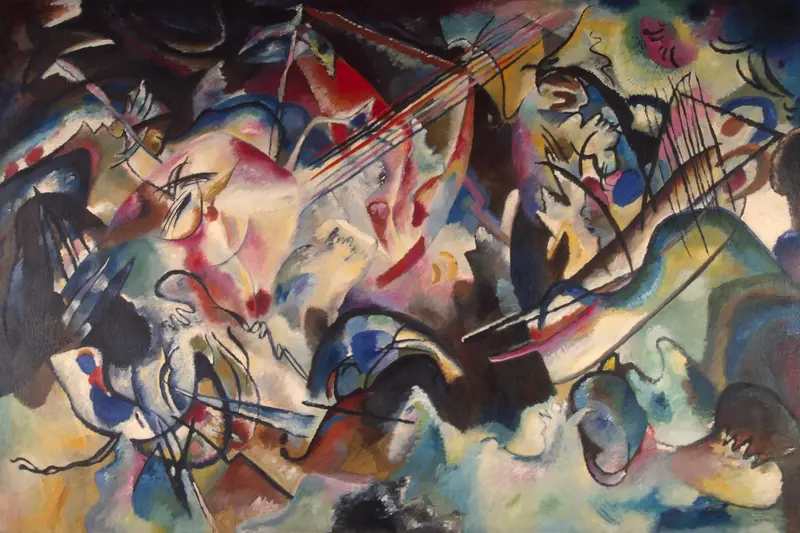
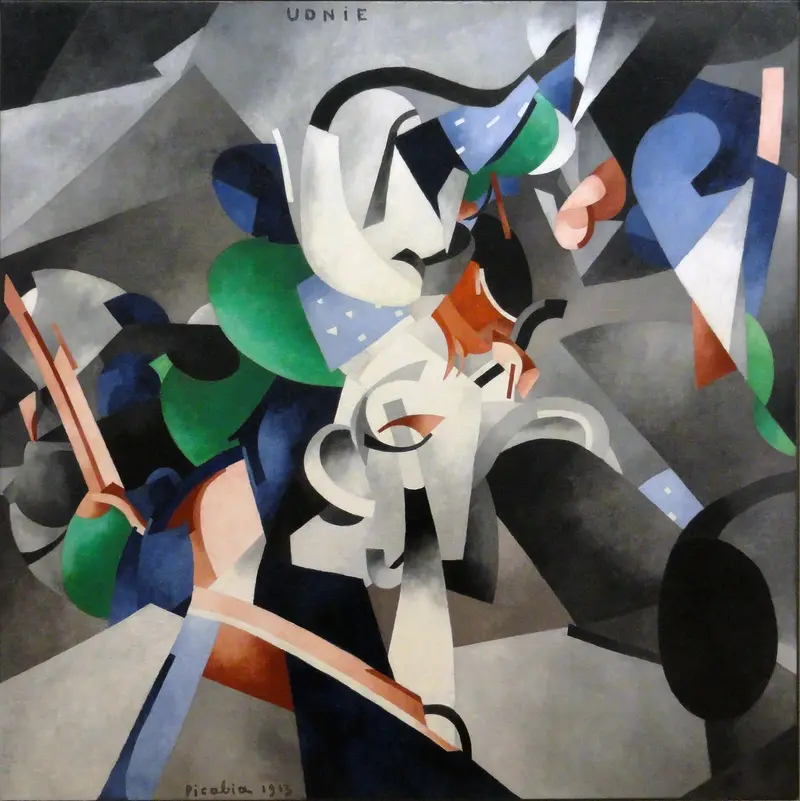
In the silent pause of contemplation, beauty reveals itself in layers unseen, inviting us to unravel its mysteries. Look to the left at the bold strokes of deep blue, where the horizon meets the sky. Notice how the swirling colors blend into one another, creating a sense of movement that suggests a journey, perhaps along a hidden path. The stark contrast of vibrant hues against the muted tones captures a moment suspended in time, where nature and human experience intersect.
Each brushstroke communicates both chaos and harmony, revealing Beckmann's mastery in conveying emotion through color. Yet, beyond the surface lies a deeper narrative. The cycling figures seem almost lost within the vastness, symbolizing the search for identity amidst a turbulent world. The undulating lines evoke a sense of uncertainty, hinting at the turmoil of the time, as World War II loomed over Europe.
This piece, rich with tension, reflects the fragile balance between beauty and despair, encapsulating the complexities of the human spirit. During the years between 1940 and 1942, Beckmann lived in exile, having fled the rise of the Nazi regime. Residing in Amsterdam, he grappled with displacement and the loss of his homeland. It was a time of great turmoil not only in his life but also in the art world, where many sought refuge in abstraction while he maintained a connection to emotional realism, blending personal strife with broader societal commentary in his works.
More Artworks by Max Beckmann

The Synagogue in Frankfurt am Main
Max Beckmann

Actors
Max Beckmann
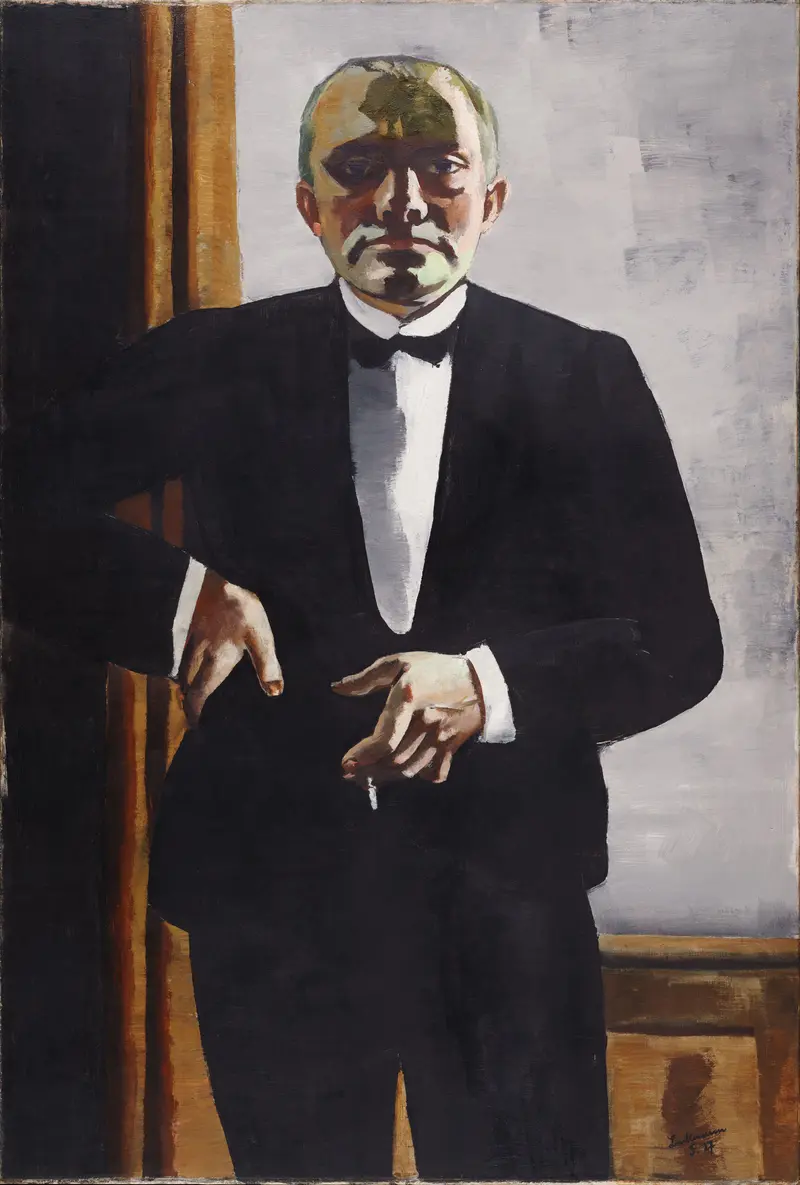
Self-Portrait in Tuxedo
Max Beckmann
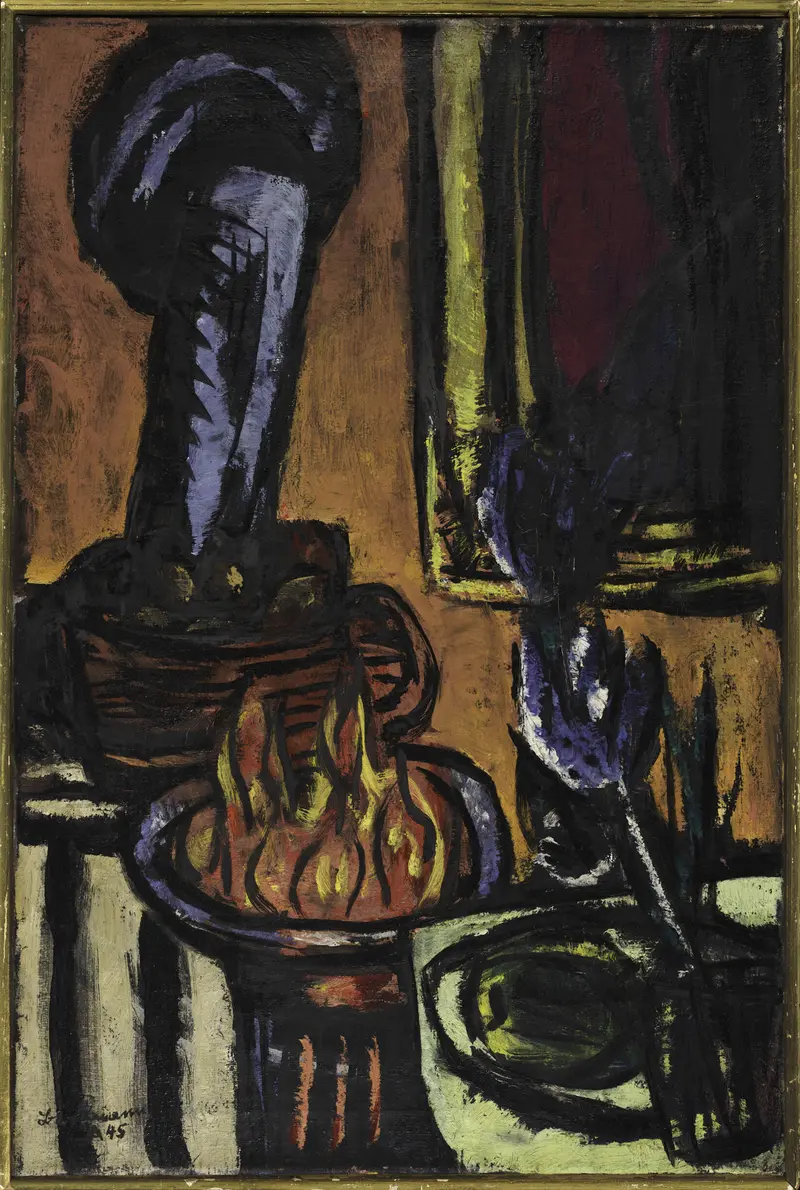
The Fire (Small Still Life)
Max Beckmann
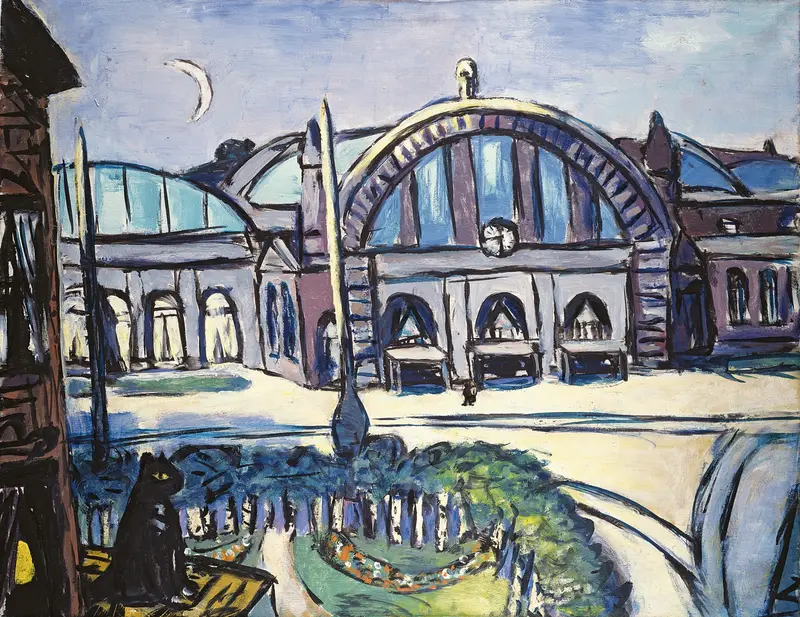
Frankfurt Main Station
Max Beckmann
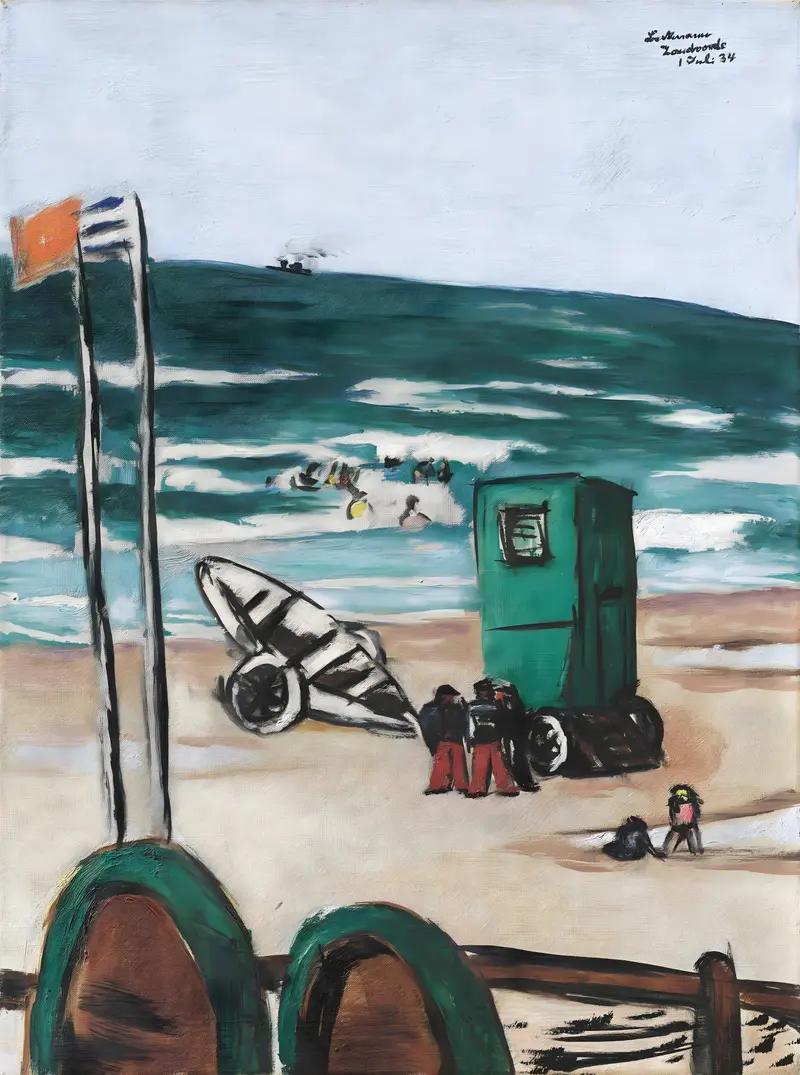
Badende mit grüner Kabine und Schiffern mit roten Hosen
Max Beckmann
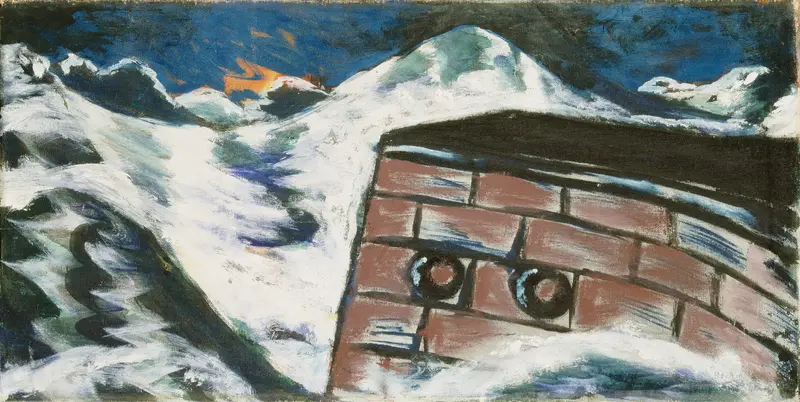
Quay Wall
Max Beckmann
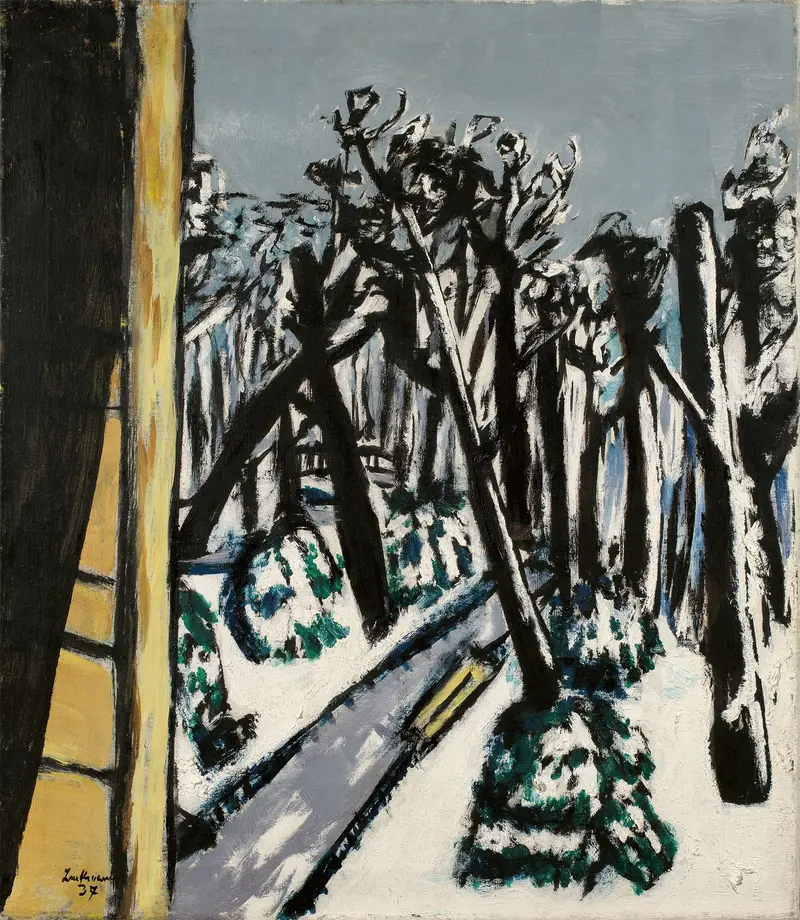
Tiergarten im Winter
Max Beckmann

Kleine Landschaft aus Bandol
Max Beckmann
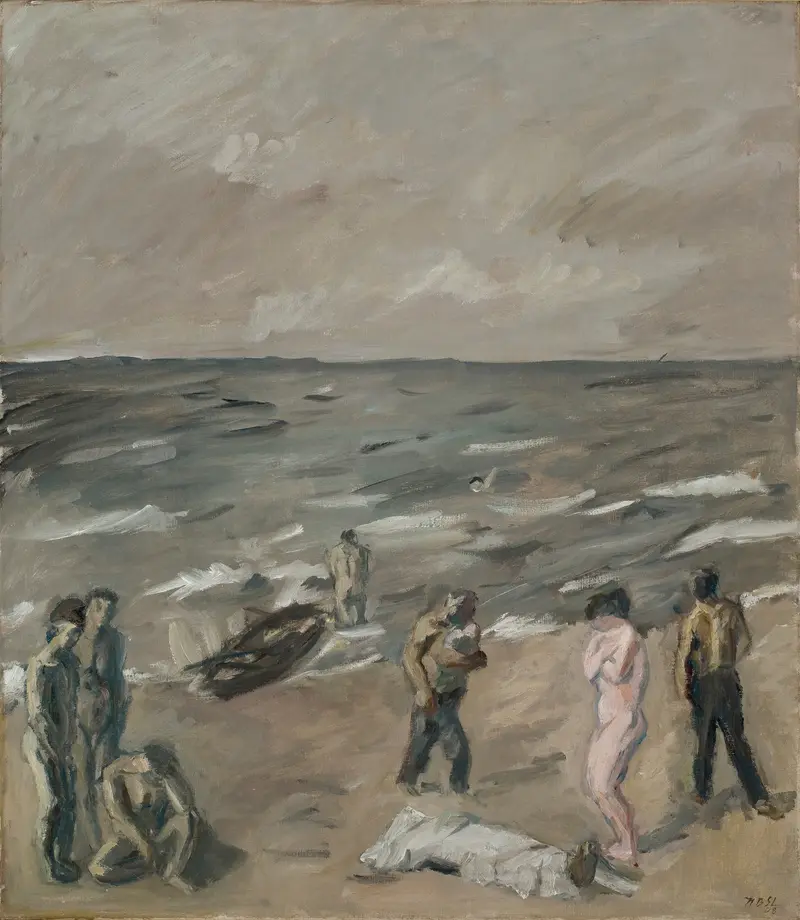
Shipwreck
Max Beckmann