Hoodo no bosetsu (Evening snow at Phoenix Hall) — History & Analysis
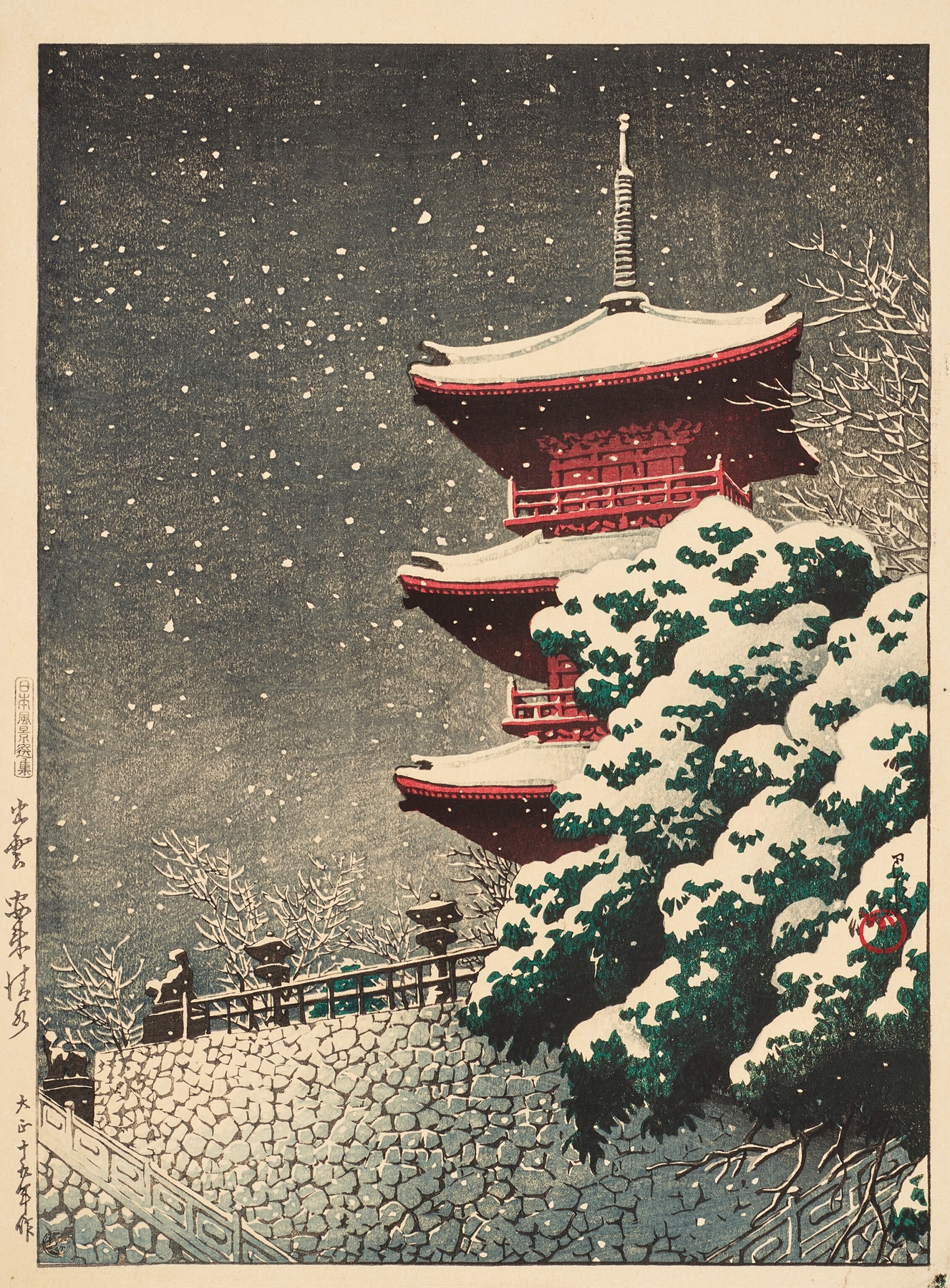
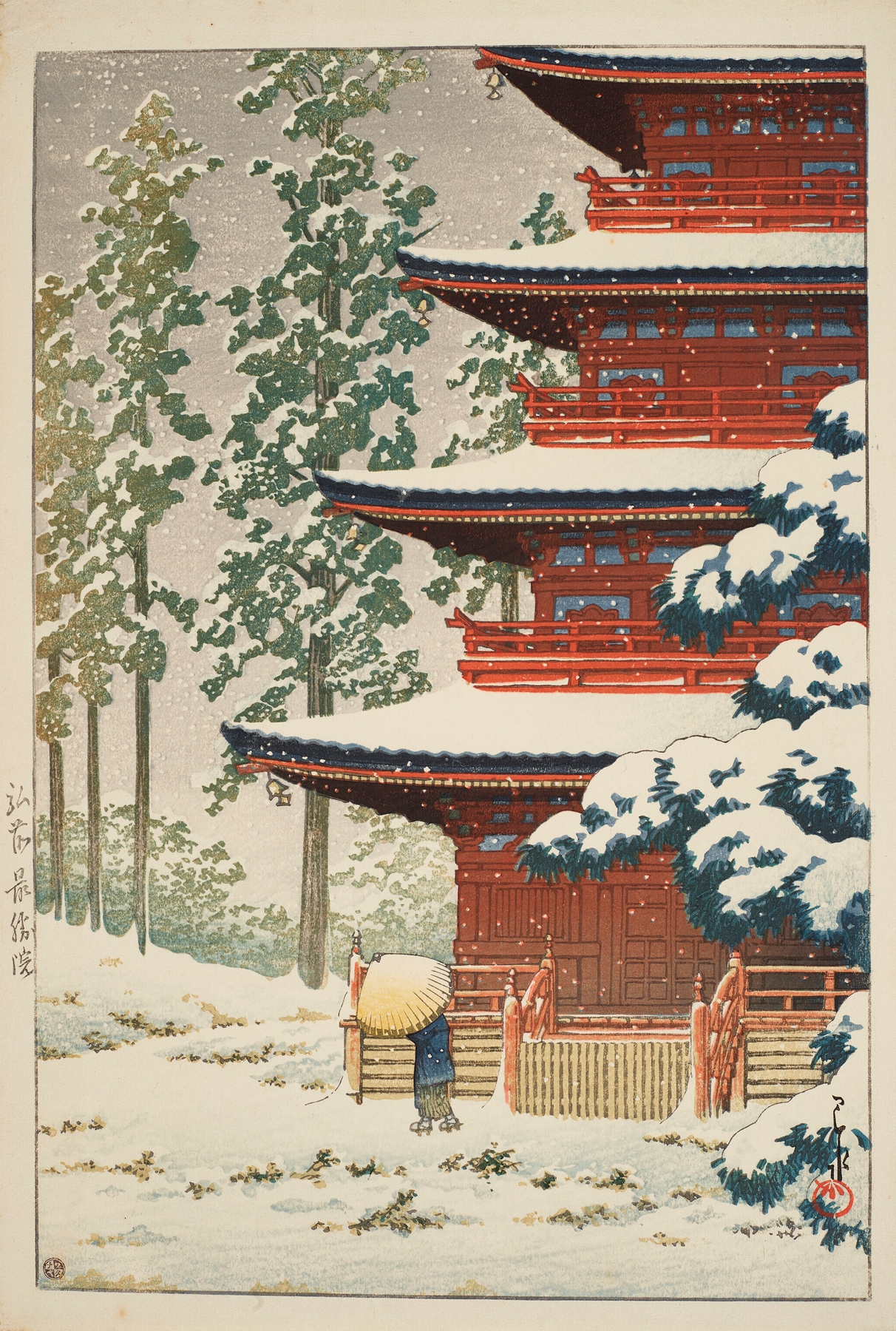
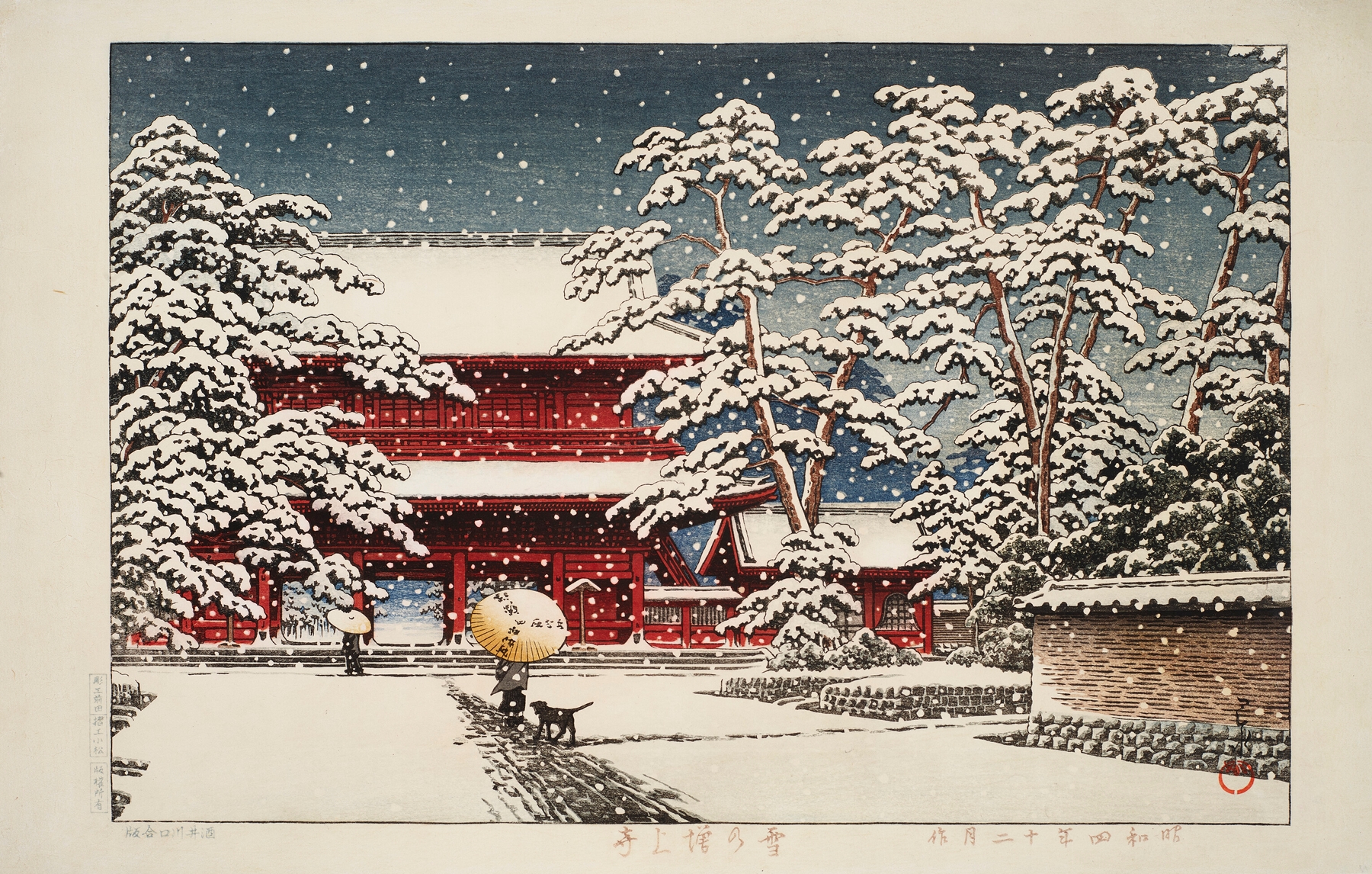
What if silence could speak through light? In Hoodo no bosetsu, a quiet tension envelops the viewer, inviting contemplation amid the beauty of falling snow. Look to the center of the canvas, where the Phoenix Hall stands resolute against a pristine blanket of white. The delicate, intricate lines of the architecture contrast sharply with the soft, amorphous forms of snowflakes drifting down from a muted sky. Dark, deep blues and subtle grays dominate the palette, creating an atmospheric chill that evokes both majesty and melancholy.
The gentle play of light on the cold surfaces enhances the scene's reflective quality, drawing the eye to the way shadows stretch elegantly across the ground. Yet beneath this tranquil façade, a palpable tension simmers. The overwhelming whiteness of the snow, often associated with purity, hints at violence concealed within its serene beauty—a reminder of nature's raw power. The Phoenix Hall, enduring yet ethereal, might symbolize resilience amidst the inevitable cycles of destruction and rebirth.
Each flake, unique in its descent, carries whispers of what has been lost, urging us to contemplate the conflict between fleeting beauty and the harsh realities of existence. Created in 1951, the work reflects Kawase Hasui's profound engagement with landscapes during the post-war era in Japan. Living in a time marked by recovery and introspection, Hasui was known for his contributions to the shin-hanga movement, which sought to blend traditional Japanese aesthetics with Western techniques. This piece embodies his mastery of capturing moments where nature and architecture intersect while delving into the deeper emotional landscapes of human experience.