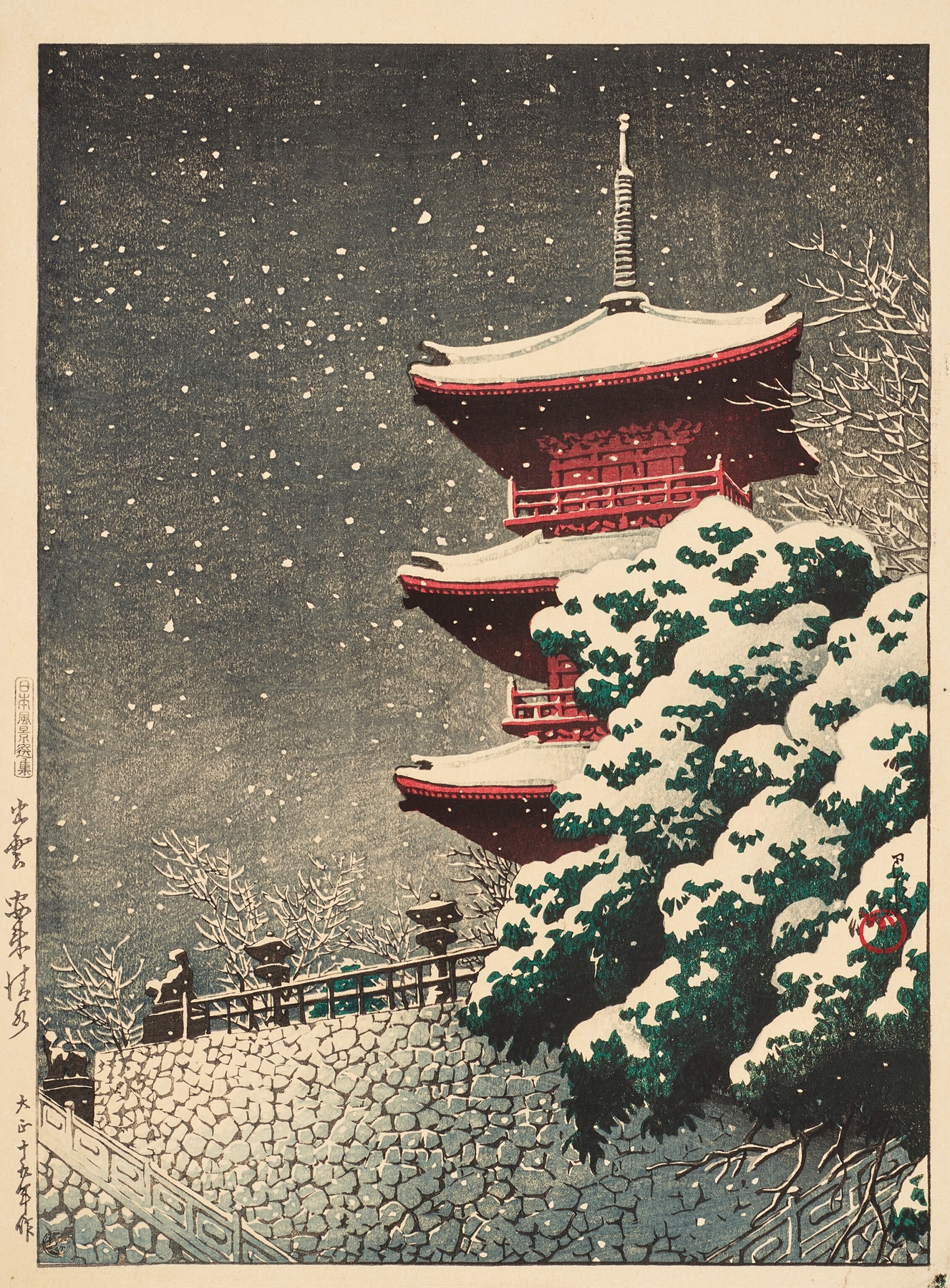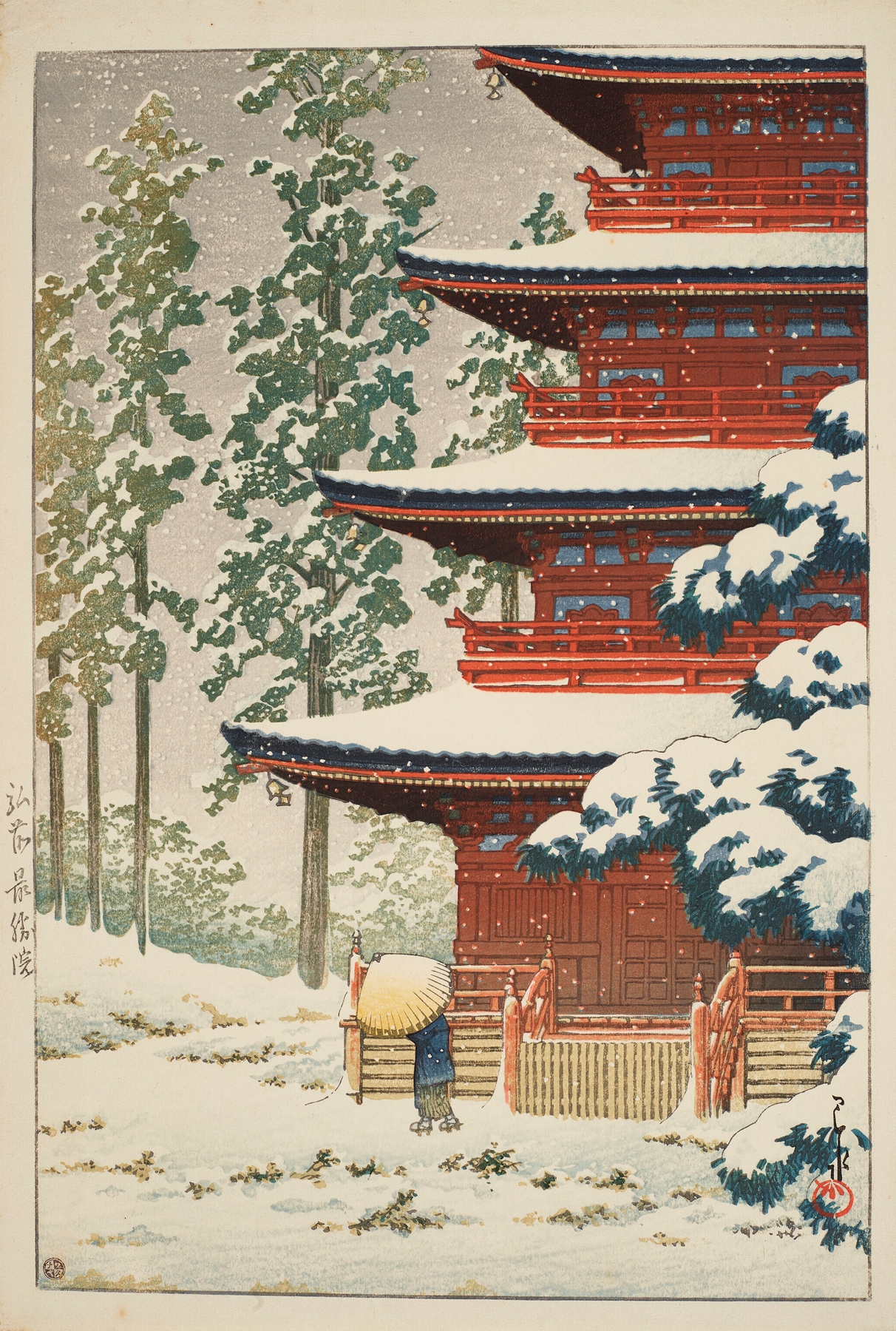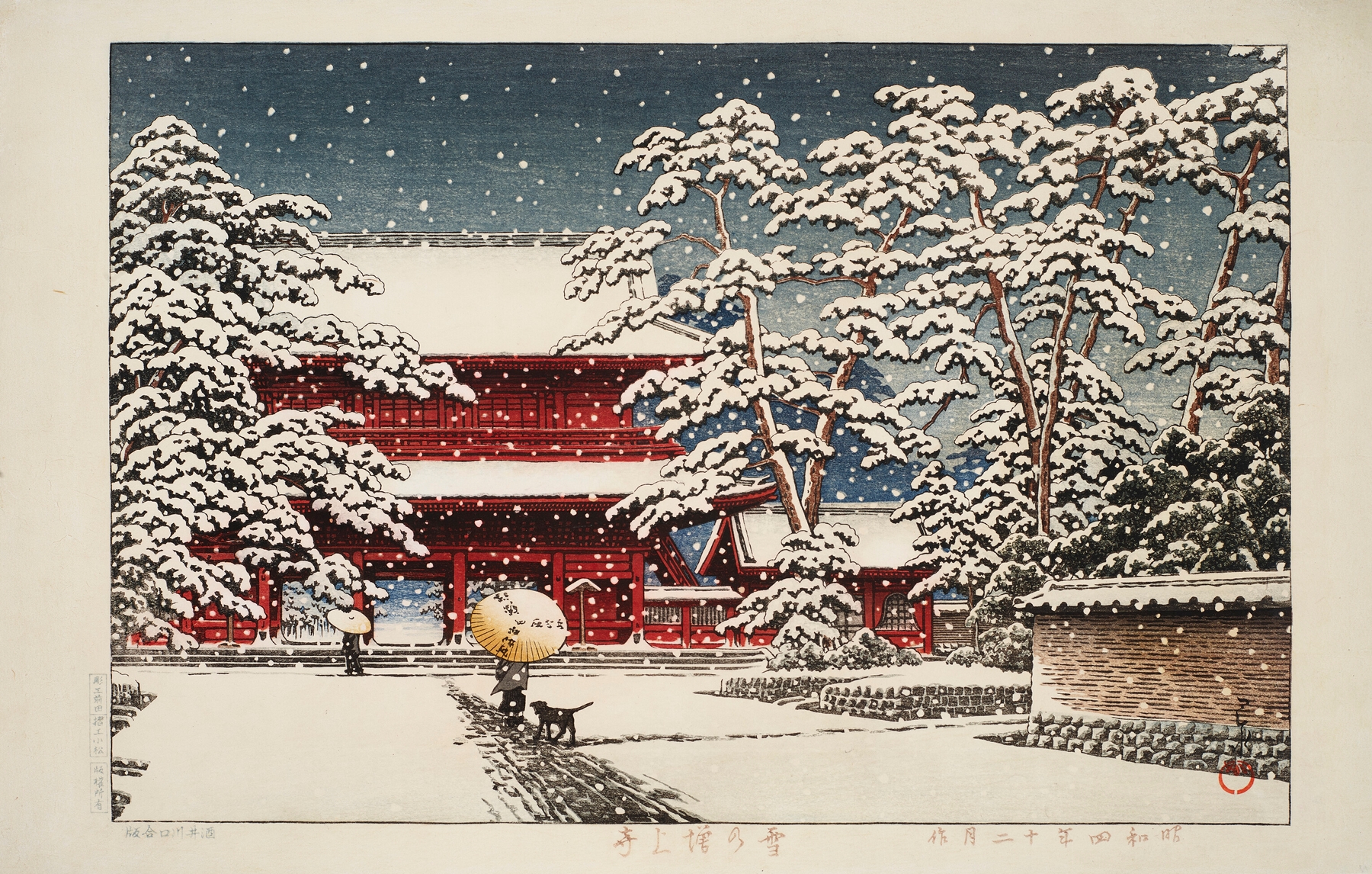
“Every silence here is a confession.” In the serene stillness of winter, a quiet awakening unfolds amid the soft embrace of snow. Each flake falls like a whisper, transforming the world into a canvas of possibility, inviting contemplation amidst nature's hushed beauty. Look to the foreground, where the delicate branches of a nearby tree are heavy with snow, their intricate patterns stark against the pure white backdrop. The temple stands proudly in the background, its roof adorned with a thick layer of snow, evoking a sense of both tranquility and majesty. The muted palette of blues and whites enhances the ethereal quality of the scene, while the gentle gradients of light and shadow create a sense of depth, inviting the viewer to explore the tranquil relationship between the architecture and its surrounding environment. Beneath the calm surface lies a complex interplay of contrasts—the warmth of the temple contrasts with the cold air, symbolizing refuge amidst adversity. The snow-covered landscape signifies a period of dormancy, yet it also hints at renewal and awakening, suggesting that life persists beneath the winter's quiet blanket. This duality reflects a universal truth: even in stillness, there is an undercurrent of life waiting to emerge. Kawase Hasui painted *Zojoji Temple in Snow* in 1929, during a time when the artist was deeply engaged in the shin-hanga movement, which sought to blend traditional Japanese aesthetics with Western artistic principles. Living in Tokyo, he observed the intersection of nature and urban life. This work encapsulates his desire to capture fleeting moments of beauty, as Japan was undergoing significant cultural and societal changes in the early 20th century.