Huisje aan een sloot — History & Analysis
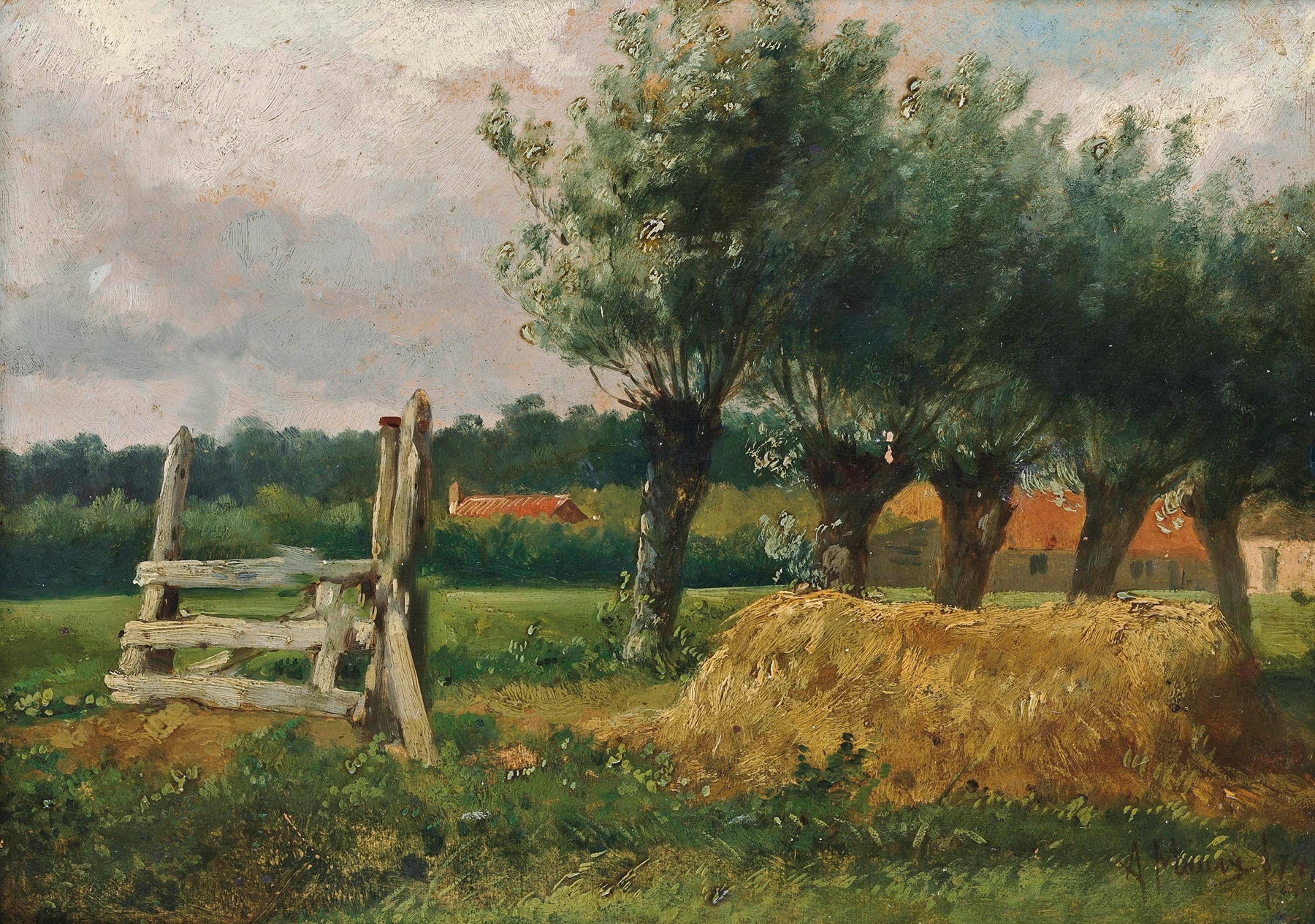
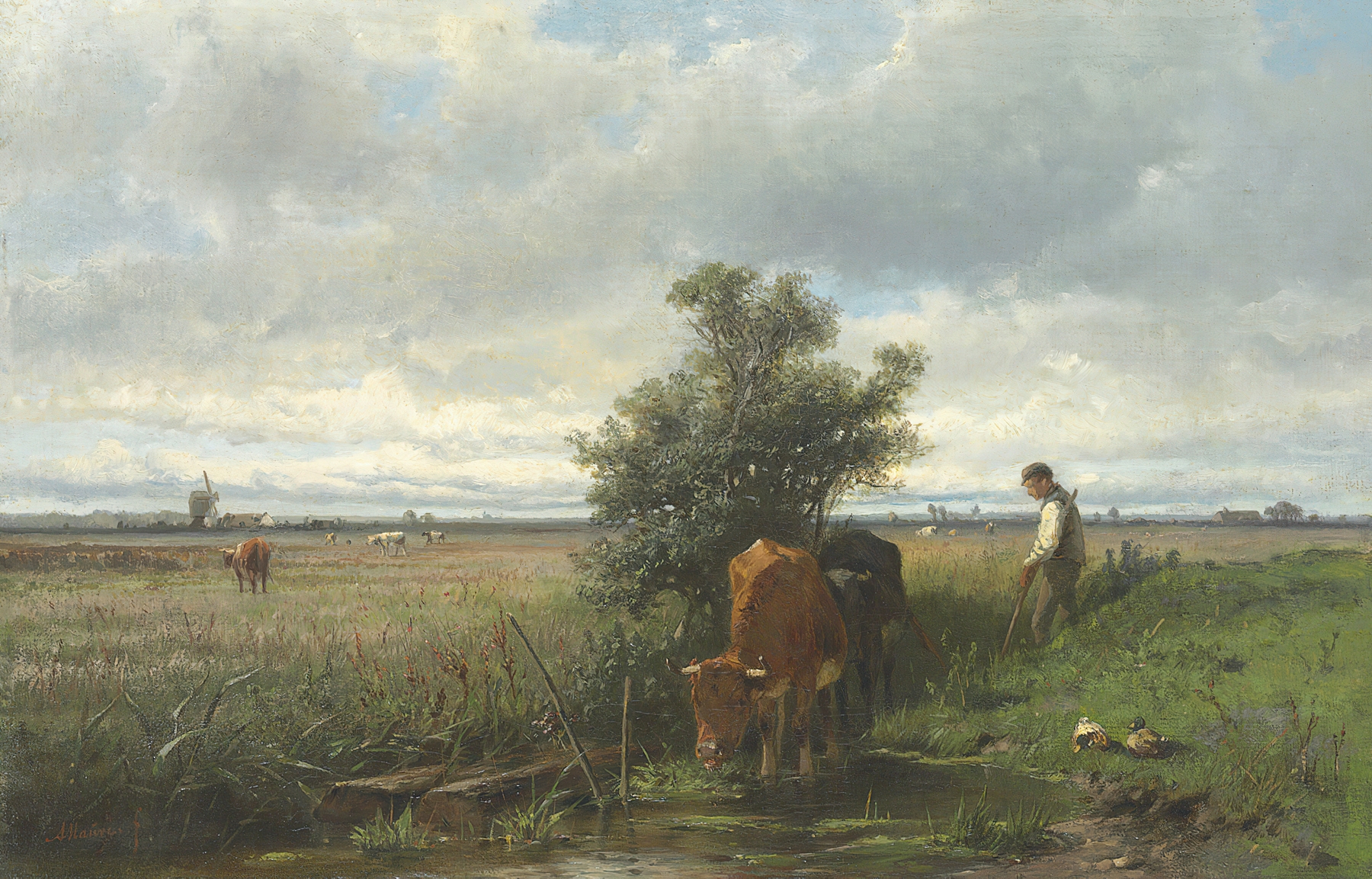
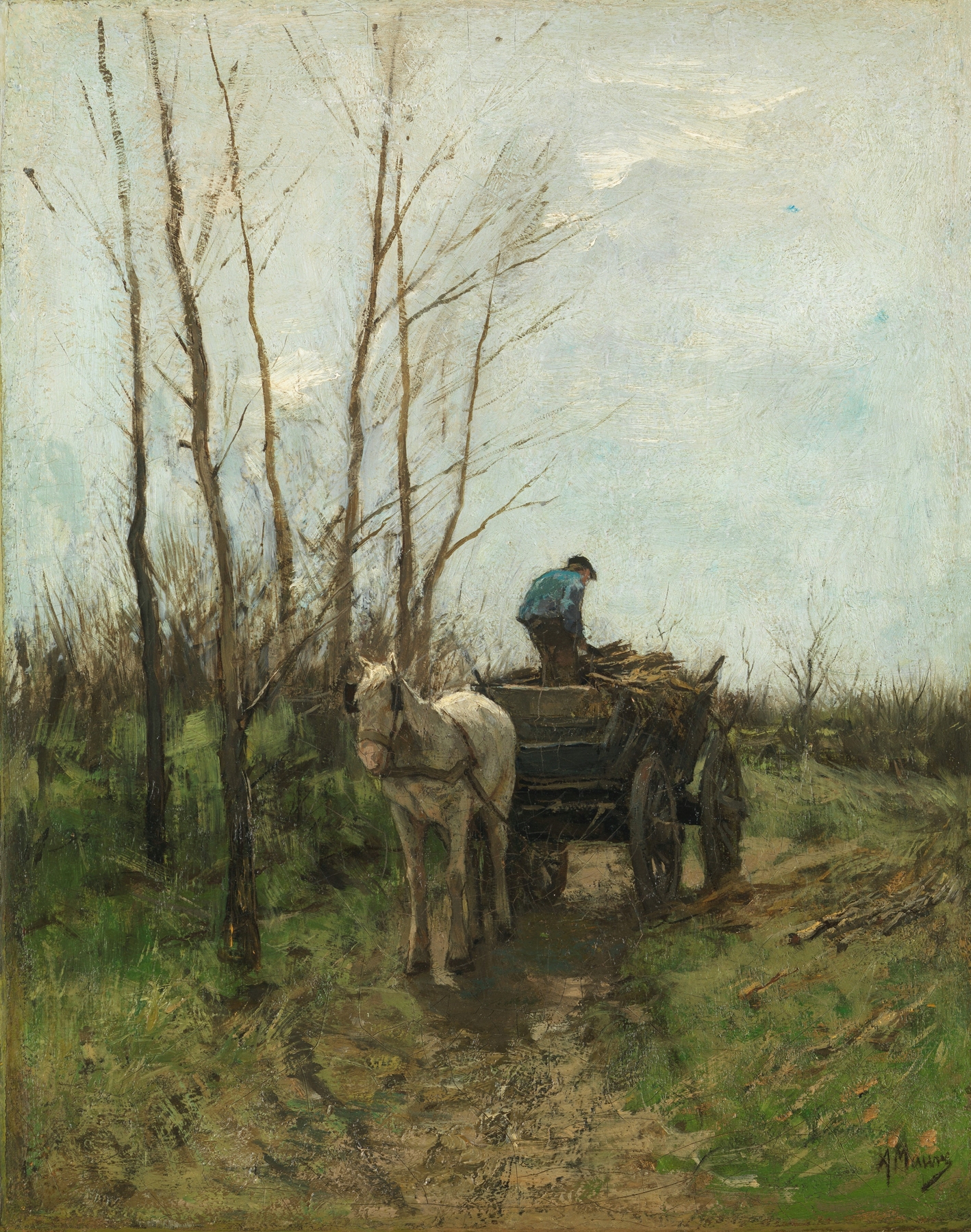
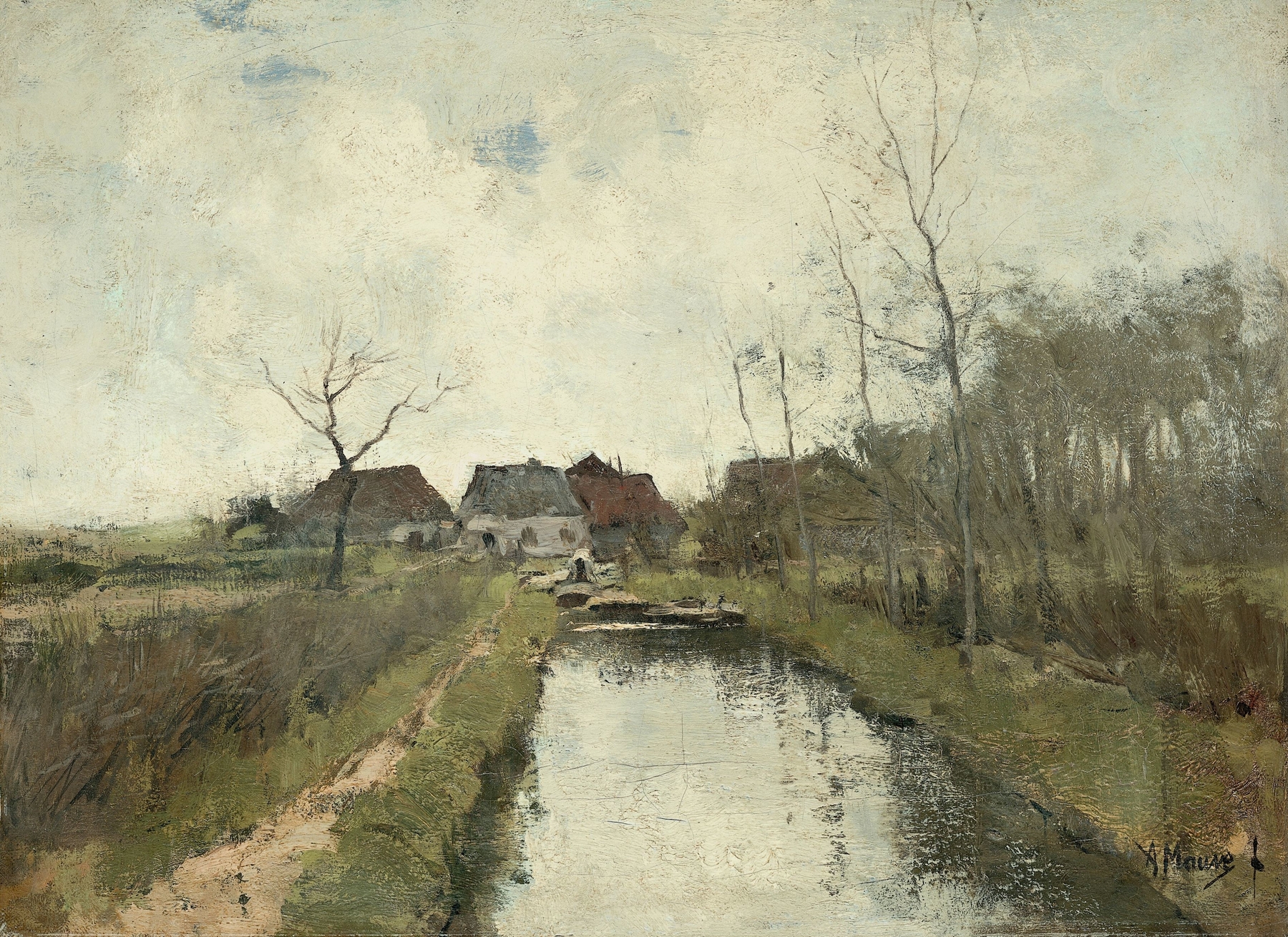
Can beauty exist without sorrow? In Huisje aan een sloot, the rich interplay of color invites contemplation of the delicate balance between joy and melancholy inherent in nature. Focus first on the lush, verdant greens that dominate the canvas, enveloping a modest cottage nestled beside a tranquil waterway. Notice how the artist employs light to create a shimmering effect on the water's surface, reflecting the soft, pastel hues of the sky.
The interplay of shadow and sunlight dances across the scene, guiding your gaze to the horizon where the clouds melt into a vibrant tapestry of blues and peaches, evoking a sense of harmony in an idyllic setting. Yet, beneath the surface tranquility lies an emotional depth. The solitary house, seemingly at peace, suggests isolation, perhaps a longing for connection. The water's gentle flow hints at the passage of time, reminding us of the inevitable change that accompanies beauty.
This contrast between serenity and solitude invites viewers to ponder their own experiences of longing or solitude, enhancing the emotional resonance of the piece. Anton Mauve painted this work during a productive period between 1870 and 1888 in the Netherlands, a time when he was deeply engaged with capturing rural life and landscapes. Influenced by both the Hague School and the burgeoning Impressionist movement, he sought to illustrate the profound beauty of everyday scenes, reflecting his own introspective nature and the broader artistic exploration of light, color, and emotional depth during this era.