Ice on the River — History & Analysis
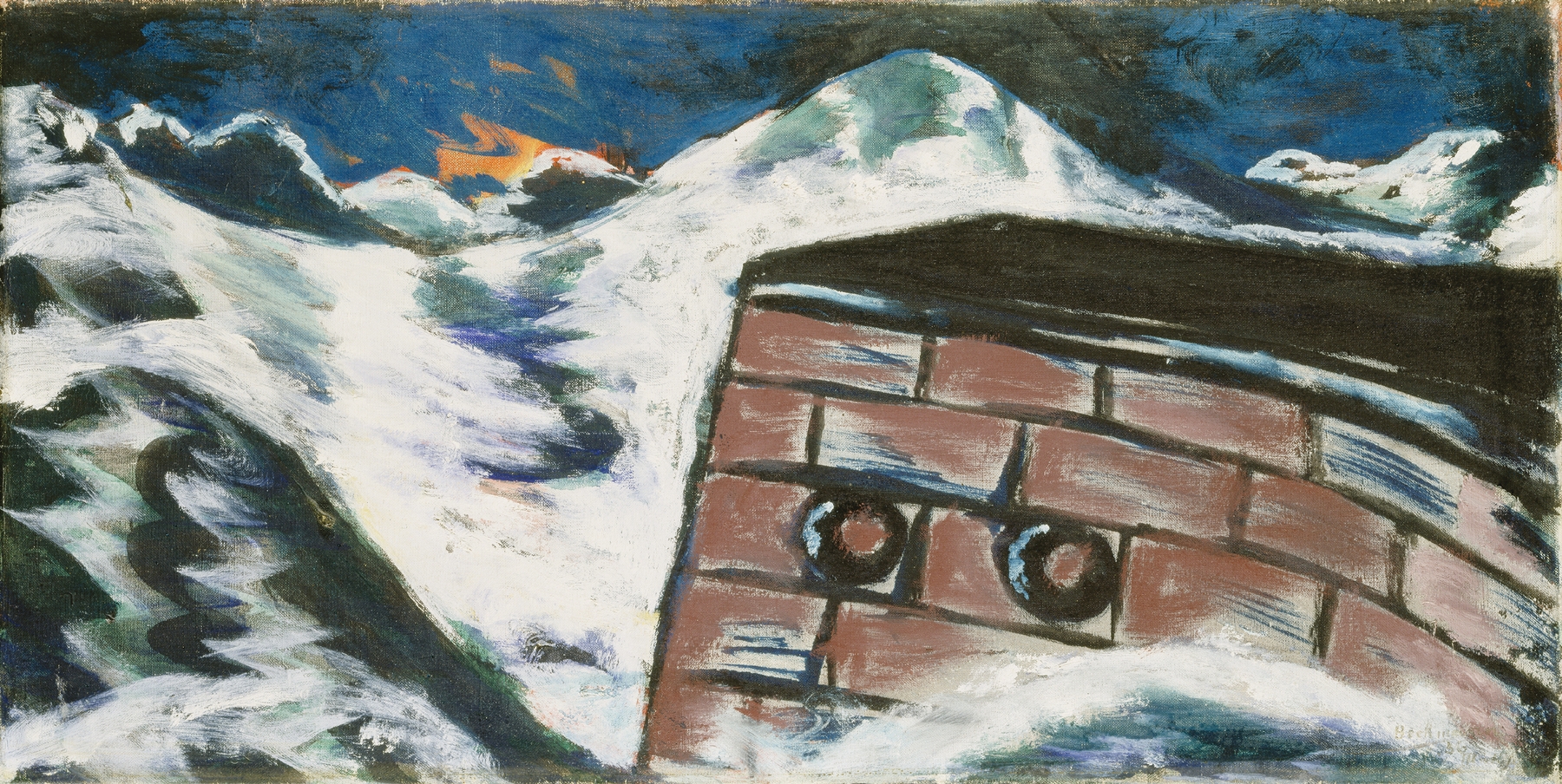
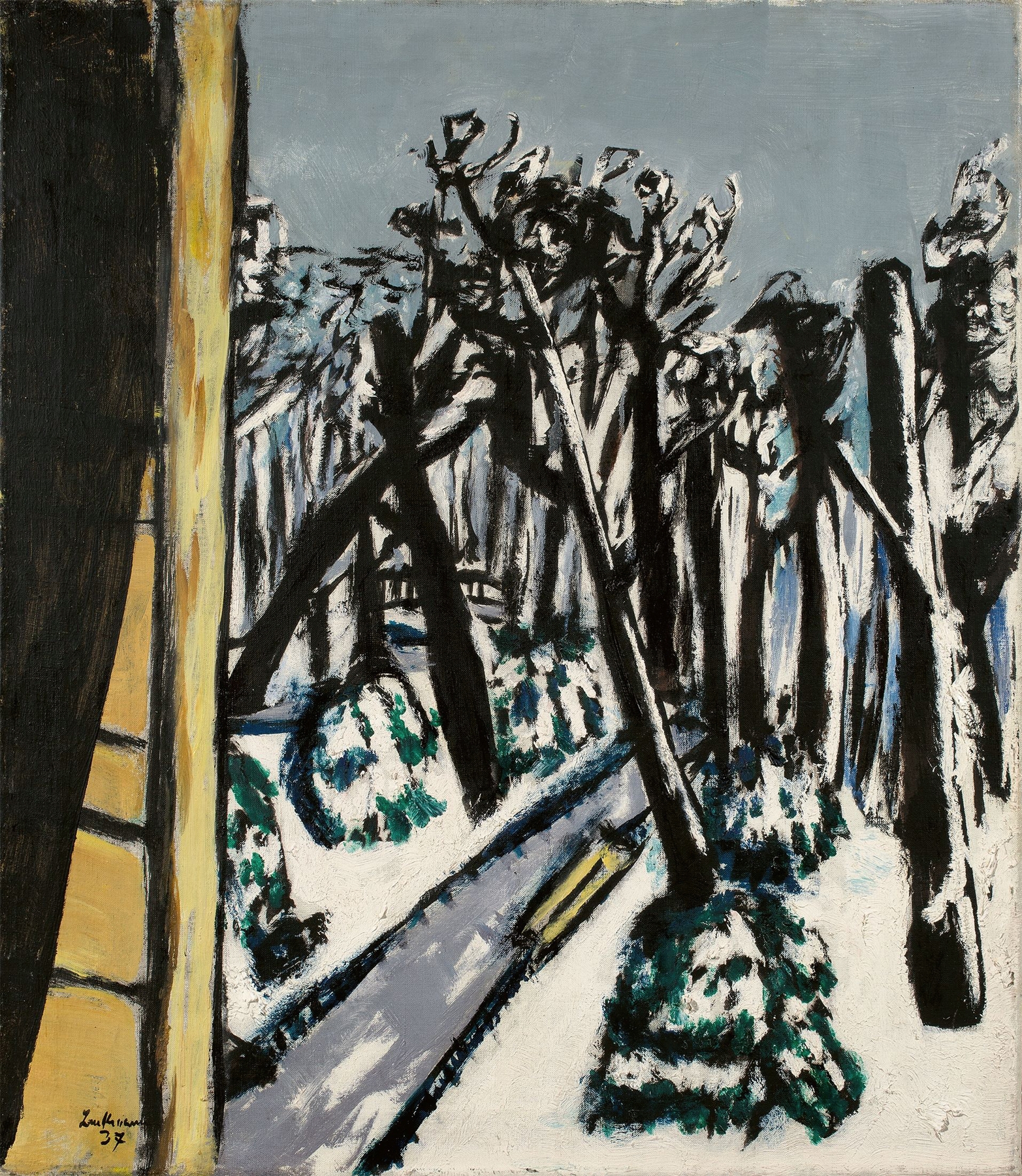
Who listens when art speaks of silence? In Ice on the River, Max Beckmann captures a moment steeped in quietude, inviting viewers to experience the weight of what remains unsaid. Look to the left at the fractured ice, its jagged edges revealing both beauty and danger. The cold palette of whites and blues contrasts sharply with the figures on the ice, cloaked in dark, muted colors.
Their postures suggest a tension; they are caught between movement and stillness, a dance of uncertainty mirrored in the textures of the frozen landscape. The subtle play of light on the ice creates a glimmering effect, almost like whispers of hope amidst the starkness. Examining the scene, one can sense the immensity of isolation that envelops the figures, evoking a profound emotional resonance. The starkness of the environment juxtaposed with the humanity present gives rise to lingering questions about existence and the passage of time.
The ice, a metaphor for fragility and the ephemeral nature of life, speaks to the quiet struggles within each figure, and the interplay between the individual and the vastness of nature adds layers to this stillness. In 1923, as Beckmann painted this work in Germany, he was grappling with the aftermath of World War I while exploring themes of alienation and the human condition. This period marked a significant evolution in his style, merging expressionism with a more somber reflection on life’s complexities, infused with his personal hardships and the cultural upheaval of the time.