Infantry, Chateau Thierry — History & Analysis
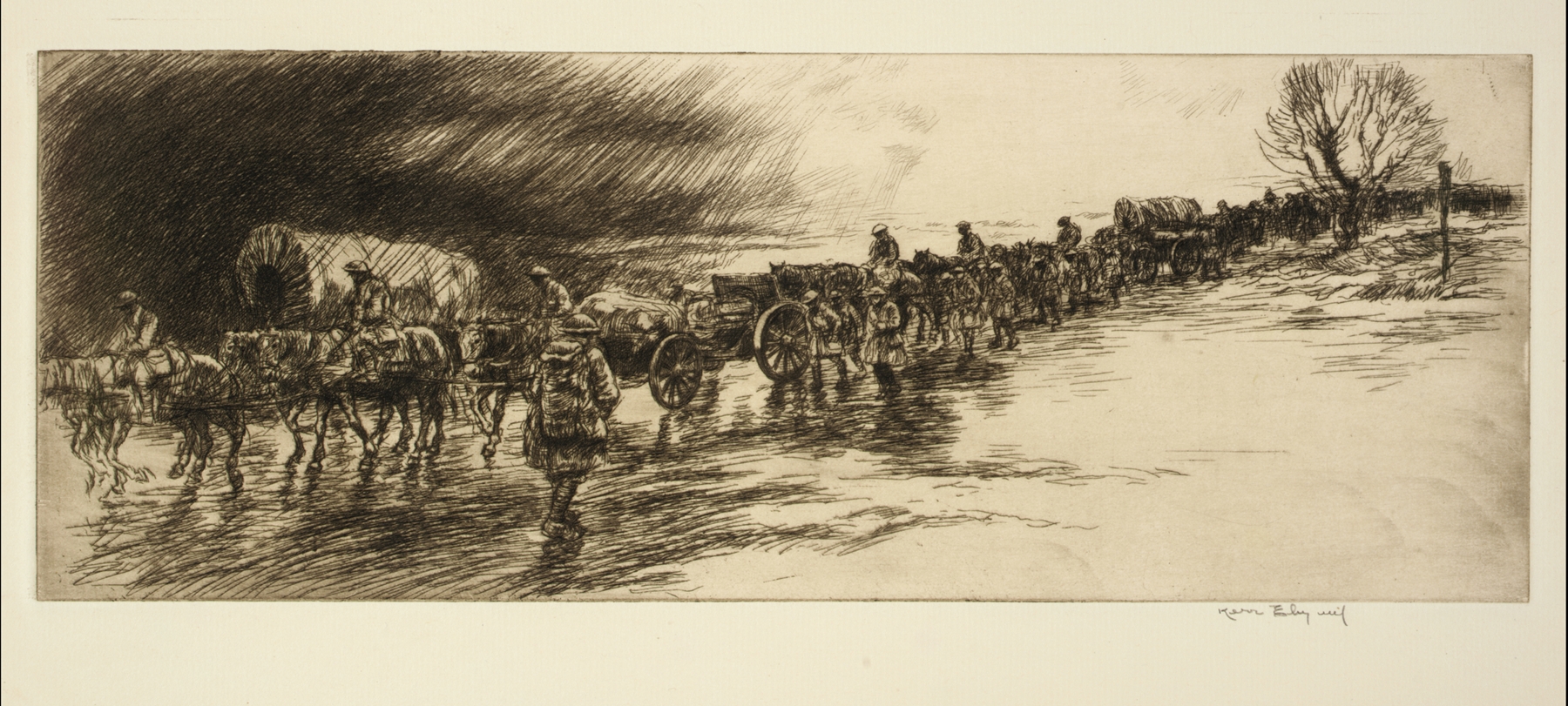
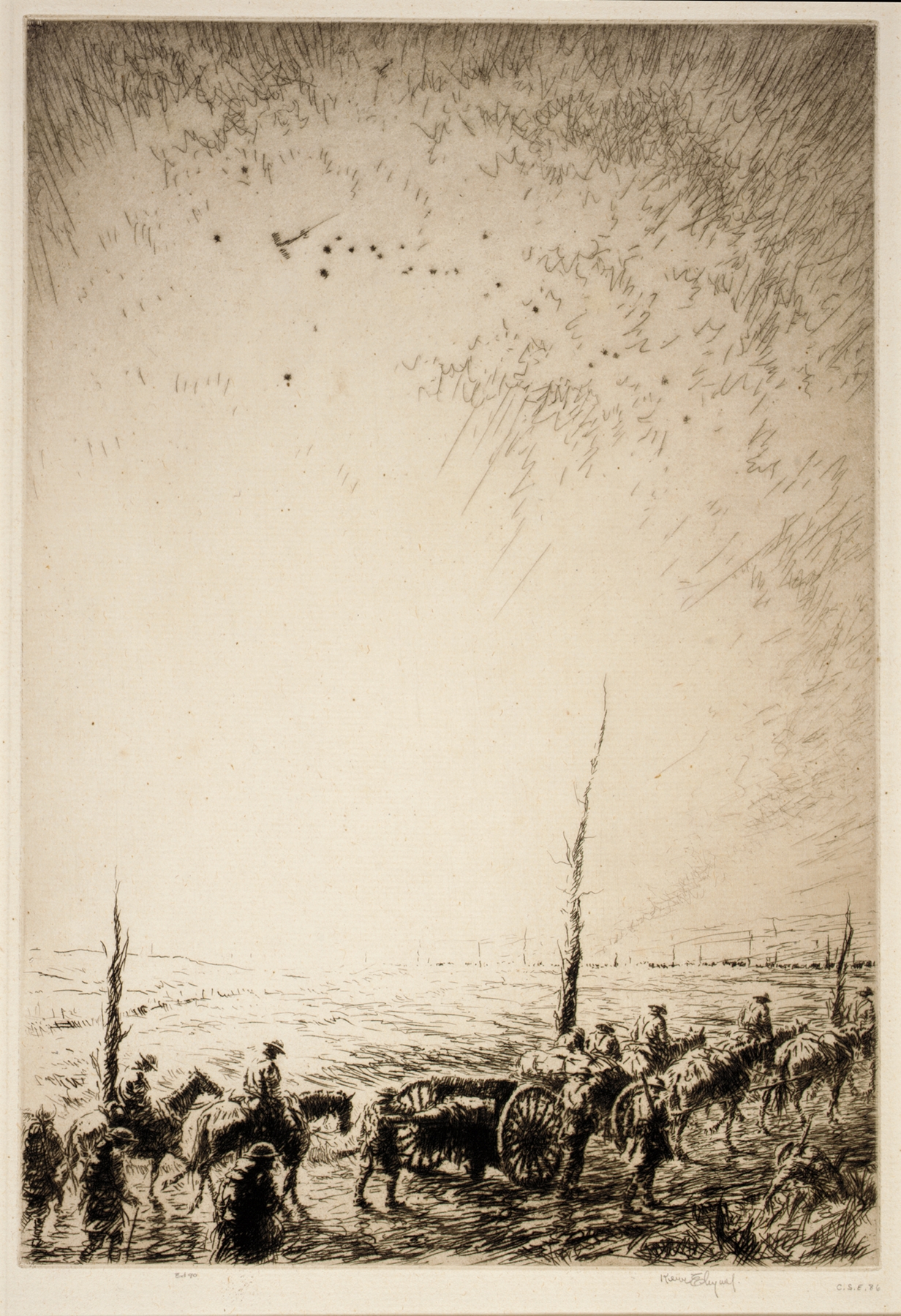
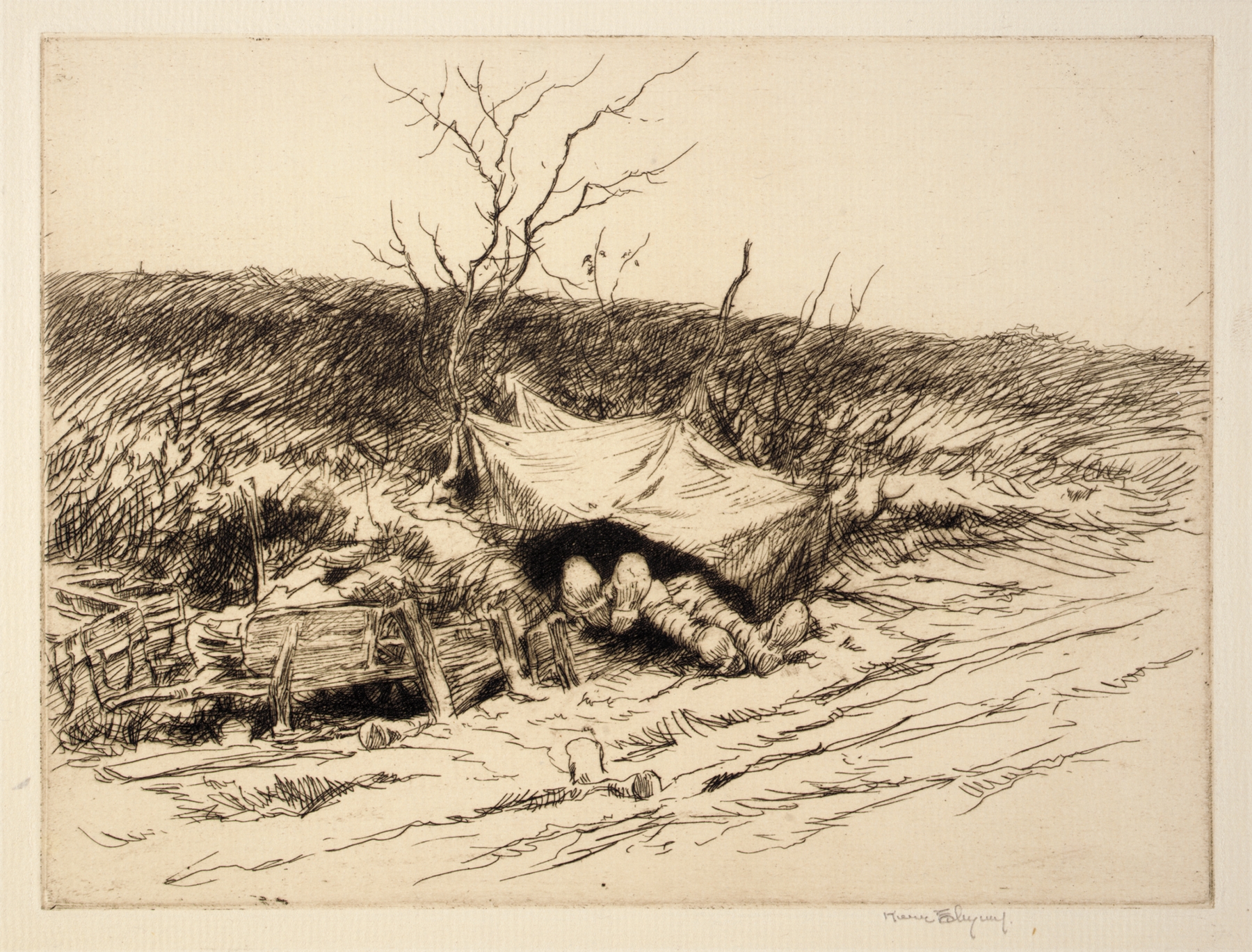
“To paint is to remember what time wants us to forget.” In a world awash with chaos, how do we capture the echoes of solitude amidst the clamor of existence? Look closely at the foreground; the somber figures of soldiers stand resolute against the backdrop of a fragmented landscape. The muted palette of grays and browns envelops them, while the slashes of light seem to carve out their outlines, emphasizing both their individuality and their shared plight. Notice how each soldier's stance speaks volumes — the weight of their gear, the slight droop of their shoulders; it’s as if the very air around them is heavy with unspoken stories.
Beneath the surface lies a deeper narrative of isolation and camaraderie. The juxtaposition of the soldiers’ stoic expressions against their barren surroundings invites contemplation on the internal battles they face, while the desolate terrain amplifies their solitude. The sparse trees in the distance stand as silent witnesses to their suffering, embodying the harsh reality that surrounds them. This poignant contrast of human resilience against nature’s indifference pulls the viewer into a shared sense of loneliness.
In 1920, while creating this work, Kerr Eby found himself grappling with the aftermath of World War I, a time marked by reflection on loss and sacrifice. Living in New York, he sought to channel the harsh realities of war through his art, aiming to evoke empathy and understanding. Eby’s experience as a war artist deeply influenced his style, allowing him to portray the emotional weight of conflict with both precision and poignancy, marking a significant contribution to the narrative of military art during that era.