Interior of the All Saints Church in Warsaw — History & Analysis
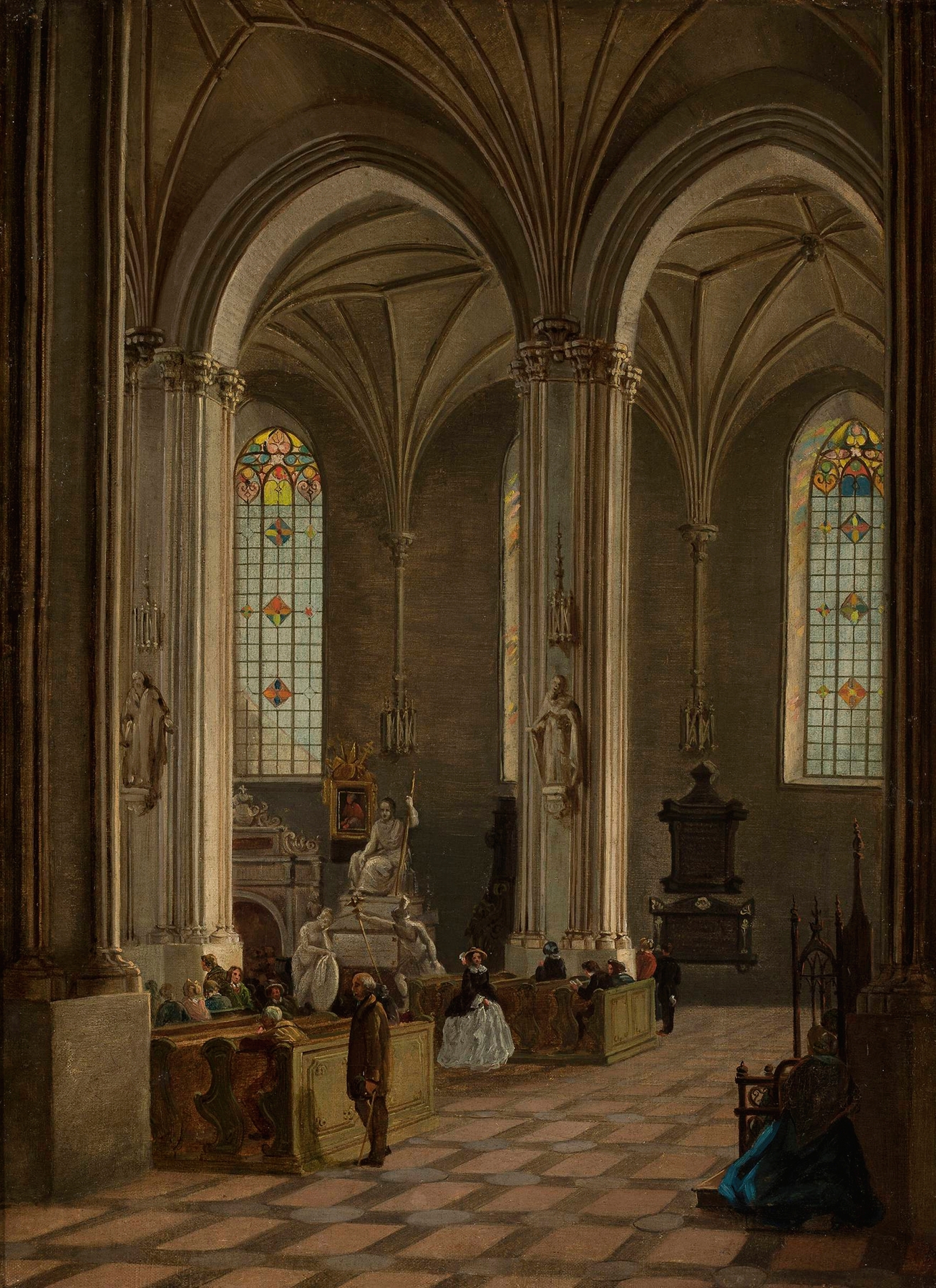
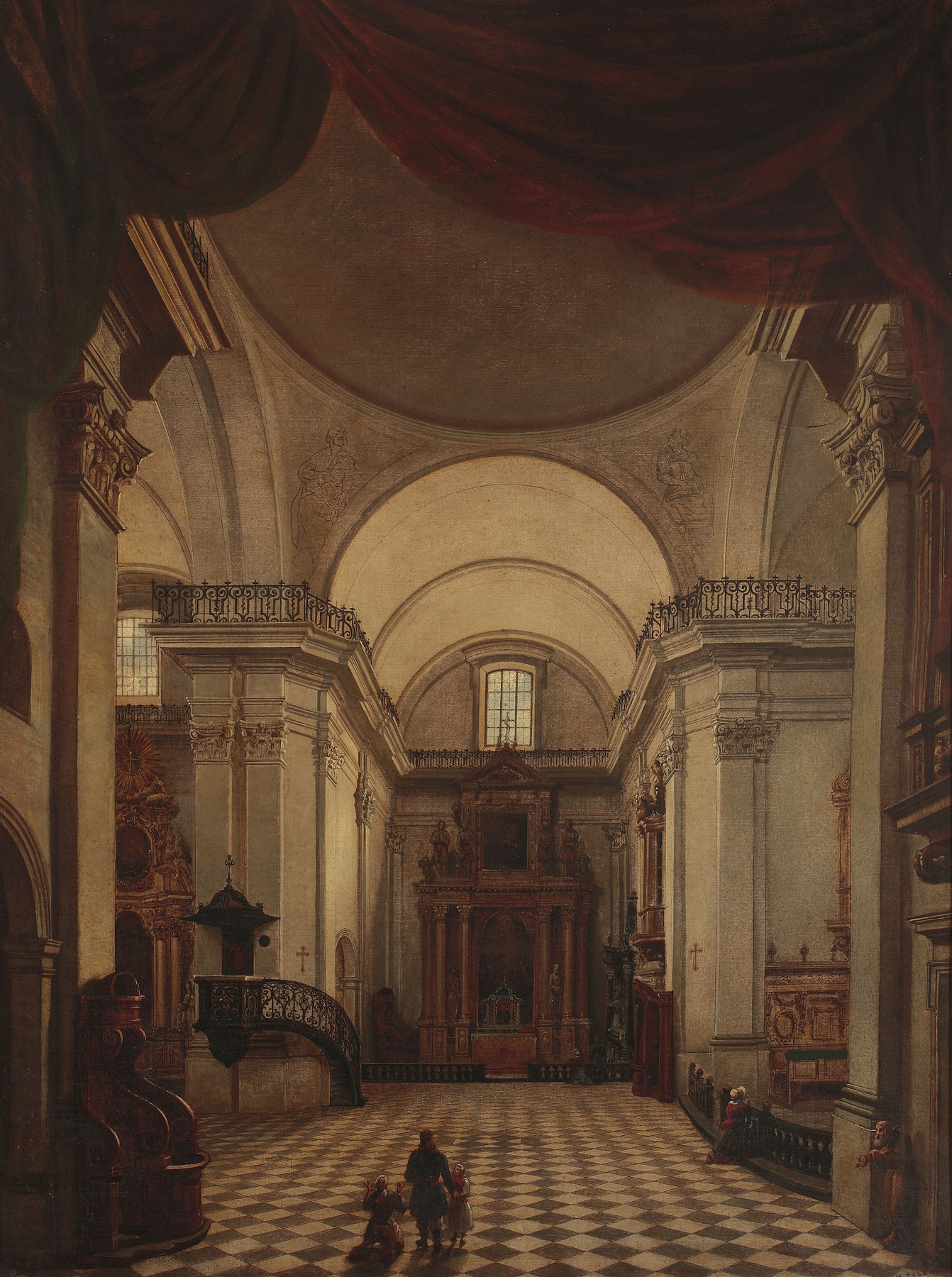
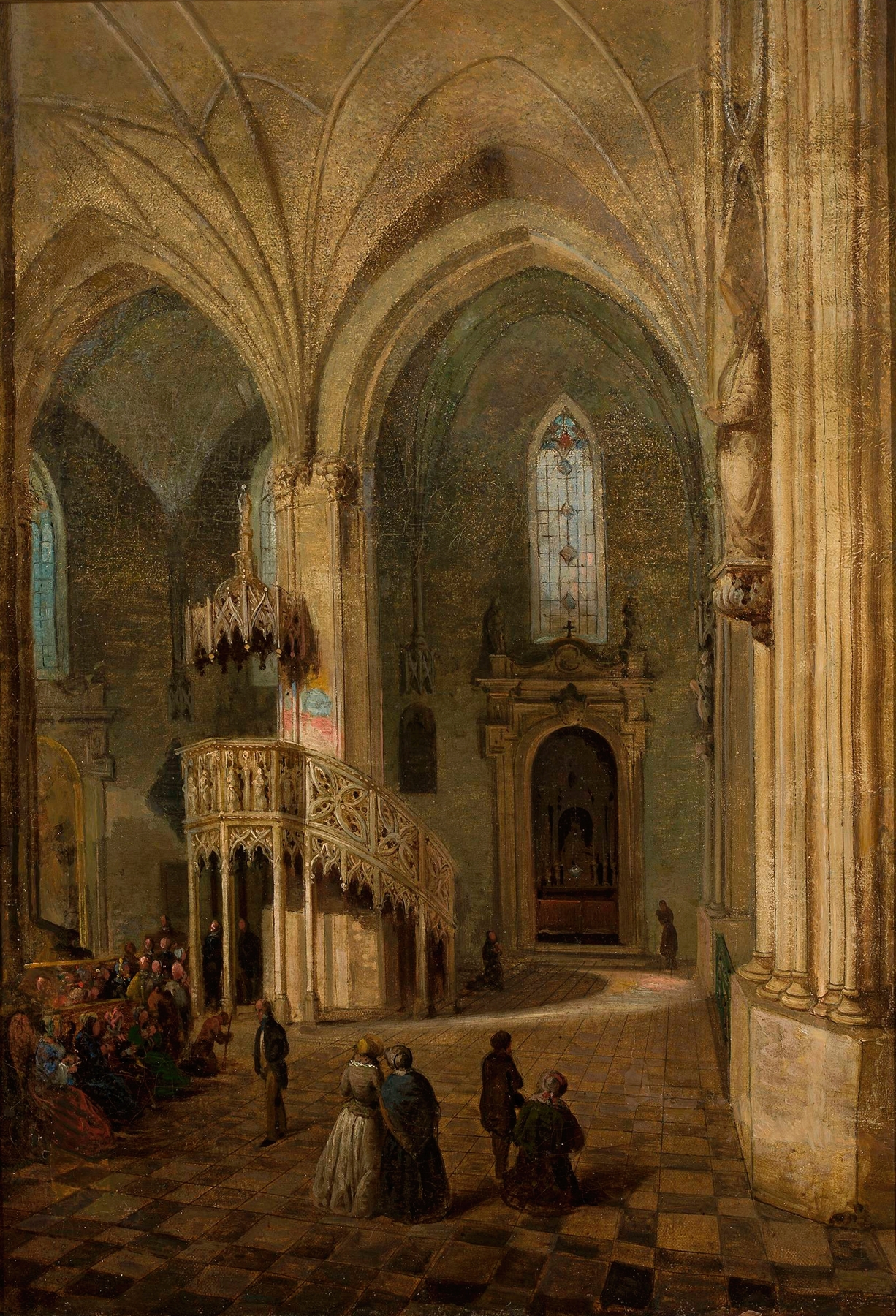
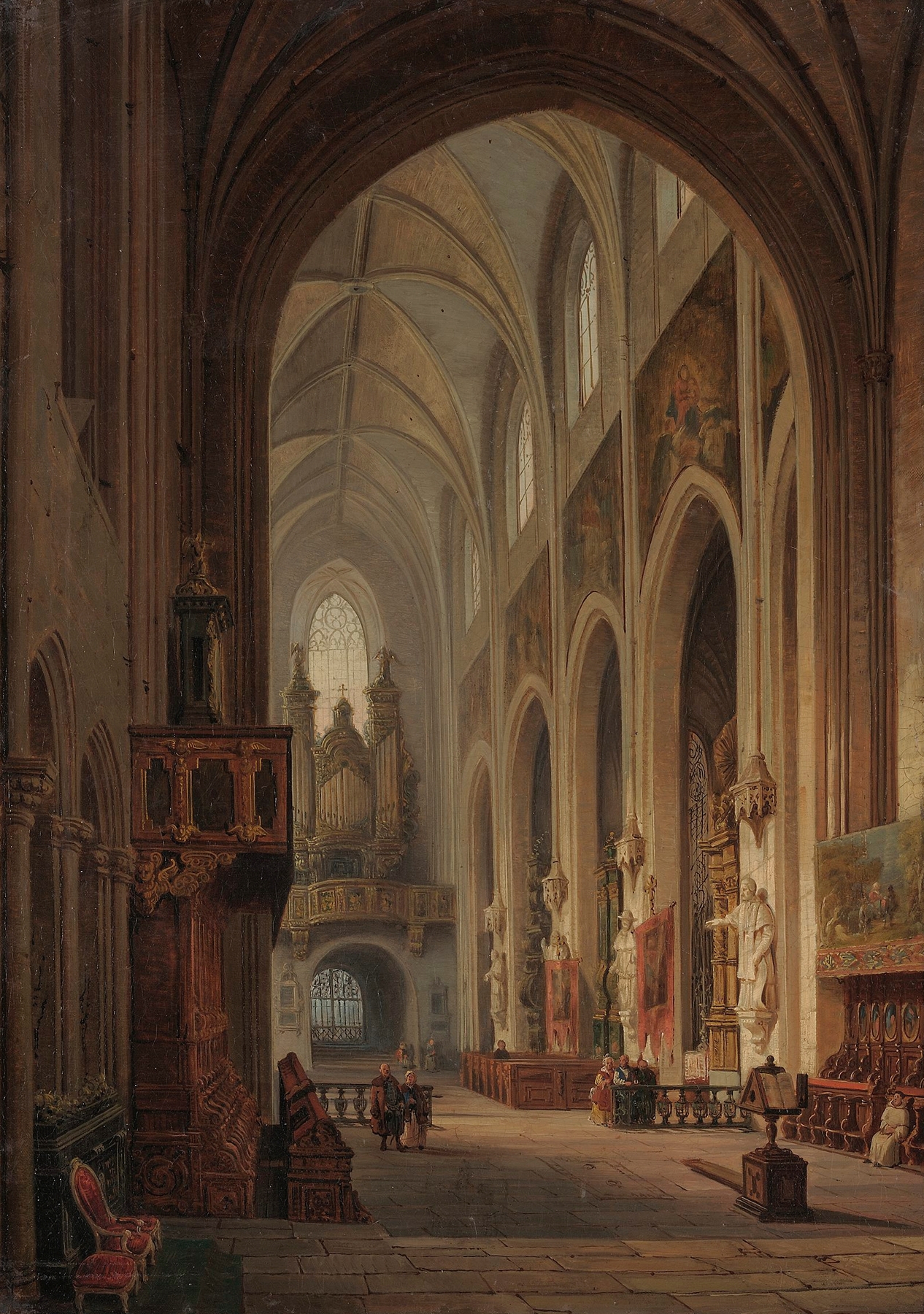
Could a single brushstroke hold eternity? In Interior of the All Saints Church in Warsaw, light and shadow intertwine, creating an illusion of depth that transcends the canvas. Focus on the archways that dominate the background, their elegant forms leading the eye upward toward the ethereal light filtering through stained glass. Notice how the artist employs soft, muted colors to evoke a serene atmosphere, while warm tones highlight the intricate details of the church's architecture.
The careful placement of figures within the space adds a sense of scale, emphasizing both the grandeur of the setting and the intimacy of worship. Zoom in on the small, human elements nestled between the towering columns; the figures appear almost ghostly, their presence a fleeting moment captured in time. This juxtaposition of the monumental and the ephemeral speaks to the tension between the physical and spiritual realms. Zaleski’s meticulous brushwork invites contemplation on faith, solitude, and the passage of time, creating a portal into the sacred.
In 1863, Zaleski painted this work during a period of cultural awakening in Poland, amidst growing national consciousness and artistic exploration. Living in Warsaw, he was deeply influenced by Romantic ideals and the historical significance of his surroundings. This piece reflects his commitment to capturing not just architecture, but the essence of a community's spiritual life, resonating with the broader currents of art and identity at that time.