Town hall in Vilnius — History & Analysis
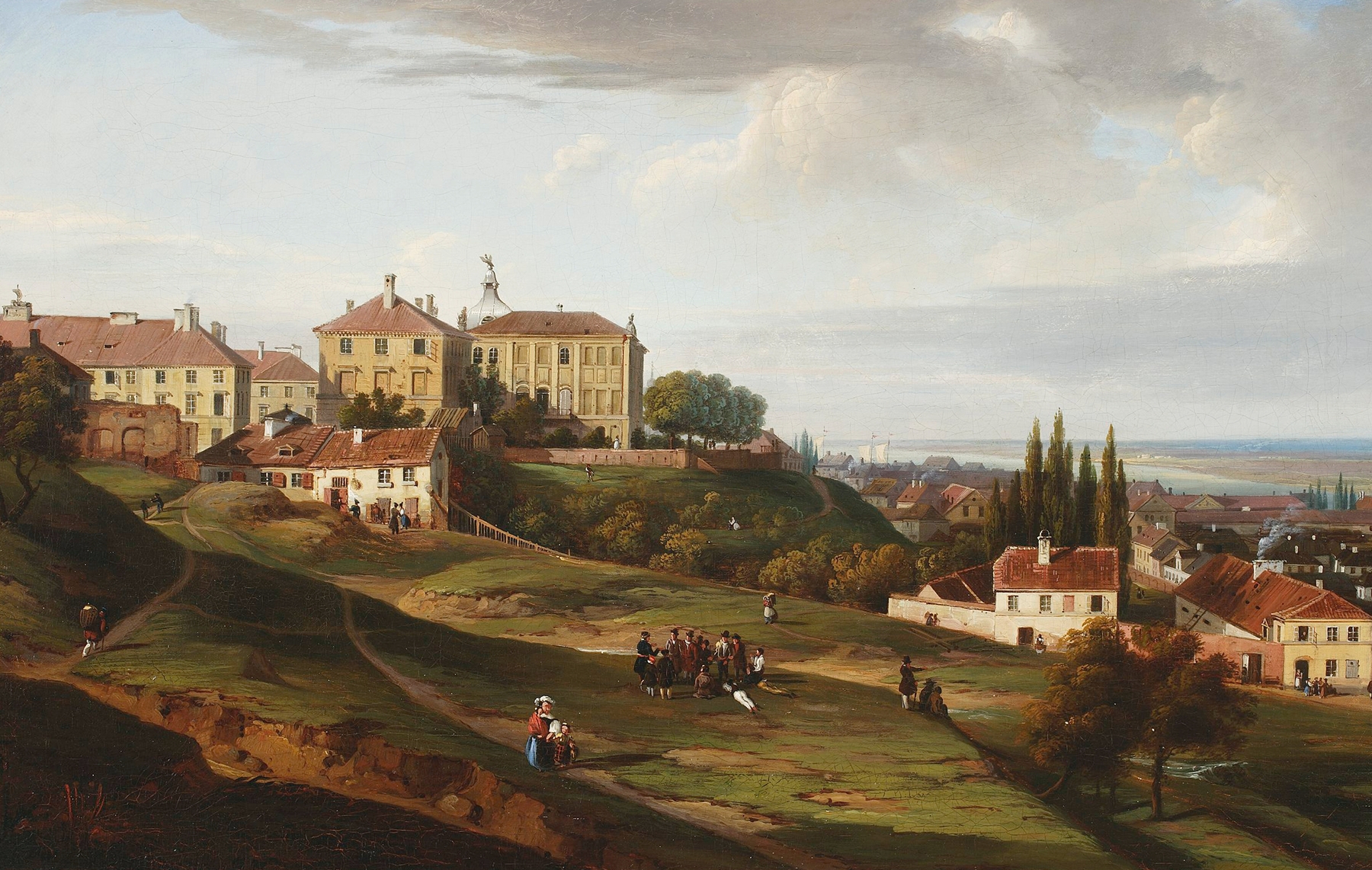
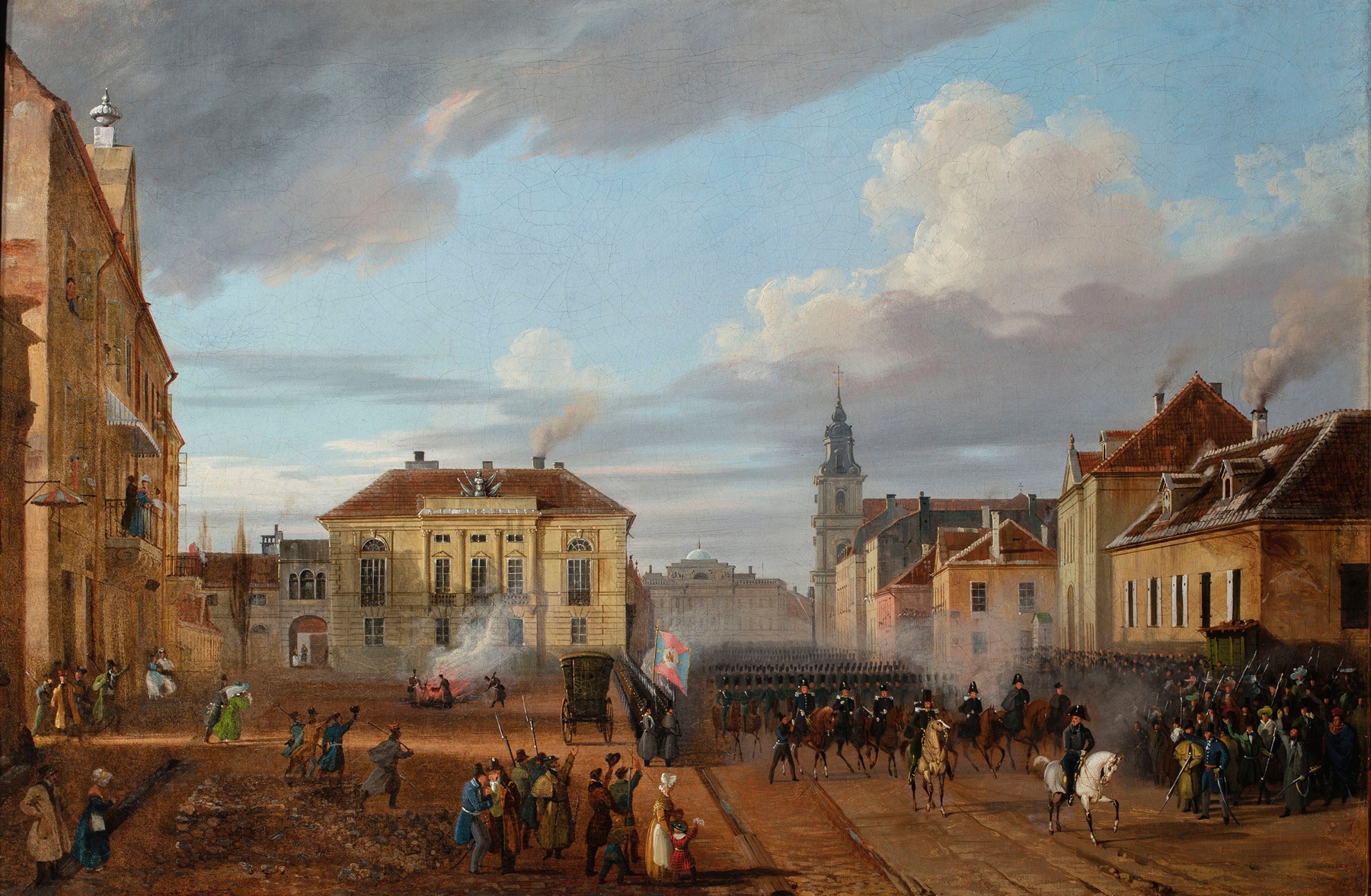
“Every brushstroke is a heartbeat remembered.” In Town Hall in Vilnius, the delicate interplay between architecture and nature evokes a sense of balance that resonates deeply within the viewer. Look to the center of the canvas, where the grand façade of the town hall rises majestically against a bright, cloud-streaked sky. The artist employs a warm palette, with soft yellows and gentle browns illuminating the building's details, while cool blues and greens in the surrounding landscape invite tranquility. Notice how the light dances gracefully on the structure’s surfaces, highlighting its neoclassical features, and drawing your eye to the steeple that reaches for the heavens.
Beneath the picturesque scene lies a subtle tension between order and chaos, as the symmetry of the town hall contrasts with the wildness of the trees that frame it. The bustling energy of townspeople subtly implied in their lively movements suggests a narrative of daily life amid a backdrop of stable architecture. This harmony between human activity and the steadfast presence of the building speaks to the resilience of community, while the swirling clouds above hint at the unpredictability of nature, reminding us of life’s perpetual balance.
In 1846, Zaleski was immersed in a vibrant art scene in Poland, a period marked by national struggles and burgeoning romanticism. Living in the aftermath of partition and political upheaval, he sought to capture the essence of his homeland and celebrate its cultural identity through his work. This painting, infused with hope and historical significance, reflects Zaleski’s desire to convey the spirit of Vilnius, a city caught between its rich past and uncertain future.