Istanbul; The Golden Horn in the moonlight — History & Analysis
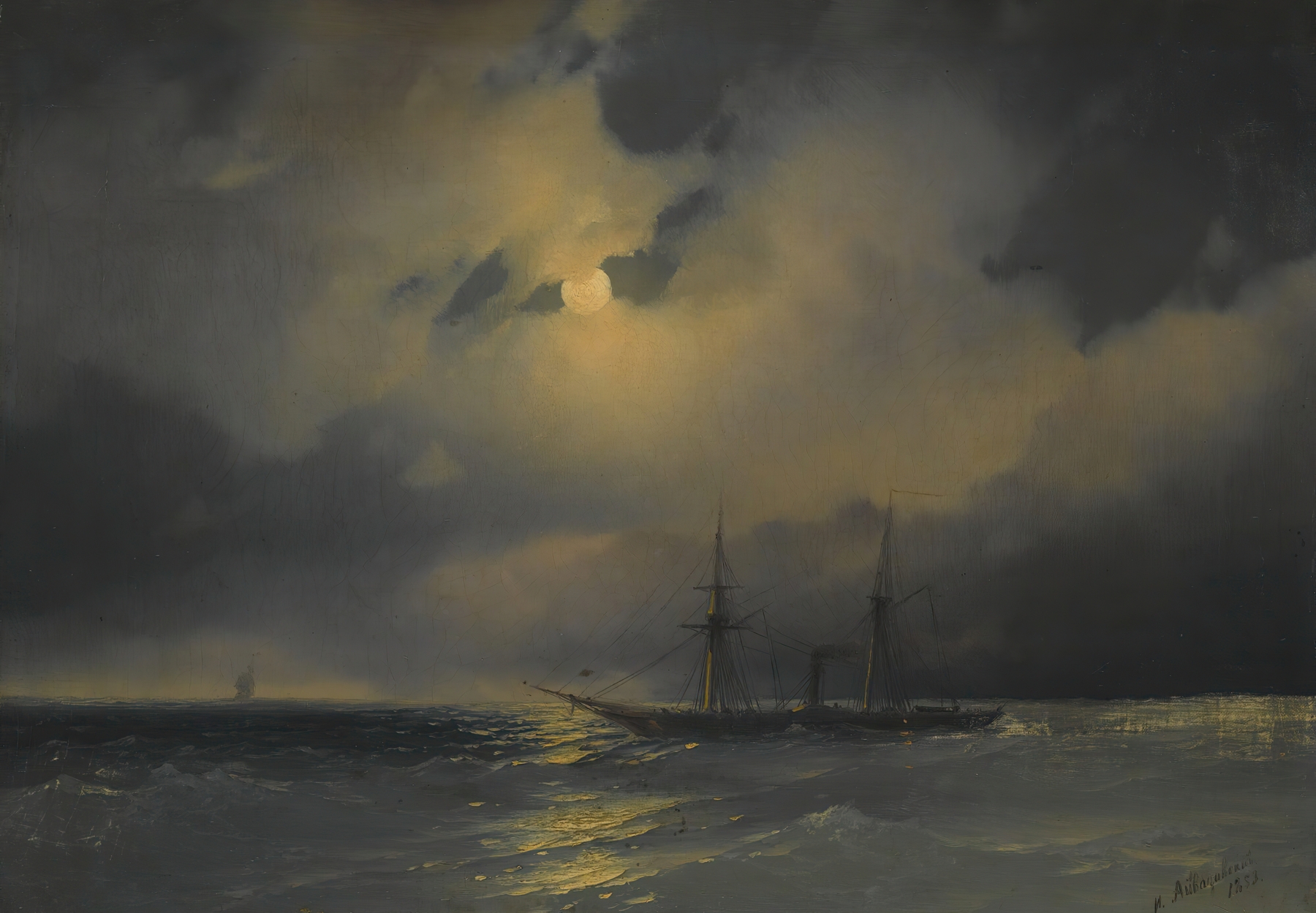
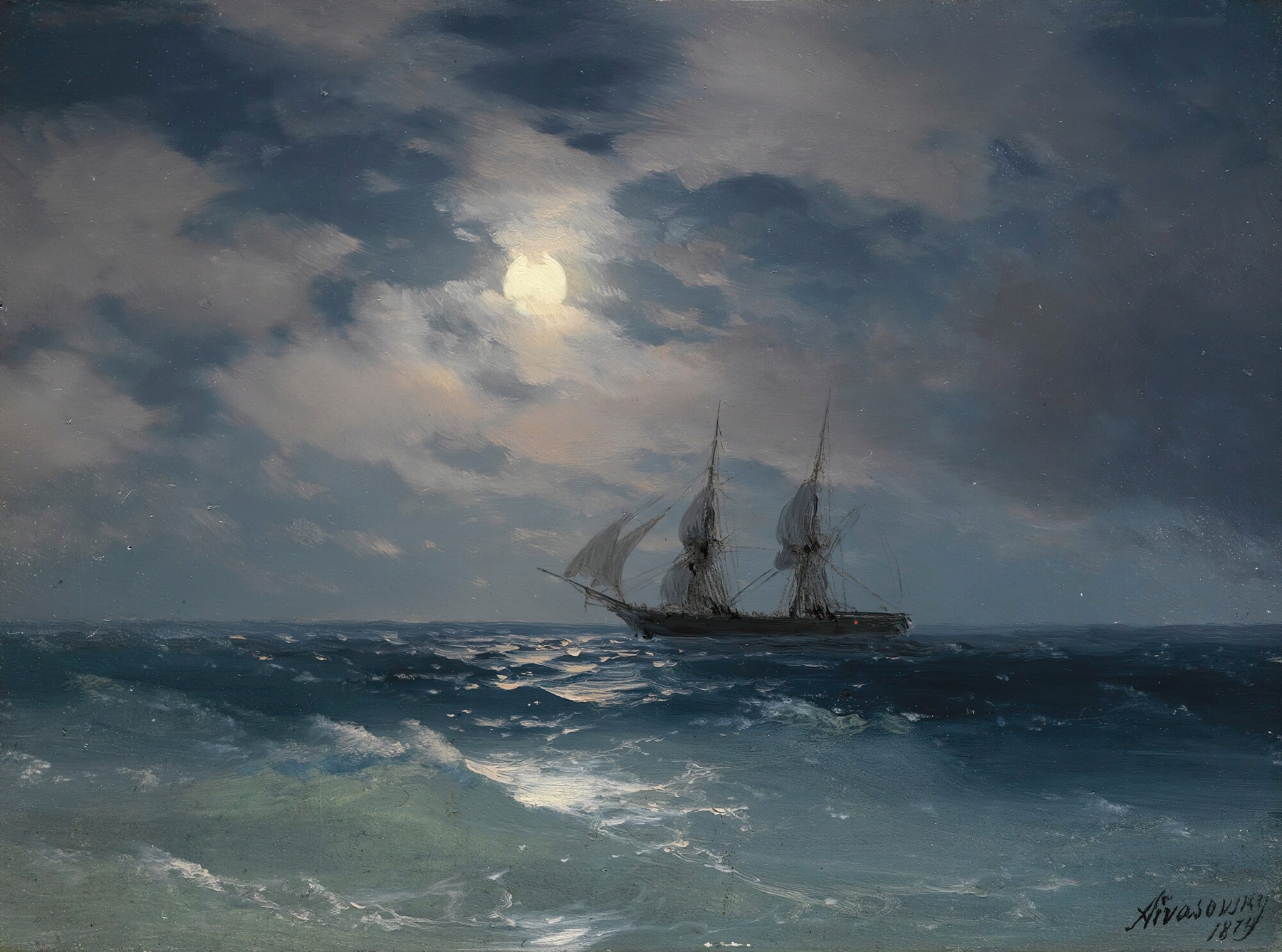
Could beauty survive in a century of chaos? In Istanbul; The Golden Horn in the Moonlight, the answer sings through the shimmering waters and moonlit skies. Here, destiny intertwines with serenity, creating a moment where the tumult of life appears far away, held at bay by nature’s embrace. Look closely at the horizon where the moon hangs low, casting a silvery glow across the Golden Horn. The soft ripples of the water reflect this celestial light, creating a path of luminescence that draws the eye towards the distant silhouettes of Istanbul’s skyline.
Notice how the artist’s brushstrokes fluidly capture both the tranquility of night and the whispers of an unseen wind, blending deep blues and luminous whites. The play of light and shadow invites contemplation, allowing the viewer to dwell within this moment of quietude. Yet beneath the surface lies a profound contrast. The stillness of the water juxtaposes the bustling life of the city, hinting at the stories that continue to unfold beyond the canvas. The moon, a symbol of constant change, offers solace amid uncertainty, reminding us of the transient nature of beauty.
In this exquisite balance, the painting raises questions about the fate of a city steeped in history, caught between its glorious past and an unpredictable future. In 1868, Aivazovsky crafted this masterpiece during a time of great upheaval across Europe. Living in Russia, he was deeply influenced by Romanticism's reverence for nature and emotion, and the piece reflects his fascination with the natural world. The era was marked by political unrest and growing industrialization, yet through this work, the artist captures the enduring allure of Istanbul, a city that stands as a testament to resilience, inviting viewers to find solace in its beauty.