The Ninth Wave — History & Analysis
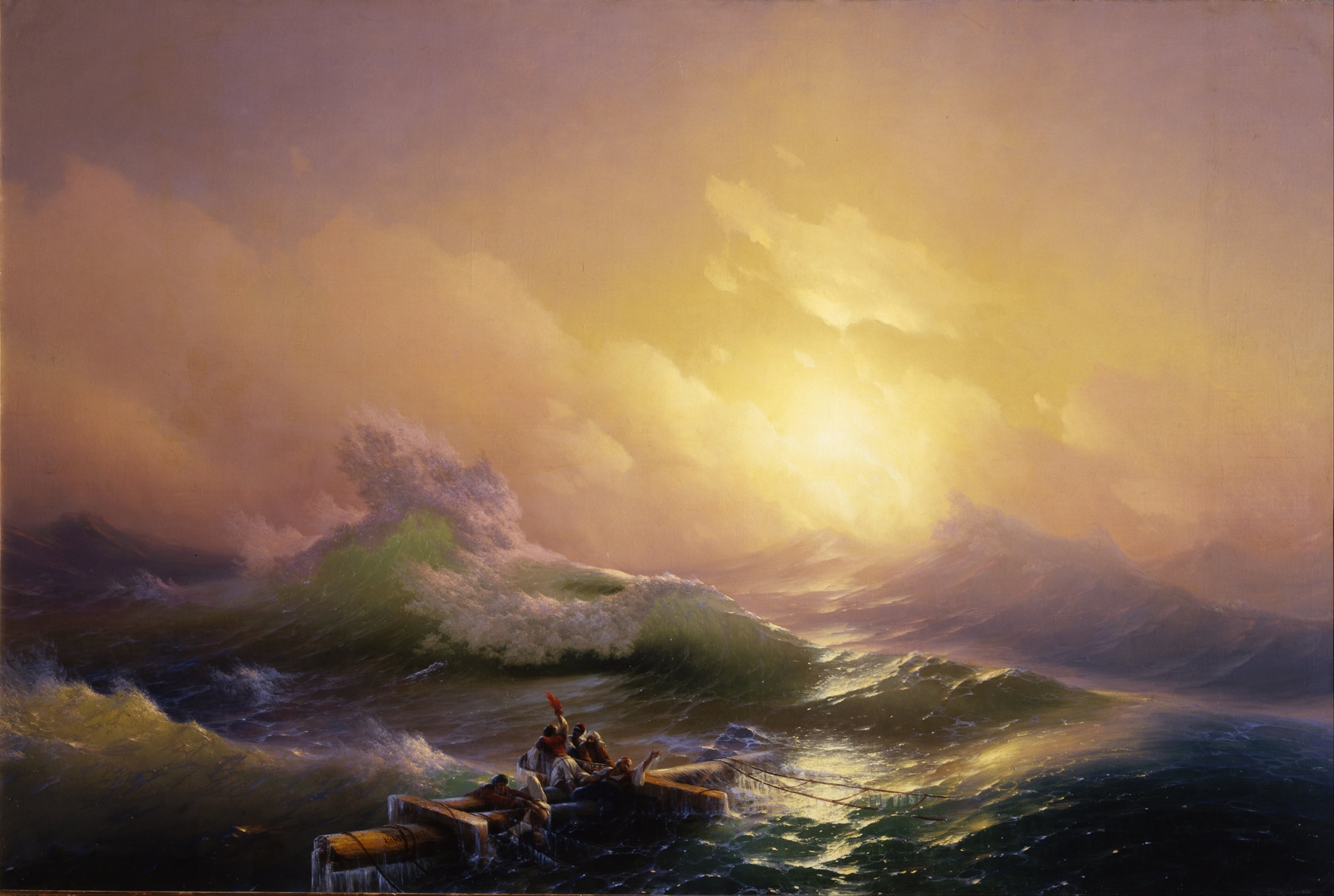
“To paint is to remember what time wants us to forget.” In the tumult of 1850, as waves of revolution surged across Europe, artists like Ivan Konstantinovich Aivazovsky captured not just landscapes but the very essence of human struggle against overwhelming forces. Look closely at the swirling waves that dominate the canvas; their relentless energy draws the eye with breathtaking realism. The bright, almost ethereal light breaking through the tumultuous clouds illuminates the scene, casting a surreal glow on the churning water below. Notice how the delicate strokes of white paint mirror the cresting waves, imparting a sense of movement and urgency, while the darker hues of blue and green anchor the composition, evoking both beauty and danger.
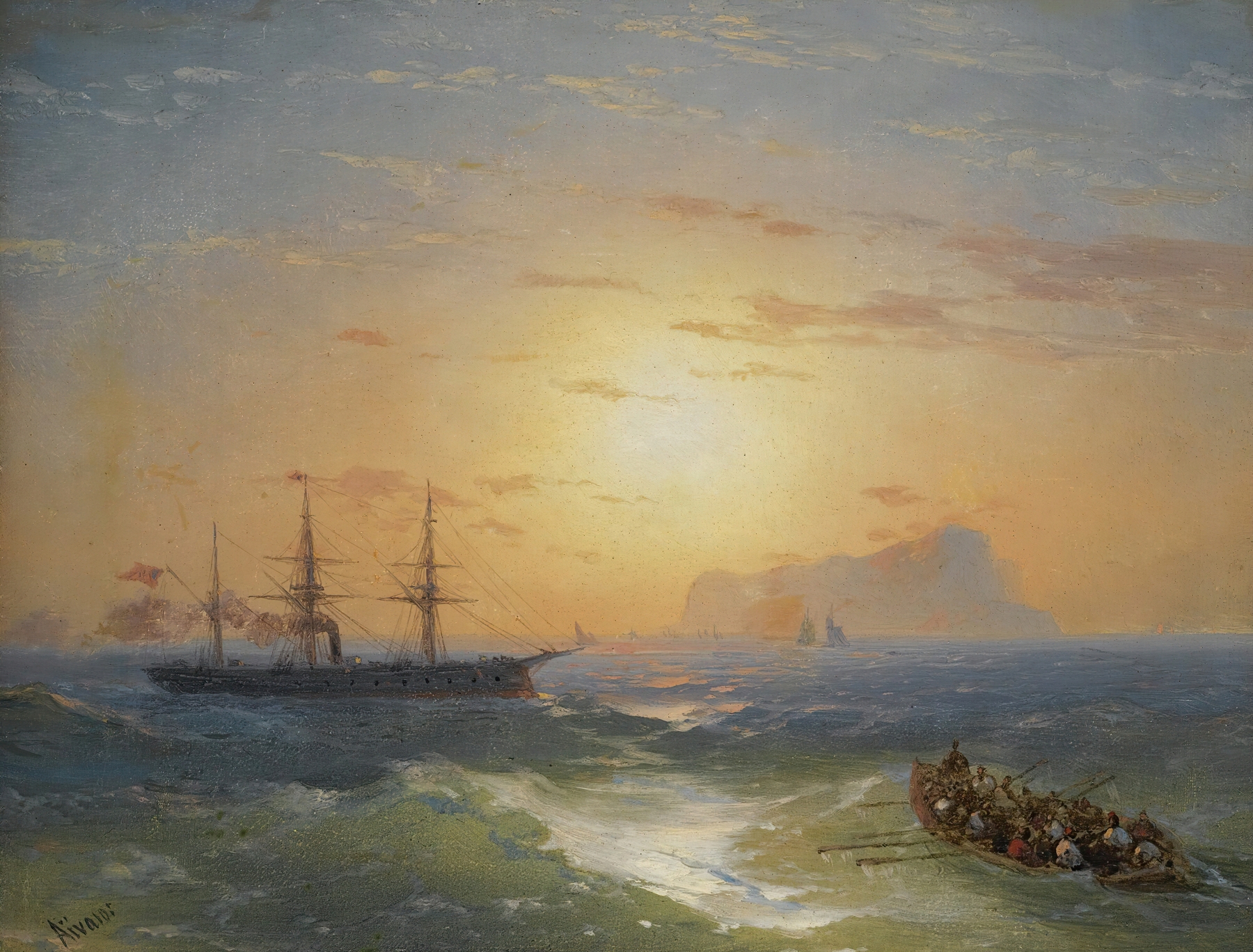
In this painting, the contrast between the small figures clinging to their fragile boat and the vast, merciless sea speaks volumes about humanity's resilience. The towering waves symbolize not only nature's fury but the societal upheavals of the time—each crest a revolutionary cry, each trough a moment of despair. The light breaking through the clouds offers a glimmer of hope, suggesting that even in the darkest moments, there remains a possibility of salvation.
Aivazovsky painted The Ninth Wave in 1850 while residing in the city of Feodosia, Crimea. This period in his life was marked by creative flourishing and a growing interest in capturing the sublime power of the sea. Amidst the backdrop of political upheaval in Europe, he explored themes of struggle and salvation, solidifying his reputation as a master of marine art, where nature mirrored the tumult of human experience.