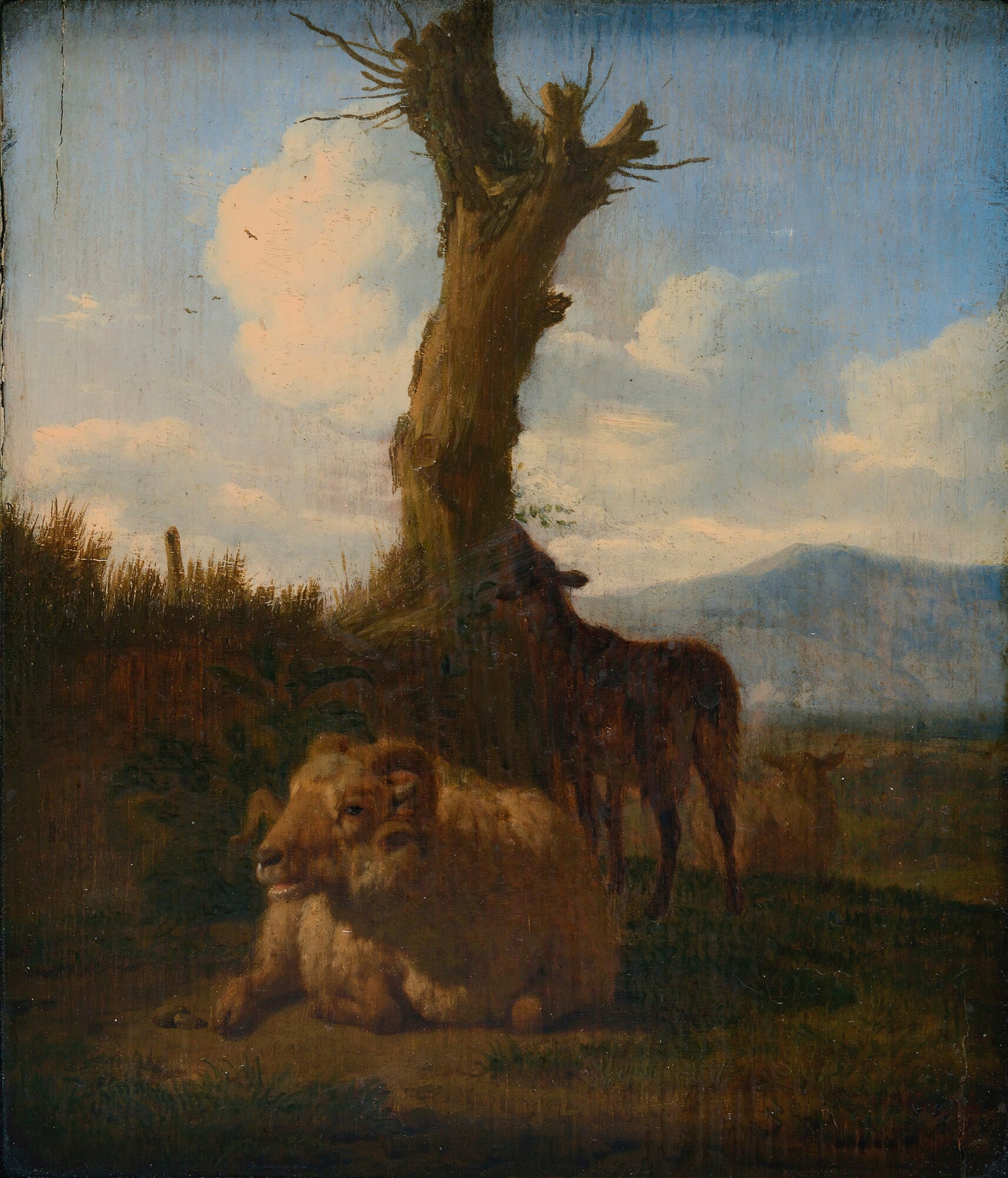
Italianate landscape with a ram, other sheep and a dead tree — History & Analysis
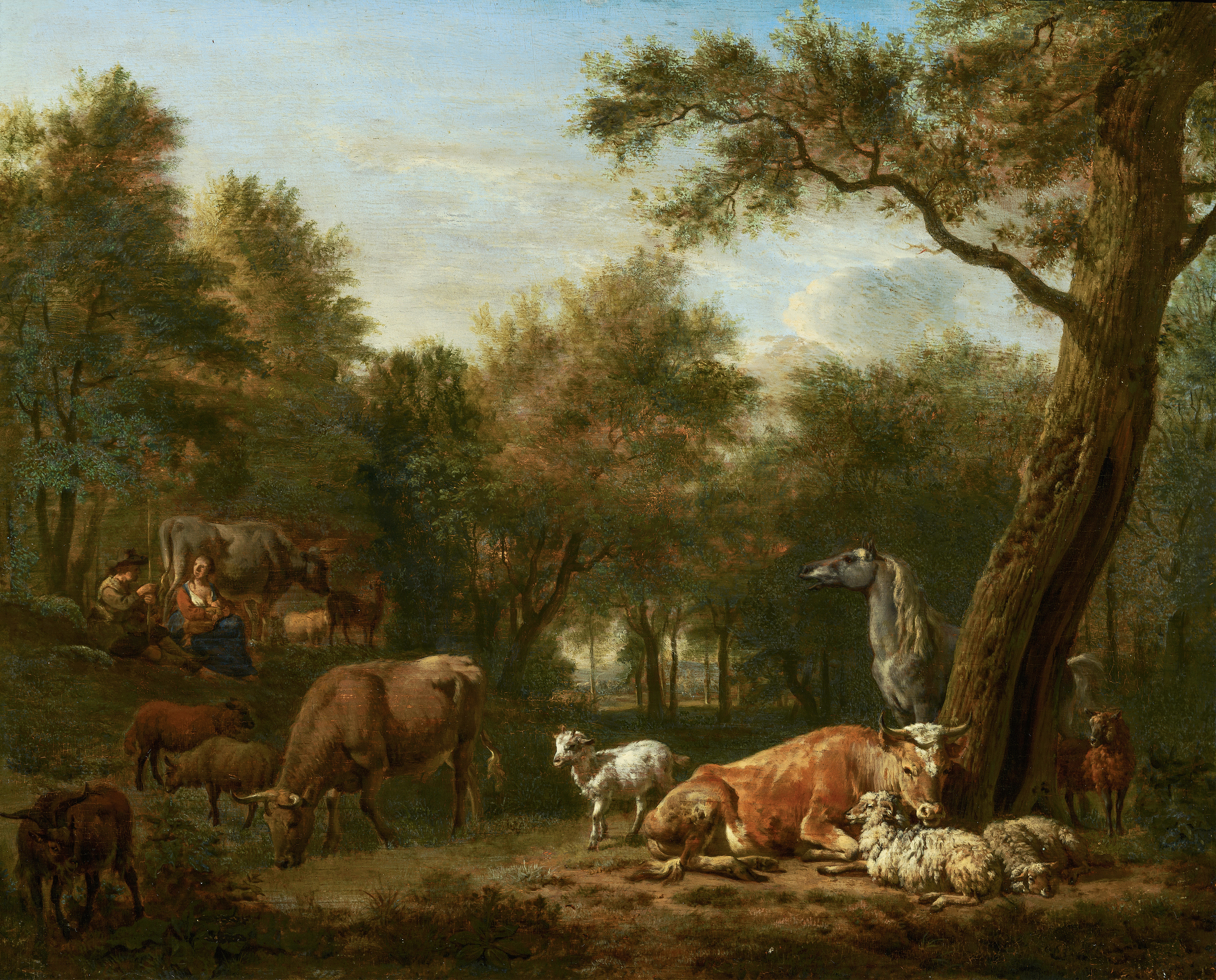
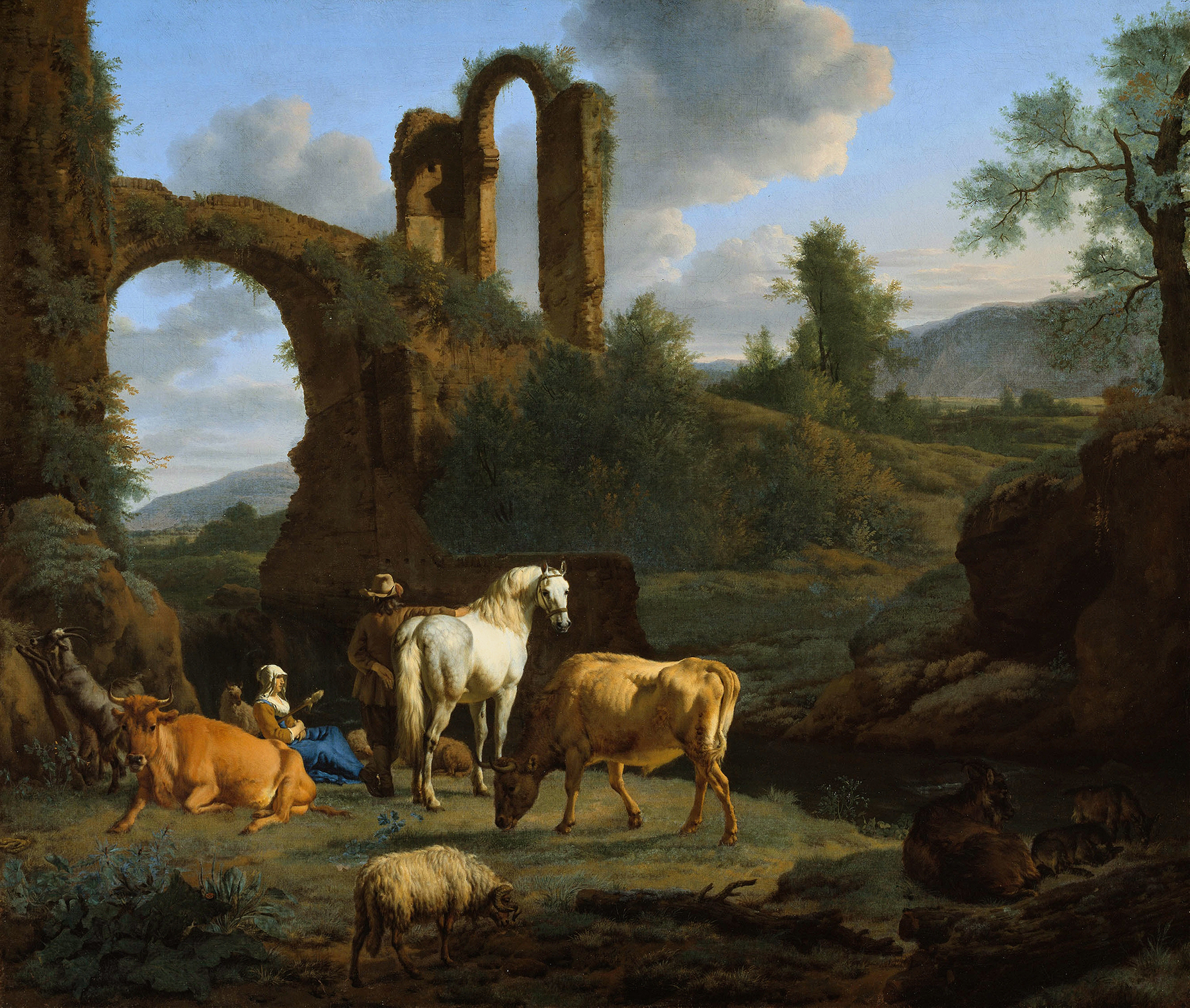
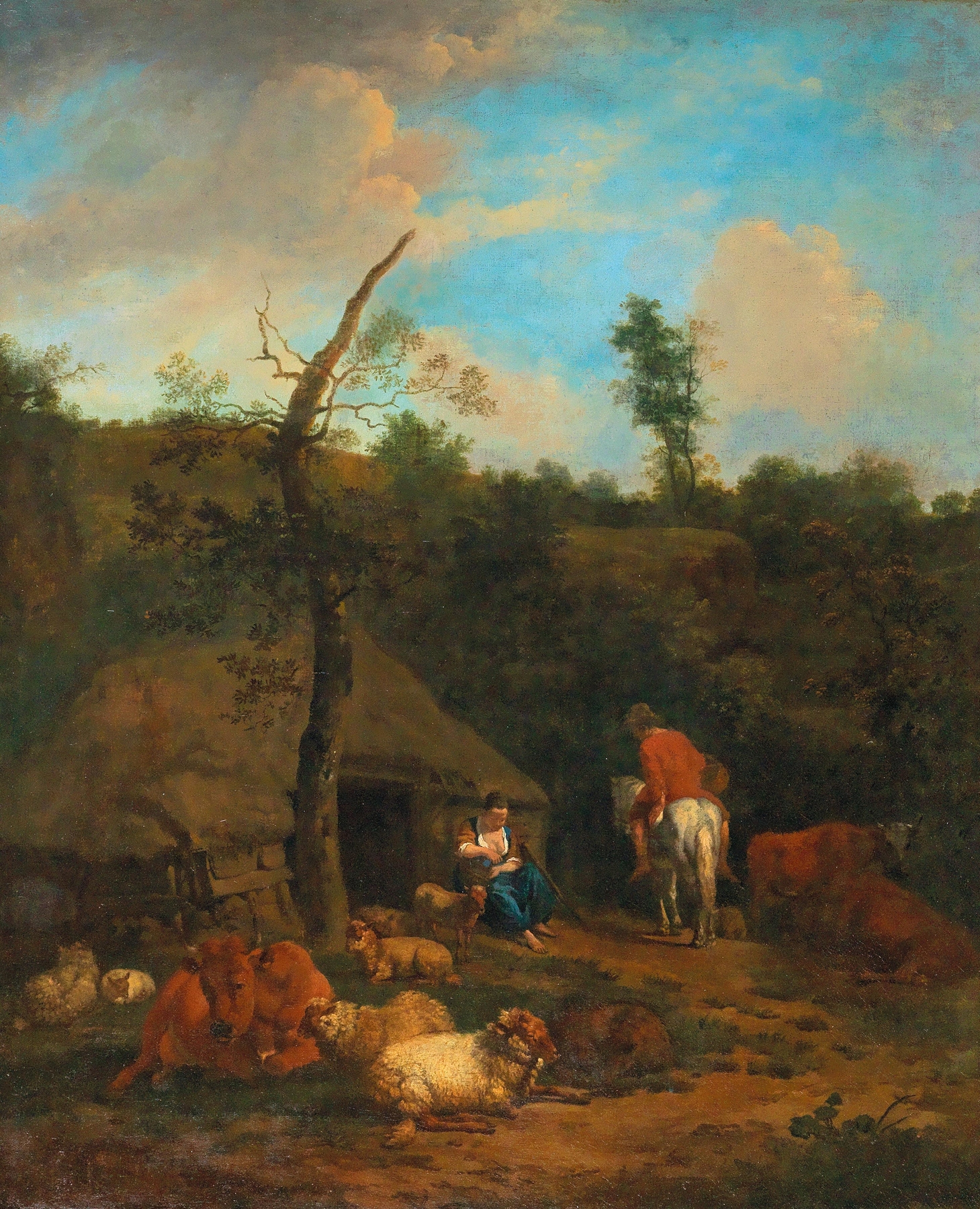
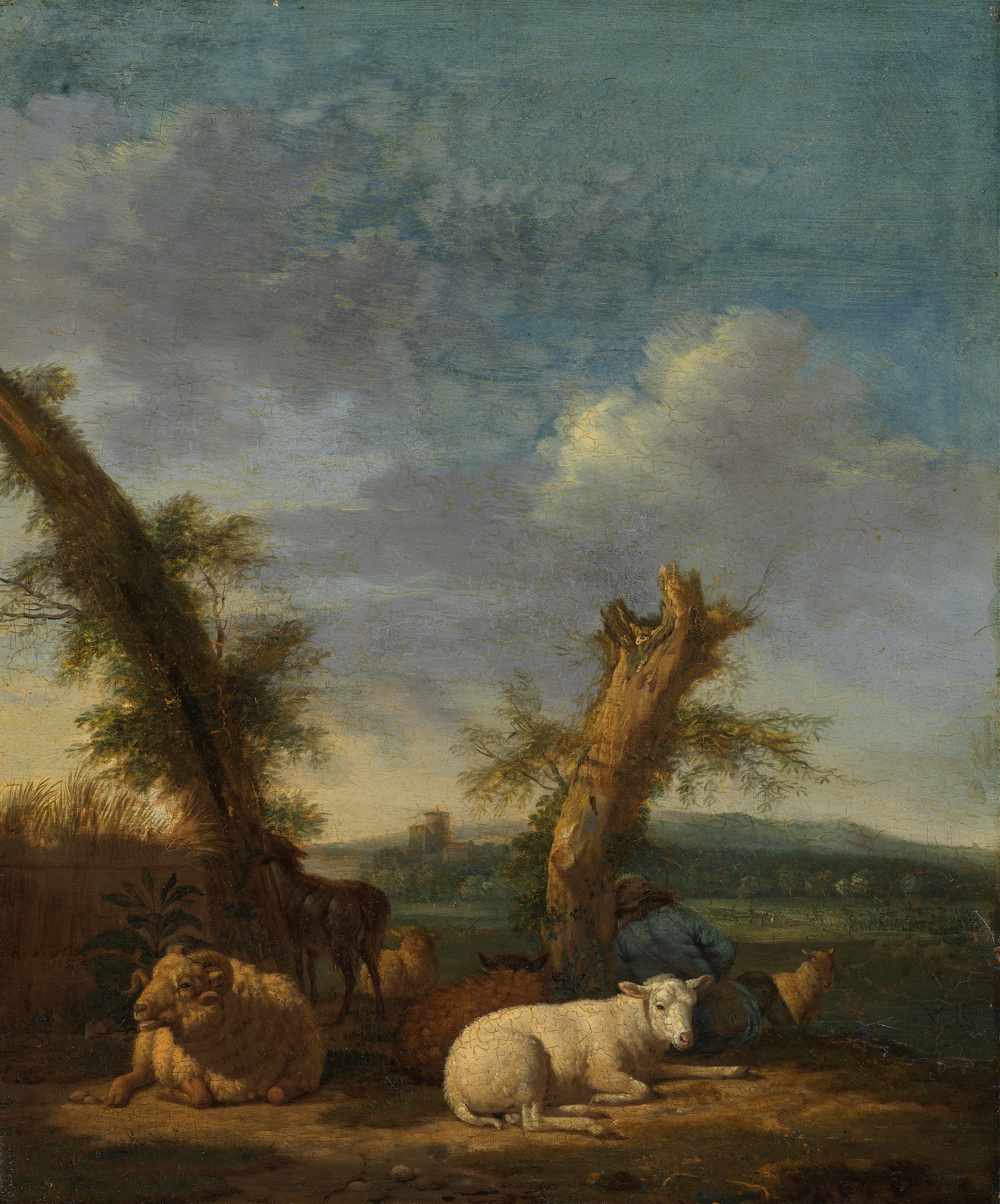
Could a single brushstroke hold eternity? In the quiet embrace of Italianate landscape with a ram, other sheep and a dead tree, the dreamlike essence of nature rests, inviting contemplation amidst its pastoral beauty. Look to the right at the solitary ram, its proud posture commanding attention as the viewer’s eye dances across the canvas. The soft hues of green and ochre flow seamlessly into a sun-drenched horizon, while the delicate strokes create a textured landscape that breathes with life.
Notice how the light falls upon the sheep, illuminating their woolly forms against the more subdued shadows of the dead tree, stark and skeletal, yet somehow harmonizing with the gentle curve of the hills. The juxtaposition of vitality and decay runs deep within this work, where the ram's robust figure stands in contrast to the lifeless tree, echoing themes of life’s transience. Each sheep becomes a symbol of serene existence, their tranquil demeanor inviting a sense of peace, while the tree serves as a poignant reminder of inevitable endings.
This duality creates an emotional tension, encapsulating the fleeting nature of dreams and the enduring quality of memory, captured poignantly in the folds of the canvas. Adriaen van de Velde painted this piece during the height of the Dutch Golden Age, when landscapes flourished in popularity, reflecting both a reverence for nature and the artist’s skillful hand. While the exact date remains uncertain, it is believed to be from the 17th century, a time marked by profound cultural and artistic exploration in the Netherlands, where van de Velde’s landscapes blossomed as a celebration of both the familiar and the sublime.