Jaipuuru no Ajumeru mon (The Ajmer Gate at Jaipur) — History & Analysis
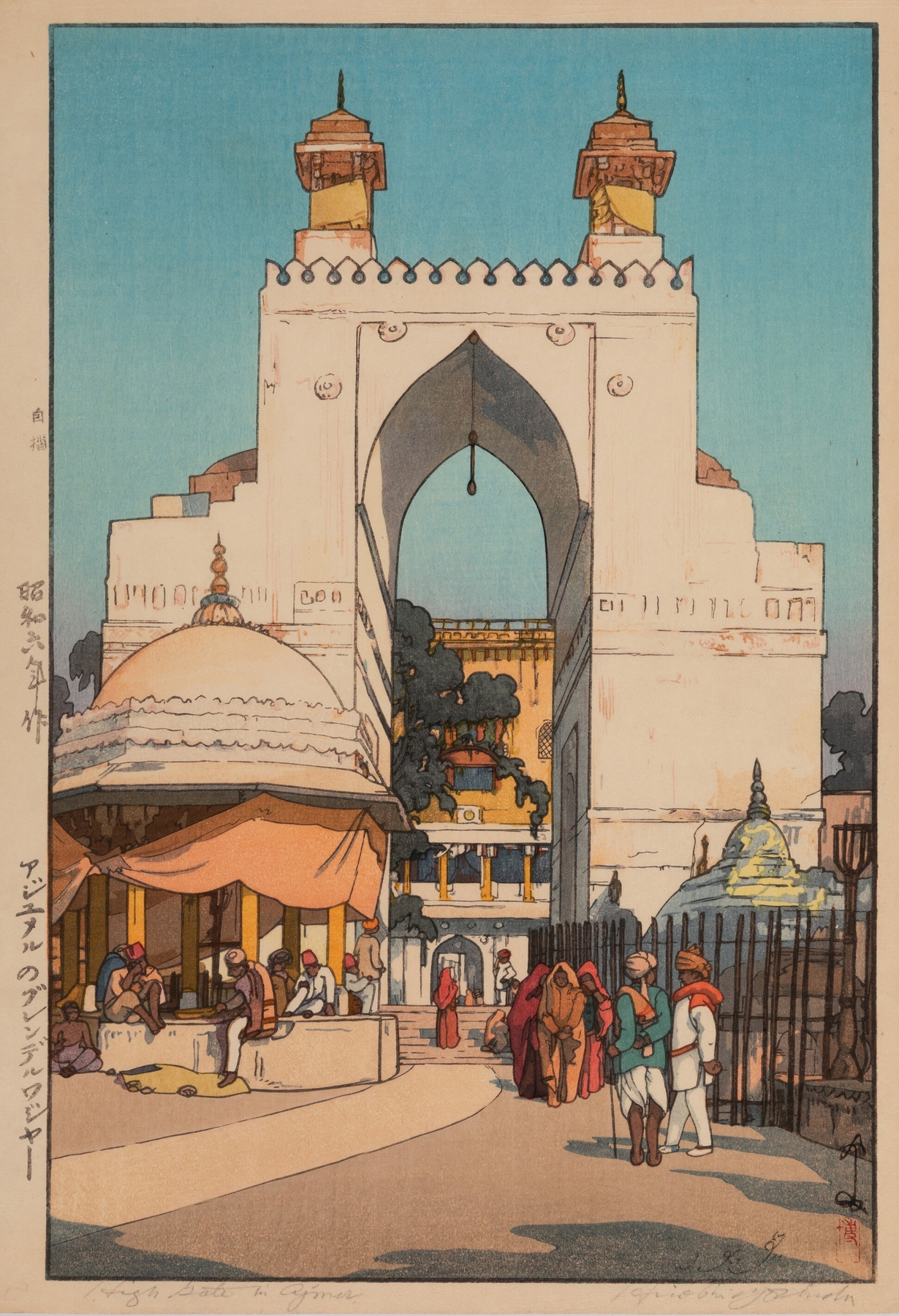
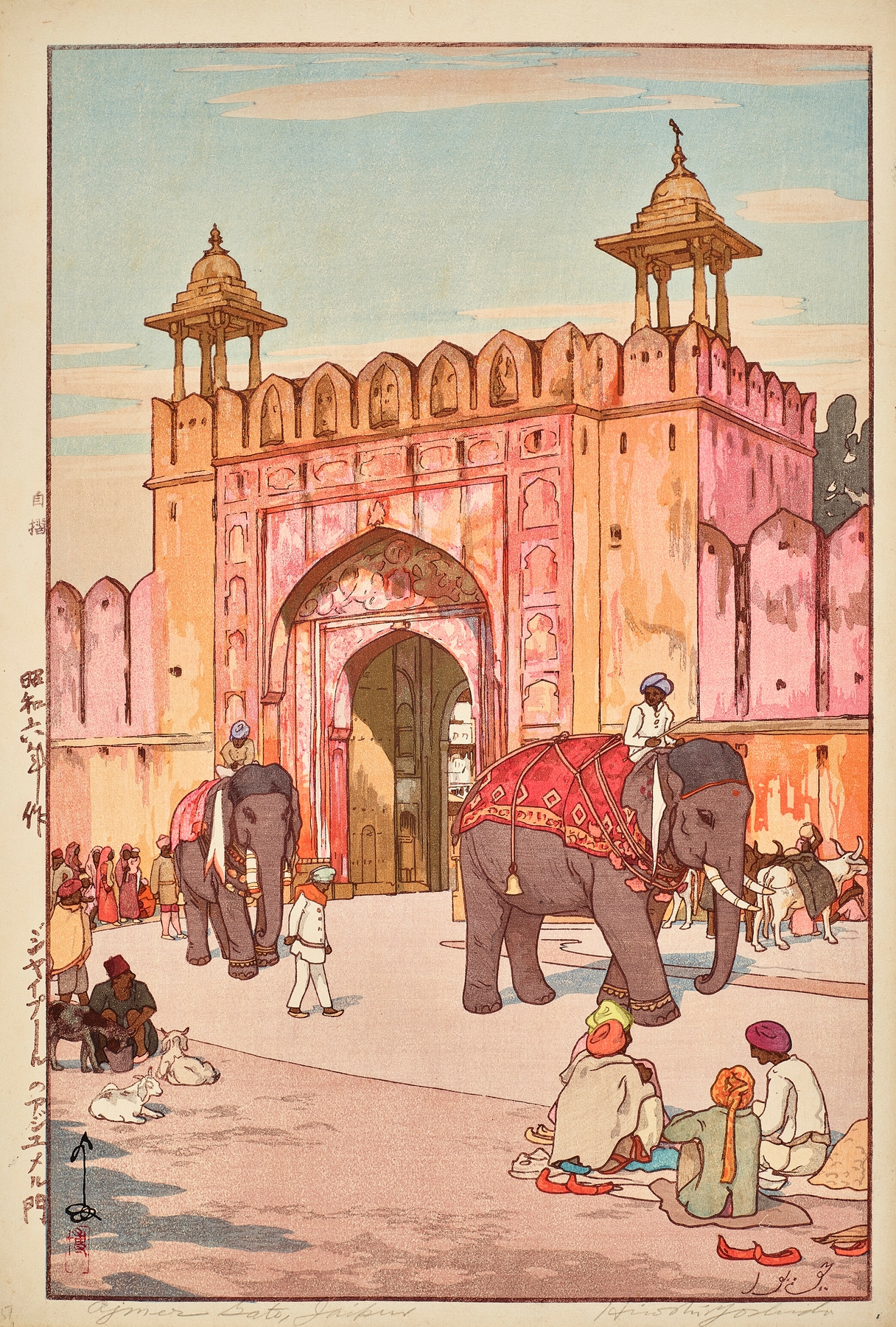
What if silence could speak through light? In The Ajmer Gate at Jaipur, the artist captures an eloquent stillness that invites contemplation of the void. The muted tones and soft hues create an atmosphere where the viewer feels the weight of unspoken history and cultural reverence. Look to the center, where the majestic gate stands tall, framed by the delicate interplay of light and shadow.
Notice how the sun bathes the stone in a warm glow, emphasizing its intricate carvings and weathered textures. Each brushstroke reflects a deep understanding of architectural form, while the surrounding landscape fades softly, drawing attention to the monumental structure at its heart. This work resonates with themes of impermanence and the passage of time. The way the light illuminates the gate suggests both glory and decay, as if the architecture itself is a sentinel of memories long forgotten.
The sparse foreground invites a sense of emptiness, encouraging viewers to reflect on what lies beyond the frame — the stories unwritten, the lives intertwined with this historic site. In 1931, Yoshida Hiroshi painted this piece during a time of personal introspection and experimentation in his career. As a major figure in the Shin-hanga movement, he sought to blend traditional Japanese art with Western influences, creating a dialogue between old and new. His exploration of light and space in this painting reflects both an appreciation for his cultural heritage and a modern artistic vision amidst a rapidly changing world.