Jonge vrouw met hoed — History & Analysis
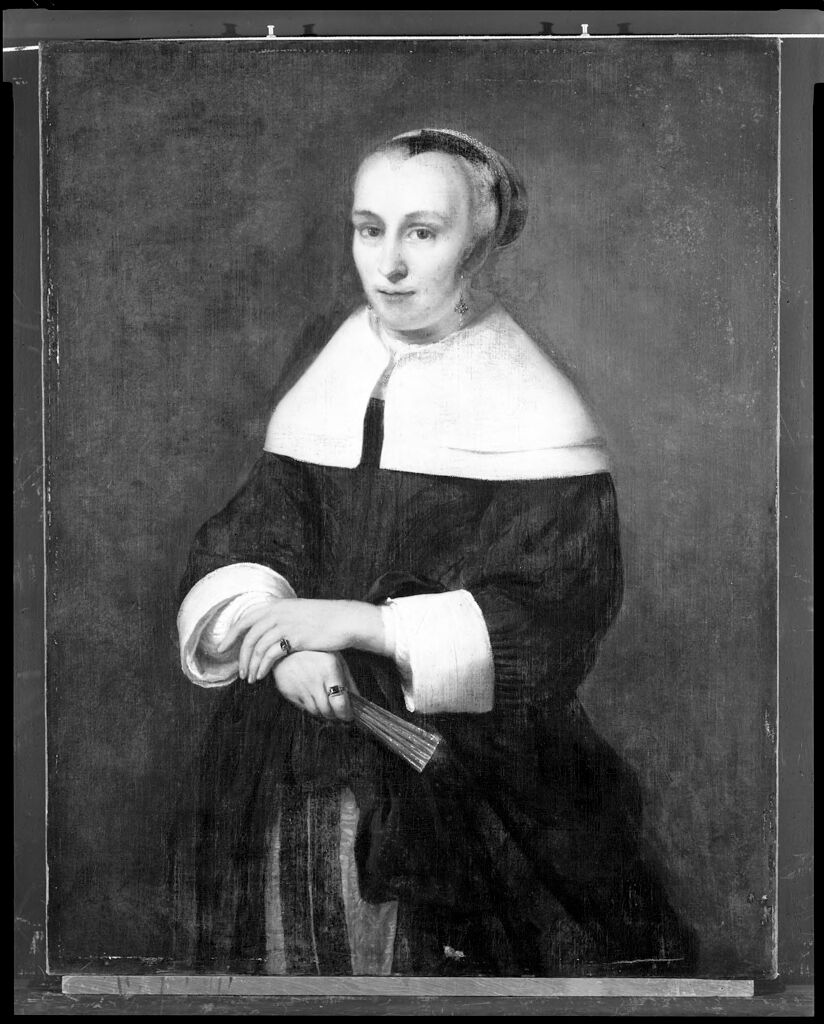
“Every silence here is a confession.” In the dim light of the canvas, shadows dance around a young woman, revealing more than mere likeness. They whisper secrets, illuminating the contrasts between presence and absence, light and dark. Look to the left at the gentle curve of her elegant hat, its brim casting a soft shadow that envelops her face. The smoothness of her skin contrasts beautifully with the texture of the fabric, while the deep, muted colors of the background enhance her prominence.
Notice how Bol’s meticulous brushwork captures the delicate interplay of light across her features, inviting you to explore the layers of her thoughts and emotions. As you delve deeper, consider the interplay of the shadows that cling to her form, suggesting a tension between her public persona and inner vulnerability. The darkness around her offers a counterpoint to her serene expression, hinting at untold stories and unexpressed feelings. Each brushstroke in the shadowed areas speaks to the complexity of human identity, embodying both the allure of the exterior and the mysteries of the interior.
Ferdinand Bol painted this portrait in 1644, during a period of artistic growth in Amsterdam, where he was influenced by the dramatic chiaroscuro techniques of his mentor, Rembrandt. This work was created at a time when portraiture was evolving, reflecting societal shifts and an increasing interest in individual identity. Bol’s dedication to capturing the soul beneath the surface marked a significant moment in his career, establishing him as a noteworthy figure in the Dutch Golden Age.