Moses Descending from Mount Sinai with the Ten Commandments — History & Analysis
“Art reveals the soul when the world turns away.” In the quiet spaces of our dreams, we encounter the truths that often elude our waking lives. This moment of revelation, crystallized in a remarkable artwork, invites us to contemplate the weight of conviction and the fragility of human resolve. Look to the center of the canvas, where Moses stands tall, bearing the etched tablets of the Ten Commandments. The dramatic play of light accentuates the contours of his face, illuminating the deep furrows of wisdom and worry intertwined.
Notice how his outstretched arm, commanding yet vulnerable, suggests both authority and a plea for grace. The rich, earthy palette contrasts with the ethereal brightness of the divine message, creating a visual dialogue between the sacred and the earthly. As you delve deeper, consider the somber expressions of the figures surrounding him, caught in a moment of both reverence and trepidation. The tension between the towering mountain behind Moses—a symbol of spiritual ascent—and the anxious crowd below suggests a chasm between divine aspiration and human frailty.
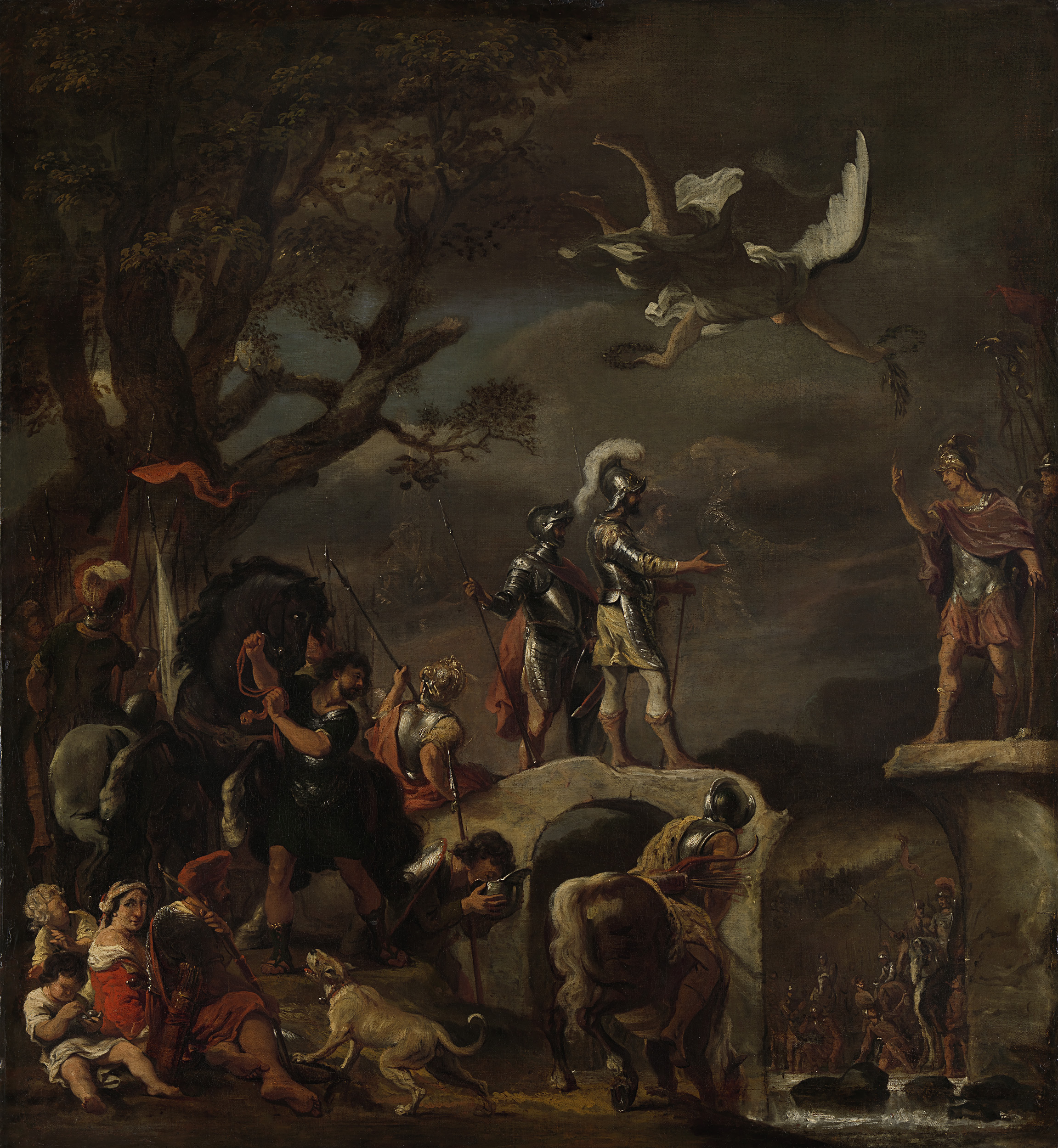
Each character’s gaze, directed towards the tablets, reflects a collective yearning for guidance, imbued with the fear of inevitable disobedience. Ferdinand Bol created this striking work around 1664, during a period of personal and professional growth. As a student of Rembrandt in Amsterdam, he was influenced by the dramatic use of light and shadow, which is evident in this painting. The piece resonates with the Baroque movement's exploration of human emotion and spirituality, reflecting both the artist's struggles and the broader societal quest for moral clarity amidst the uncertainties of the time.