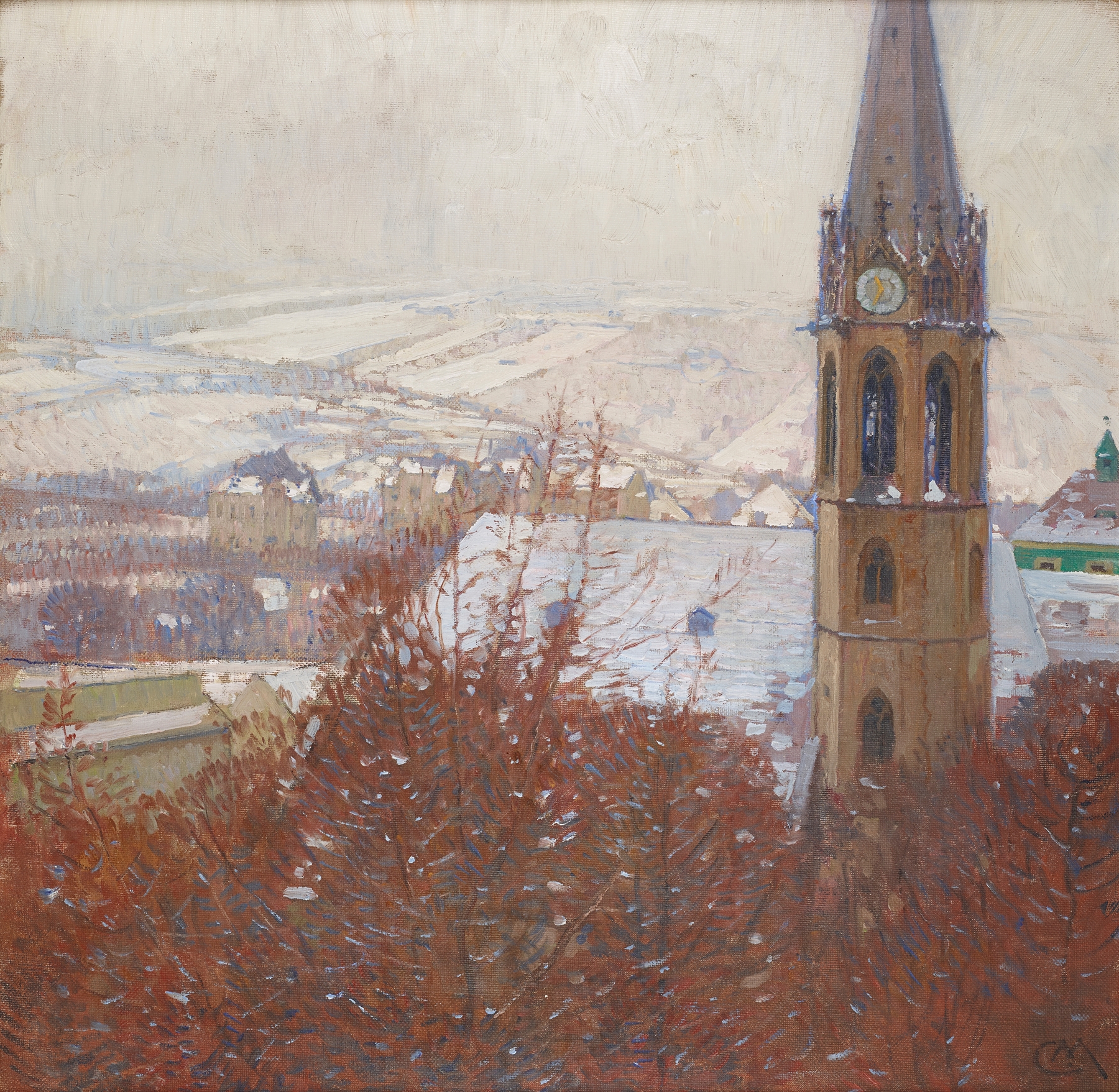
Karlskirche im Winter (Church of St. Charles in winter) — History & Analysis
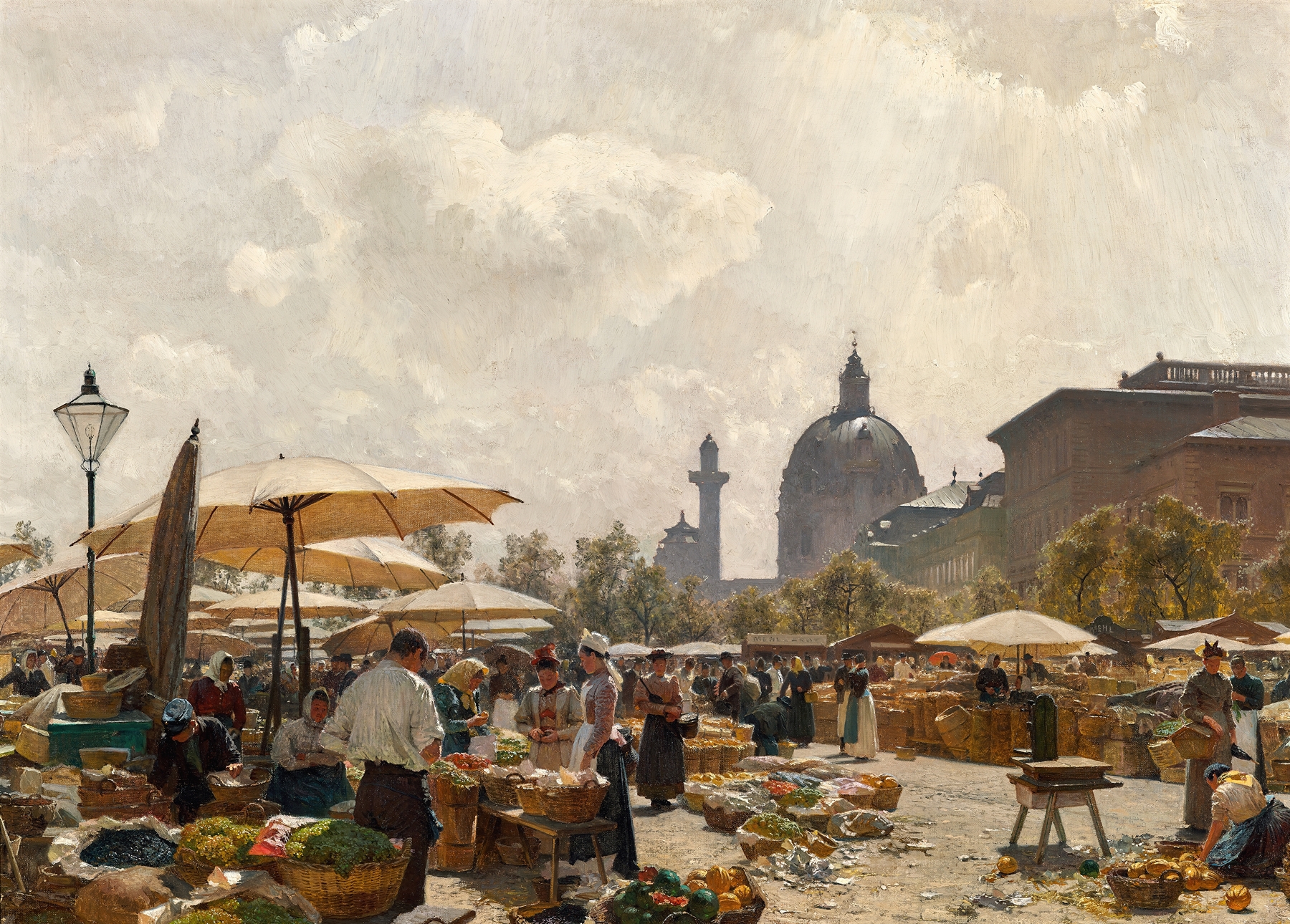
“Between color and silence, truth hides.” In the stark embrace of winter, a longing for warmth and connection permeates the air, whispering through the stillness. Focus on the soft, spectral glow of the church's dome against the icy blue sky. The delicate strokes of white and gray create an ethereal atmosphere, inviting you to explore the interplay of light and shadow. Notice how the gentle curve of the building’s architecture juxtaposes with the sharp outlines of the bare trees, emphasizing both fragility and strength.
Each brushstroke evokes a sense of solitude yet radiates a quiet beauty that captivates the viewer. Hidden within the tranquil scene are echoes of yearning—the contrast between the lively past of the church and the desolate winter landscape. The imposing structure, once vibrant with life, now stands solemnly against the cold, eliciting thoughts of nostalgia and reflection. The artist’s choice of a muted palette enhances this emotional depth, suggesting a world waiting to be awakened once again, hinting at the cycles of life and the passage of time.
Created in 1902, this work was painted during a transformative period for the artist, who was deeply influenced by the Austrian Secession movement. Moll was evolving his style, drawing on both Impressionism and the emerging modernist trends. At this time, Vienna was a crucible of artistic innovation, and the quiet power of Karlskirche im Winter reflects both personal and societal shifts, capturing a moment of introspection amidst the bustling changes of the early 20th century.