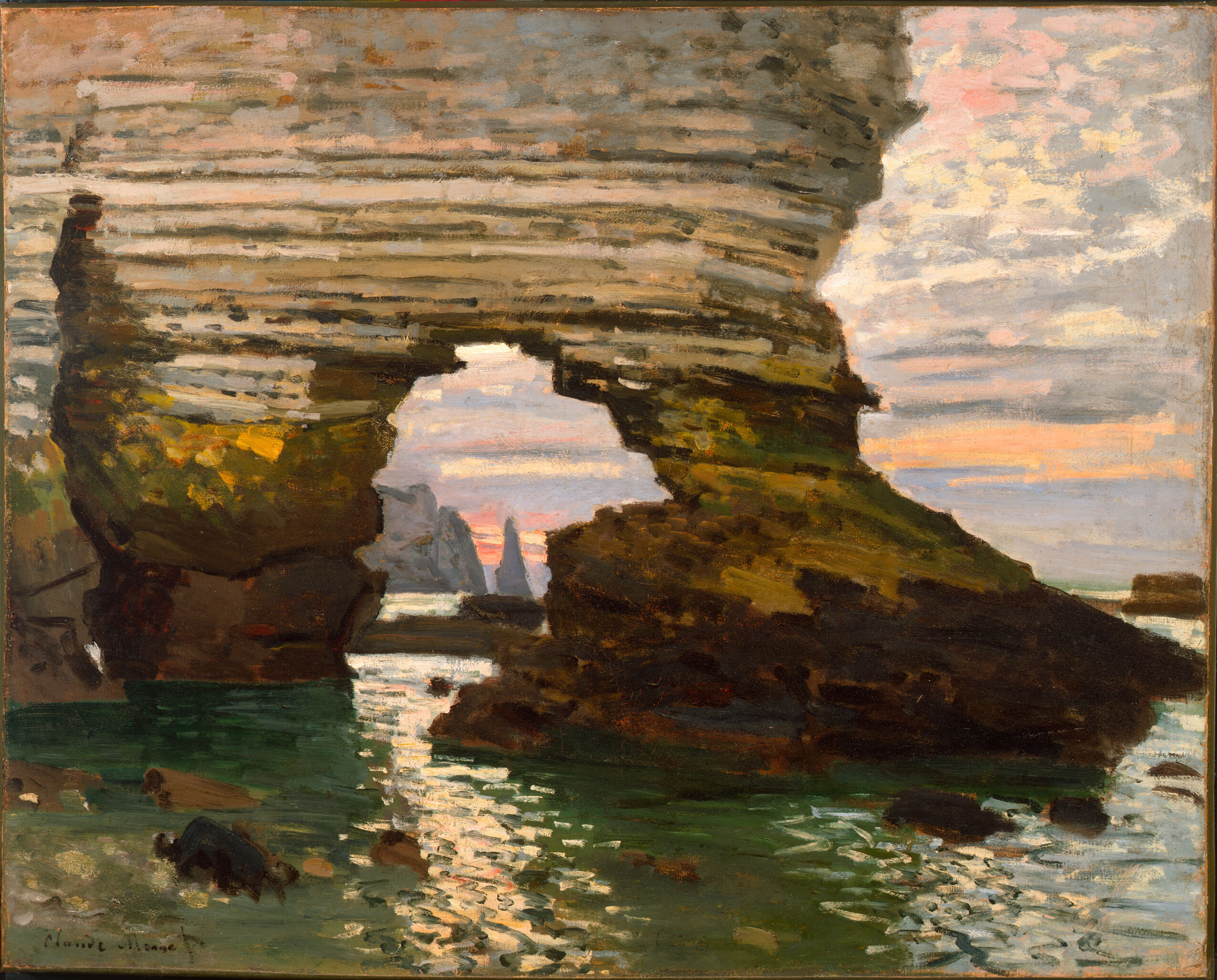
La Porte d'Amont, Étretat — History & Analysis
Can beauty exist without sorrow? In La Porte d'Amont, Étretat, the silence of nature resonates through the vibrant brushstrokes, encapsulating a moment both fleeting and eternal. The calmness of the sea juxtaposed with the grandeur of the cliffs invites contemplation, revealing the emotional landscape hidden beneath the serene facade. Look to the left at the towering chalk cliffs, their jagged edges softened by a gentle haze. Notice how the light dances upon the waves, glistening in shades of cerulean and teal, inviting you to trace the contours of the water.
The sky, an ethereal blend of blues and whites, reflects Monet’s masterful technique of capturing light; each stroke evokes a sense of movement while maintaining a stillness that feels palpable. The composition draws your eye toward the archway, a natural gateway that frames the horizon, conveying a sense of depth and infinite possibility. As you absorb the scene, consider the tension between the solidity of the cliffs and the fluidity of the sea. This duality reveals a hidden narrative—nature's permanence contrasted against the ephemeral beauty of a fleeting moment. The tranquility of the scene is underscored by an underlying melancholy, hinting at life’s transience and the quiet sorrows that linger beneath the surface.
It begs the viewer to reflect on their own experiences of beauty intertwined with loss. Monet painted La Porte d'Amont, Étretat around 1868-1869 during his stay in Normandy, a period of artistic exploration and personal transformation. At this time, he was gaining recognition among the Impressionists, a movement that sought to capture the essence of a moment rather than its precise details. The changing societal landscape, coupled with his own pursuit of artistic freedom, influenced his portrayal of nature, allowing him to blend emotion and observation with profound sensitivity.