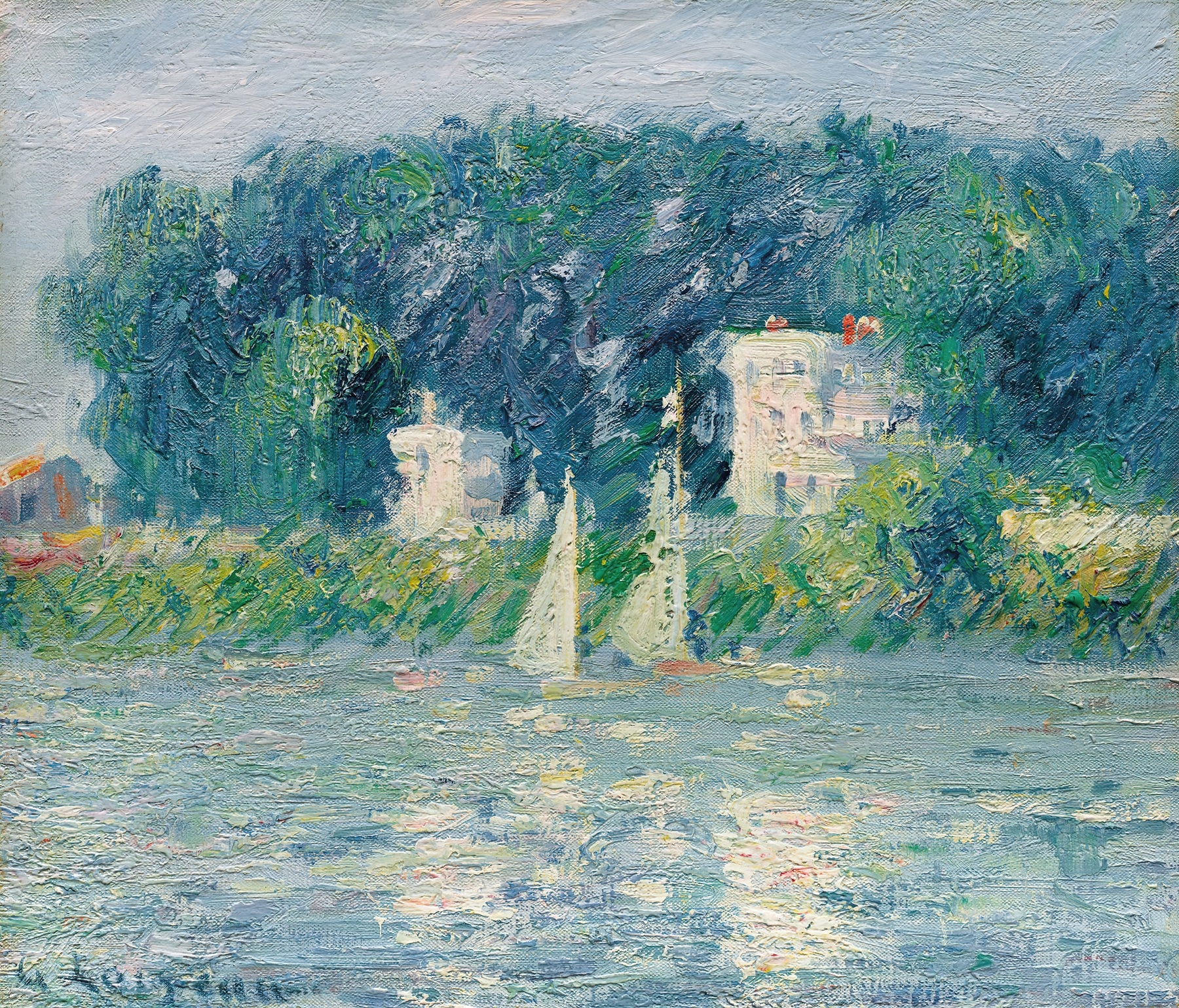
La Vallée De L’yerres — History & Analysis
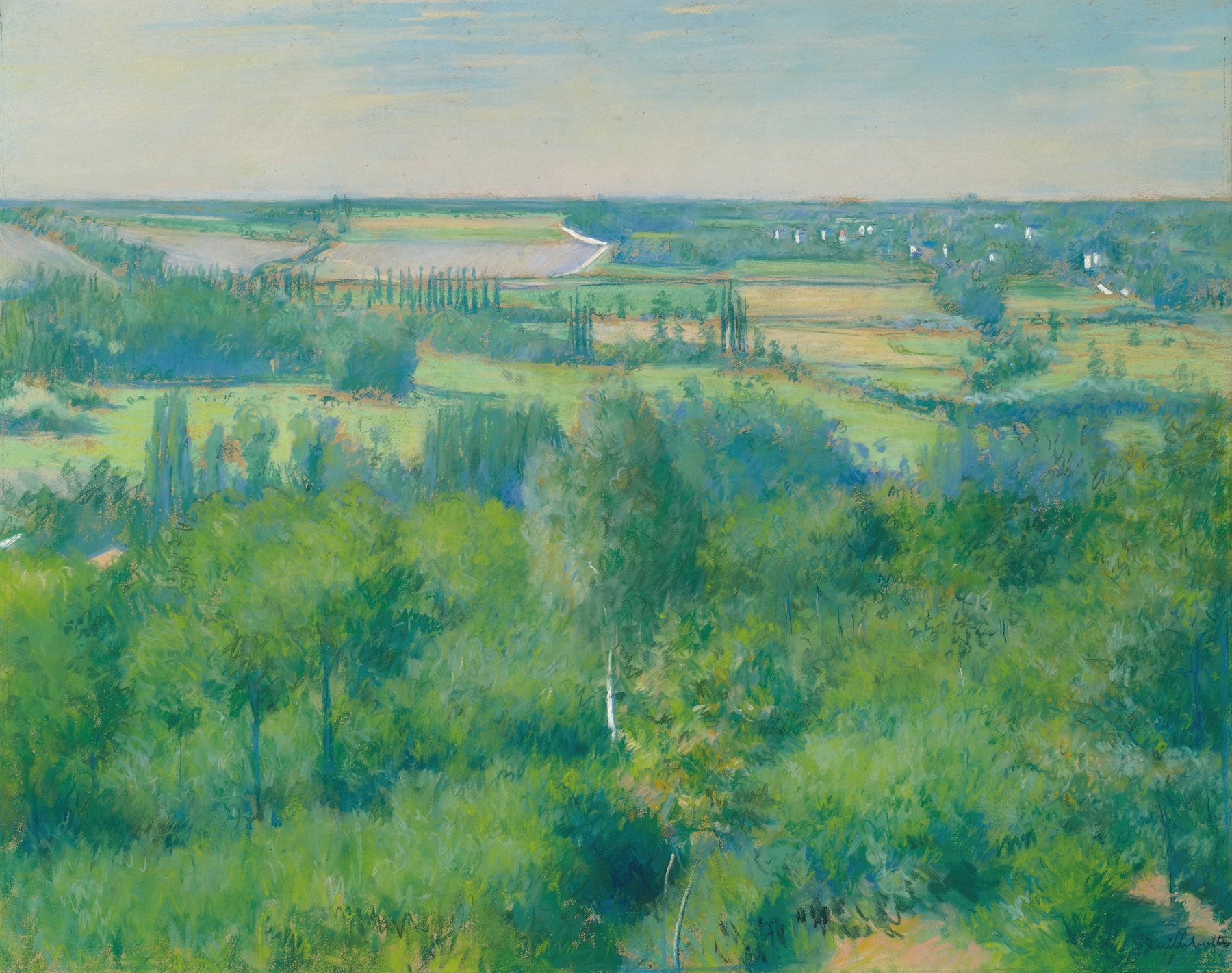
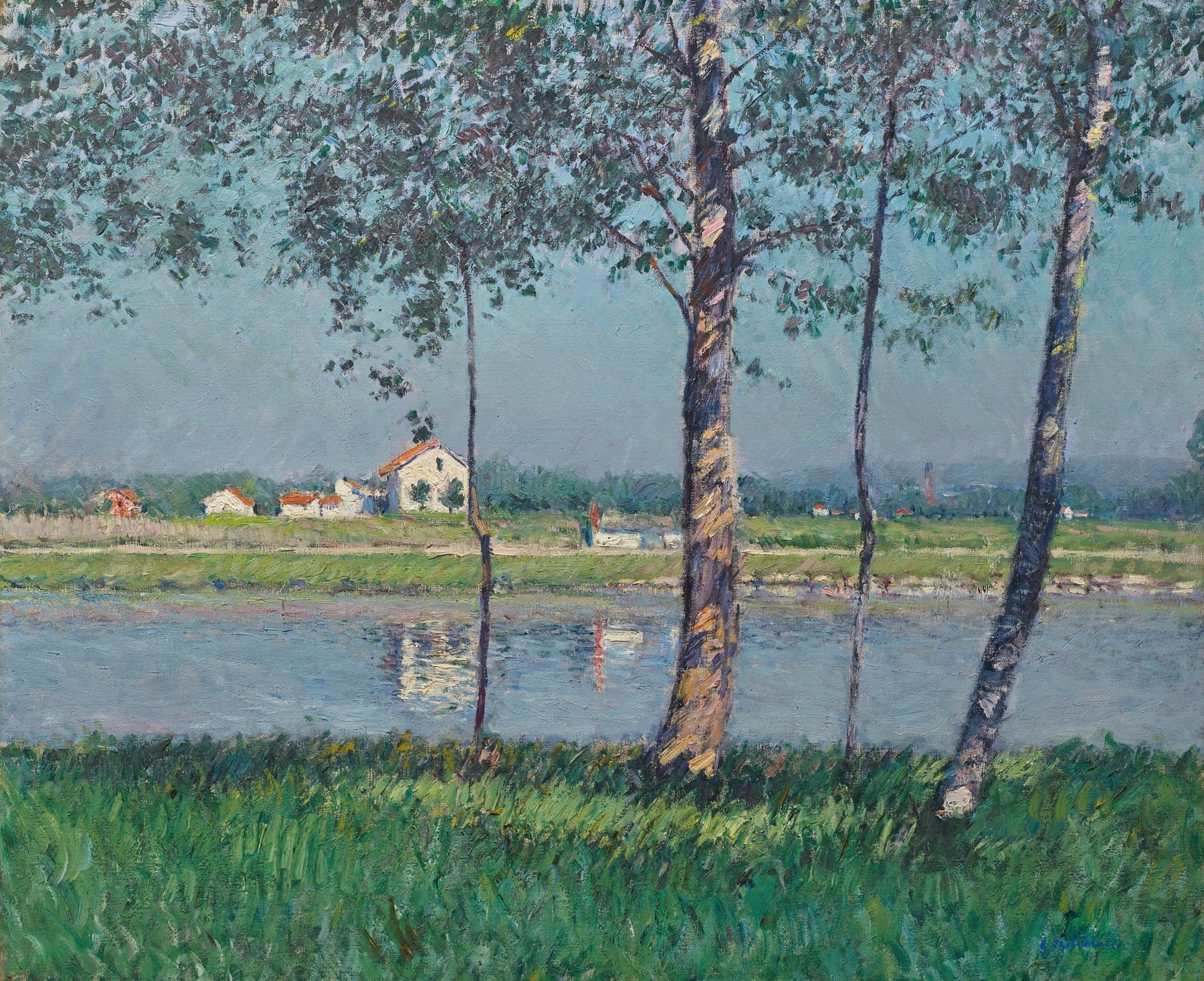
What secret hides in the quiet of the canvas? In Gustave Caillebotte's La Vallée De L’yerres, silence speaks volumes, revealing a tranquil world cradled by the embrace of nature. Look to the foreground where delicate strokes of green and gold intertwine, inviting your gaze across a gently undulating landscape. Notice how the light cascades over the rolling hills, illuminating patches of wildflowers while casting soft shadows that suggest the time of day—perhaps late afternoon, when life seems suspended.
The careful composition, marked by a balanced horizon line, subtly draws viewers into the serene depths of the valley. As you explore further, consider the interplay between stillness and potential movement. The serenity of the scene is punctuated by the hints of life—a distant figure, perhaps a farmer or wanderer, nearly invisible yet impactful, suggesting a narrative beyond the visual. Moreover, the absence of bustling activity intensifies the viewer's experience, allowing for introspection amidst the natural beauty that seems frozen in time.
Created in 1877 during his years in Paris, Caillebotte was deeply influenced by the Impressionist movement yet sought to convey a unique sensibility through his precision. This particular work emerged as he strived to combine realism with the emerging fascination for capturing light and atmosphere. At this time, the art world was beginning to embrace change, and Caillebotte's commitment to depicting everyday scenes with nuance placed him at the heart of this transformation, quietly reshaping how we perceive the ordinary.