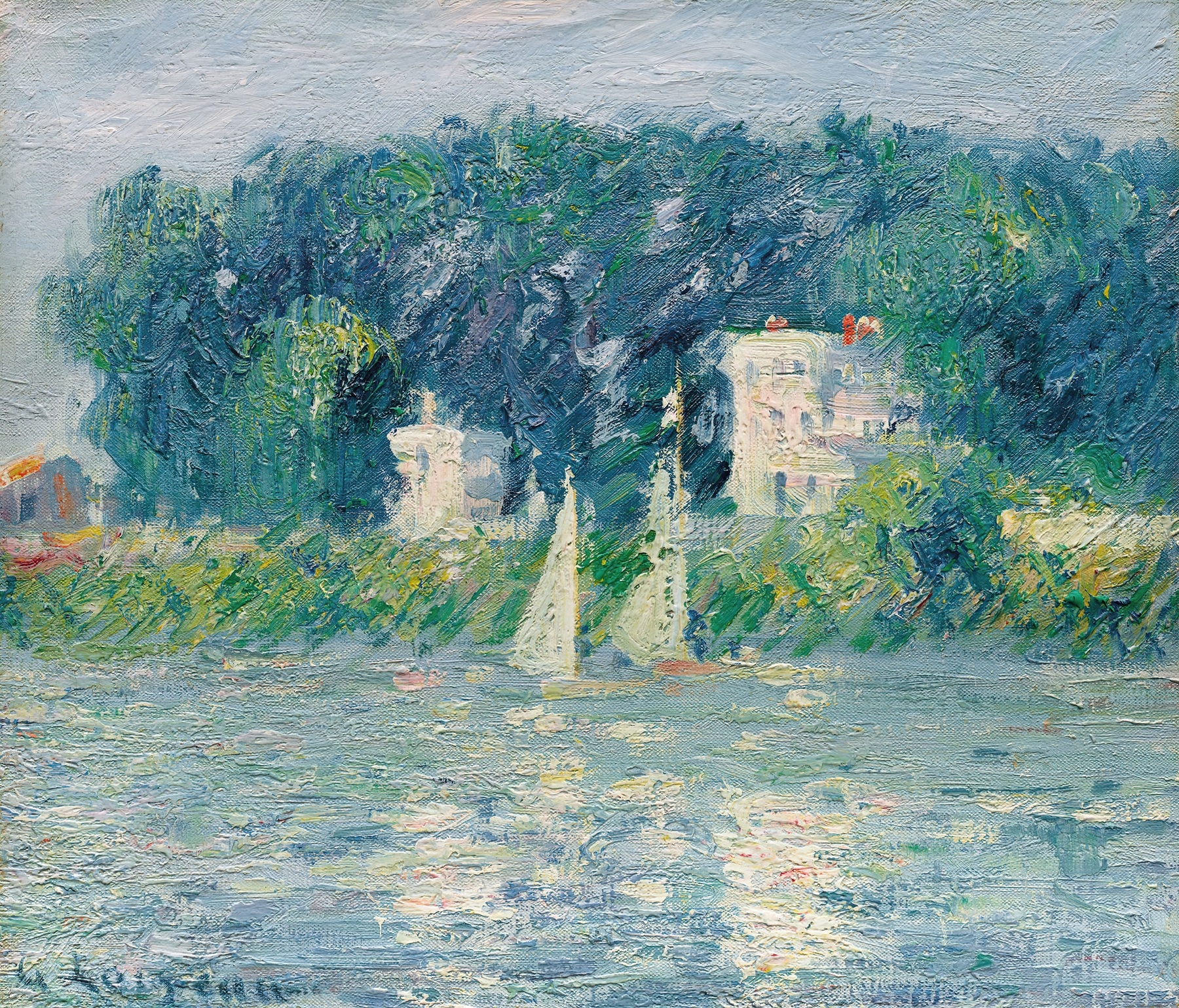
Le Parc Monceau — History & Analysis
Where does light end, and longing begin? In the quiet expanse of an urban park, Le Parc Monceau encapsulates a moment where hope flutters in the air like autumn leaves caught in a gentle breeze. Look to the left at the elegantly dressed figures strolling leisurely along the gravel path. Each brushstroke captures the soft interplay of light filtering through the verdant canopy above, illuminating the scene with a golden warmth.
The vibrant greens and soft pastels create a soothing palette, drawing the eye toward the park’s winding pathways and inviting the viewer to step into this serene world. Notice how the composition is balanced, with trees framing the figures and allowing the light to dance upon their faces, evoking a sense of tranquility and connection. Delve deeper into the subtle details: the contrast between the structured forms of the trees and the fluid lines of the path suggests a tension between nature and urban life. The figures appear engaged in their own thoughts, each lost in a private reverie, hinting at unspoken stories and desires.
This duality of presence and solitude enhances the emotional weight of the scene, reminding us that hope often thrives in quiet moments of reflection, even amidst the bustle of the city. In 1877, when Caillebotte painted this piece, he was part of the Impressionist movement, forging a new path in depicting modern life. Living in Paris during a time of social change, he was deeply influenced by the evolving urban landscape and the rise of the bourgeois class. His works, including this evocative piece, reflect both an appreciation for the beauty of everyday life and a longing for deeper connections within that bustling environment.