Landscape near Pontoise, the Auvers Road — History & Analysis
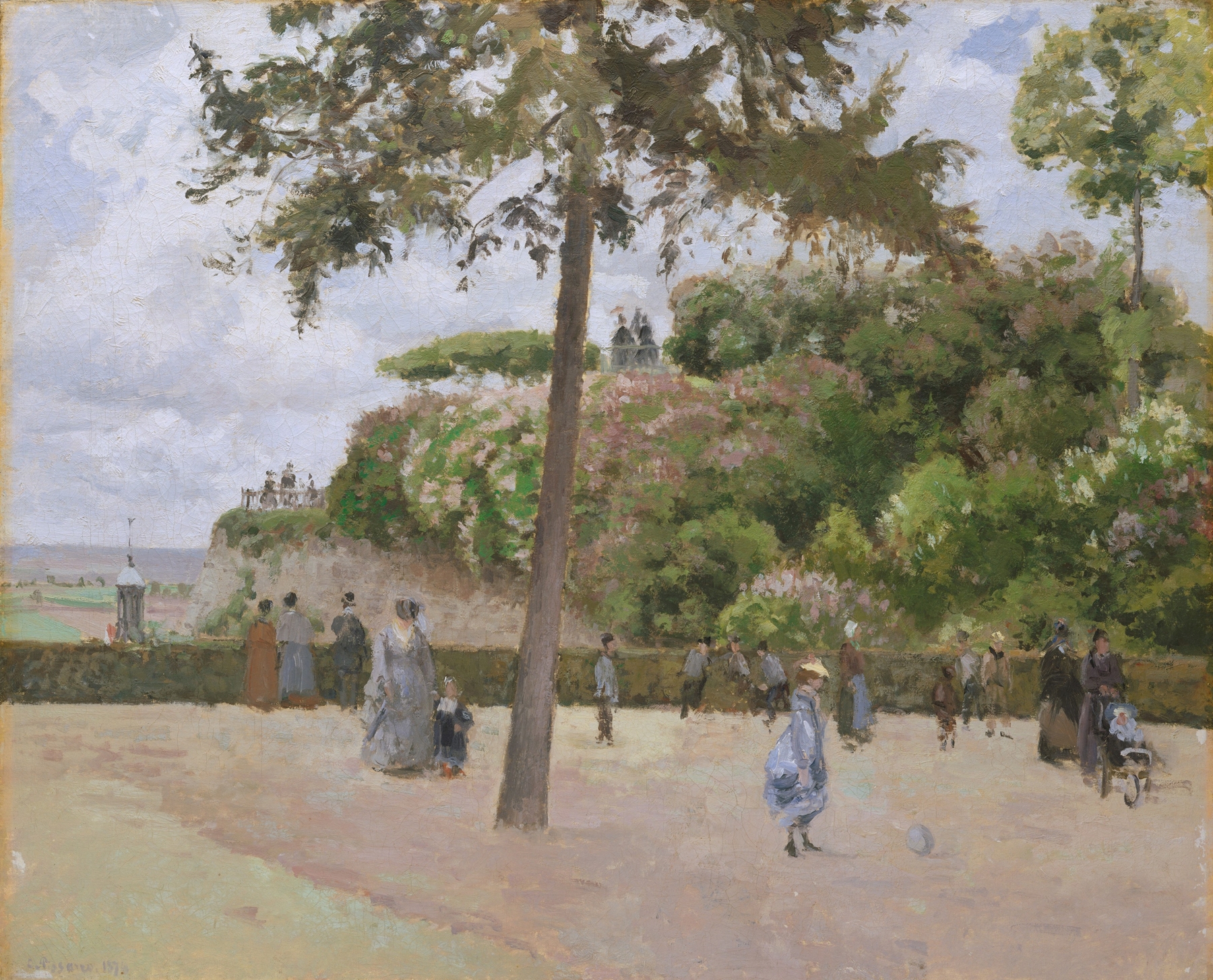
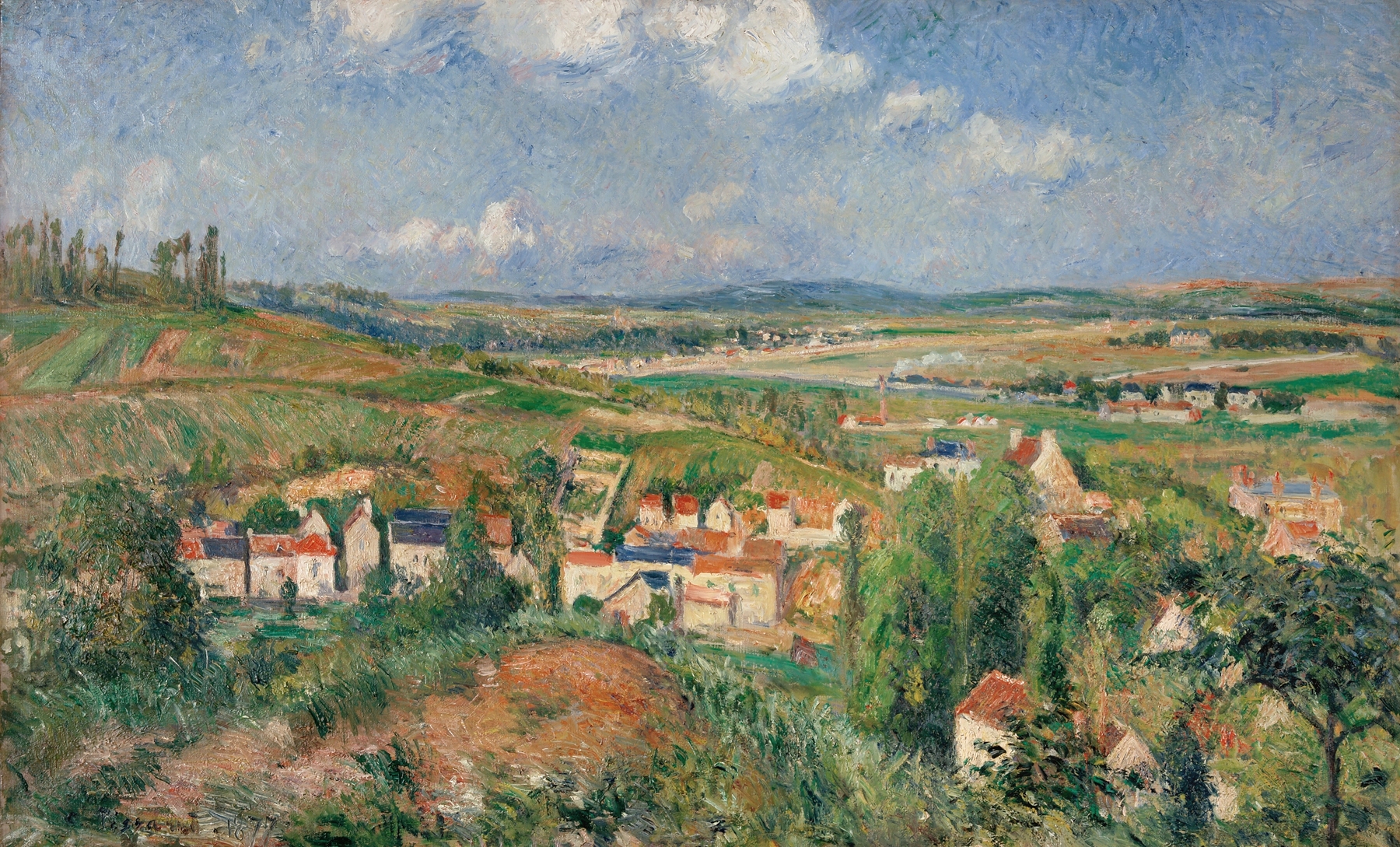
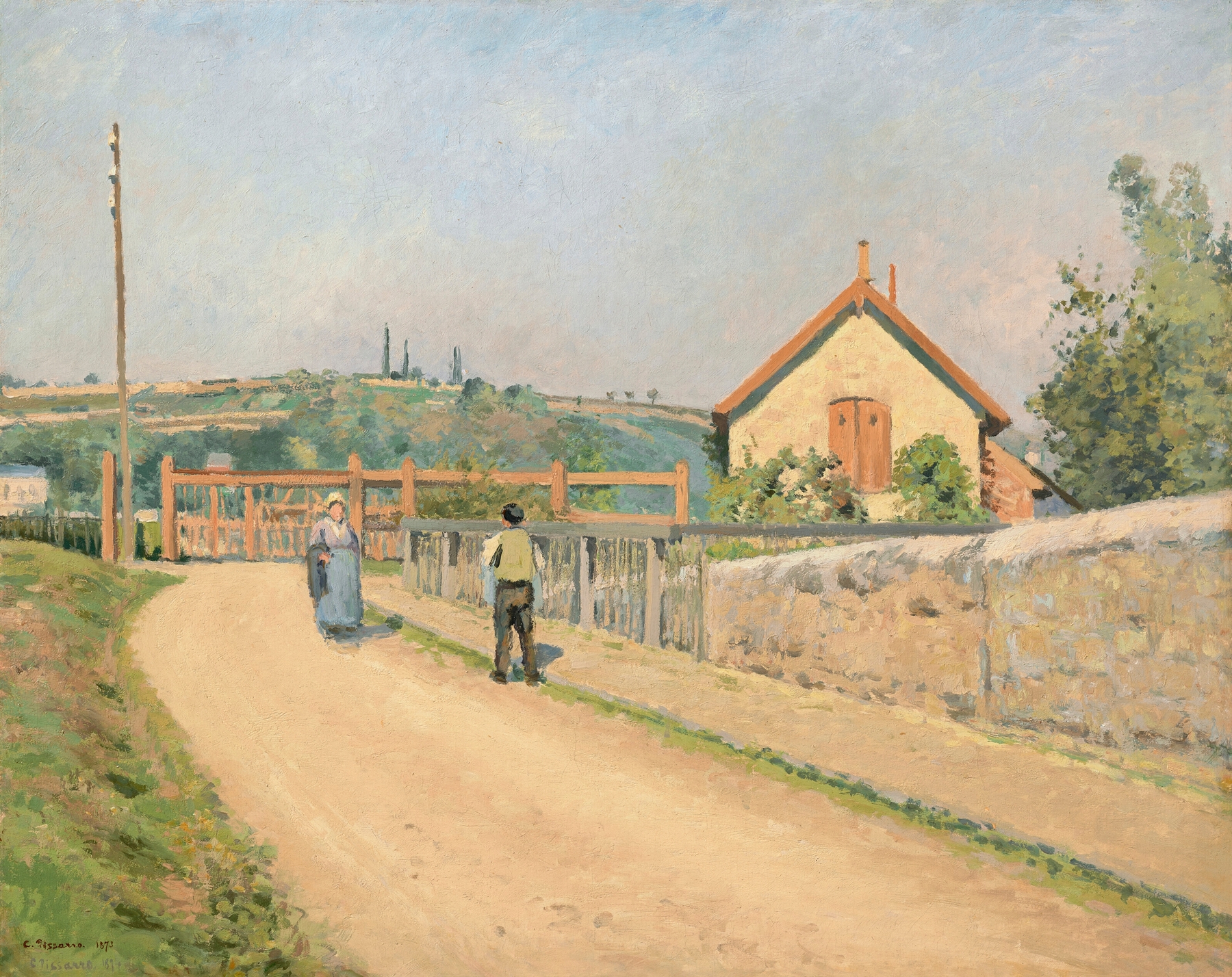
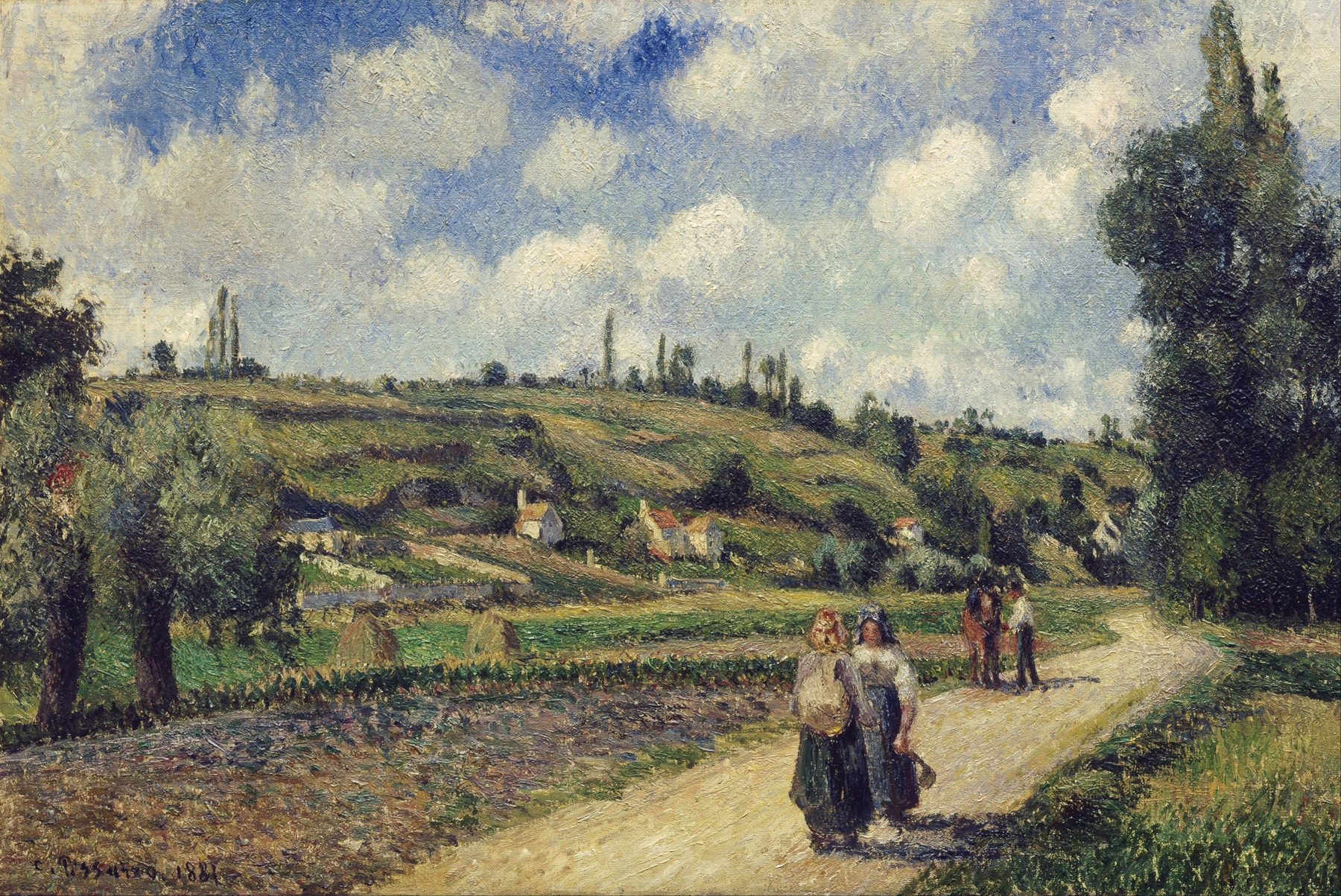
“To paint is to remember what time wants us to forget.” In the vibrant strokes of the canvas, we glimpse the delicate interplay between memory and reality, an illusion captured in a moment of tranquil beauty. Look to the right at the winding road, a ribbon of beige that snakes through the lush greens and golds of the landscape. Notice how the dappled sunlight dances across the scene, illuminating patches of wildflowers in vivid hues, while shadows linger in the cool, shaded areas beneath the trees. Pissarro’s deft brushwork creates a sense of movement and stillness, inviting the viewer into a world where the boundaries of time blur, giving rise to both nostalgia and hope. Yet, there is a subtle tension in this seemingly idyllic portrayal. The winding path suggests a journey, perhaps a metaphor for life’s uncertainties, while the looming trees stand as guardians of the past, watching over the passage of time. The sky, painted in a soft blue dotted with wisps of white, speaks to the transient nature of these moments, where each flicker of light reveals new emotions and memories hidden within the depths of nature. In 1881, while creating this landscape, Pissarro was deeply entrenched in the Impressionist movement, finding solace in the rural beauty of Pontoise amidst the bustling art scene of Paris. This period marked a time of personal growth for him, exploring new styles and techniques, as well as a growing camaraderie with fellow artists. The world was shifting, and through his art, Pissarro sought to commemorate the ephemeral moments that would otherwise slip away.