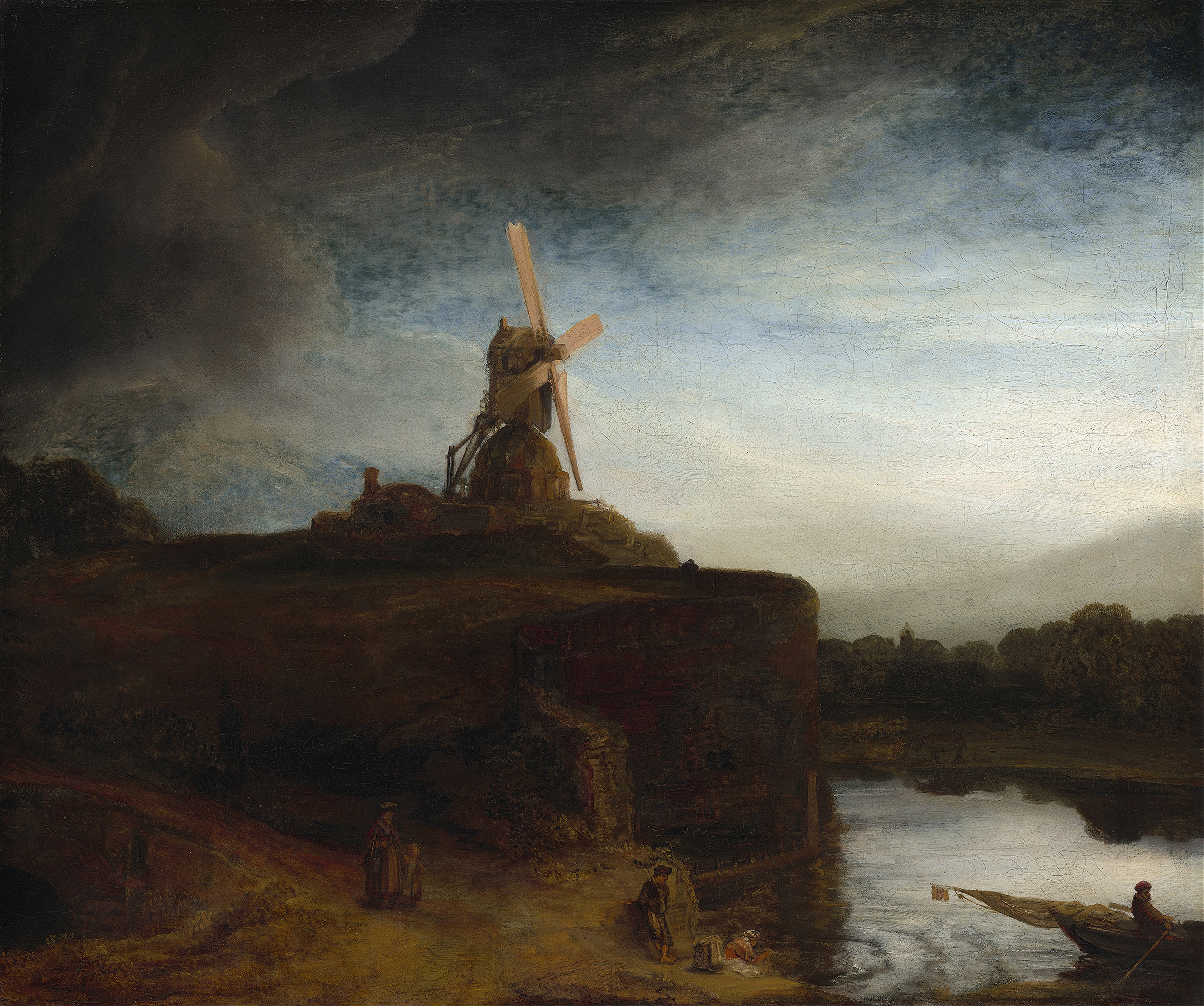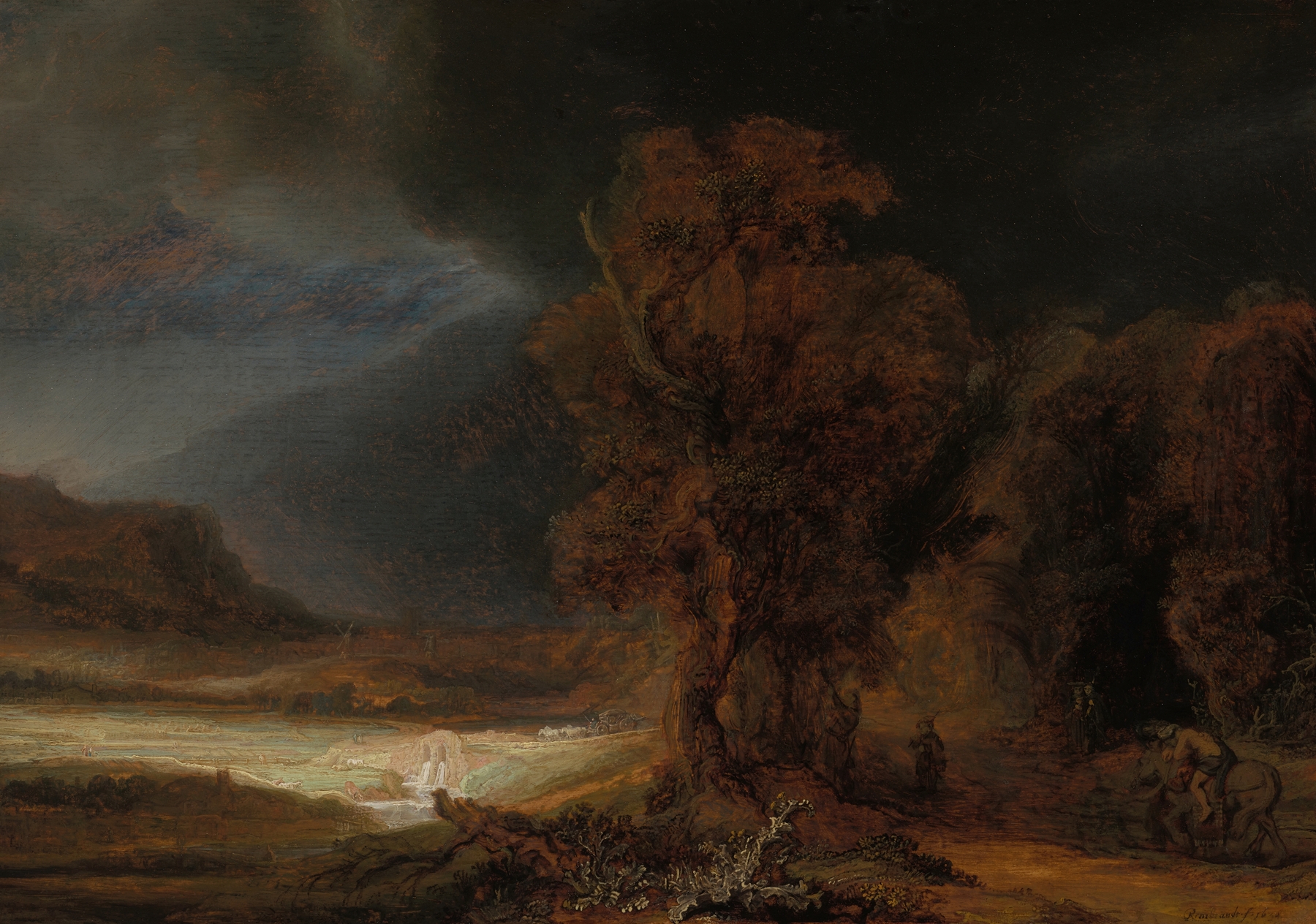
What secret hides in the quiet of the canvas? In the stillness of *Landscape with the Parable of the Good Samaritan*, a profound longing whispers between the strokes of paint, inviting viewers to unearth its hidden narratives. Look to the left where the figure of the Samaritan kneels, enveloped in earthy tones that blend harmoniously with the surrounding landscape. Notice how light cascades softly across the scene, illuminating his compassionate gesture as he tends to a wounded traveler. Rembrandt’s masterful use of chiaroscuro creates a dramatic interplay between light and shadow, drawing the eye first to the acts of mercy while subtly revealing the vast, silent world around them. The expansive sky looms overhead, painted in muted blues and grays, amplifying the emotional resonance of the characters below. Beneath the serene surface lies a rich tapestry of contrasts. The Samaritan’s warm, empathetic presence starkly opposes the desolate figure of the injured man, emphasizing the themes of care and isolation. The landscape itself, while beautiful, feels expansive and empty, reflecting the solitude of those who have lost their way. This duality encapsulates a broader human experience: the longing for connection amidst the vastness of existence. In 1638, Rembrandt was navigating a period of artistic experimentation in Amsterdam, where he had begun to delve into storytelling through his work. The city was alive with burgeoning artistic movements, yet he remained committed to exploring deeper themes of humanity and faith—evident in this depiction of kindness and moral duty. The canvas serves not only as a visual narrative but also as a reflection of the artist's own struggles and aspirations during this transformative time in his career.