Landscape with the Ruins of the Castle of Egmond — History & Analysis
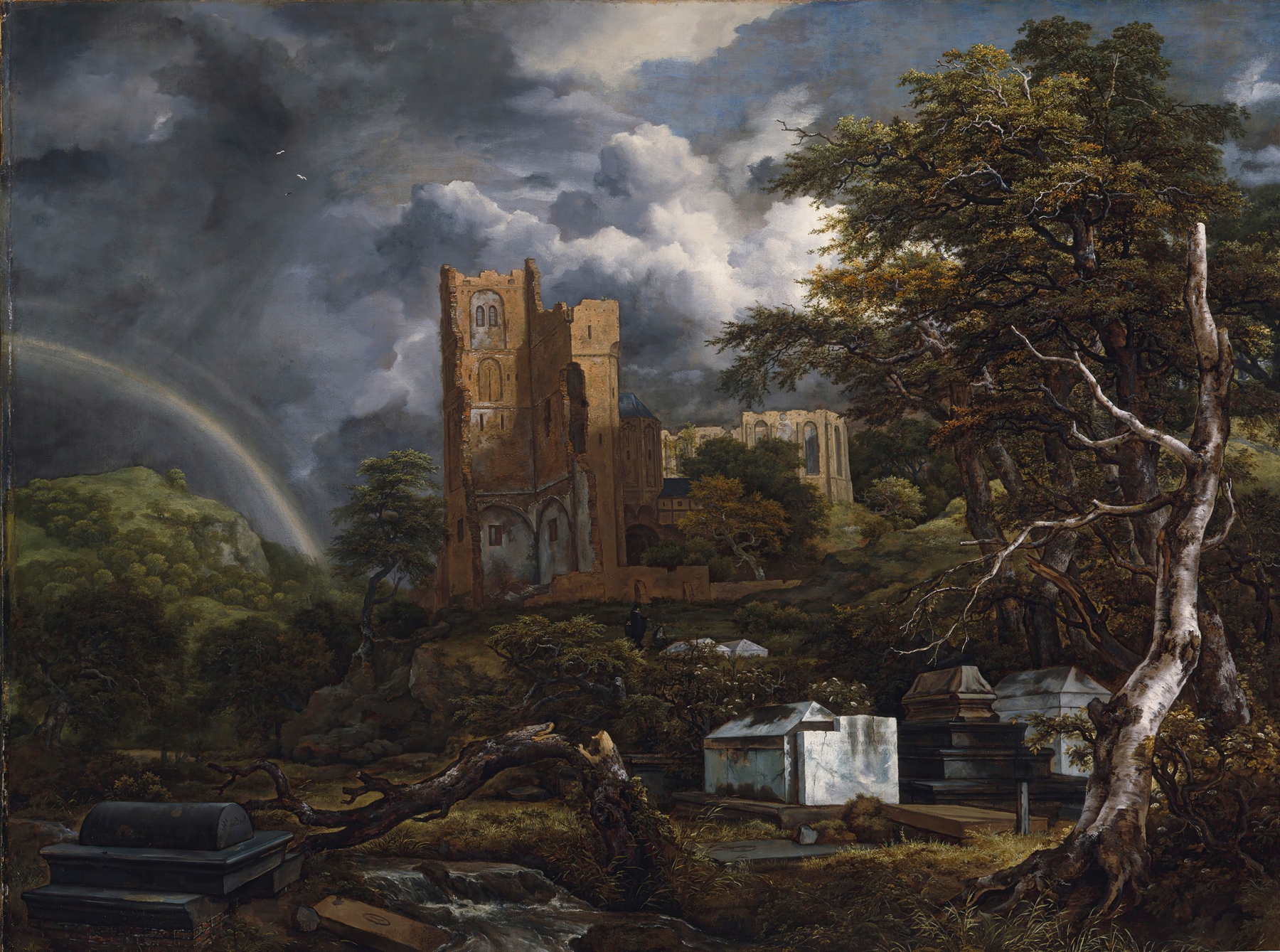
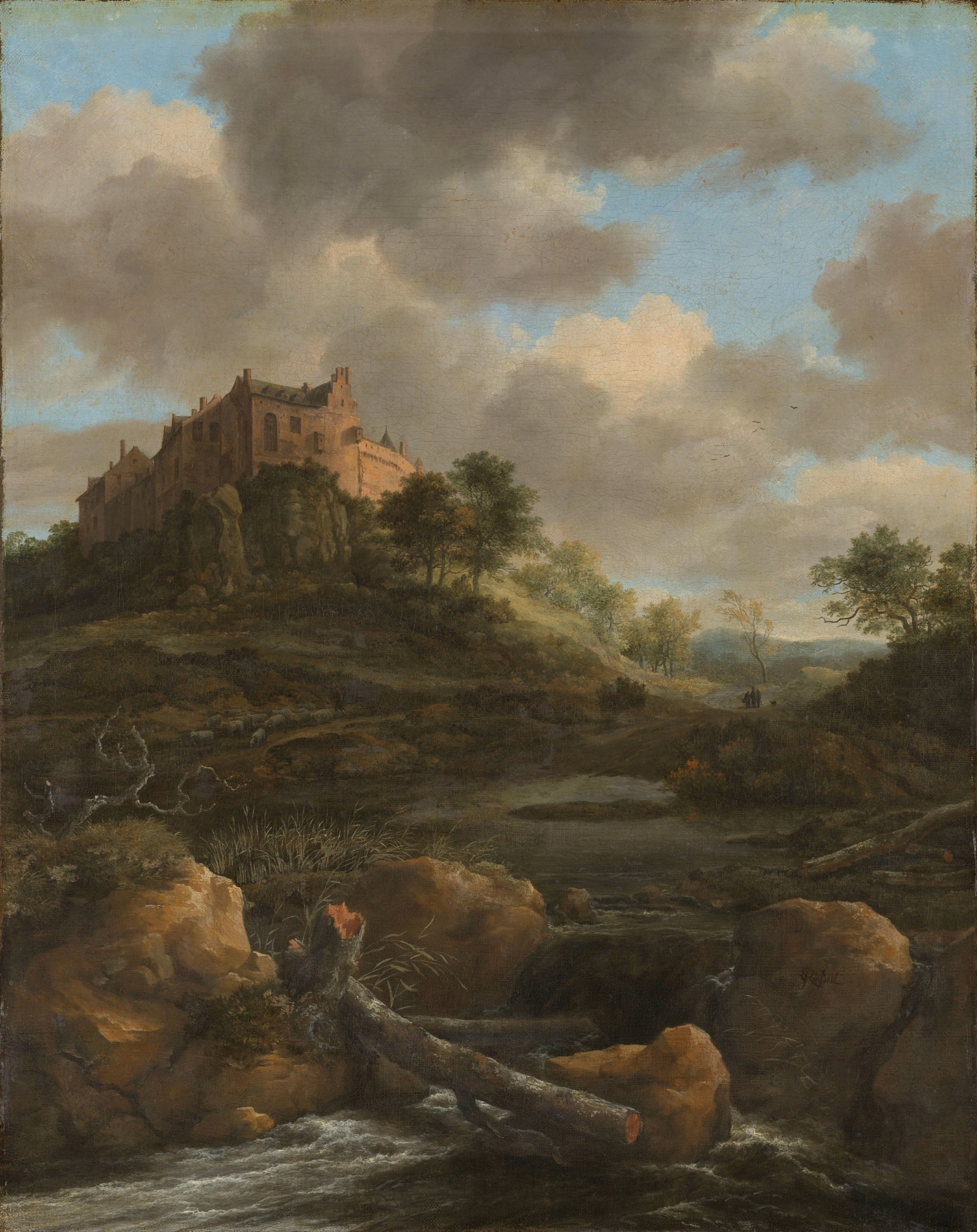
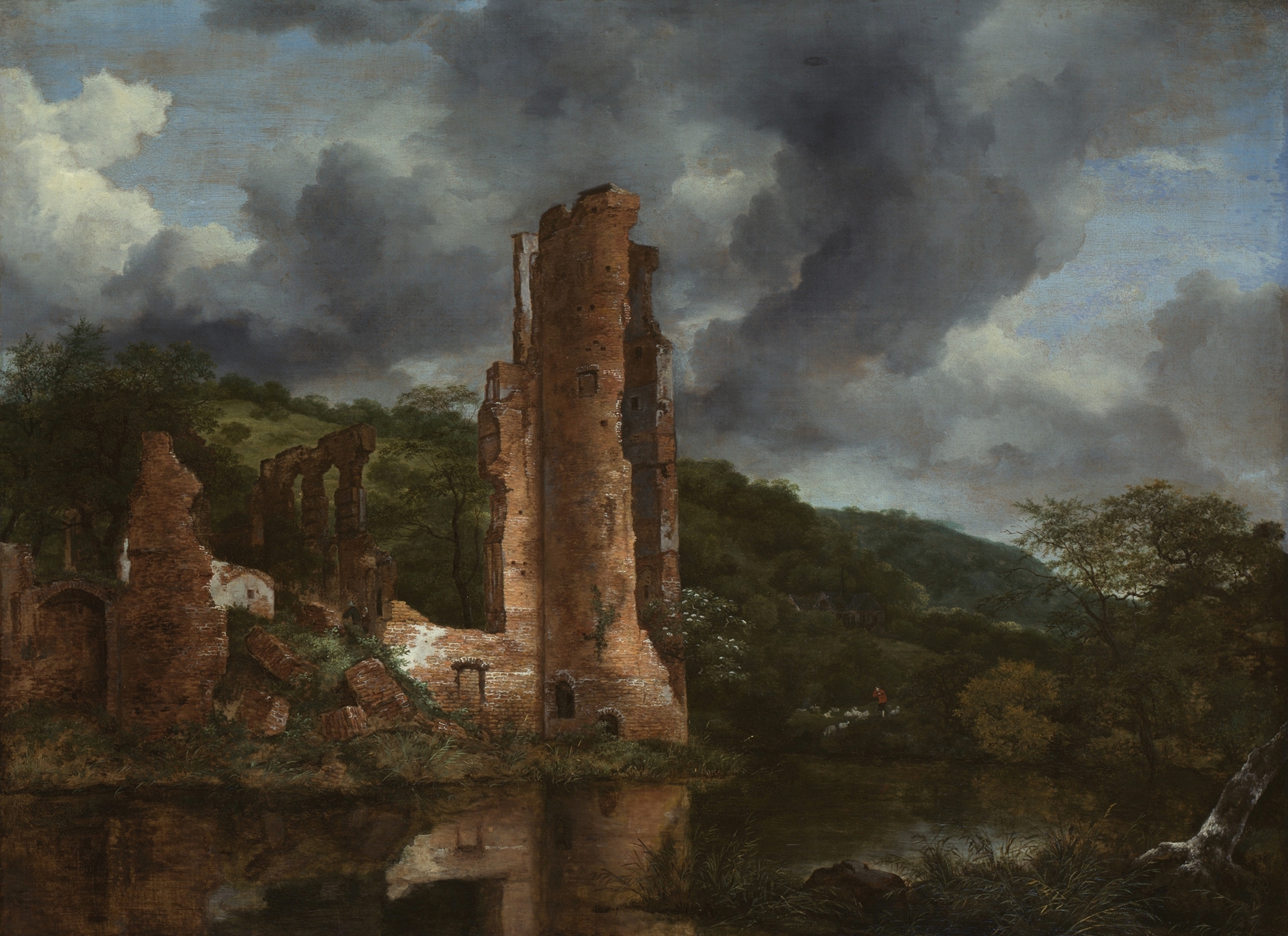
Is this a mirror — or a memory? In Landscape with the Ruins of the Castle of Egmond, the viewer is invited to contemplate the fragile remnants of the past, set against the backdrop of an expansive sky. The painting evokes a profound sense of melancholy, suggesting that within the beauty of nature lies the whisper of lost histories. Look to the left at the dilapidated towers peeking through a curtain of lush, overgrown trees. The somber hues of browns and greens contrast sharply with patches of vivid blue sky, emphasizing the encroachment of nature upon human achievement.
Notice how the light bathes the ruins, casting long shadows that hint at stories untold, while the meticulously painted clouds add depth and create a sense of time suspended. Each brushstroke speaks of decay, inviting contemplation on the passage of time. The emotional tension of this work lies in the juxtaposition of the serene landscape against the crumbling architecture, evoking themes of loss and resilience. The presence of the castle ruins serves as a poignant reminder of fleeting glory and the inevitable march of nature reclaiming what was once a proud symbol of strength.
In the distance, the serene rolling hills and gentle waters reflect an ever-present cycle of renewal and decay, suggesting that beauty persists even amidst destruction. Jacob van Ruisdael painted this compelling scene in the mid-1650s, a period marked by his exploration of landscapes that evoke emotional depth and historical resonance. Living in the Dutch Golden Age, he was influenced by the burgeoning interest in naturalism and the portrayal of the sublime in art. This work reflects both personal and societal themes of remembrance and the passage of time, embodying the artist's mastery in merging landscape with narrative.