Landschaft — History & Analysis
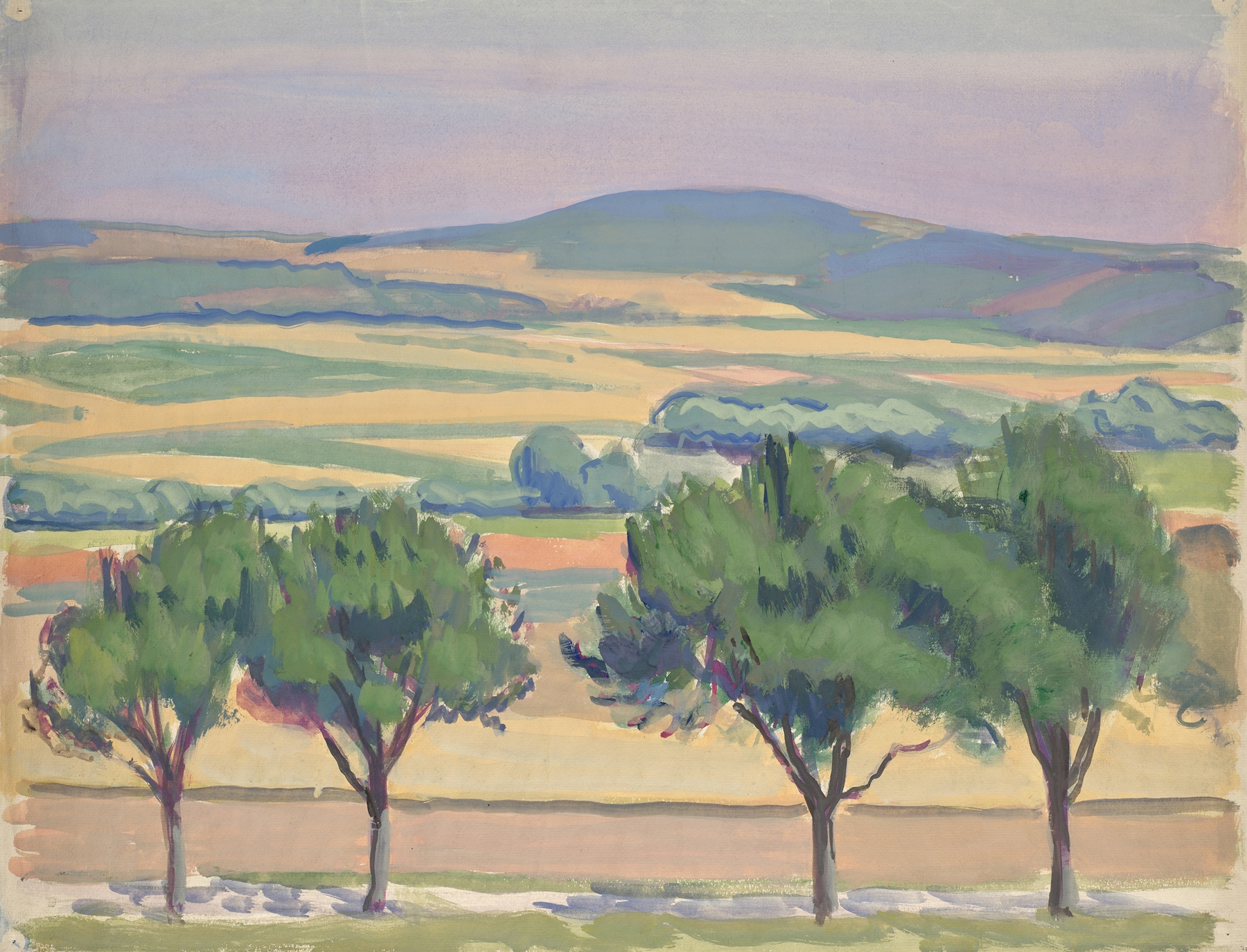
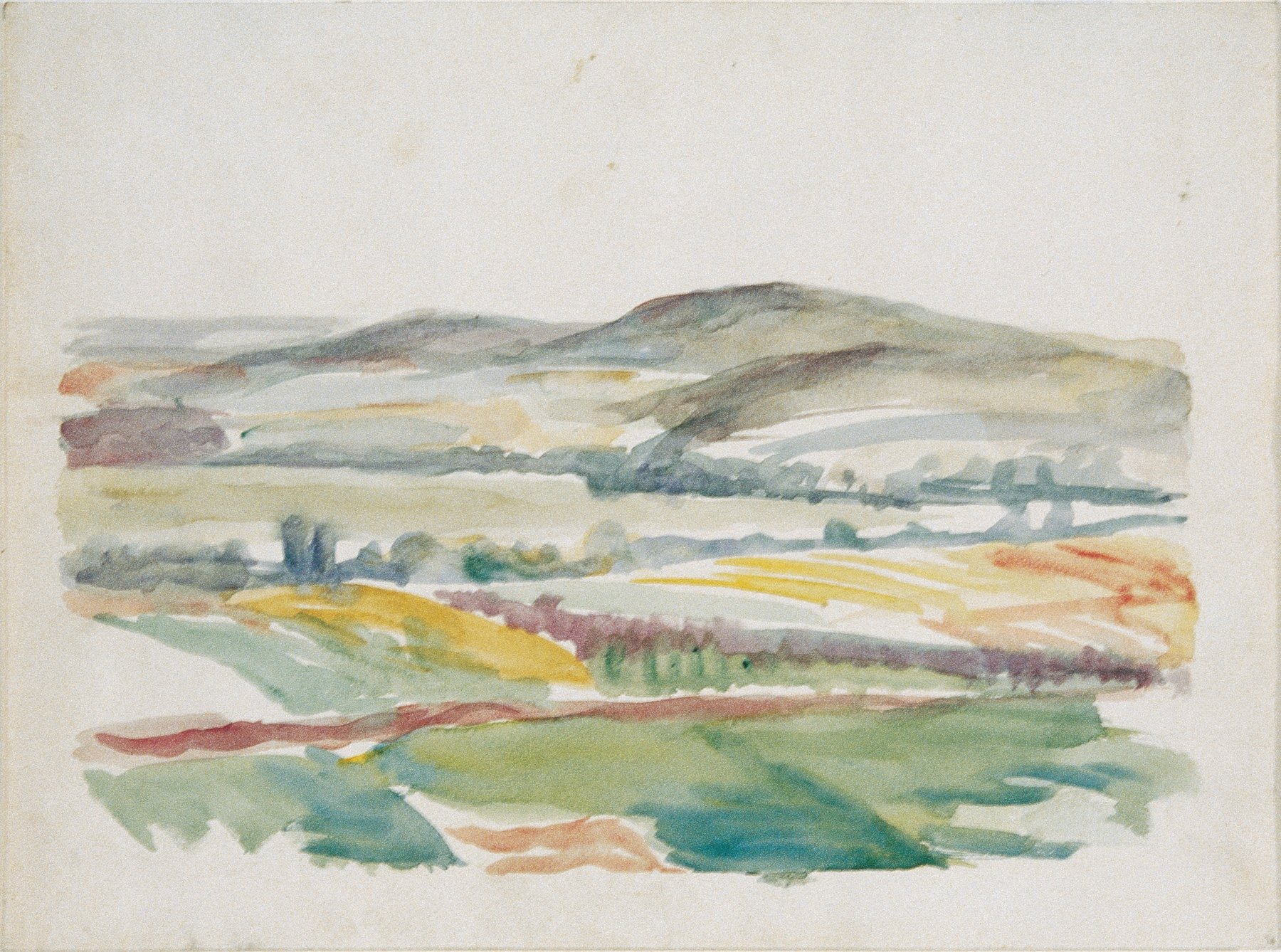
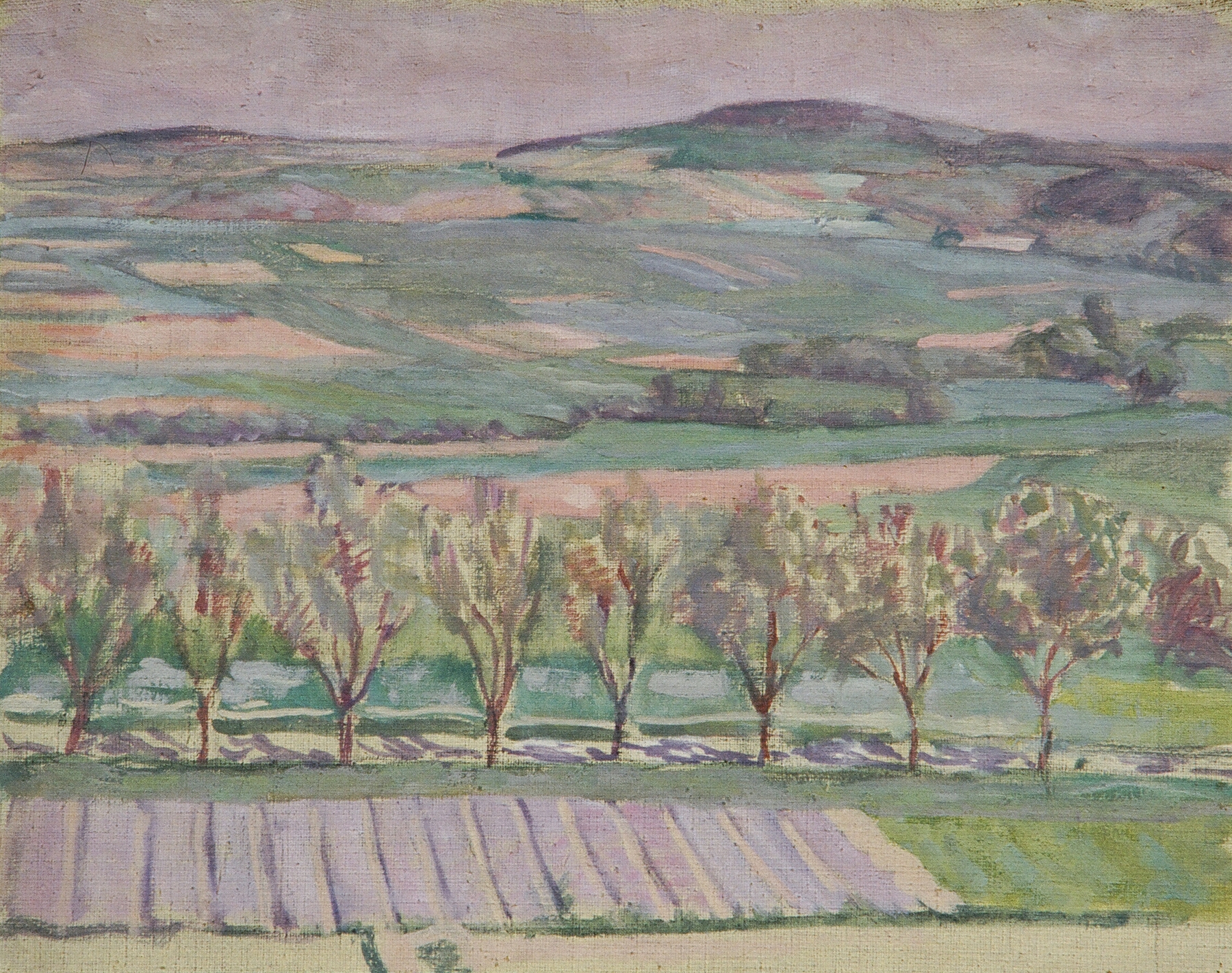
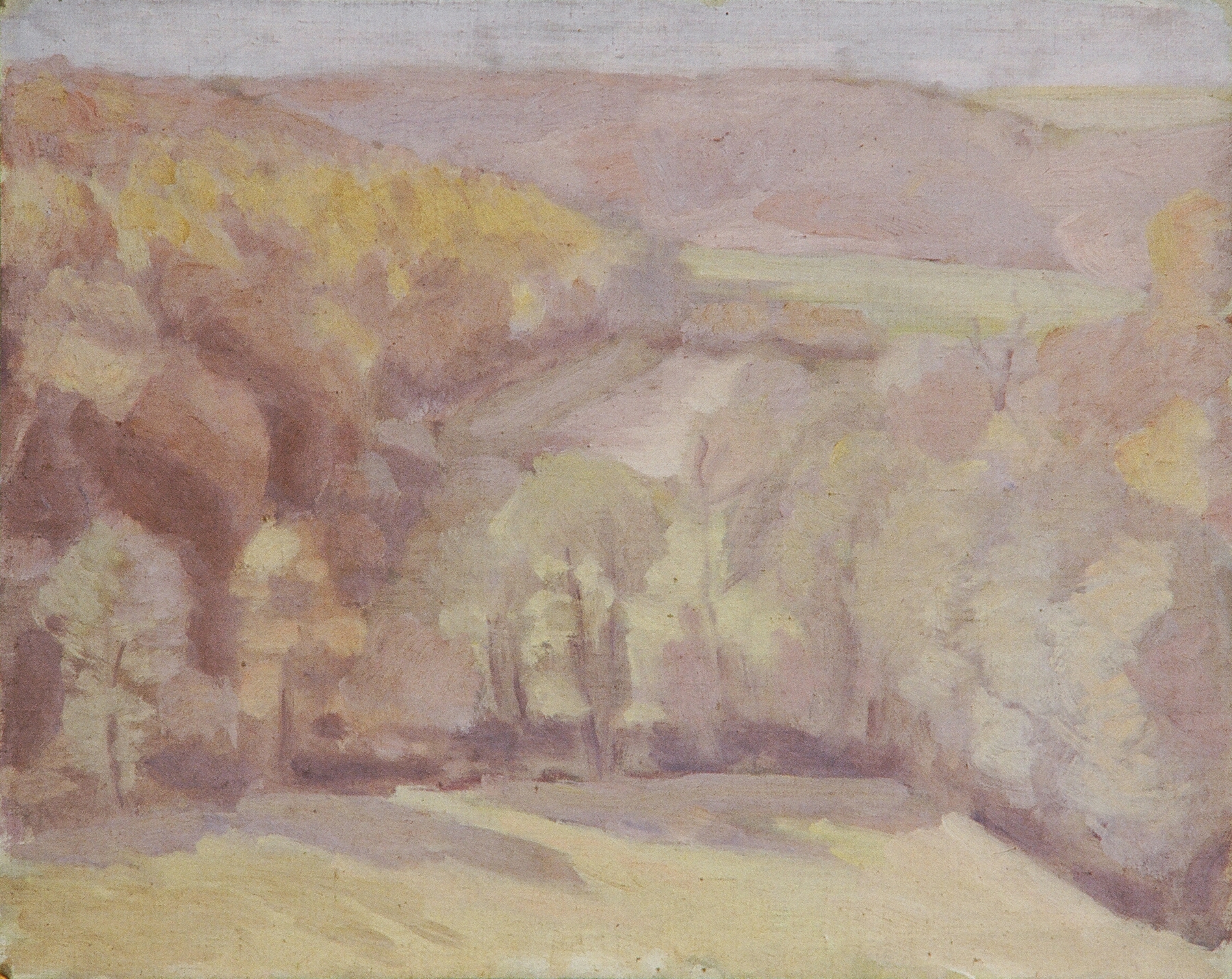
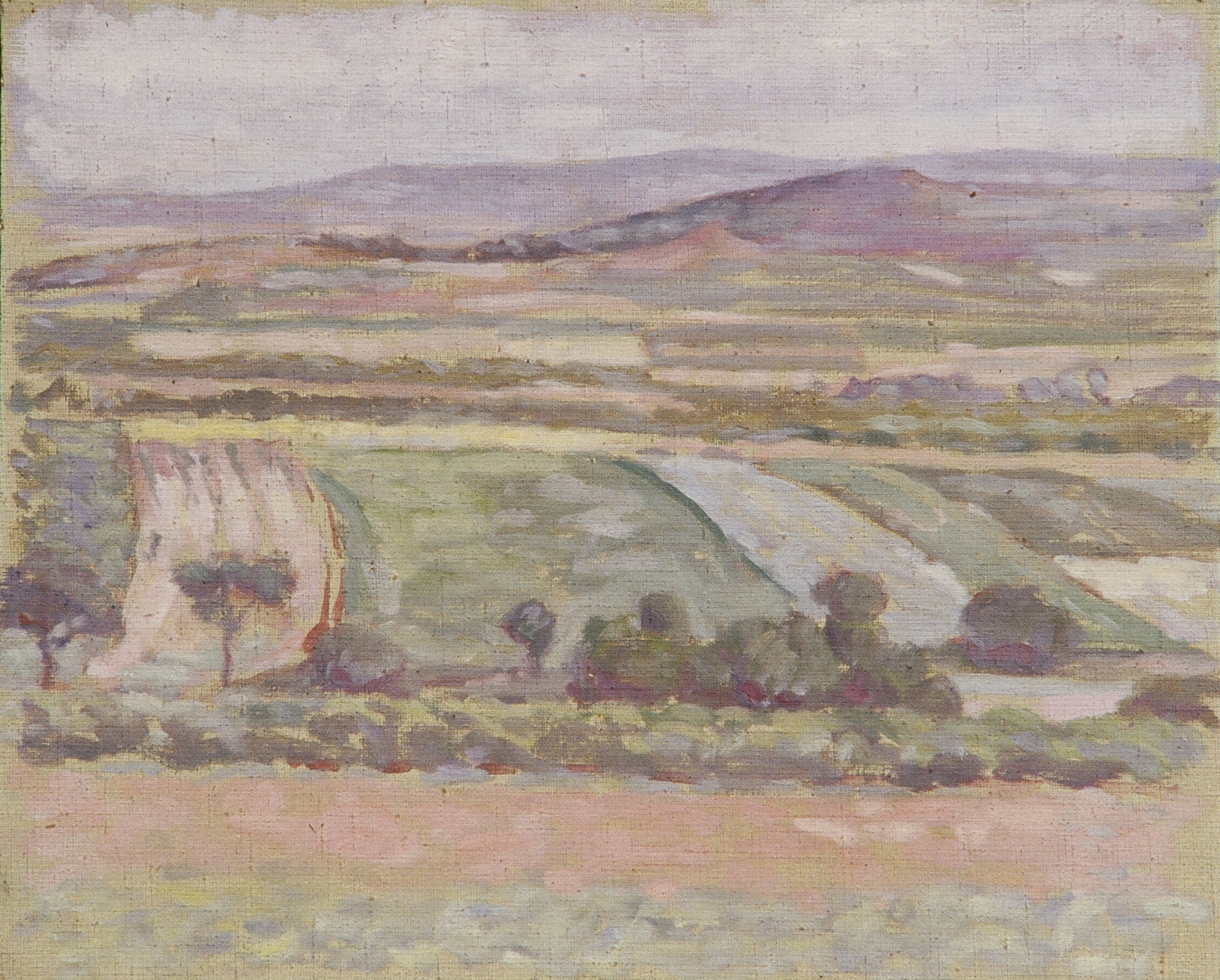
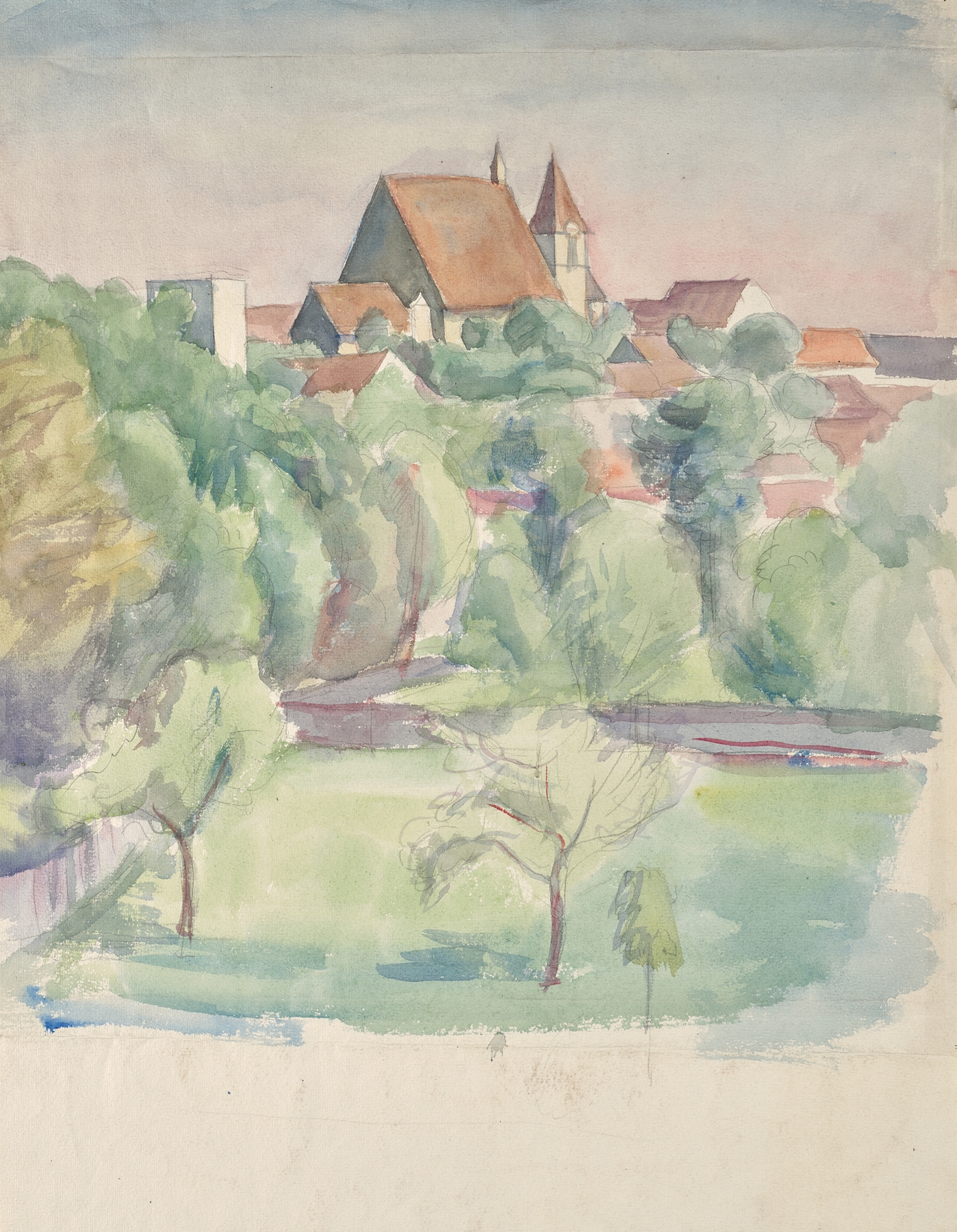
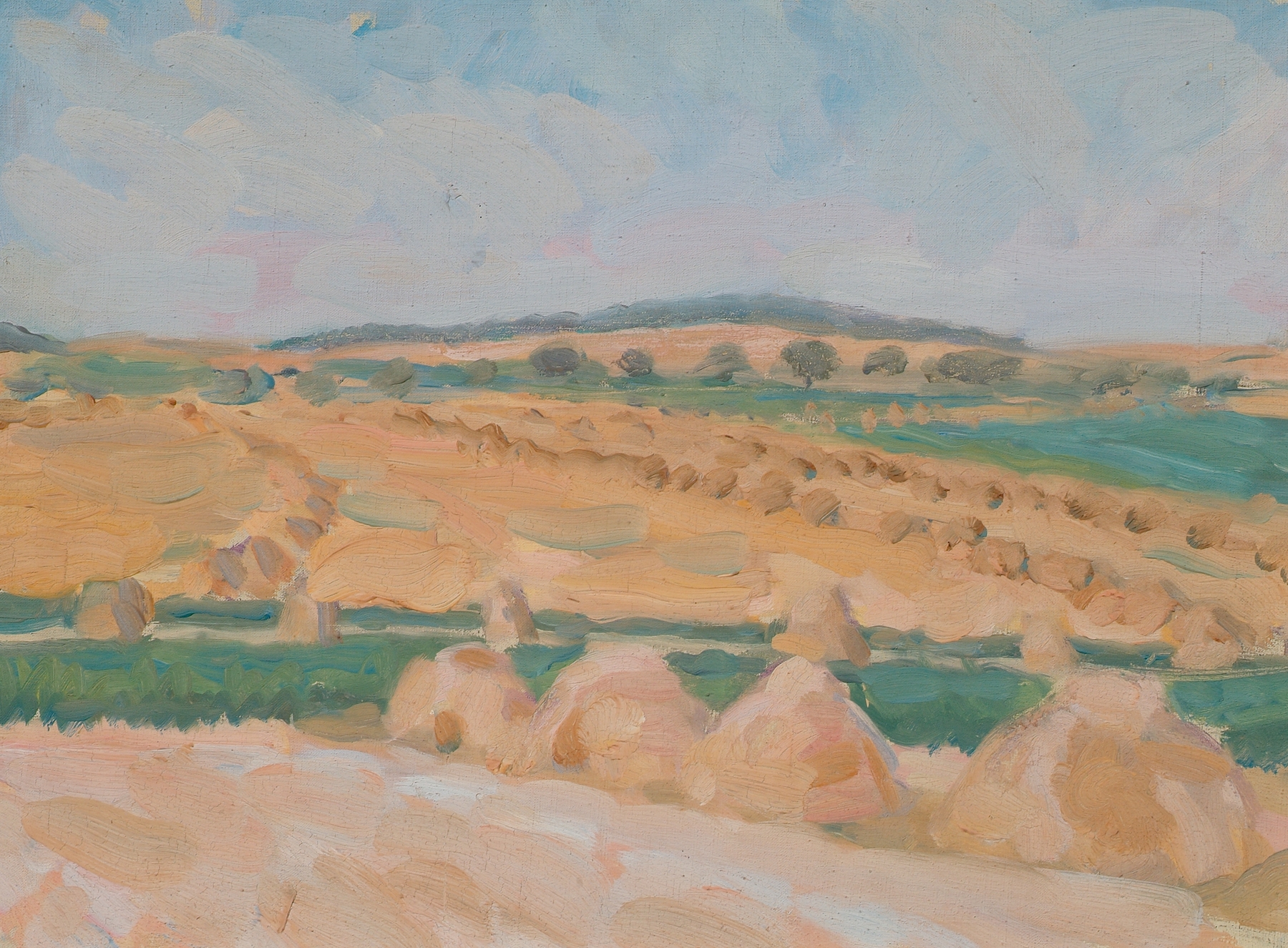
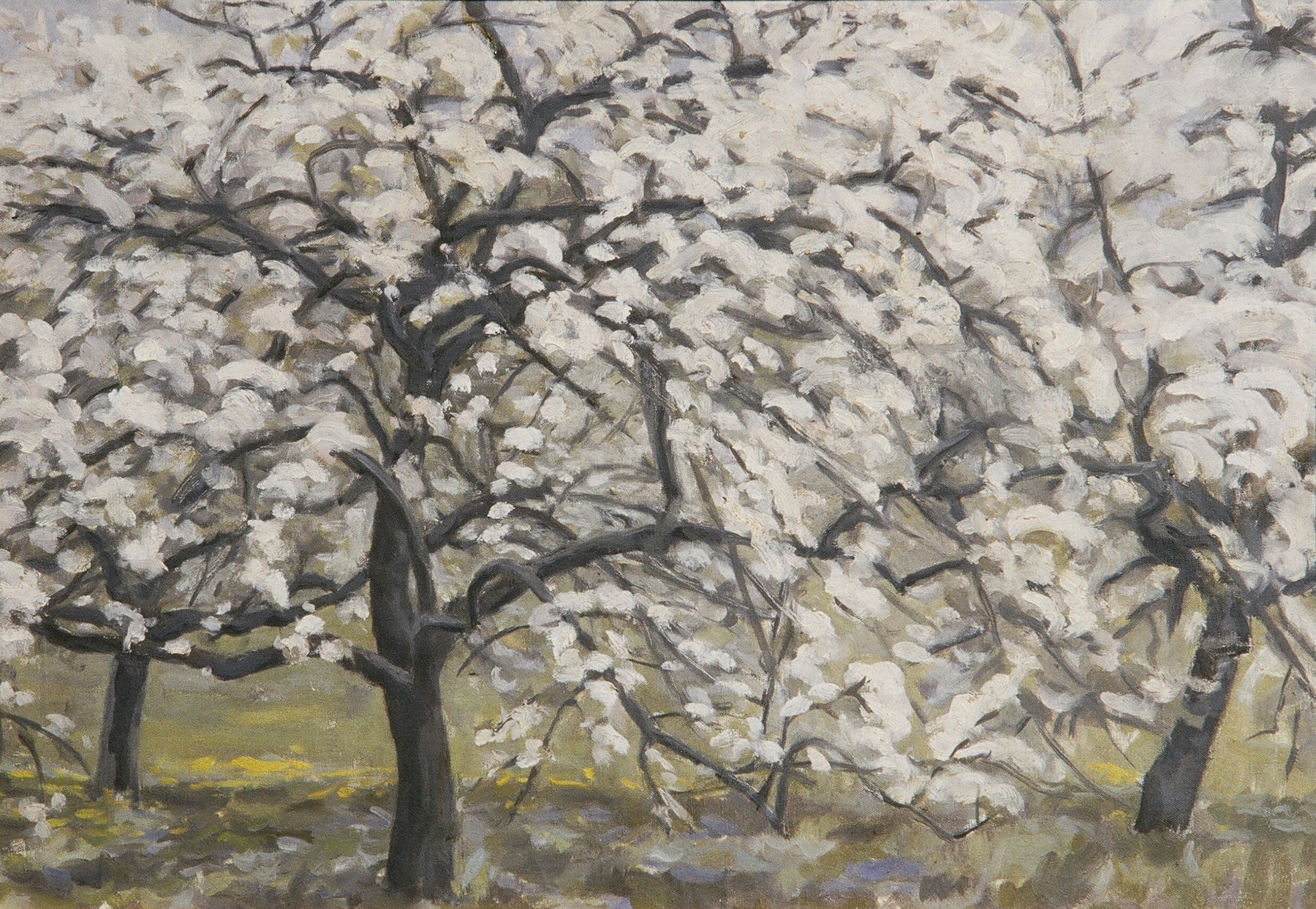
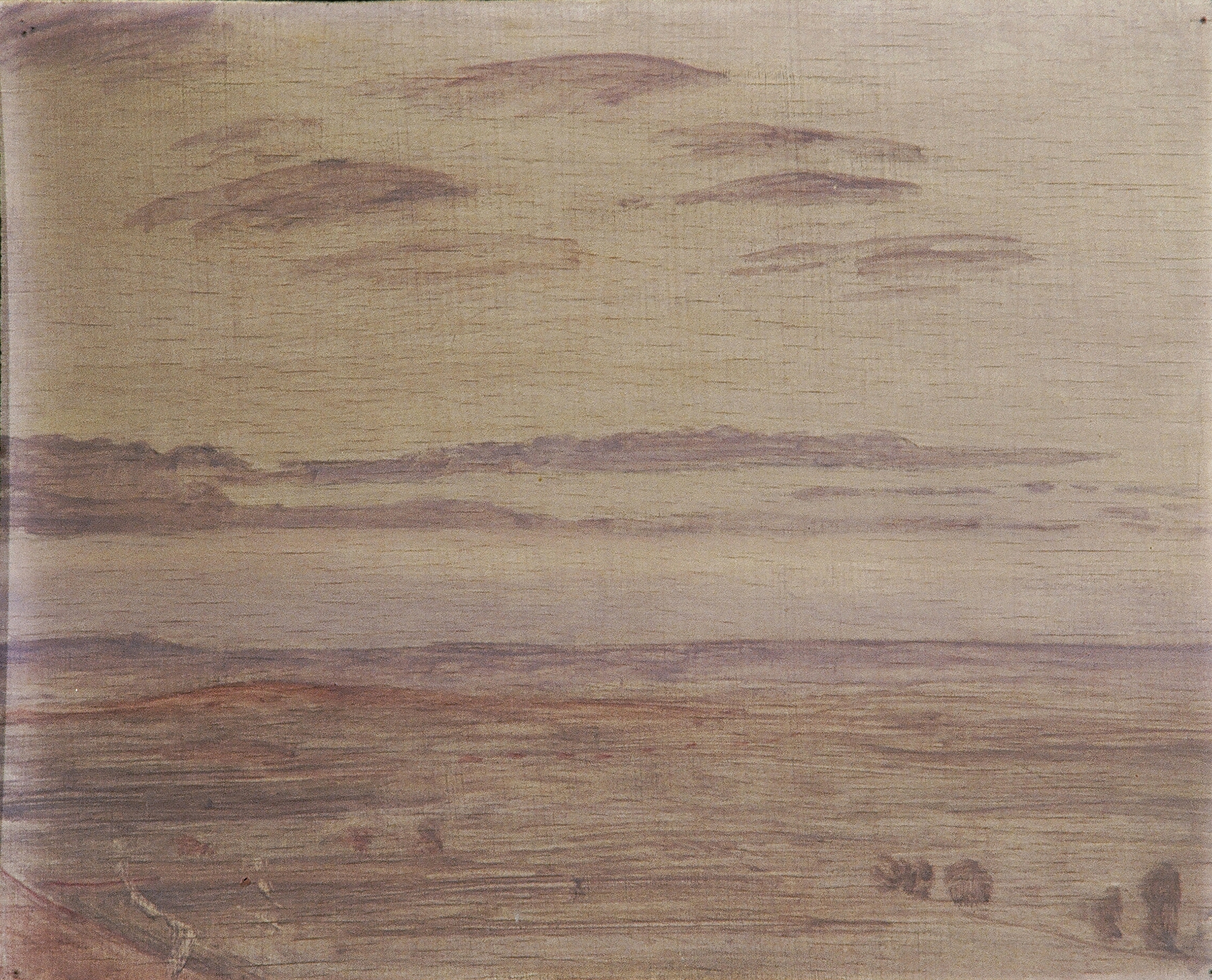
“The canvas doesn’t lie — it simply waits.” In its quiet embrace, it holds the whispers of the past, beckoning viewers to remember what was once felt and seen. Each brushstroke, a pulse of nostalgia, invites an intimate reflection on life's fleeting moments. Look to the horizon, where soft blues and greens meld in a gentle gradient, revealing distant hills that seem to vanish into a dream. Notice how the light dances across the landscape, with dappled sunlight creating a tapestry of shadows and highlights, guiding your gaze through the tranquil scenery.
The subtle interplay of warm and cool colors evokes a sense of serenity, while the meticulous detailing around clusters of trees suggests a careful observation of nature's quiet elegance. Yet beneath the surface, this work resonates with a more profound emotional complexity. The expansive sky invokes a sense of longing, as if it cradles unfulfilled desires or memories of happier days. In contrast, the stillness of the land may symbolize an unchanging past, offering solace or perhaps a reminder of time’s relentless passage.
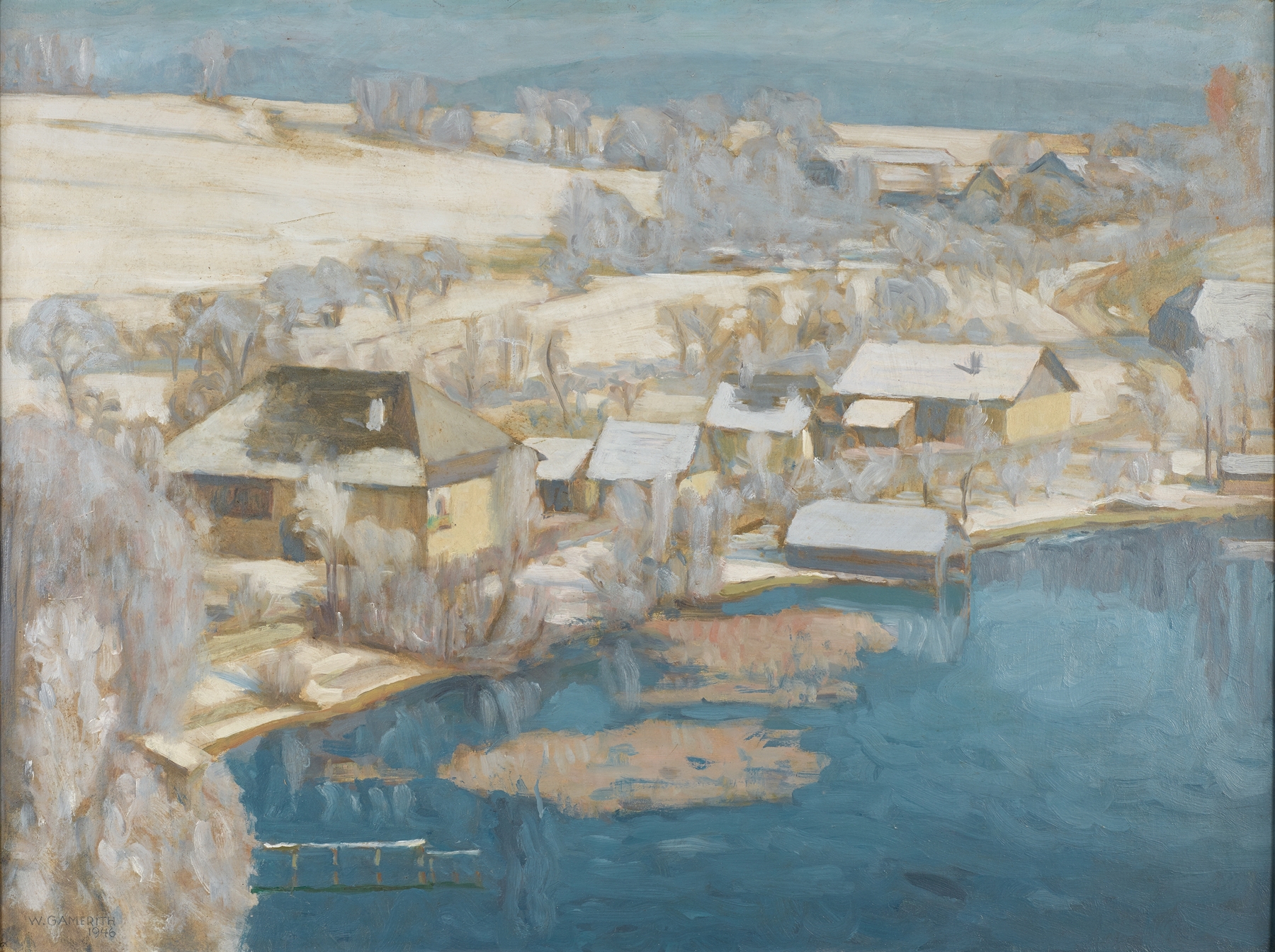
Each element in the scene coalesces to form a meditation on memory, loss, and the beauty of what once was. Walther Gamerith painted this work during an era marked by profound transformation in the art world, likely in the mid-20th century. As modernism began to dominate, he sought to capture the essence of landscapes with a unique tenderness, drawing upon his own experiences and the nostalgia of a simpler time. This piece reflects both his personal journey and the broader search for meaning amid a rapidly changing environment.