Landschap met brug, de Ponte Molle — History & Analysis
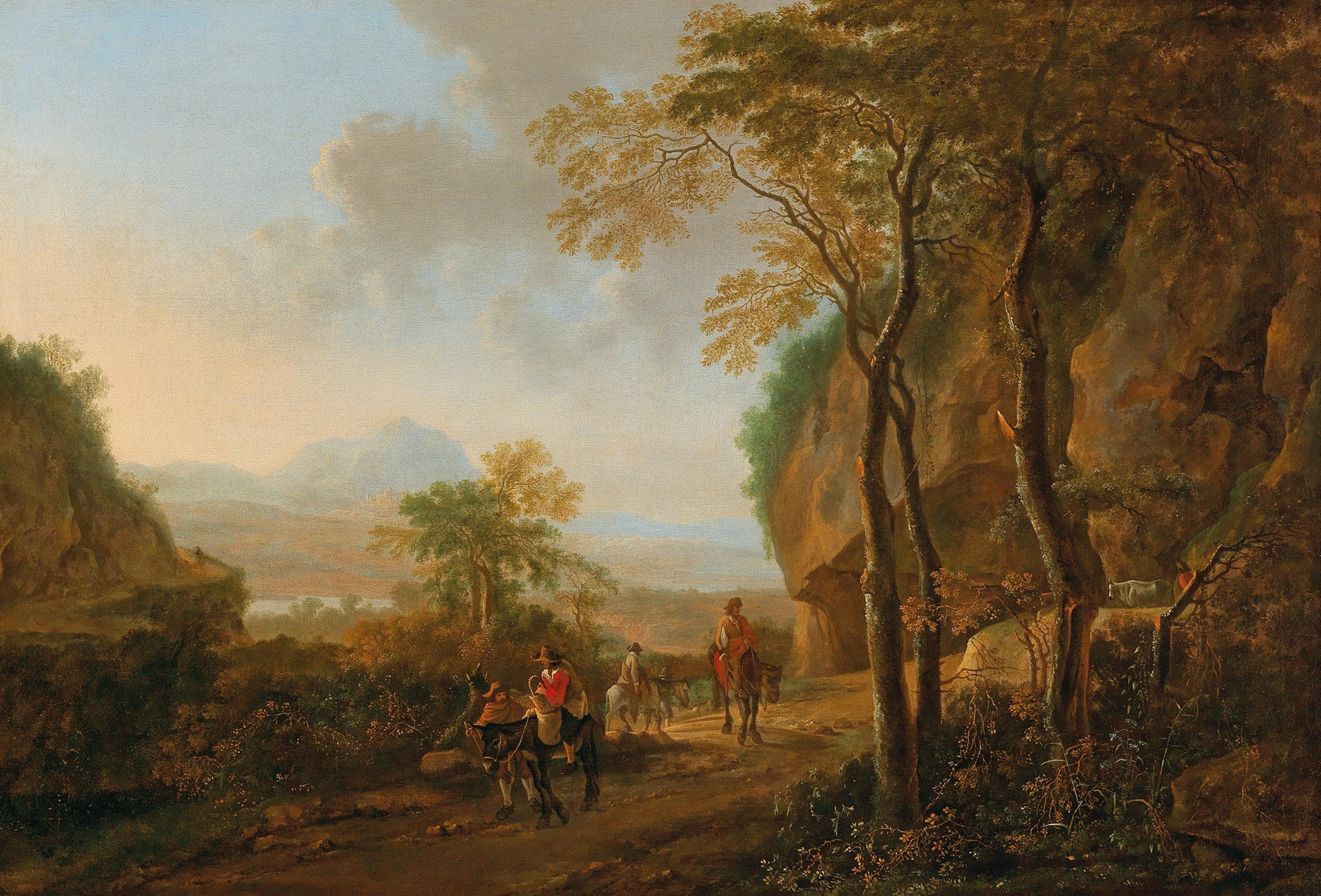
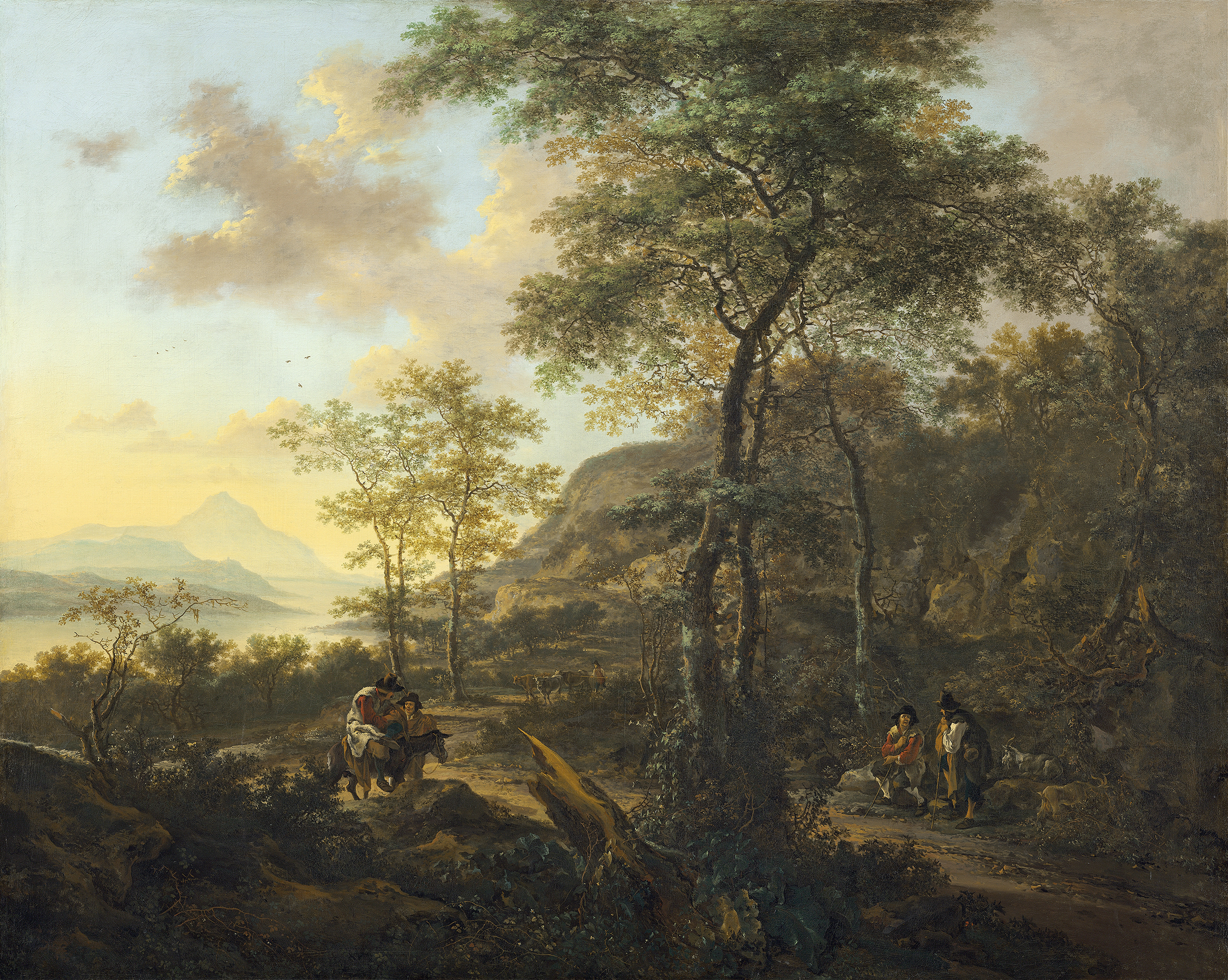
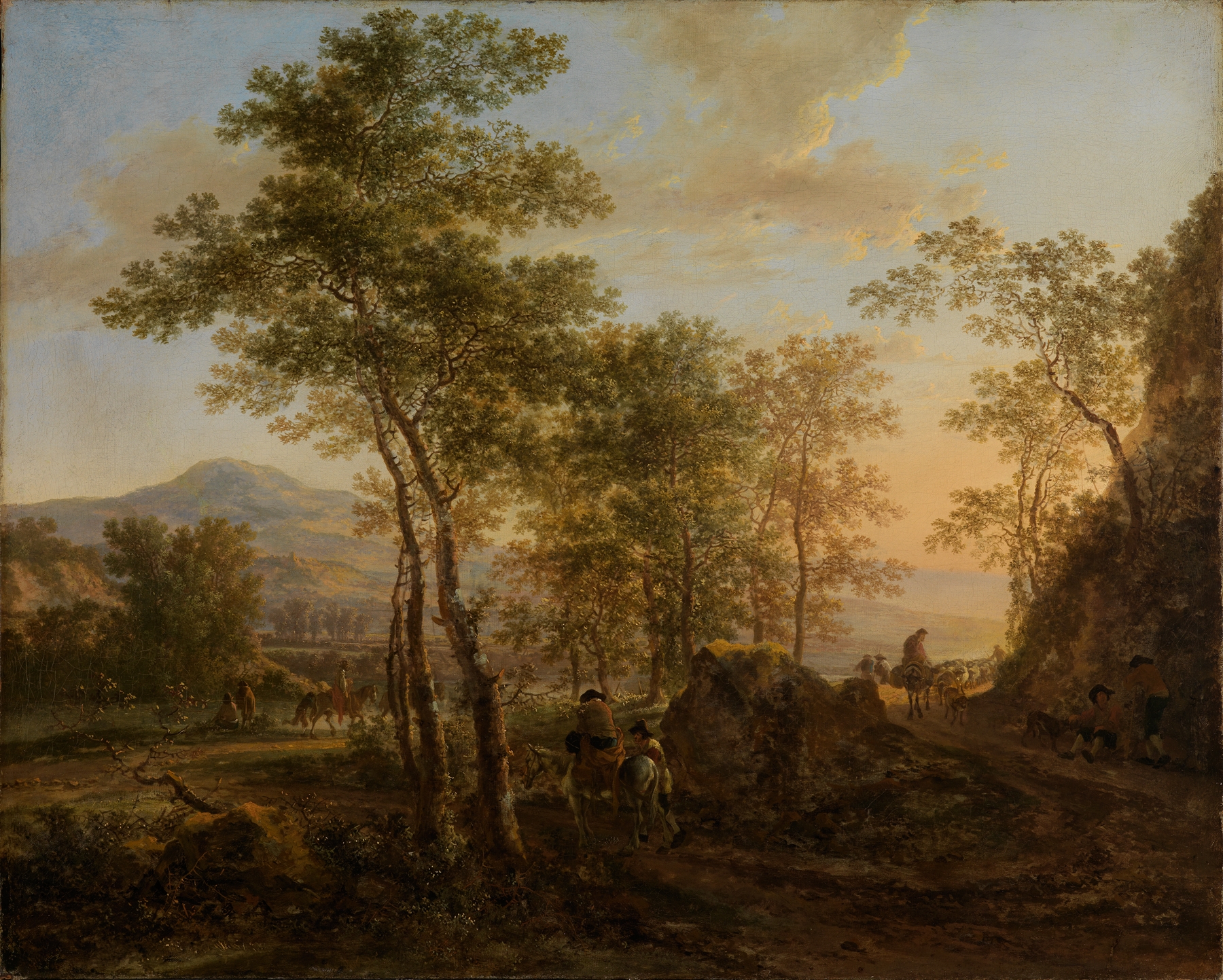
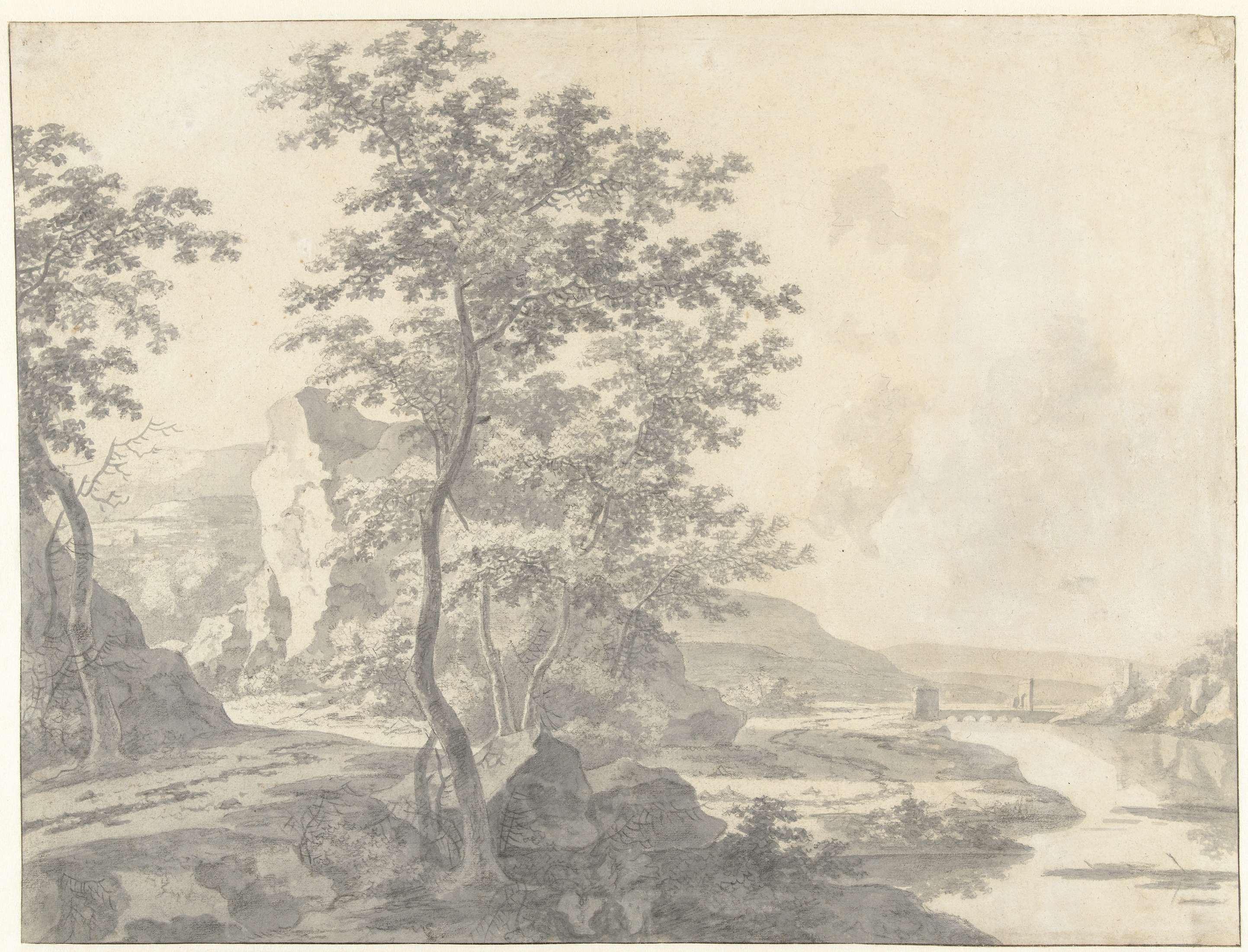
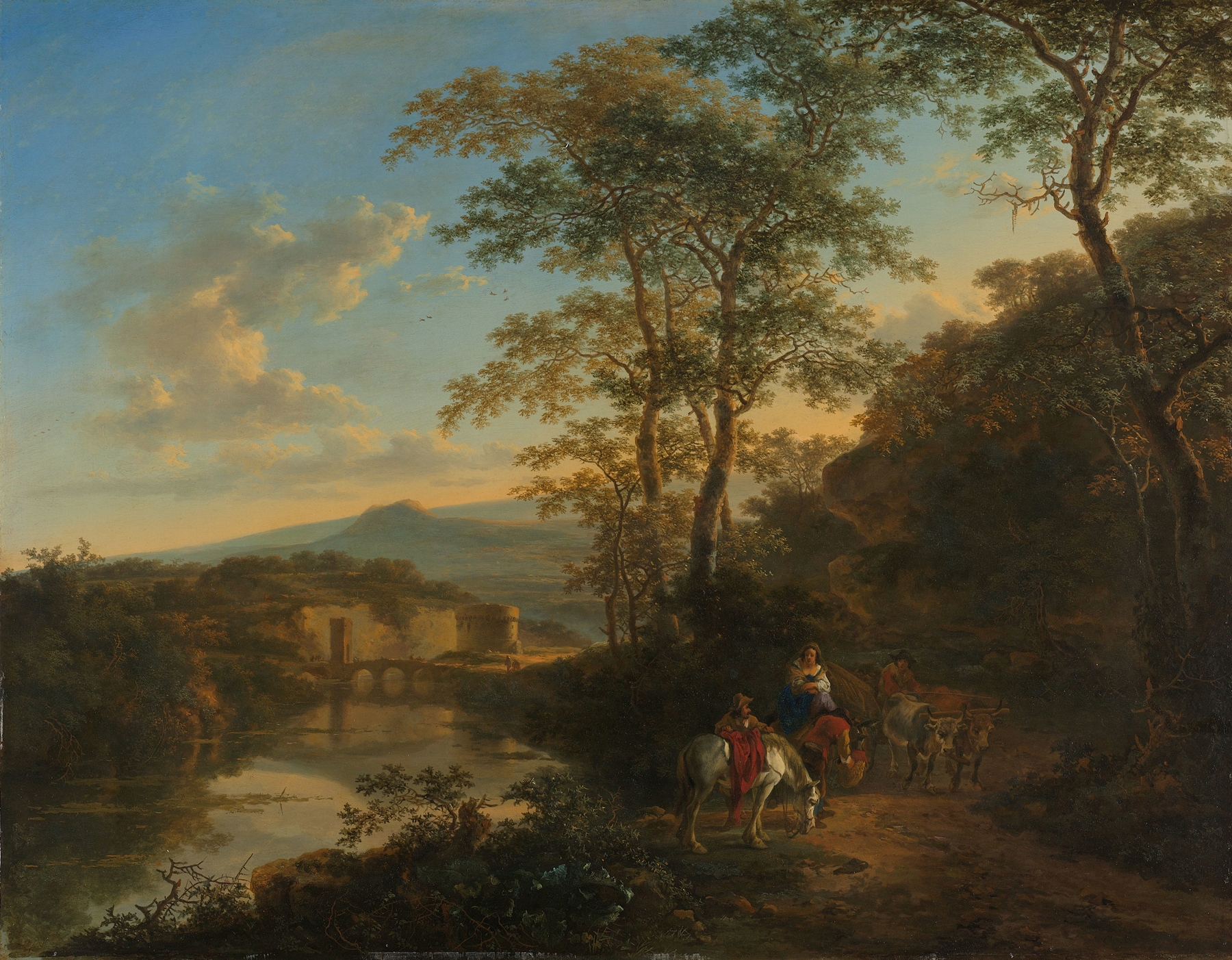
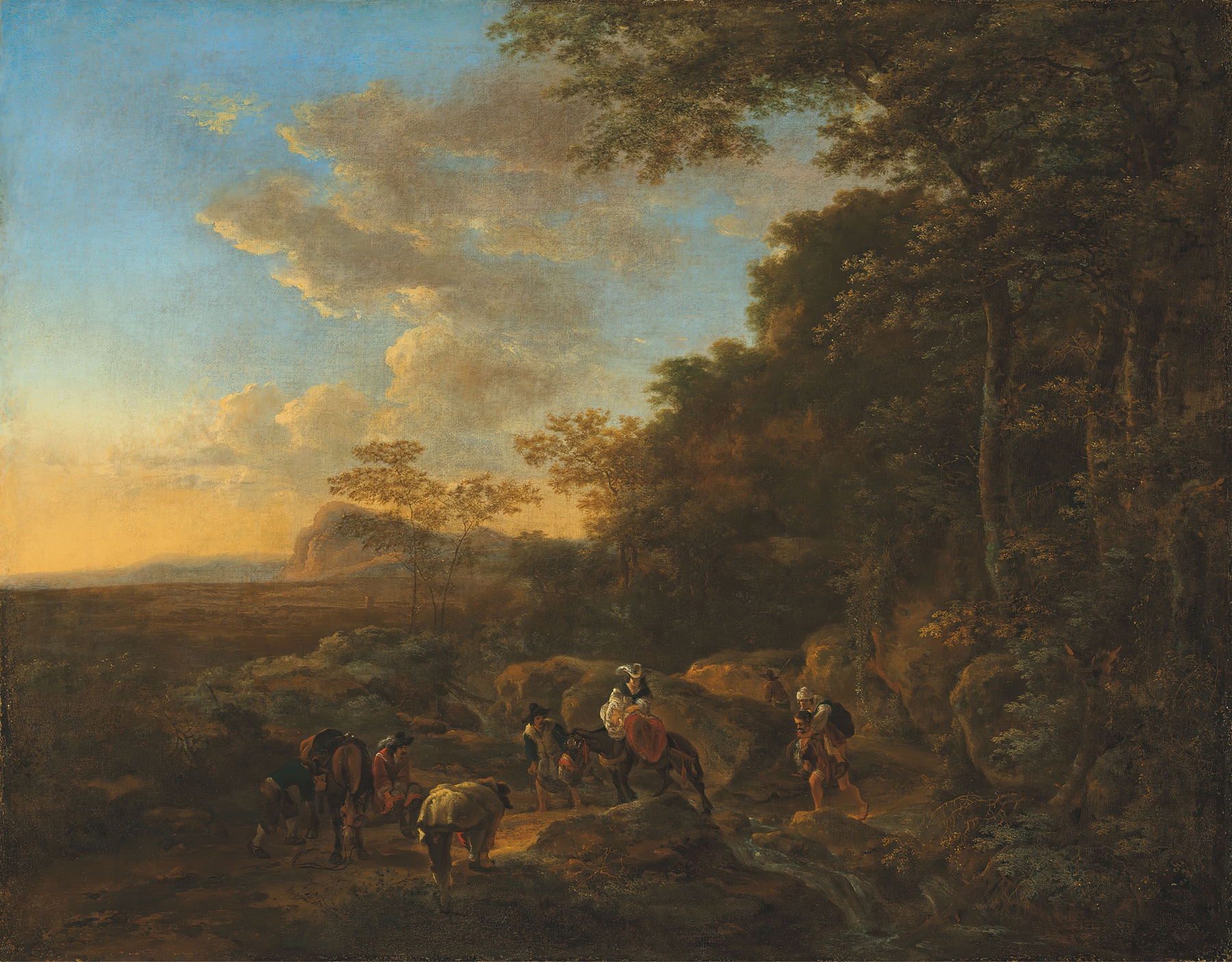
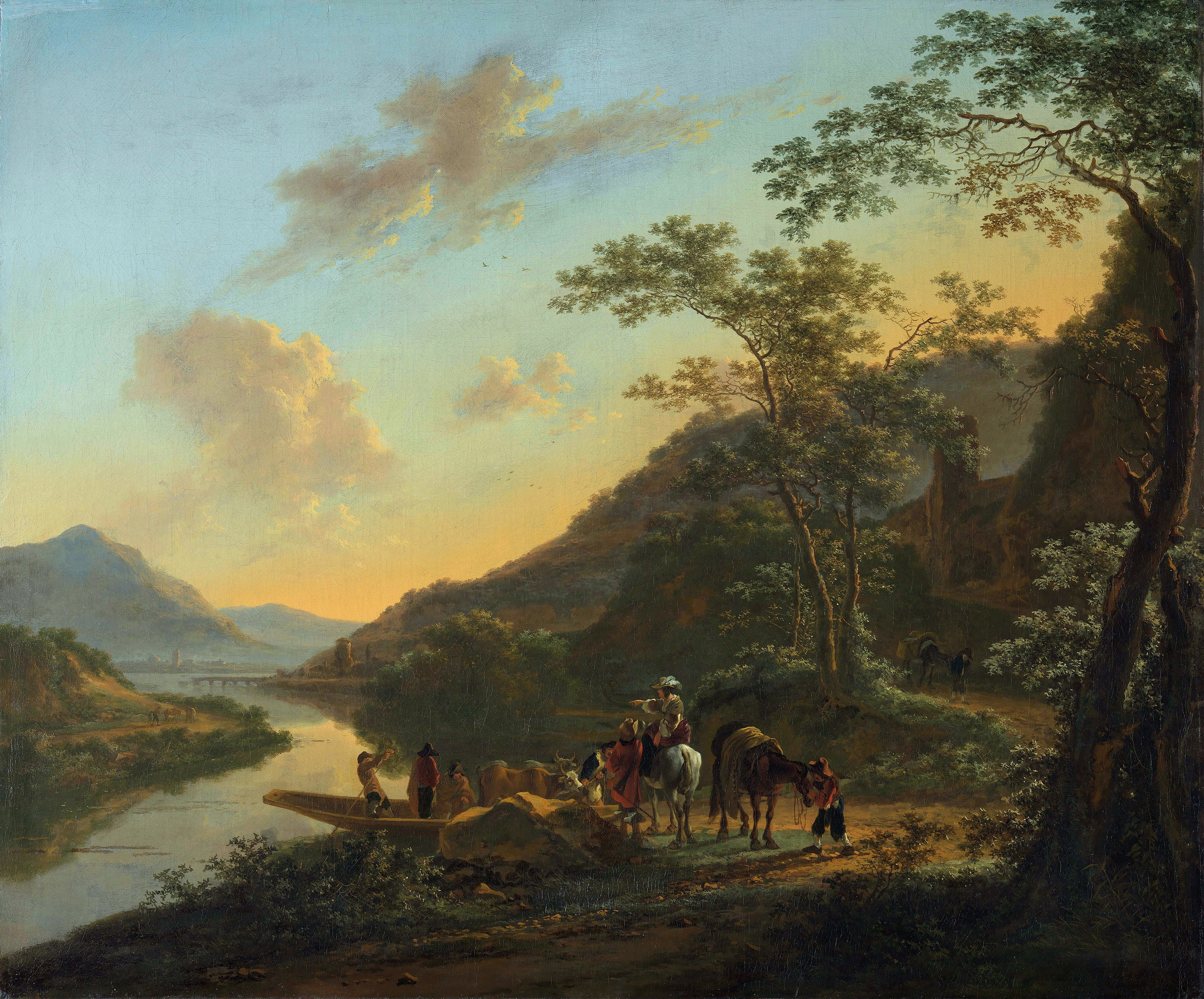
What secret hides in the quiet of the canvas? In the serene expanse of Jan Both's Landschap met brug, de Ponte Molle, the illusion of depth invites you to linger, urging contemplation of the tranquil yet enigmatic world it unveils. Focus on the bridge that spans the calm waters; its arch gently connects two worlds, embodying a conduit between reality and the sublime. The muted greens and soft blues of the landscape blend seamlessly, while dappled light filters through the trees, illuminating the textured foliage with delicate highlights.
The painter’s expert handling of chiaroscuro enhances the sense of dimensionality, drawing you into a scene that feels both expansive and intimate. Yet, beneath the surface, tension hums quietly. The bridge, a symbol of connection, also serves as a barrier, suggesting the complexities of traversing between realms. Notice the figures at the water's edge; their stillness contrasts sharply with the dynamic play of light and shadow, hinting at the secrets held within the landscape.
Each brushstroke whispers of life beyond the frame, inviting the viewer to ponder what lies just out of sight. Jan Both painted this landscape between 1644 and 1652, during a time when Dutch art was undergoing profound transformation. Experimenting with atmospheric perspective and emotional resonance, he was influenced by the burgeoning Baroque movement. His works, celebrated for their naturalism, reflect a world rife with exploration and discovery, echoing the evolving consciousness of his contemporaries.