Landschap met twee muilezels voor de Rocca Aquatico bij Ancona — History & Analysis
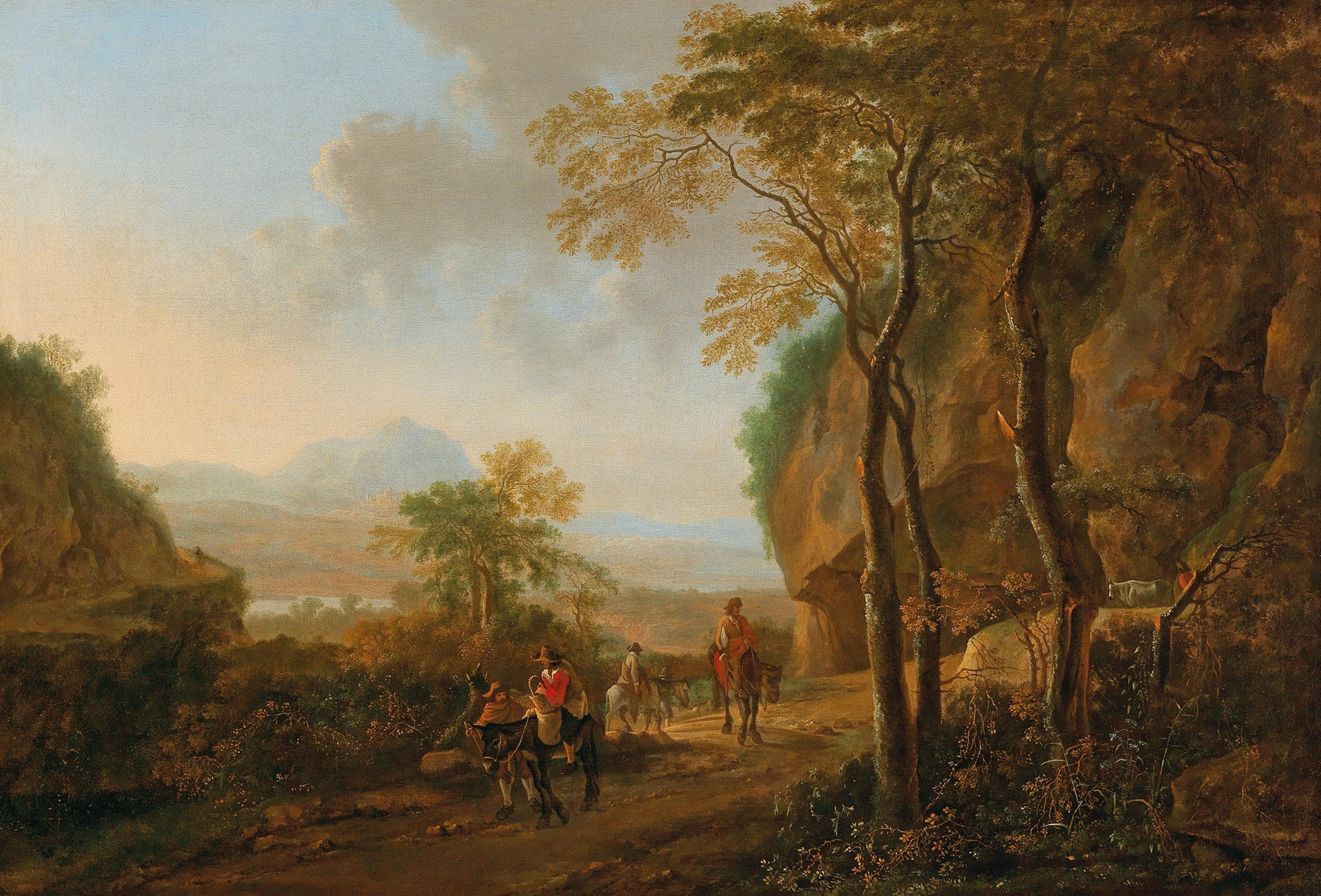
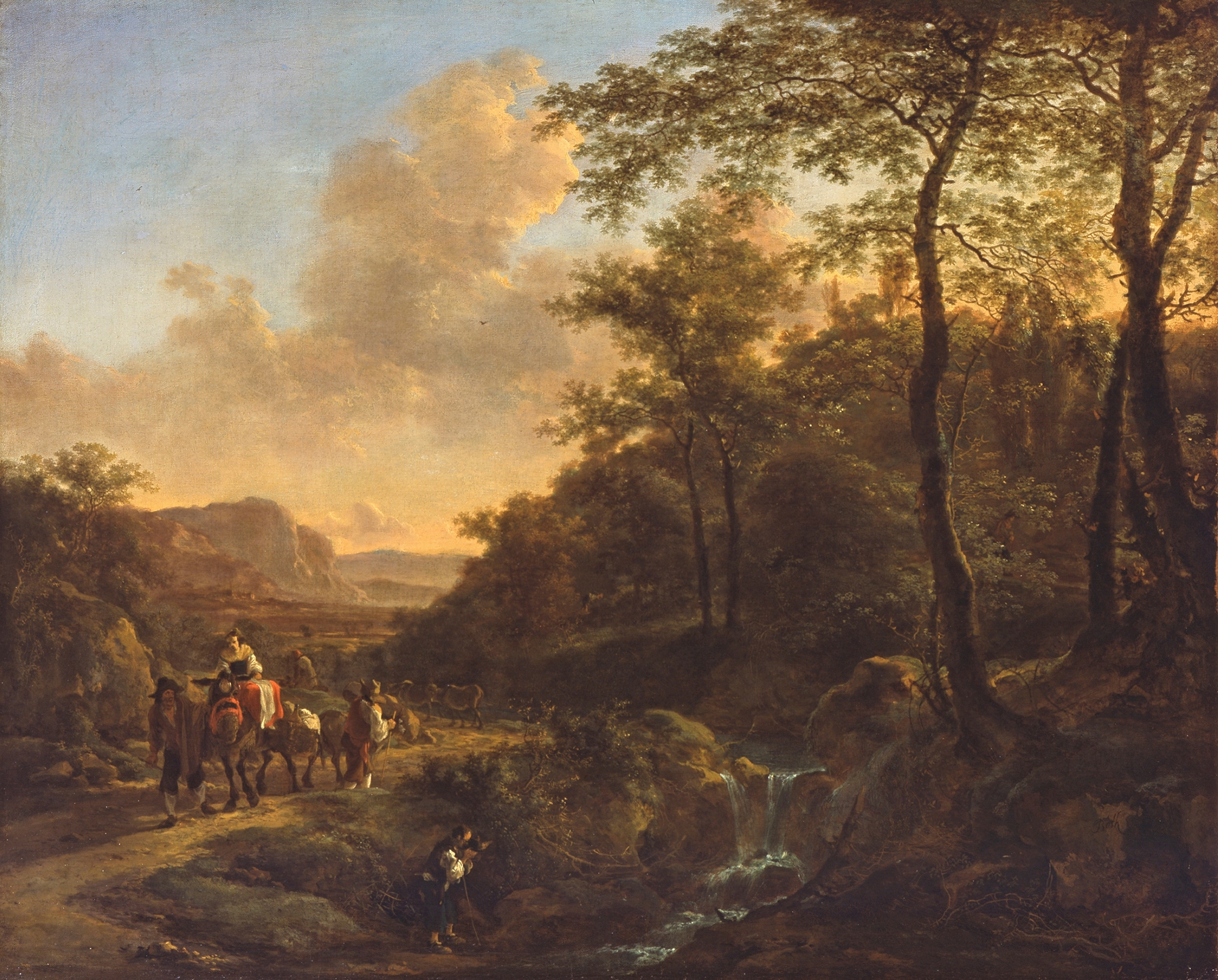
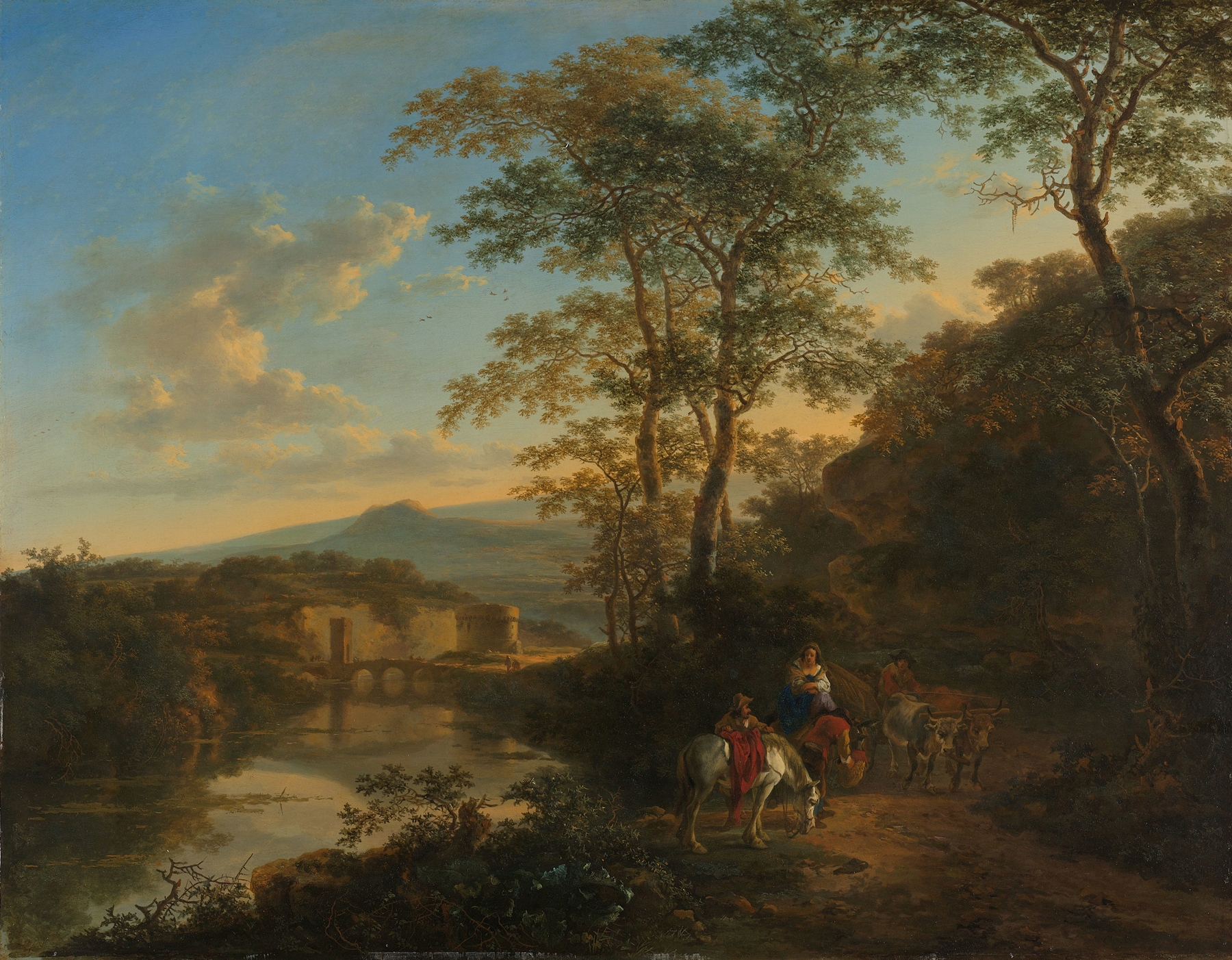
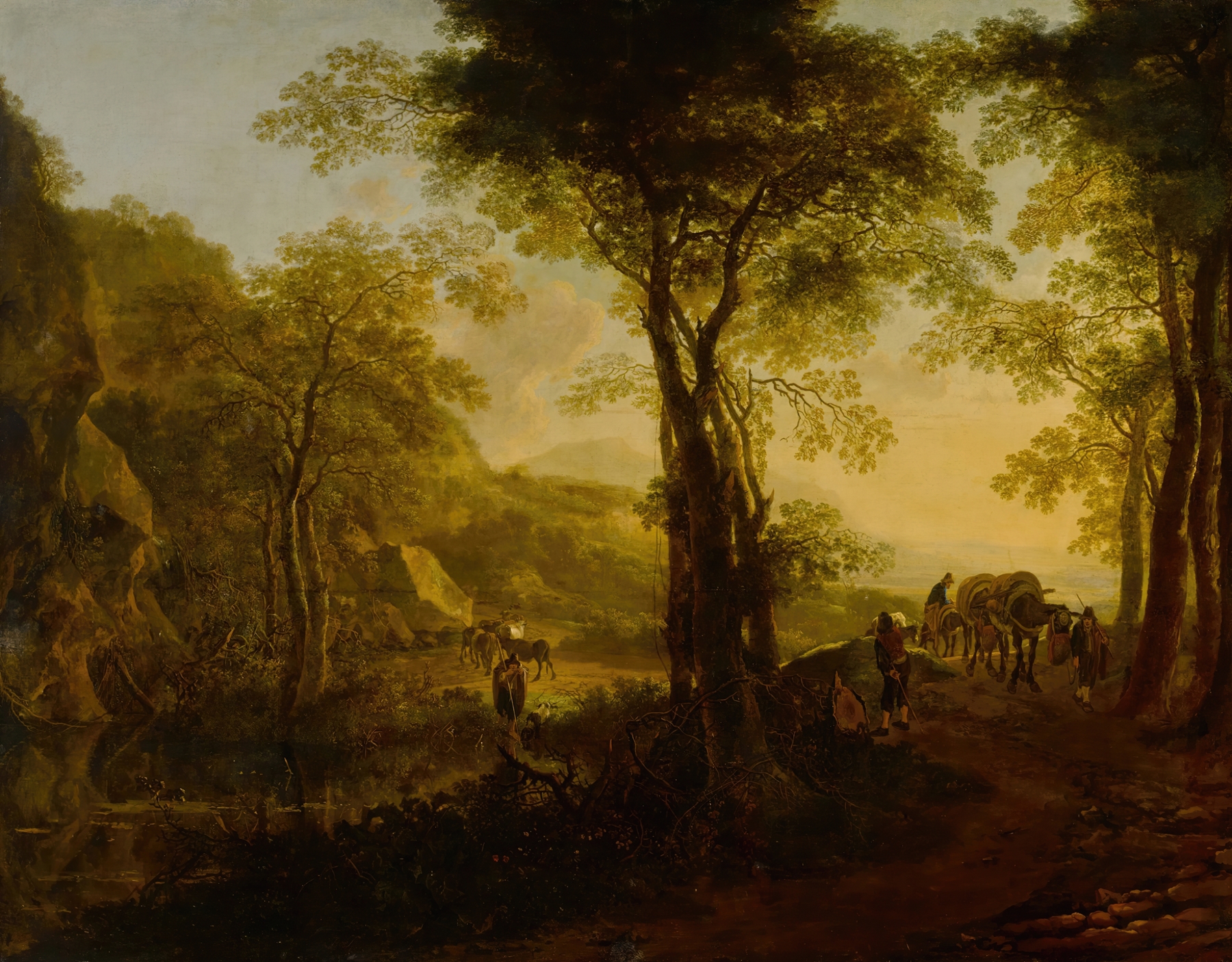
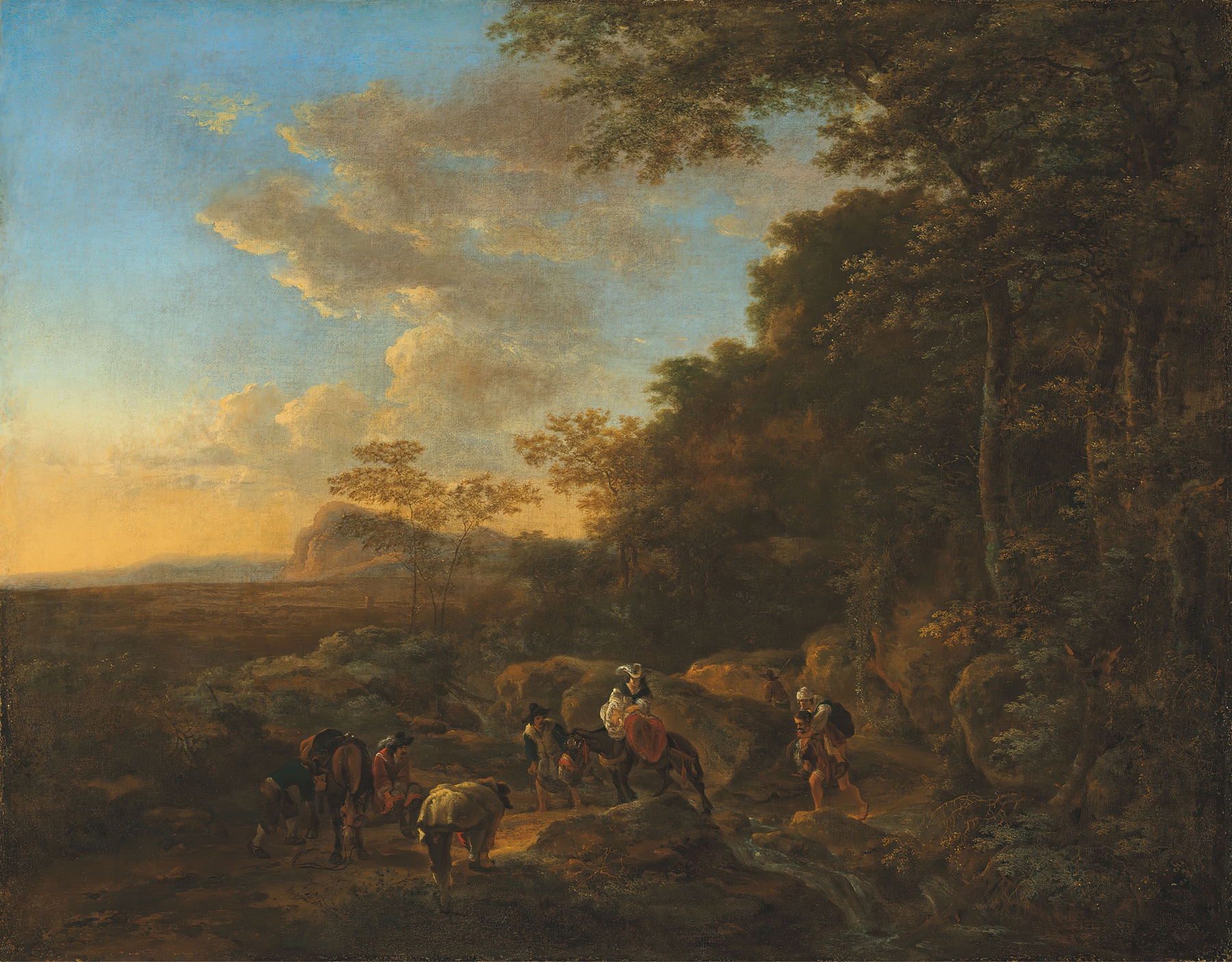
Can beauty exist without sorrow? In Landschap met twee muilezels voor de Rocca Aquatico bij Ancona, the delicate interplay of nature’s splendor and a haunting sense of emptiness invites contemplation. Look to the left where the two mules, with their soft earthy tones, stand quietly against the backdrop of a rolling landscape. Their sturdy forms contrast sharply with the ethereal quality of the light filtering through the clouds, casting a gentle haze over the distant hills.
Notice how the painter captures the depth of the scene through a careful balance of greens and browns, emphasizing the natural beauty while hinting at an underlying melancholy. The absence of human figures in this vast expanse accentuates the solitude felt within the landscape, as if the mules themselves represent a fleeting, transient connection to life itself. The looming Rocca Aquatico in the distance stands as a silent sentinel, a remnant of human endeavor now softened by time, reflecting the fragility of our existence against the enduring face of nature. The juxtaposition of life and emptiness creates an emotional tension, making the viewer ponder the stories that remain untold within this serene yet melancholic setting.
During the years 1644 to 1652, Jan Both painted this work while residing in Italy, where he was deeply influenced by the landscape tradition. The period was marked by a growing interest in naturalism and the depiction of light, as artists sought to capture the essence of their surroundings. Both’s exploration of landscape painting during this time reflects both a personal journey and a broader artistic movement, embracing the beauty of nature while hinting at the inevitable passage of time.