Le Matin — History & Analysis
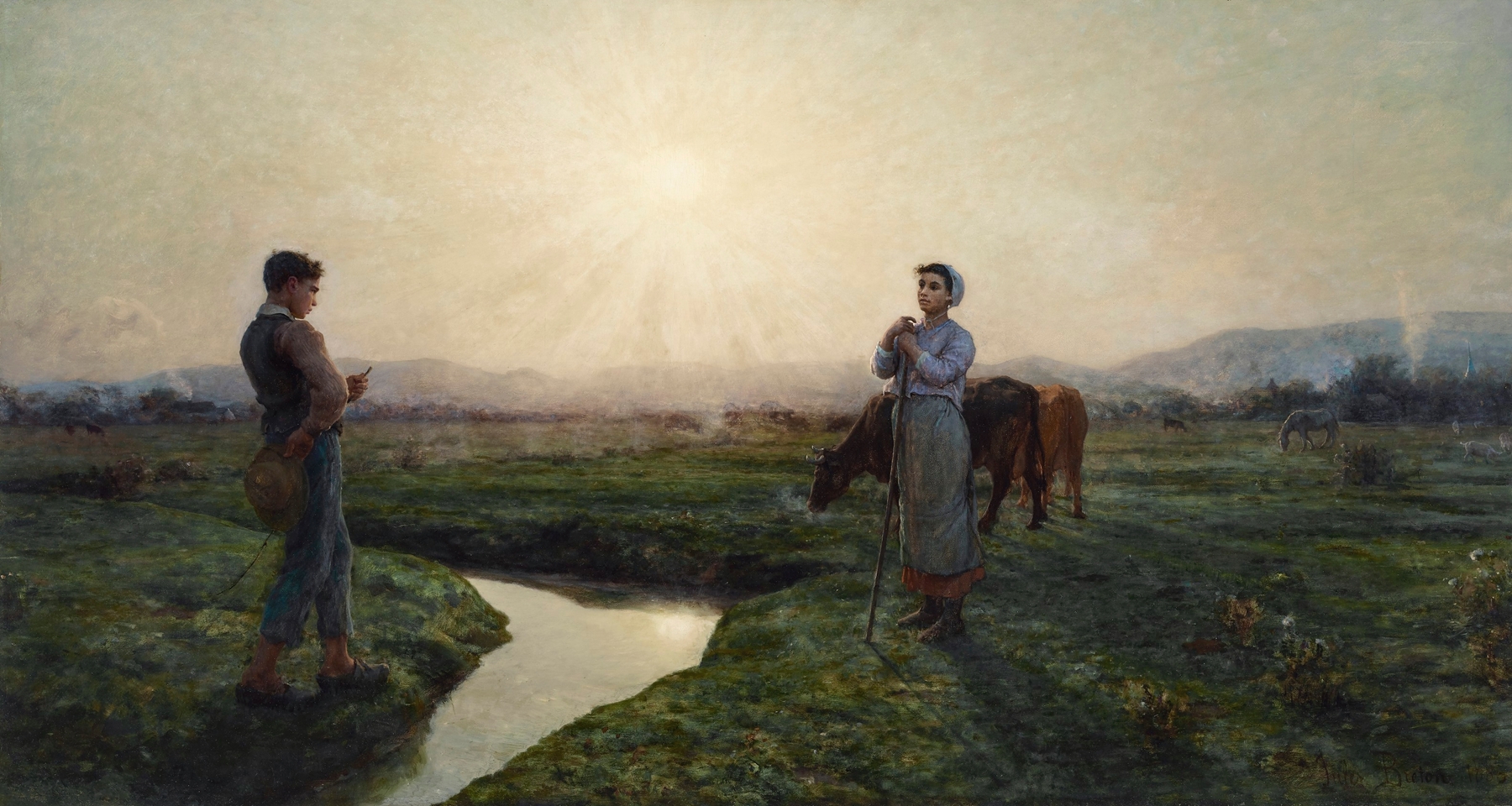
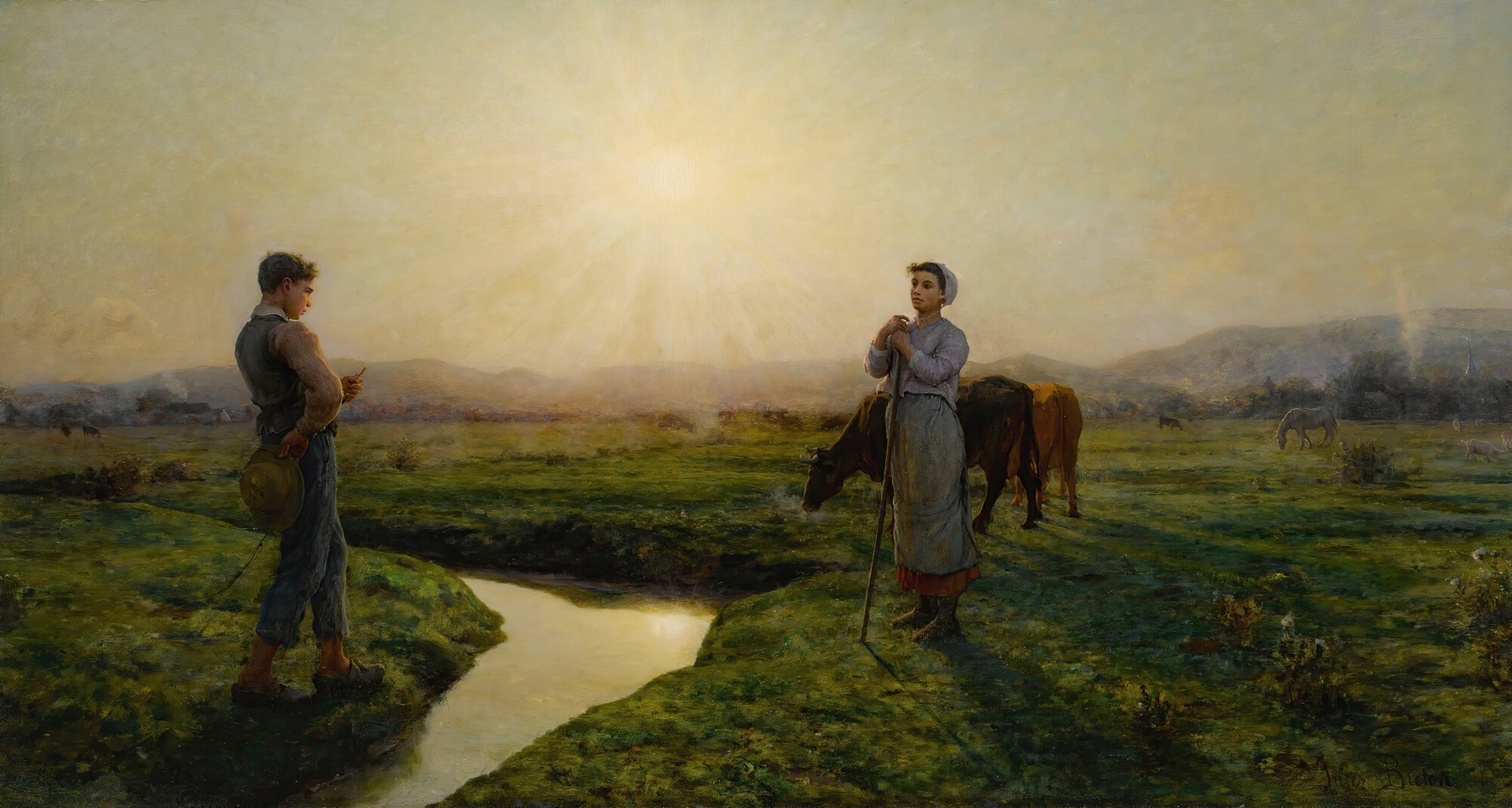
What secret hides in the quiet of the canvas? Beneath the soft, golden light, a quiet legacy of labor and life unfolds, inviting us to ponder the stories of those who toil under the dawn’s embrace. Look to the center of the canvas, where a young peasant woman stands, poised and serene against the backdrop of a gently rising sun. Notice how the light spills over her figure, illuminating her simple dress, which blends harmoniously with the earth tones of the field. The brushwork is delicate yet confident, creating a palpable texture that captures the morning dew and the rich, fertile soil.
Surrounding her, the landscape stretches, hinting at both the promise of the day ahead and the weight of responsibilities that lie within the fields. Within this tranquil scene lies a profound tension between hope and duty. The woman's expression, dappled in sunlight, carries a mixture of anticipation and weariness; she stands as a bridge between the past and a future filled with both toil and abundance. The soft palette of pastel hues contrasts with the hard lines of her labor, evoking the dual nature of agricultural life—nurturing yet demanding.
Each brushstroke whispers the story of countless mornings spent in silence, where dreams take root alongside the remorseless cycle of the seasons. In 1883, Le Matin was painted during a pivotal period in Jules Breton's career, as he embraced the themes of rural life and the dignity of labor. Living in France, where industrialization was reshaping society, his work resonated with nostalgia for a simpler era. This painting reflects Breton’s dedication to immortalizing the lives of peasants, encapsulating the struggles and joys of a world on the brink of change, a legacy reflected in the very fabric of the landscape he cherished.