The Weeders — History & Analysis

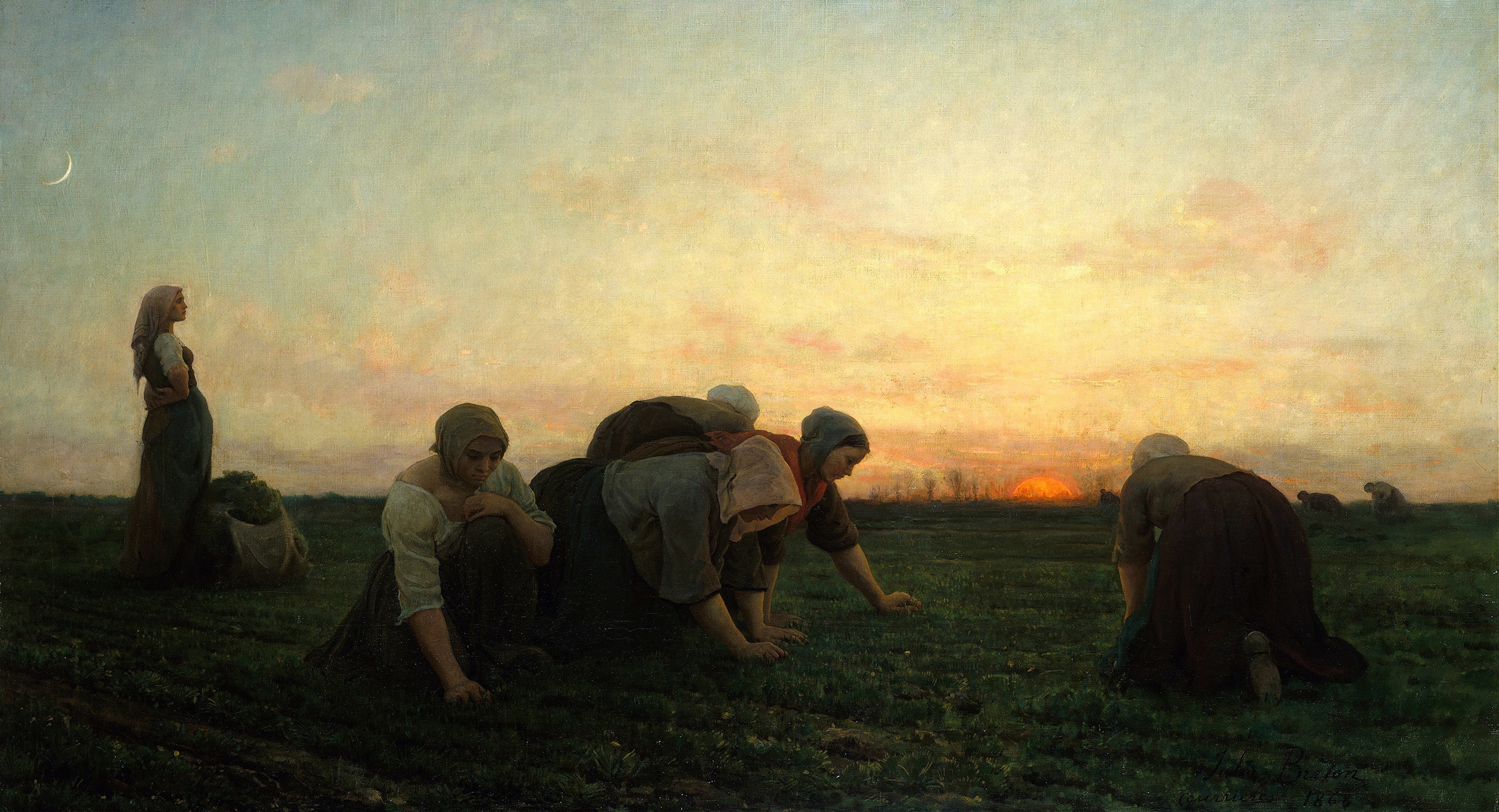
“Art reveals the soul when the world turns away.” In The Weeders, the delicate balance between labor and nature is poignantly captured, inviting viewers to explore the deeper truths behind everyday existence. Look to the center of the canvas, where two laborers bend over the earth, their bodies echoing a connected rhythm with the land. Notice how soft, warm light spills over the scene, illuminating their toil yet casting gentle shadows that hint at the weight of their work. The earthy palette of greens and browns intertwines with the faint blue sky, creating a harmonious backdrop against which the figures emerge with textured detail and human vulnerability.
The composition draws your gaze inwards, making the viewer feel both a part of and apart from this intimate moment. Beneath the surface, the painting speaks to the duality of existence—the joy found in labor contrasted with the burdens it entails. The expressions of concentration on the workers’ faces reflect not just their task but a deeper, shared human experience of perseverance. The surrounding flora, rich and vibrant, serves as a reminder of nature's bounty while also emphasizing the harshness of agricultural life.
This tension between beauty and struggle resonates throughout the piece, evoking a sense of empathy and reflection on our own lives. In 1868, Breton created this work during a period of personal and artistic transition, having found initial success in portraying peasant life. The artist, influenced by the burgeoning Realist movement, sought to capture the authenticity of rural labor, reflecting a society deeply intertwined with the rhythms of nature. As he painted, the world was on the cusp of modern industrialization, making his delicate homage to agrarian life all the more poignant.