The Ruins of Saint Bavo’s Abbey in Ghent — History & Analysis
“Sometimes beauty is just pain, disguised in gold.” The haunting elegance of decay often reveals a deeper longing, an aching desire for what once was. In The Ruins of Saint Bavo’s Abbey in Ghent, the contrast of loss and beauty invites reflection on time’s relentless passage and the remnants of human aspiration. Focus on the intricate archways that rise dramatically in the background, their crumbling forms softened by the golden hues of the setting sun. The warm light spills across the scene, illuminating fragments of stone and wisps of vegetation that cling desperately to the ruins.
The careful brushwork not only captures the texture of the aged stone but also evokes a sense of reverence for the history embedded in these walls. Beneath the surface of this serene depiction lies a profound tension between nostalgia and the inevitability of decay. Notice how the interplay of light and shadow serves to highlight this duality; where light touches, there is a sense of hope, yet the shadows speak of loss and abandonment. The lingering beauty of the abbey suggests a desire to hold onto the past, even as nature steadily reclaims its territory, reminding us that beauty often arises from the remnants of what is gone.
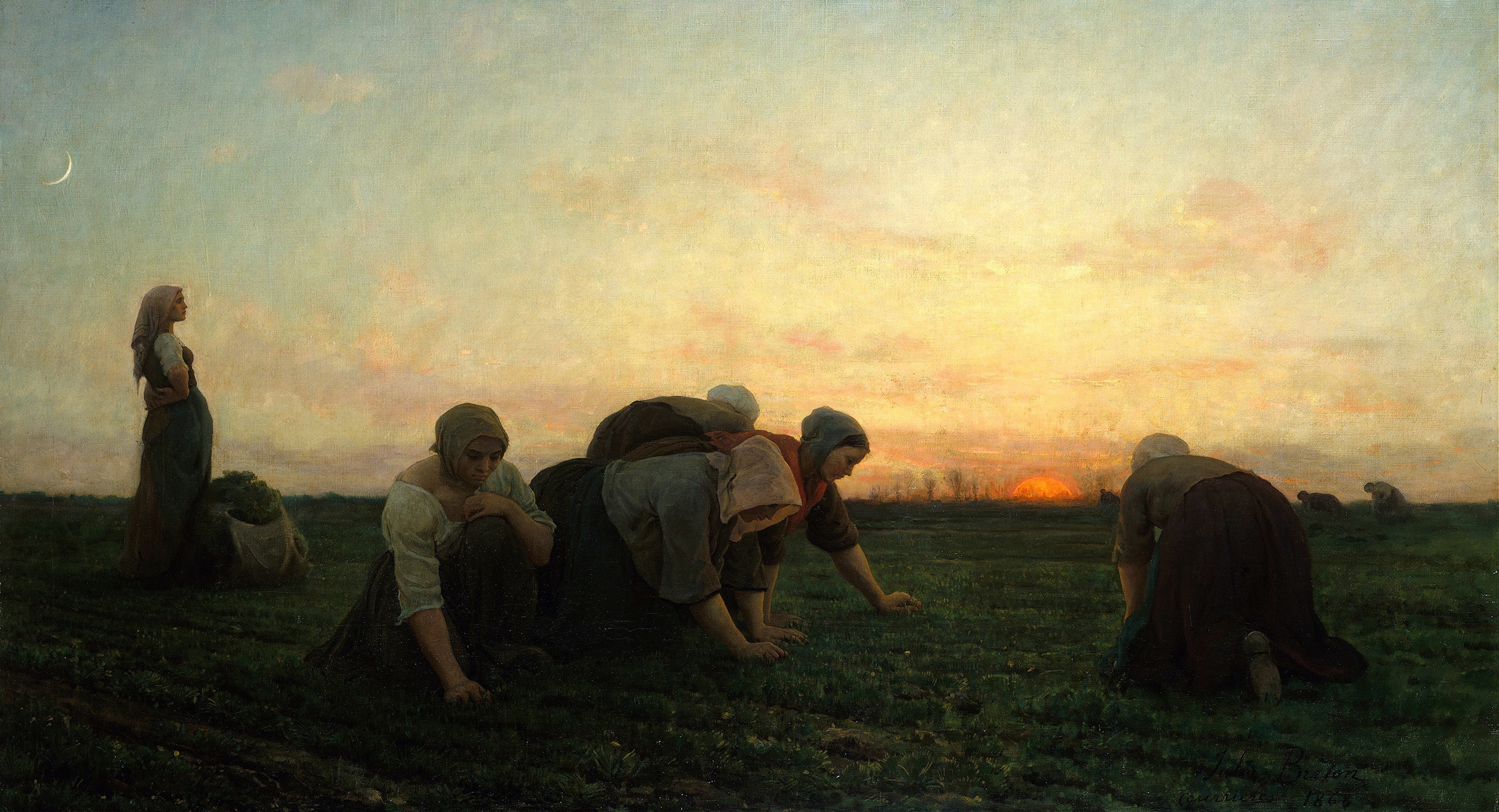
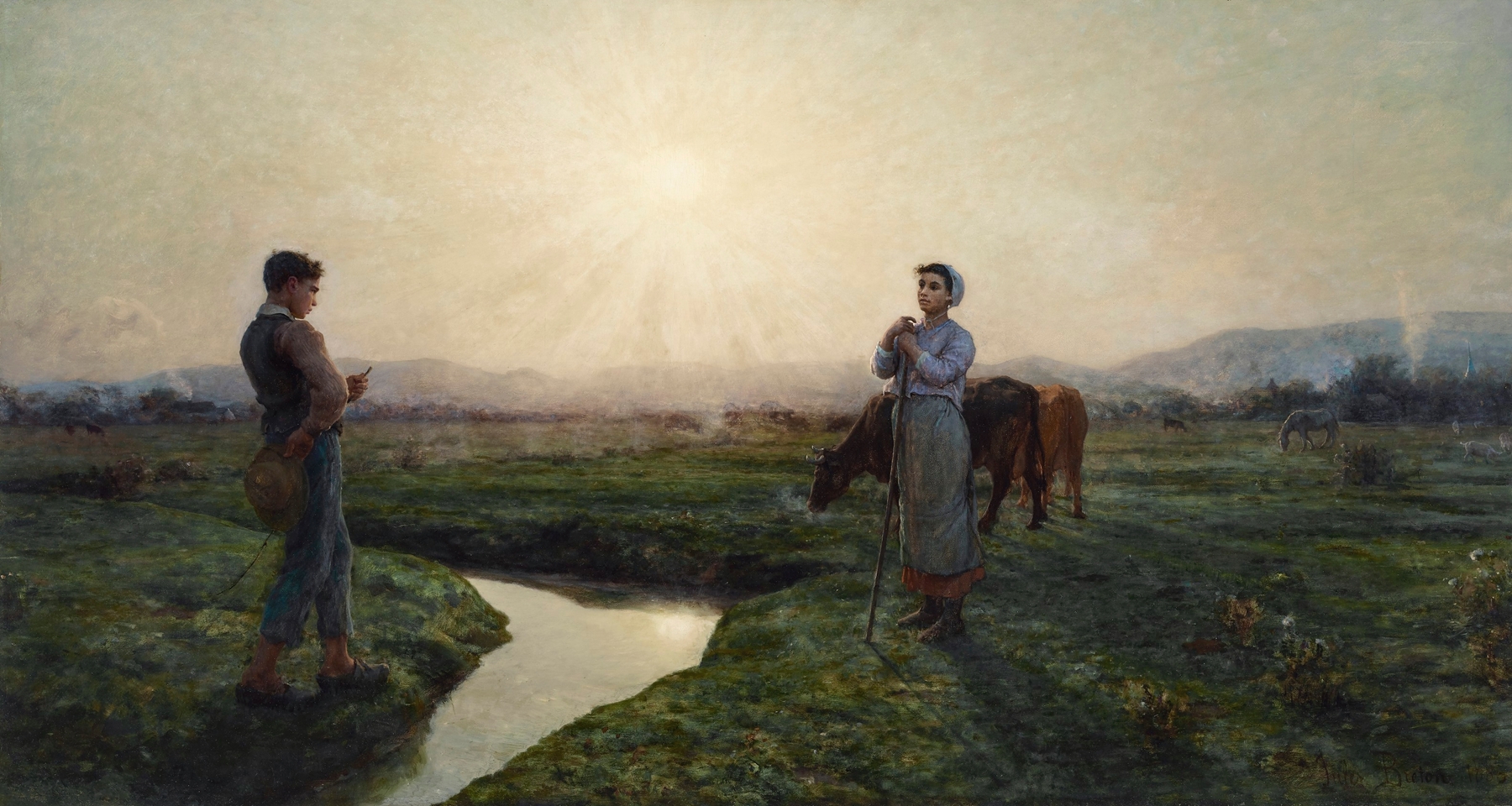
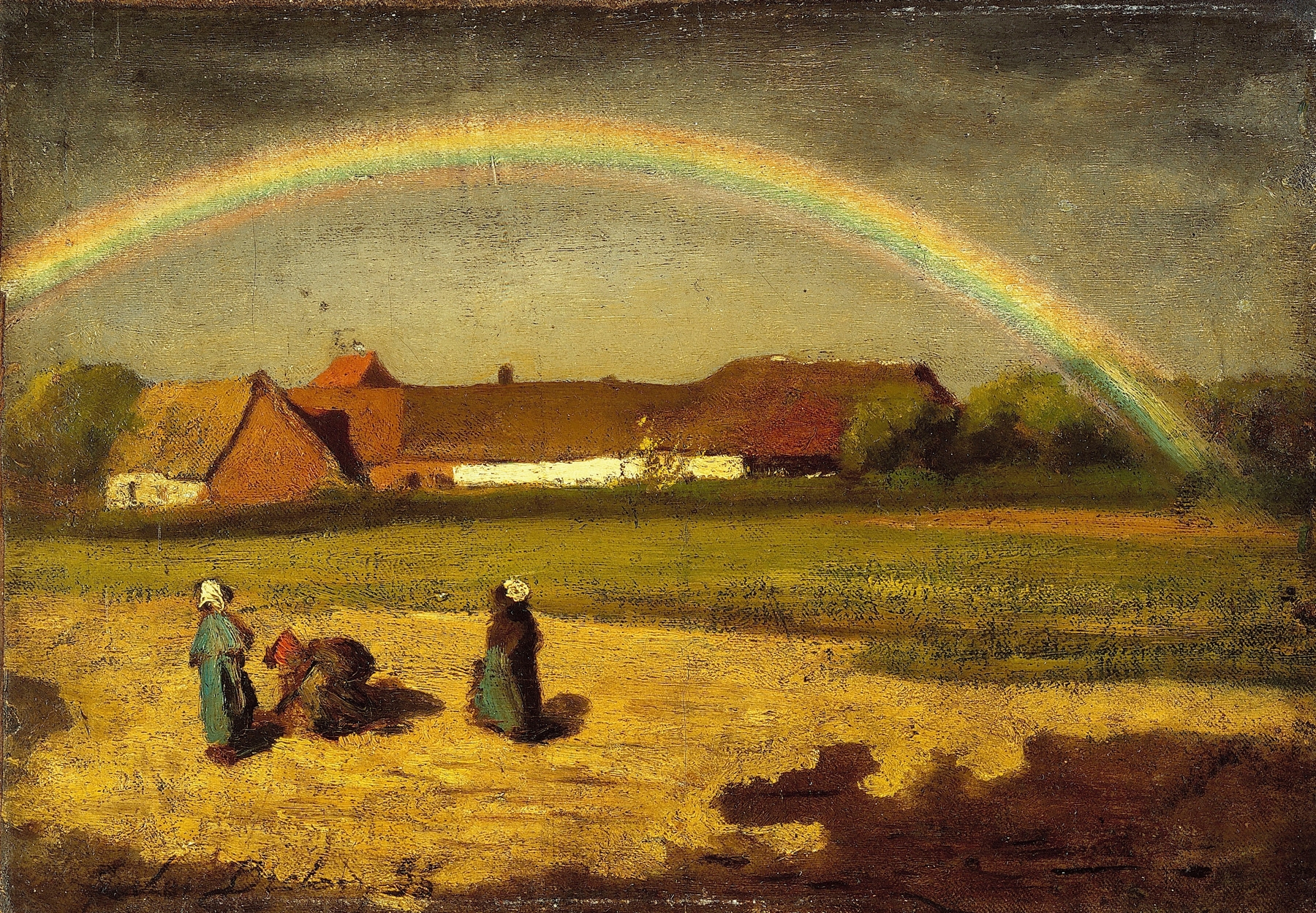
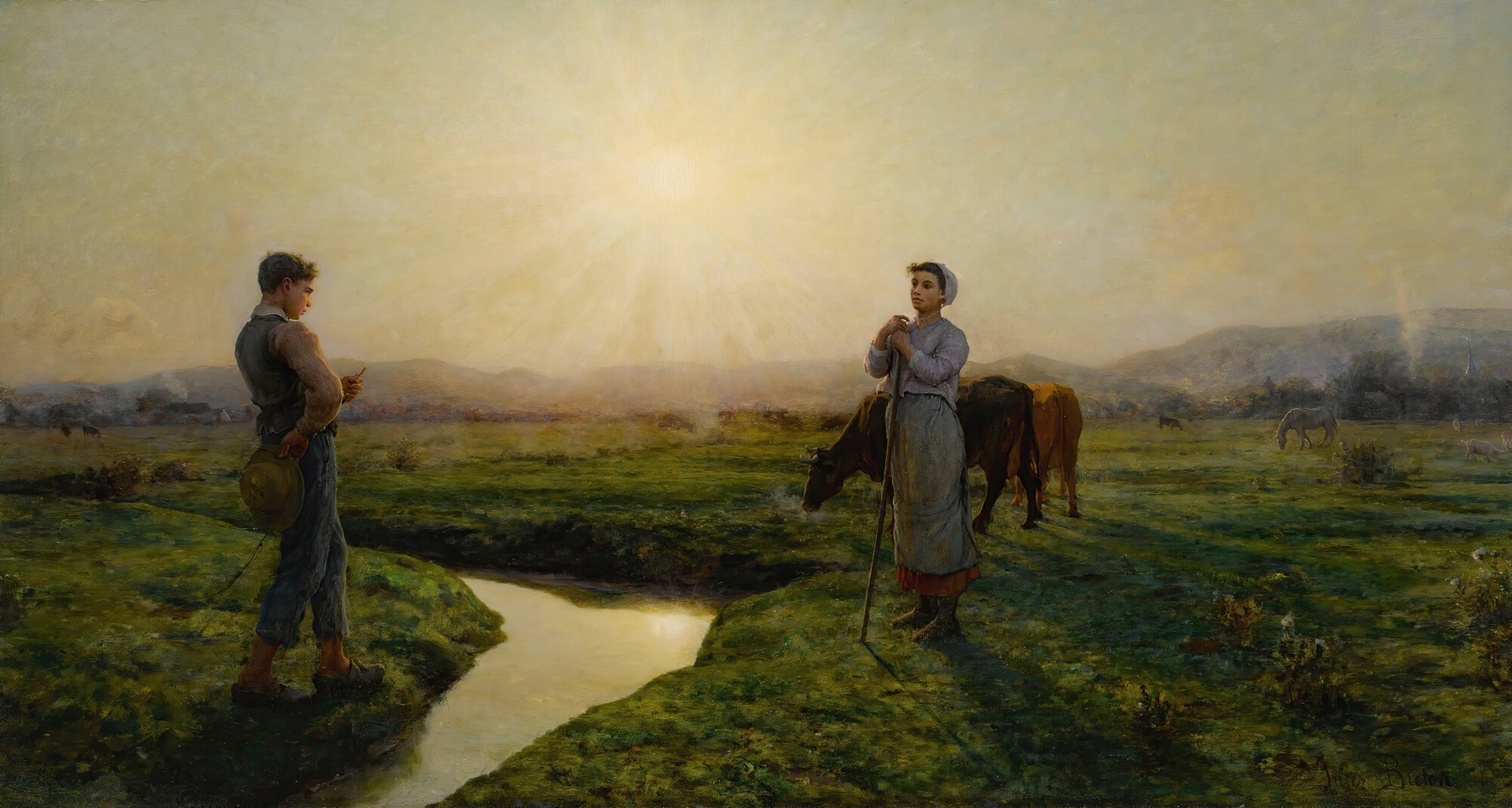
In 1853, when this work was created, Jules Breton was immersed in the Romantic movement, exploring themes of nature and decay in an increasingly industrialized world. Living in France, he was influenced by the changing artistic landscape and the rise of plein air painting, which emphasized capturing natural light. This context informs his poignant portrayal of the abbey, a reflection on both personal and collective histories, revealing the artist's profound understanding of desire and loss.