Liggende jonge stier — History & Analysis
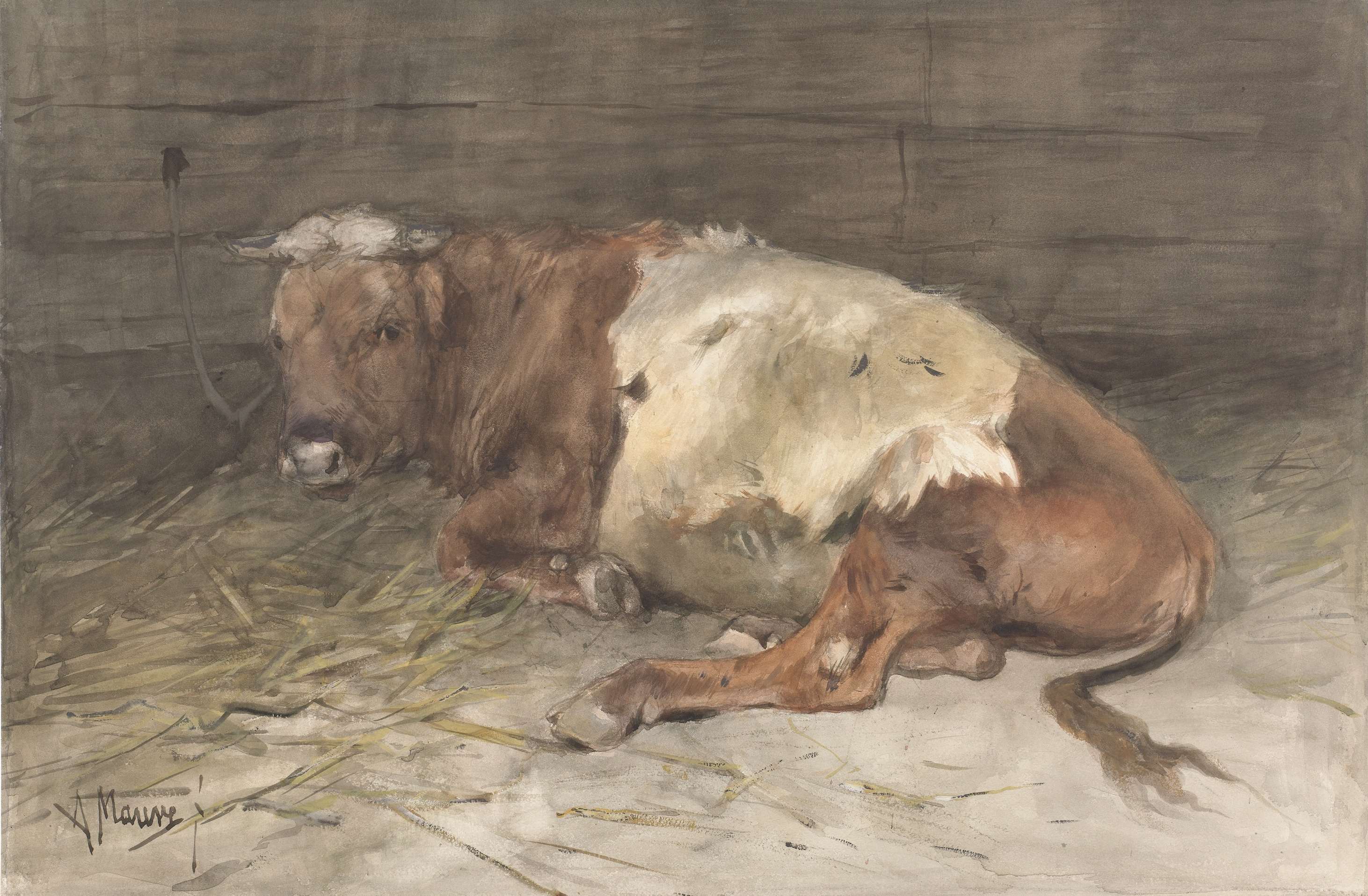
Can paint confess what words never could? In Liggende jonge stier, the essence of time unfurls through the stillness of a resting young bull, a quiet monument to both life and fleeting moments. Focus on the bull's form, relaxed yet noble, as warmth from soft, natural light caresses its coat. Notice how the artist deftly blends earthy browns and muted greens, creating harmony that draws the viewer’s gaze to the subtle interaction of shadows and highlights.
The texture of the fur invites touch, bridging the gap between the viewer and the subject, while the softly blurred background suggests a pastoral serenity that cradles the creature in a world untroubled by haste. Delve deeper into the contrast between stillness and the inevitable passage of time. While the young bull embodies youthful vigor, its peaceful repose hints at a tranquil acceptance of life’s cycles. The muted colors evoke nostalgia, reminding us of the fleeting nature of each moment, as if Mauve captures a whisper of eternity within the ordinary.
The gentle positioning of the bull suggests an intimate connection to the viewer, inviting contemplation on the quiet beauty of existence. Painted in the mid-1800s, this work emerged during a period when Anton Mauve was establishing his reputation in the Netherlands. He was deeply influenced by the Romantic movement, which emphasized emotion and a profound appreciation for nature. This particular time in his career was marked by a shift towards realism, as he sought to depict the everyday life and landscapes of rural Holland, reflecting the broader themes of his time in art.