Liverpool Docks — History & Analysis
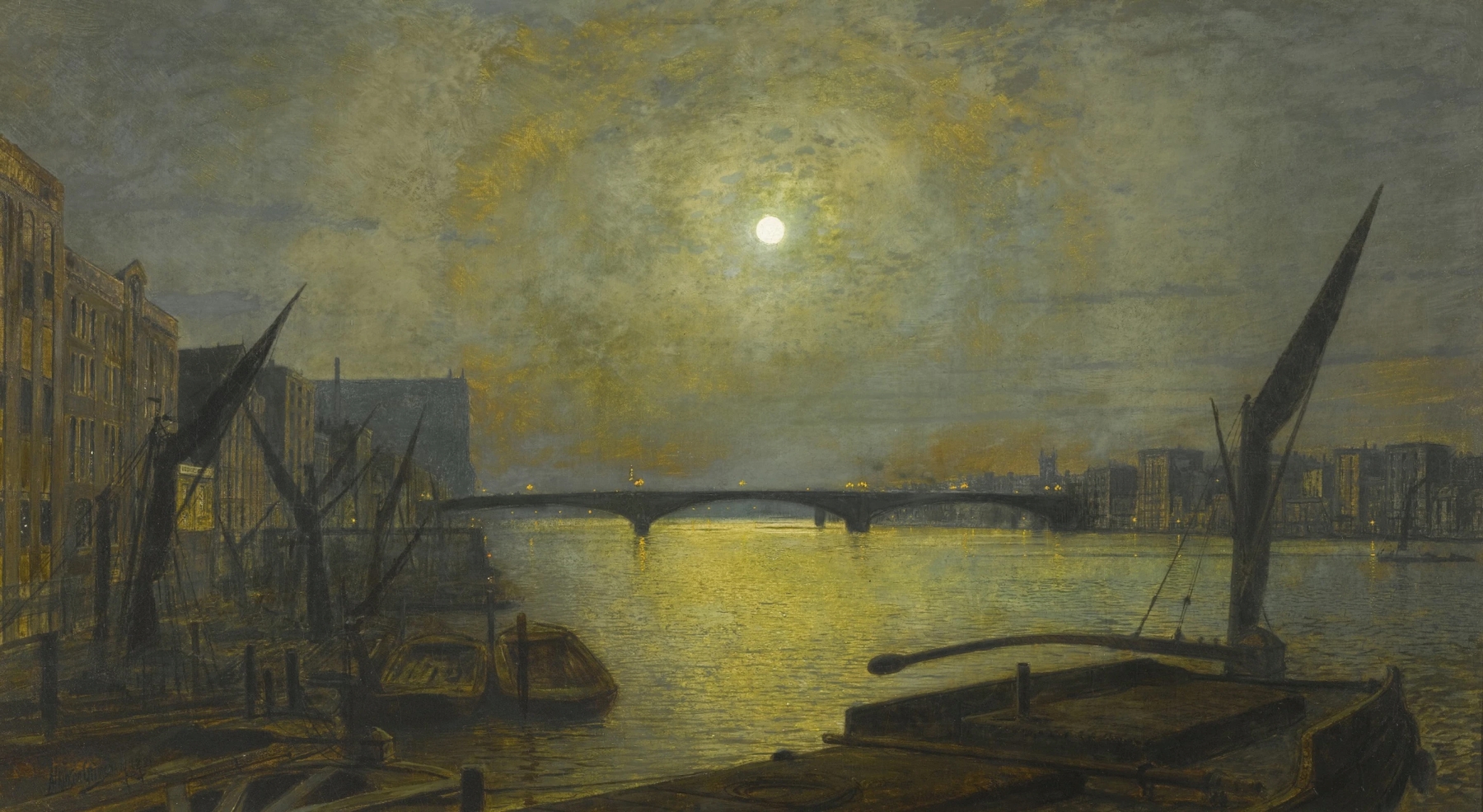
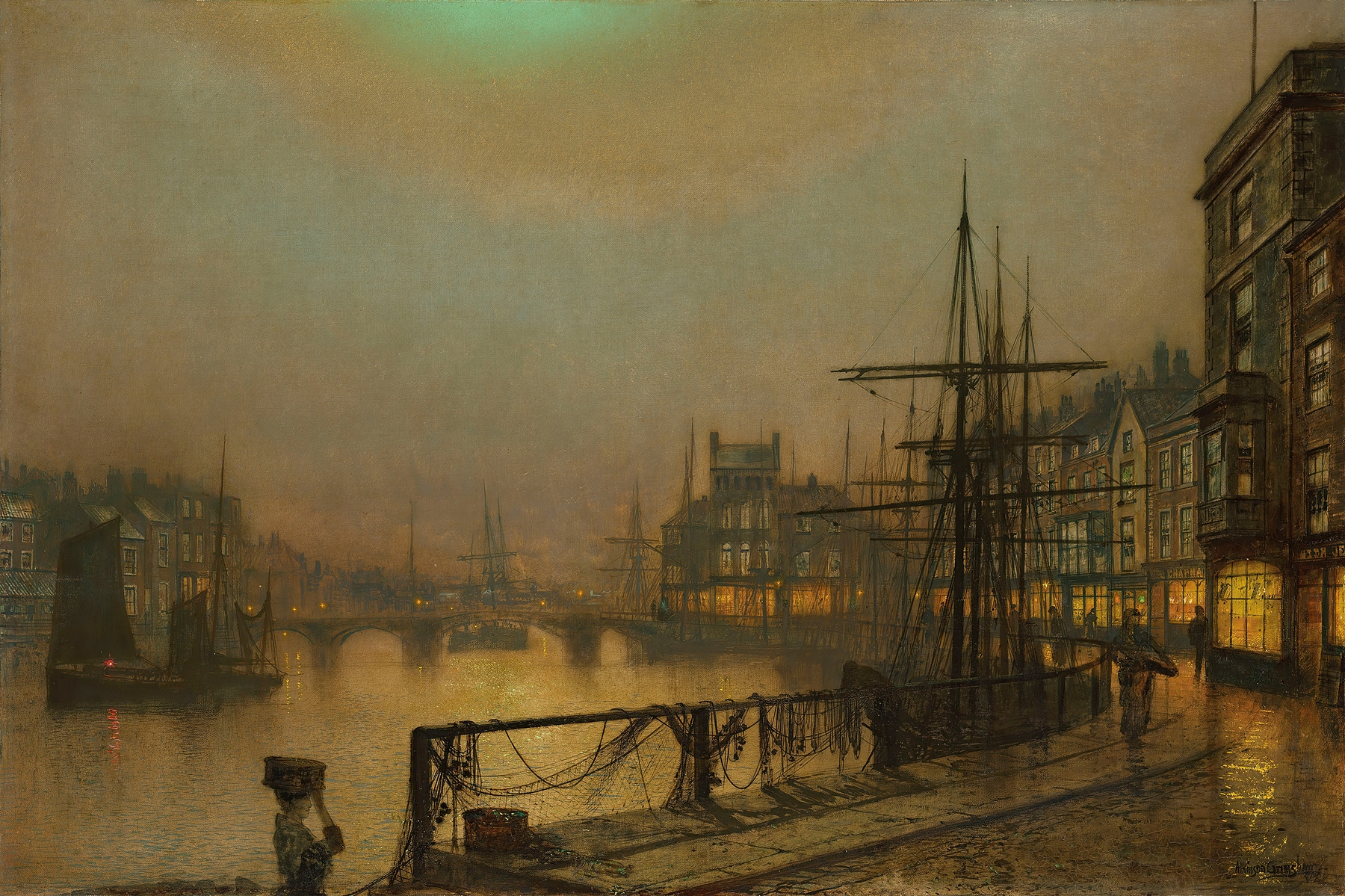
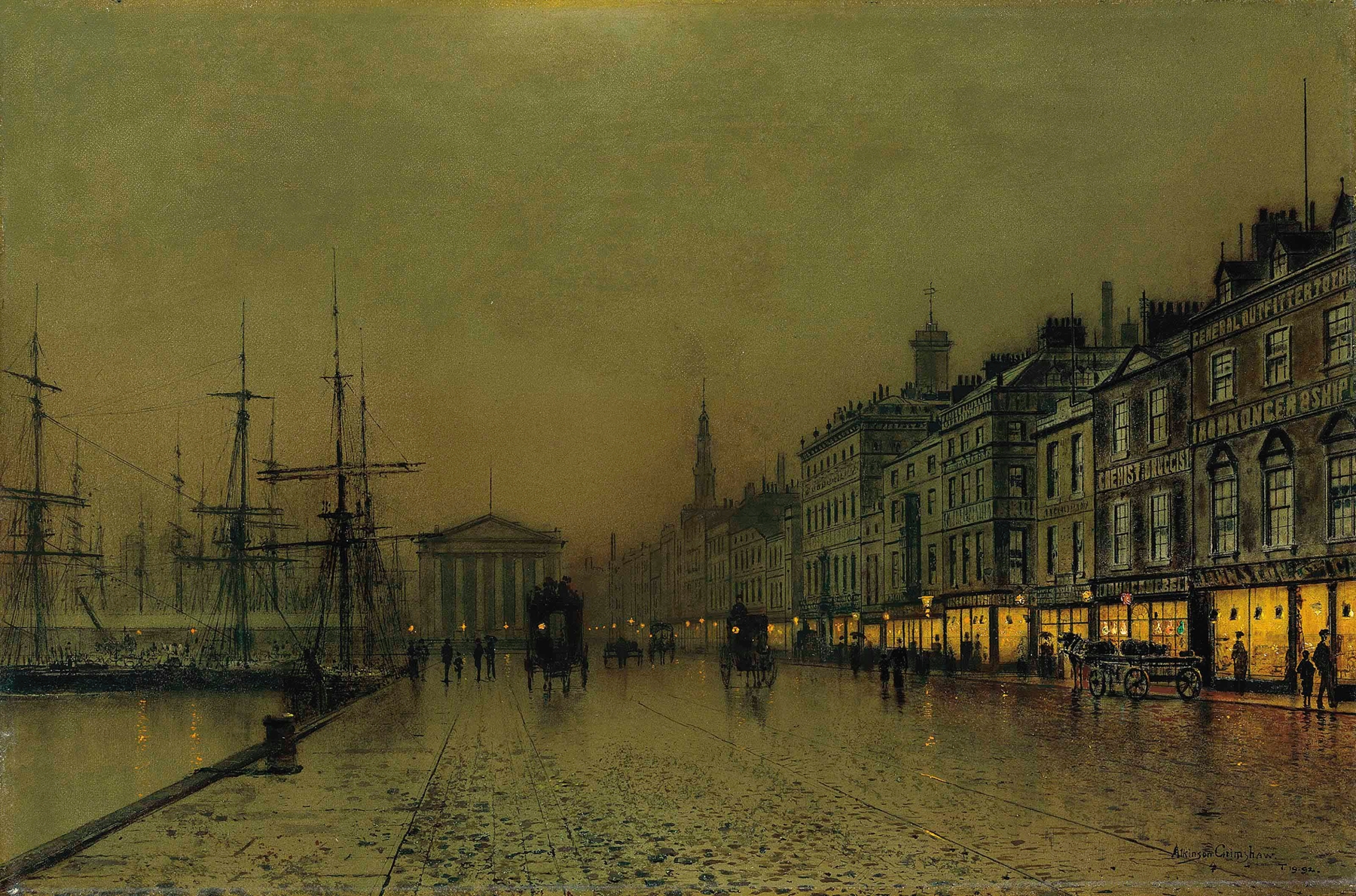
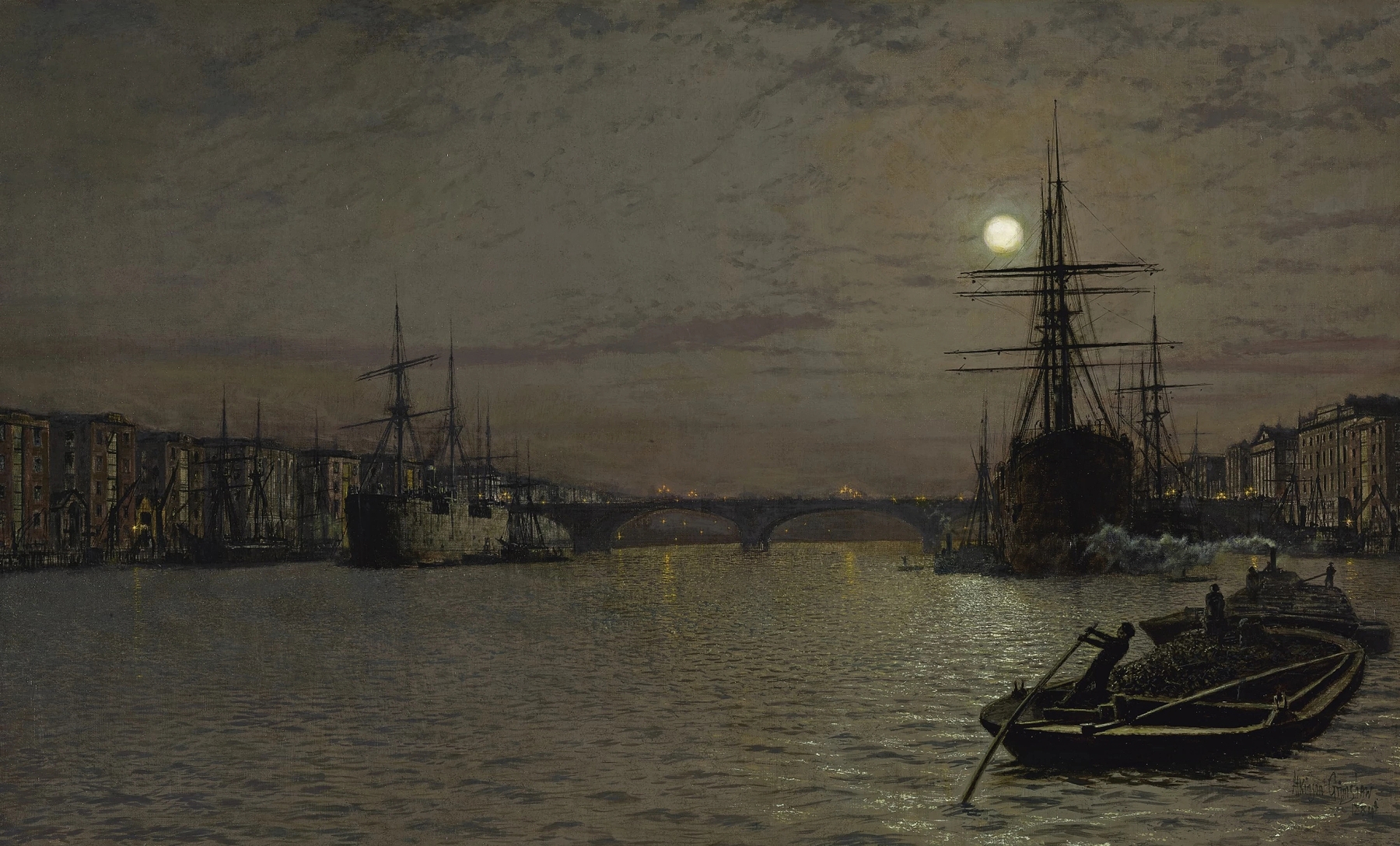
Where does light end, and longing begin? The interplay of shadow and glow in Liverpool Docks beckons us to explore the boundaries of sanity and yearning amid urban solitude. Look to the left at the pier's edge, where the muted tones of the water reflect the cool, silver gleam of street lamps flickering with life. The meticulous detailing captures the gritty texture of the docks, while a haunting blue envelops the scene, suggesting the encroaching night.
Your gaze is drawn toward the train plumes rising in the distance, a reminder of movement and transience, contrasting with the stillness surrounding the solitary figure lost in thought. The painting conveys a profound sense of isolation, where the beauty of the illuminated docks stands in stark opposition to the loneliness felt by the man gazing into the void. Grimshaw's choice of color imbues the scene with melancholy, where the brilliance of the gaslight represents both hope and madness—an invitation to the vibrant world just beyond the edges of perception. The silent water mirrors not only the surroundings but also the inner turmoil, evoking the tension between reality and desire.
Completed in 1892, this piece emerged during a transformative period for Grimshaw, who was increasingly exploring nocturnal landscapes. Living in Leeds while often working in Liverpool, he sought to capture the industrial spirit of the age, where the rise of the railway and shipping industries symbolized progress yet bred alienation. The late Victorian era was marked by a dichotomy of enlightenment and unrest—elements palpably present in this evocative vision of the docks.