Low Waterfall in a Wooded Landscape with a Dead Beech Tree — History & Analysis
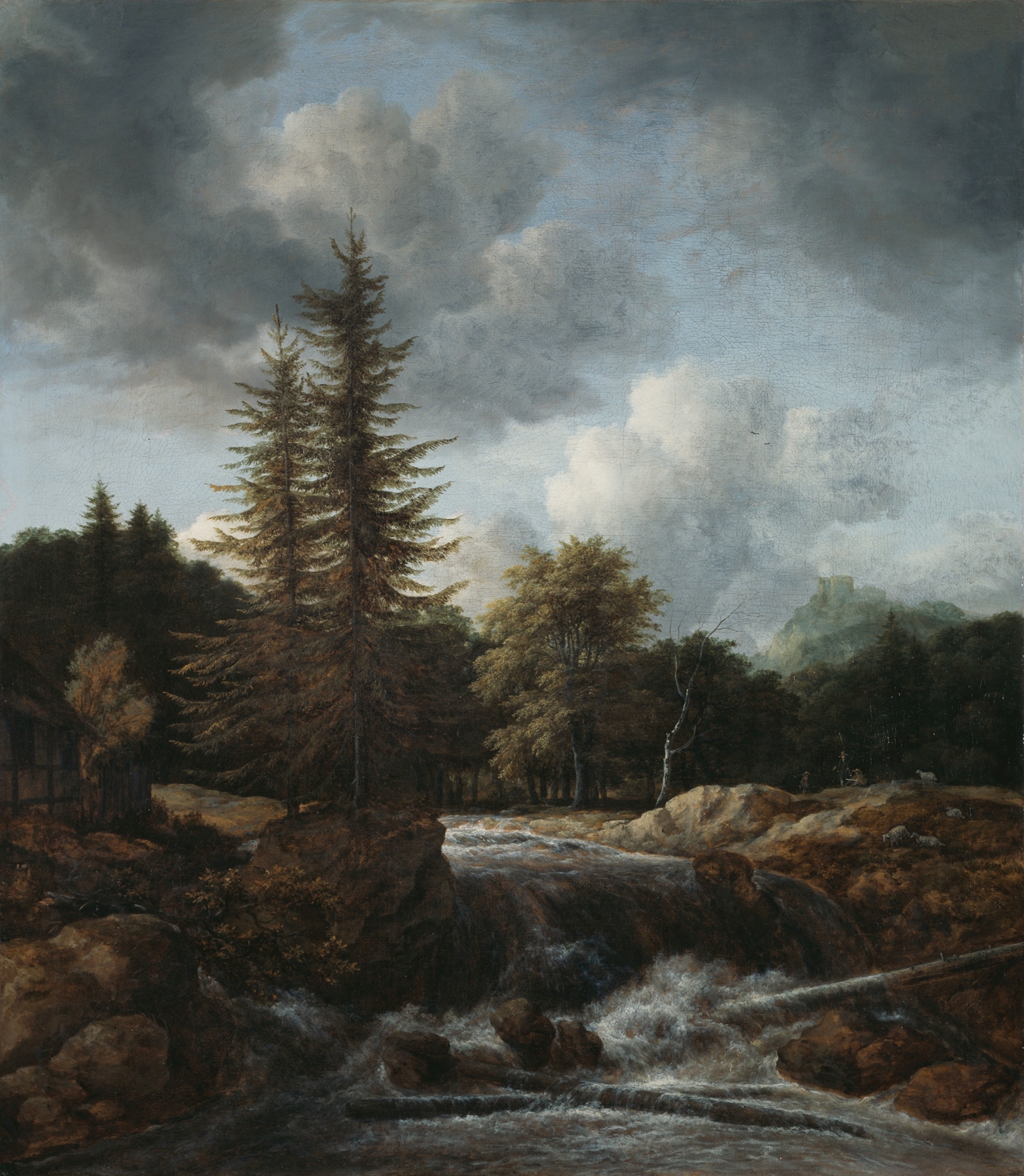
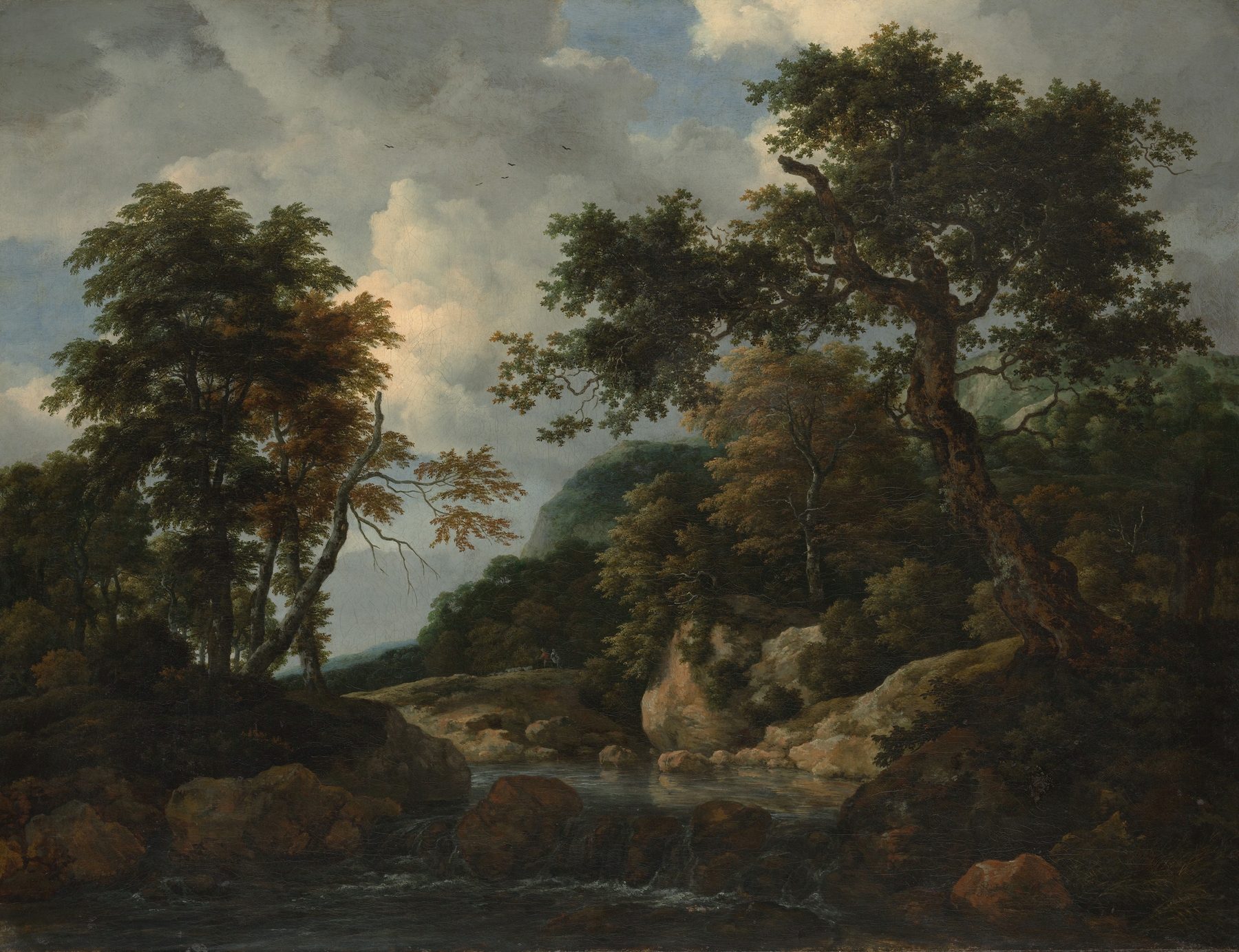
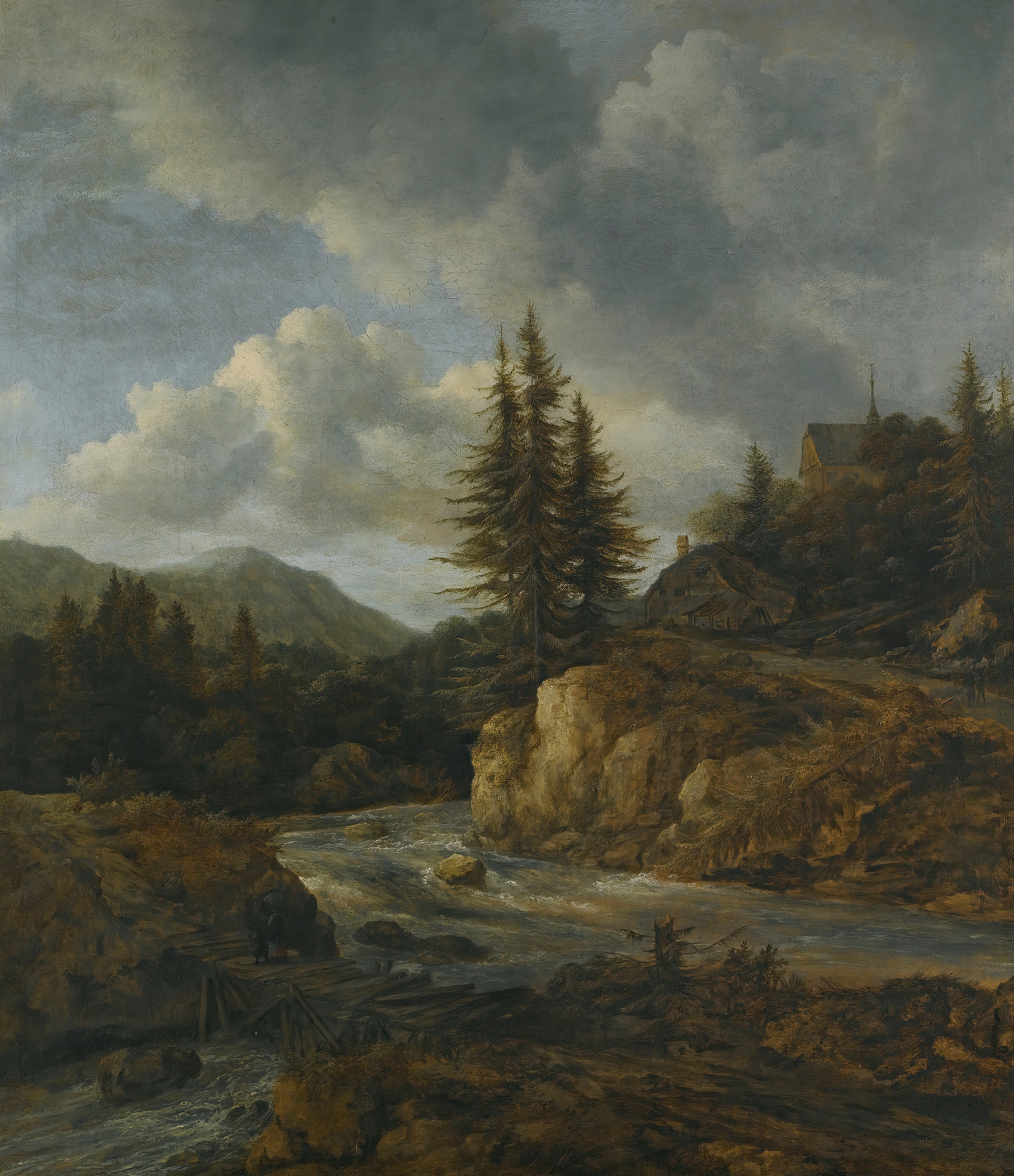
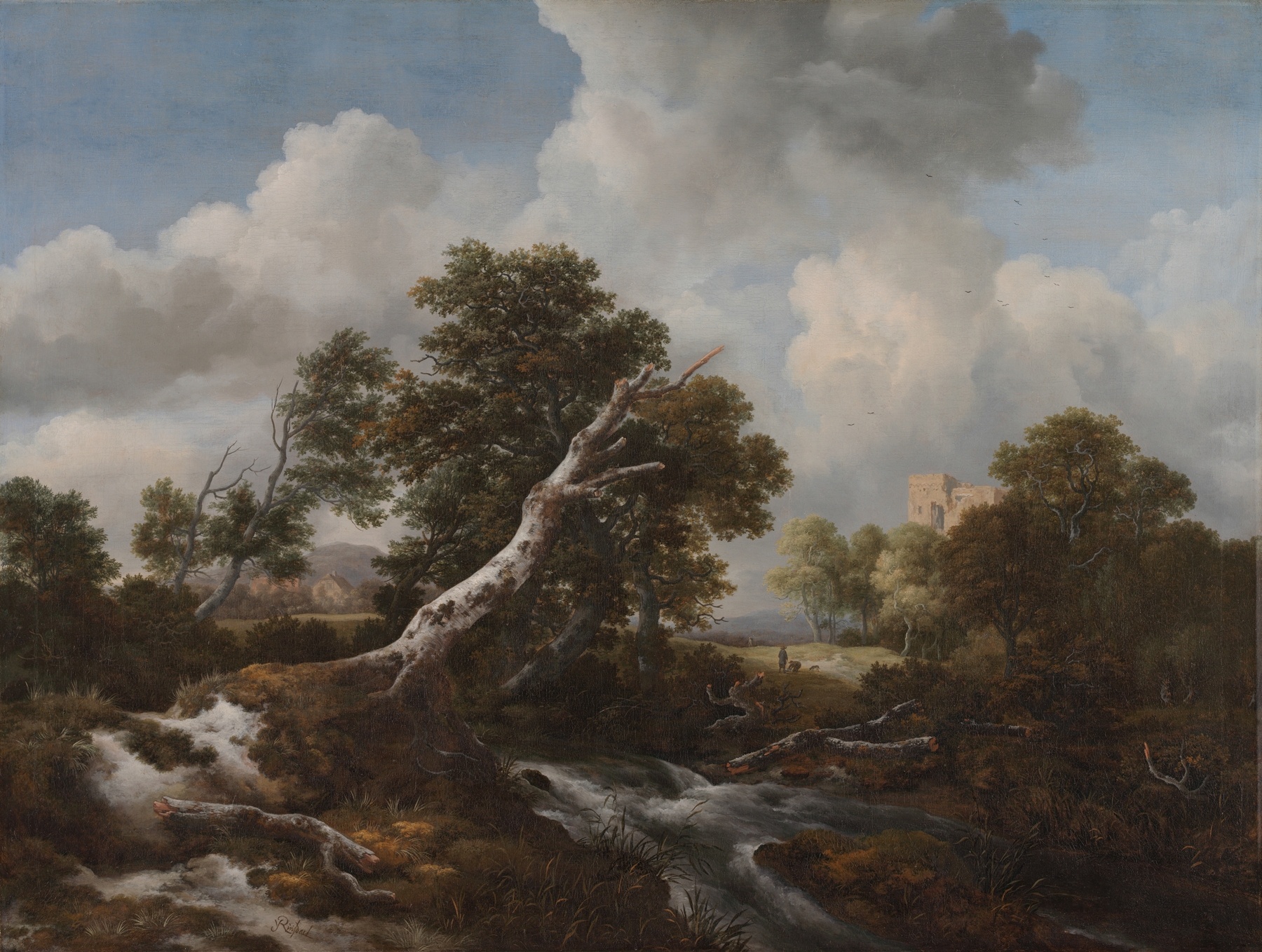
What secret hides in the quiet of the canvas? The stillness of nature speaks volumes, inviting you to uncover its mysteries and embrace the serenity that lingers in the air. Look to the left at the prominent dead beech tree, its gnarled branches reaching out like skeletal fingers against a backdrop of vibrant foliage. The trunk, heavy and weathered, anchors the composition, while the gentle cascade of the waterfall in the background captures a delicate play of light, dancing upon its surface.
The subtle palette of earthy greens and deep browns contrasts beautifully with the sparkling whites of the water, inviting the viewer into a realm where tranquility reigns. Beneath the surface lies the tension between life and decay, the beech tree embodying the inevitable passage of time, while the waterfall symbolizes renewal and vitality. This juxtaposition fosters contemplation about the cycle of existence, opening a dialogue on the coexistence of beauty and mortality. Each brushstroke seems to whisper secrets of nature's resilience, as if the scene itself holds the breath of a thousand stories waiting to be told.
During the late 1660s, Jacob van Ruisdael was deeply immersed in the Dutch Golden Age, a time characterized by flourishing artistic expression and landscape appreciation. Based in Haarlem, he painted Low Waterfall in a Wooded Landscape with a Dead Beech Tree amid a growing fascination with capturing the natural world’s subtleties. The artwork reflects both personal contemplation and a broader cultural shift towards the profound representation of landscapes, marking a pivotal moment in the evolution of art.