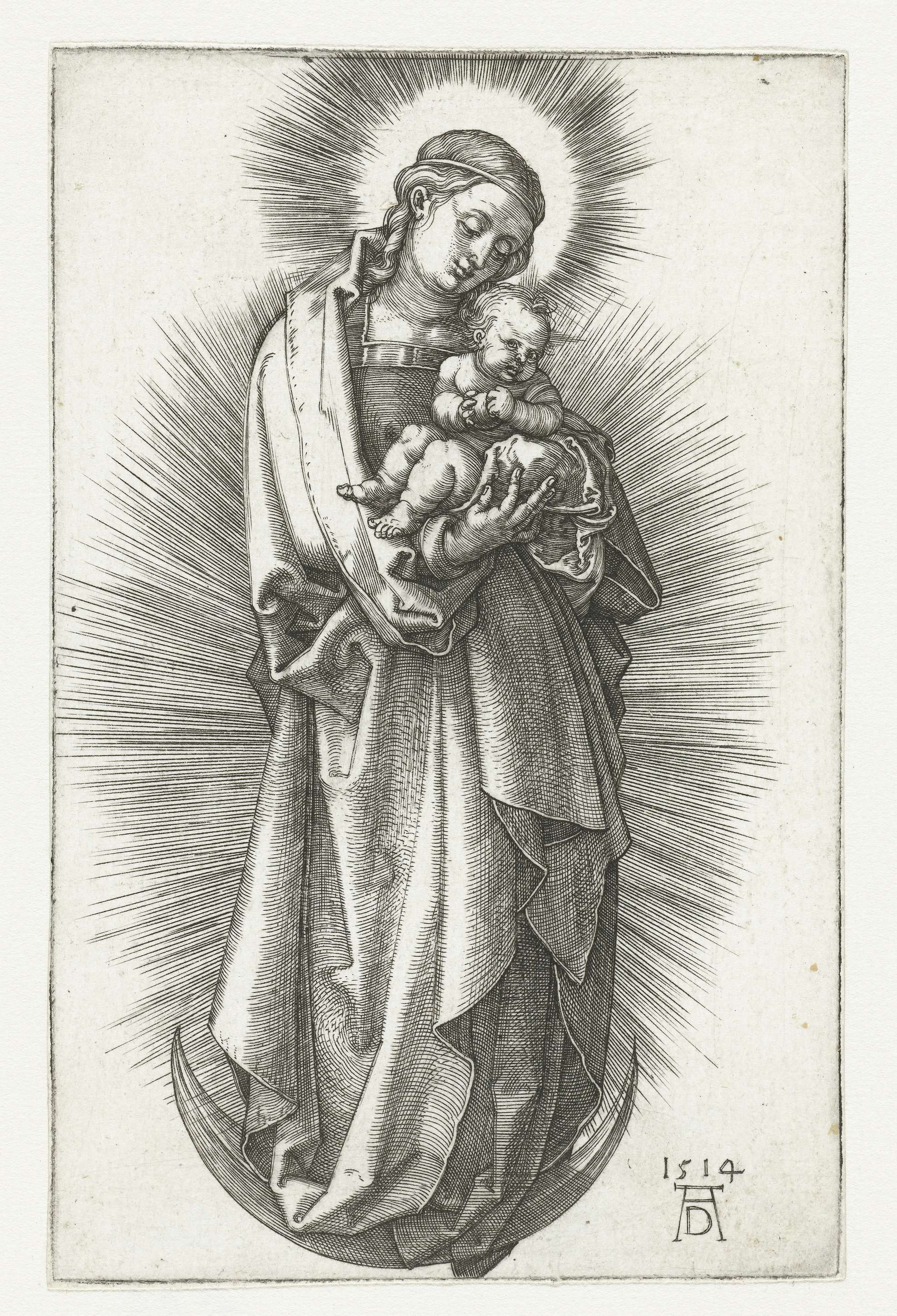
Maria met kind op de maansikkel — History & Analysis
Where does light end, and longing begin? In *Maria met kind op de maansikkel*, the viewer is drawn into an ethereal void where divine purity meets earthly desire, an interplay of emotion that transcends time and space. Look to the center of the composition, where Mary, cradling her infant son, appears almost suspended in a luminous glow. The crescent moon beneath them serves as both a platform and a symbol, cradling their forms in a celestial embrace. Observe the delicate interplay of color; the muted earth tones of Mary’s robe contrast sharply with the vivid blues and silvers of the moon, creating a visual tension that radiates serenity amid vulnerability. Dürer’s precise lines and careful shading breathe life into their expressions, inviting the viewer into this intimate moment. Yet, it is the subtleties that resonate most profoundly. Notice the way Mary's gaze not only focuses on her child but also reaches outward, suggesting a consciousness of the wider world that lies beyond this sacred space. The void surrounding them speaks of absence and yearning; there’s an unfulfilled longing for connection and understanding. The moon, a silent witness, echoes the cyclic nature of life, hinting at the duality of existence—light and dark, presence and absence. Dürer painted *Maria met kind op de maansikkel* in 1514 during a period marked by both personal and artistic evolution. Living in Nuremberg, he was deeply influenced by the Northern Renaissance, exploring themes of spirituality and human emotion. This time was characterized by a growing interest in humanist ideals, and Dürer’s work reflects a sophisticated blend of these ideas with a meticulous attention to detail, drawing viewers into a contemplative engagement with the divine.