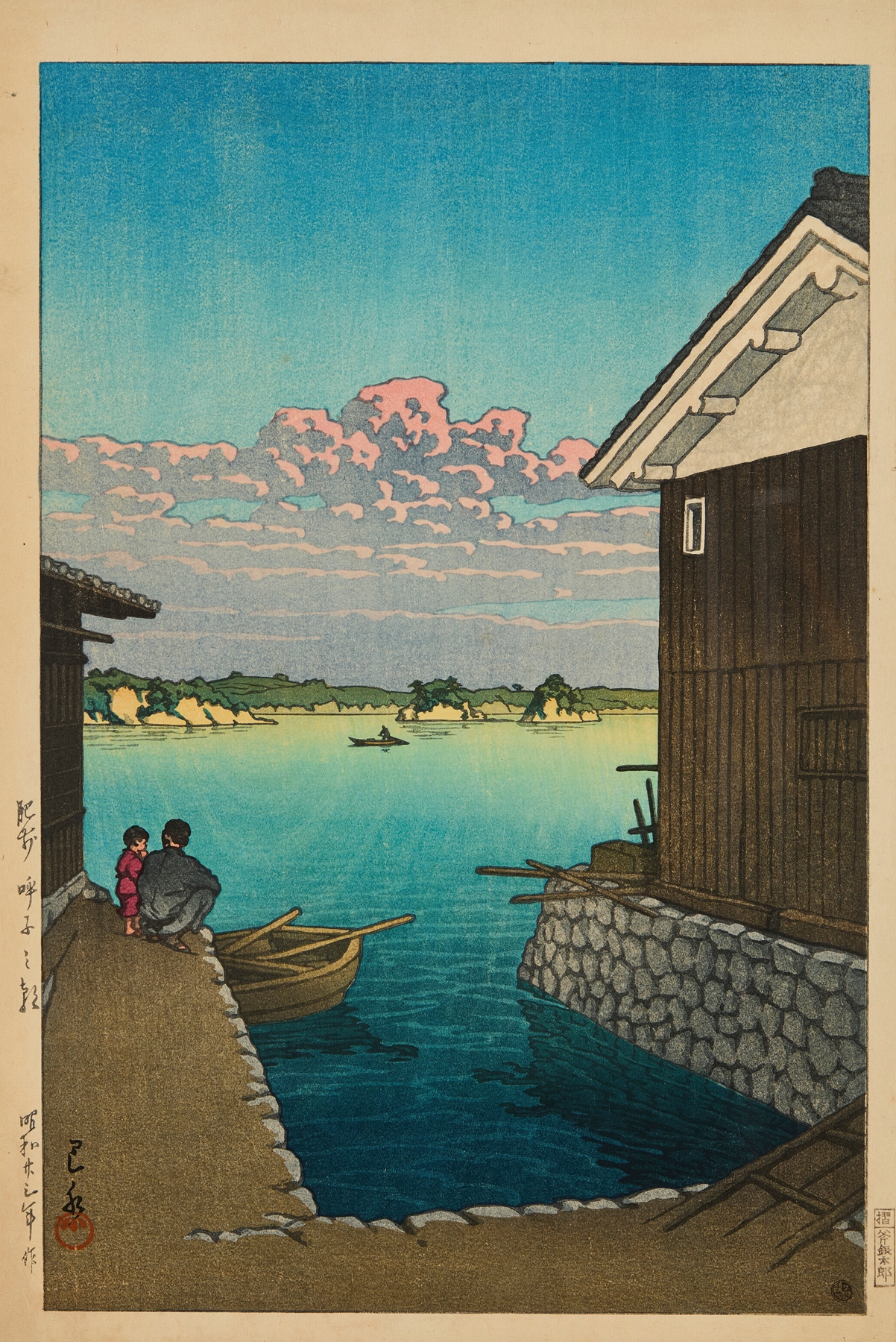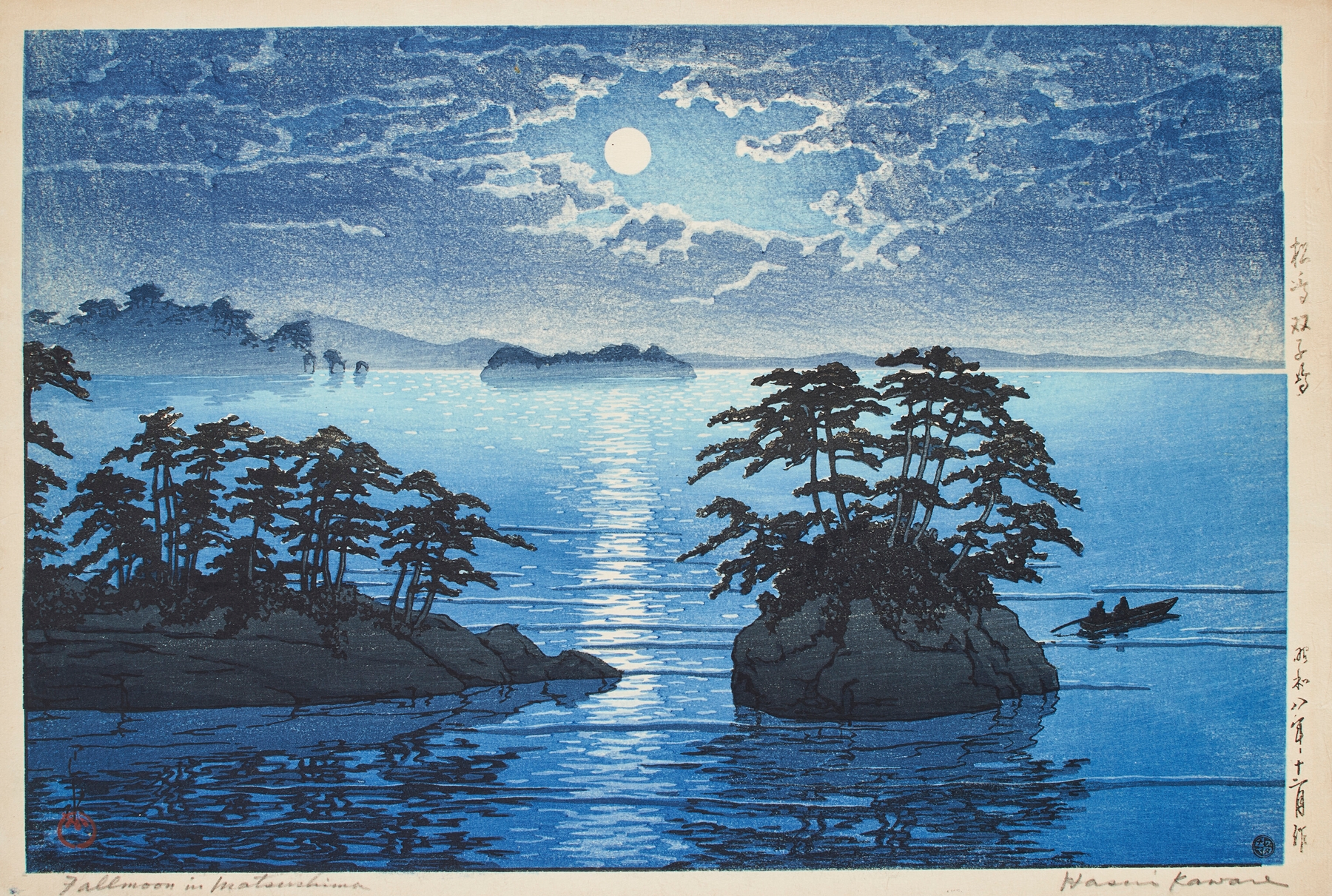
“Sometimes beauty is just pain, disguised in gold.” This paradox captures the essence of the fleeting innocence that lies at the heart of our experiences. In the tranquil stillness of *Matsushima Futagojima*, the layers of nature unveil a complex narrative beyond the serene façade. Focus first on the delicate hues of blue and green that envelop the islands, a soothing embrace that invites you in. Notice how the gentle brushstrokes convey a harmonious balance, the two islands anchored by a fragile bridge. Light dances across the water’s surface, reflecting the soft glow of the setting sun, while wisps of clouds tease at the horizon. The composition highlights both separation and connection, encapsulating a moment in time that feels suspended yet full of life. Within this picturesque scene lies a deeper commentary on innocence—one that can be both serene and ephemeral. The juxtaposition of the tranquil landscape against the looming mountains invokes a sense of vulnerability, suggesting that beauty often conceals the transient nature of life. Each detail, from the gentle ripples in the water to the shadows cast by the islands, serves as a reminder that tranquility and turmoil coexist—a delicate balance that defines existence. In 1933, Kawase Hasui was deeply immersed in the shin-hanga movement, which sought to blend traditional Japanese art with Western techniques. Painted during a time of social change and modernization in Japan, this work reflects both his reverence for natural beauty and his dedication to preserving cultural heritage. As Hasui captured this serene landscape, he was also responding to the challenges of his time, making *Matsushima Futagojima* not just a visual feast but a poignant commentary on the nature of change itself.