Matsushima Godaido no yuki (Snow at Godaido Temple in Matsushima) — History & Analysis
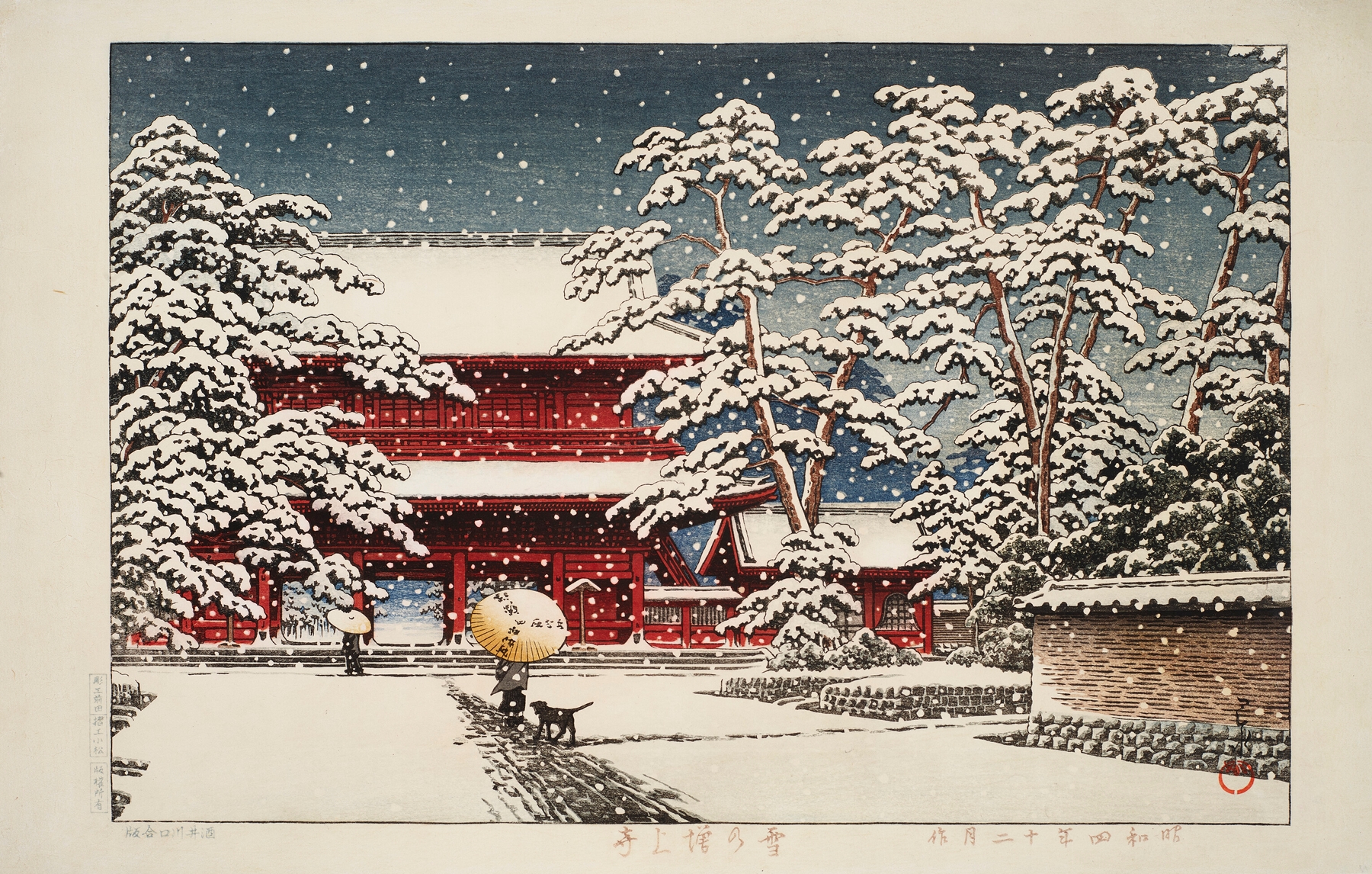
Can beauty exist without sorrow? In Matsushima Godaido no yuki, the delicate interplay of snow and stillness suggests that even the most serene landscapes carry the weight of time and decay. Look to the left at the tranquil silhouette of the Godaido Temple, its intricate eaves softly embraced by a blanket of pure white snow. The crispness of the scene is heightened by the gentle blues and grays that envelop the landscape, creating a soothing yet melancholic palette.
Notice how the snowflakes appear to pause mid-fall, as if suspended in time, while the trees stand bare and solemn, their branches reaching for the sky like delicate fingers. Beneath this serene beauty lies an emotional tension; the pristine layers of snow conceal the fundamental impermanence of nature. Each flake that descends is a reminder of the cycle of life and death, of beauty that inevitably fades. The contrast between the temple's enduring architecture and the ephemeral snowfall evokes a poignant reflection on how history weathers, yet somehow remains.
Kawase Hasui painted this piece in 1932, during a time when Japan was navigating a complex cultural shift between tradition and modernity. As a prominent figure in the ukiyo-e revival, Hasui sought to capture the essence of the Japanese landscape through his prints, infusing each work with a sense of nostalgia and reverence for nature. His mastery of color and composition served both as a tribute to his heritage and a response to the changing world around him.