Moret Sur Loing, Bord De Rivière — History & Analysis
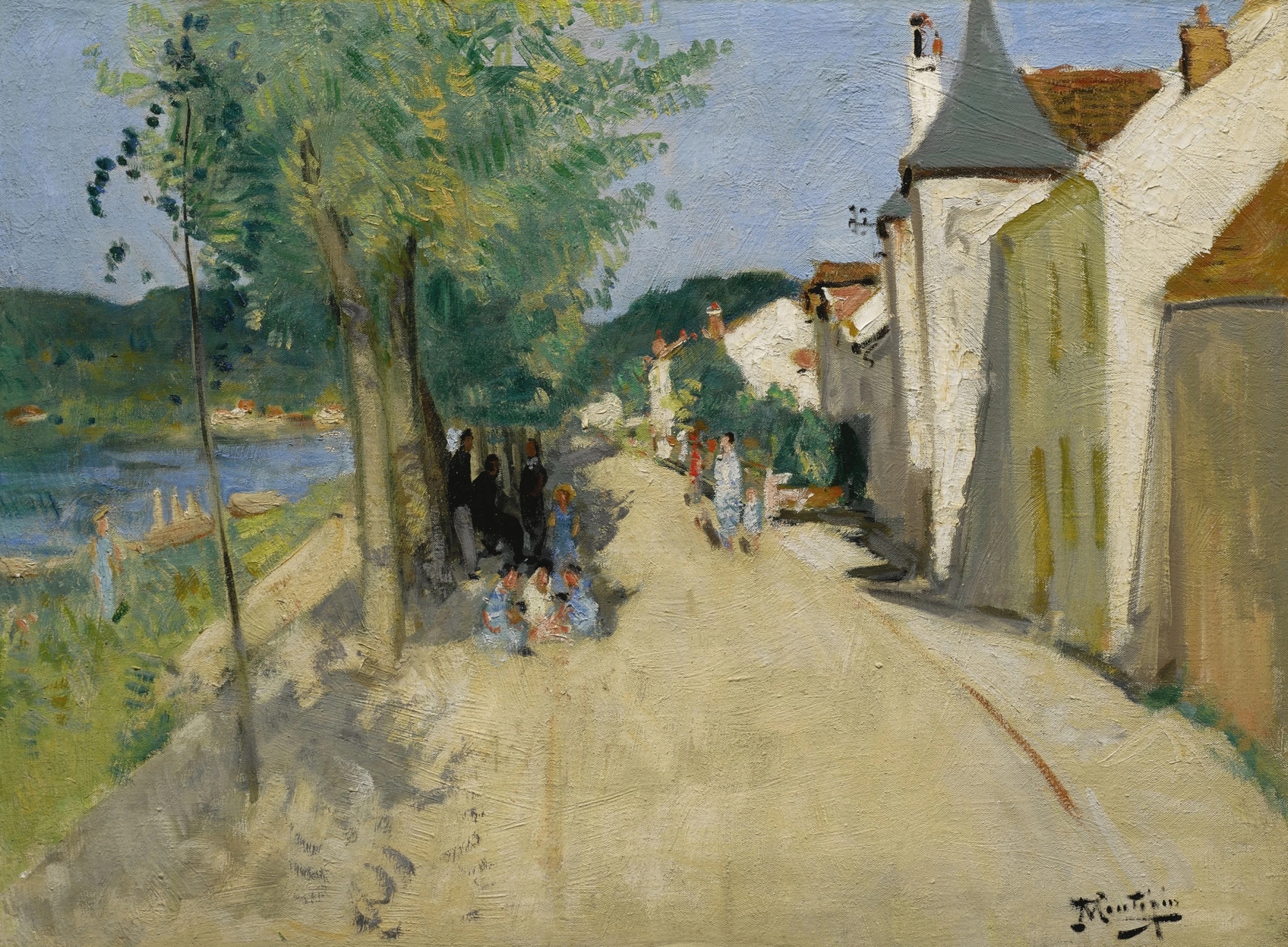
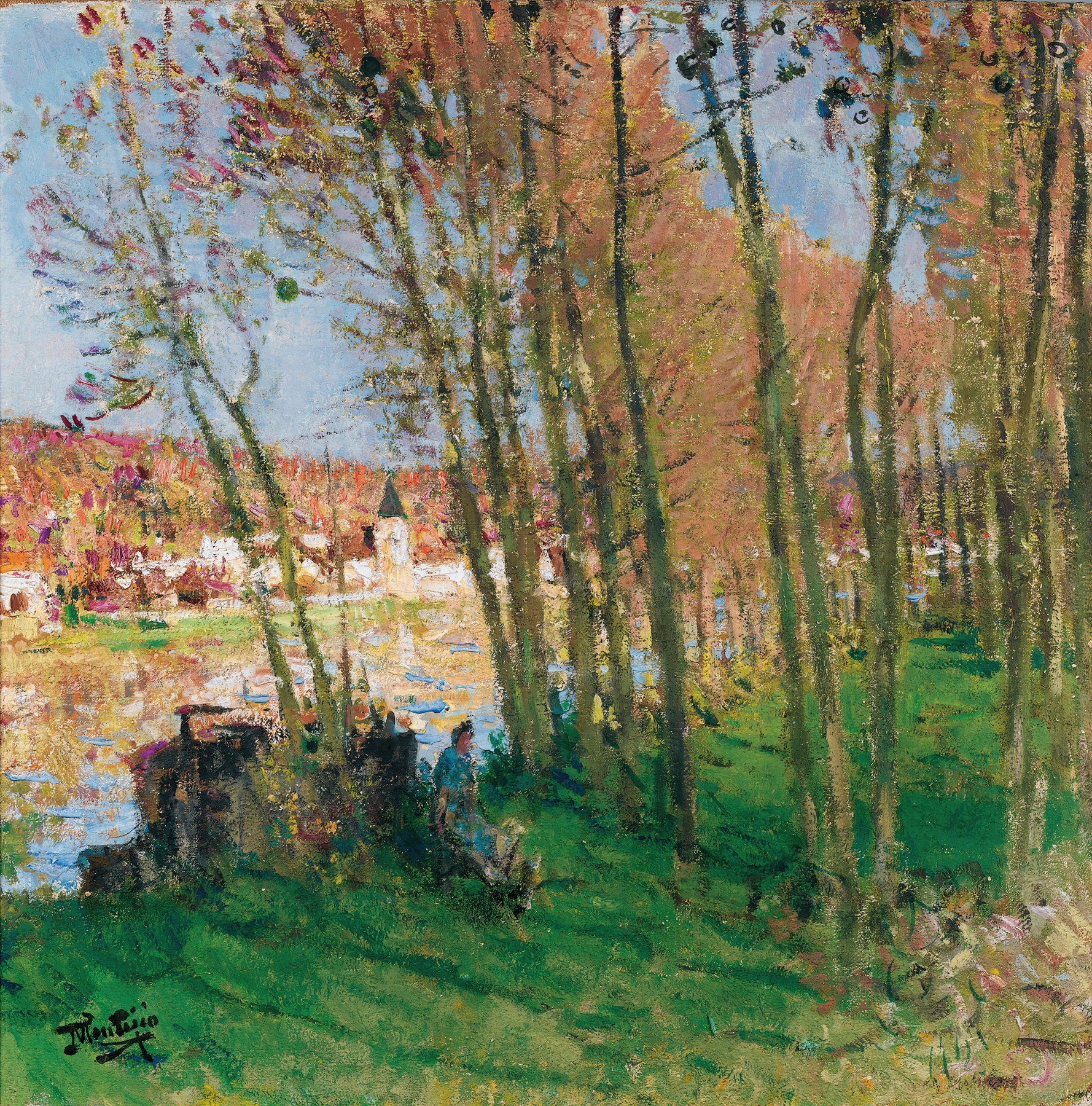
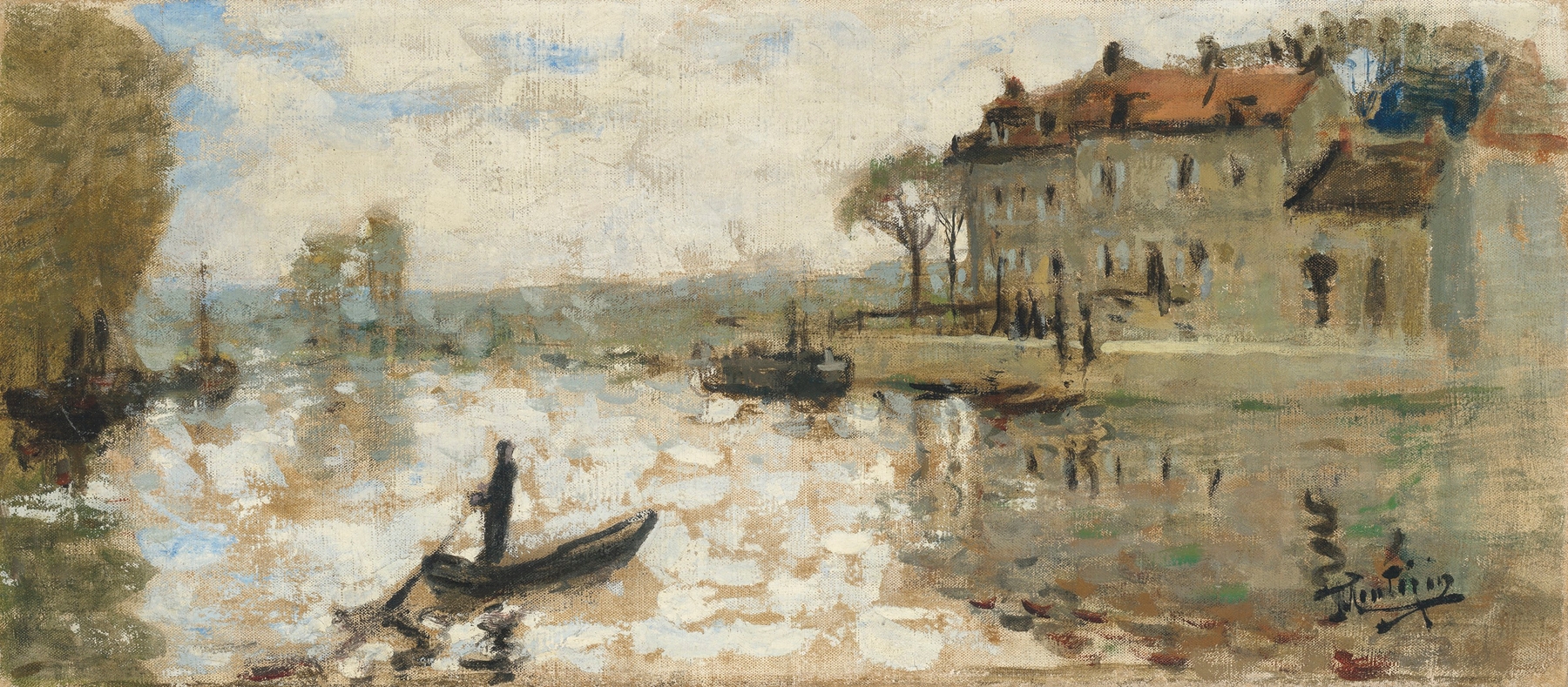
What if beauty was never meant to be finished? In Moret Sur Loing, Bord De Rivière, Pierre-Eugène Montézin invites us to linger in the essence of fleeting moments, presenting a truth that transcends the confines of time. Focus first on the tranquil river that meanders through the scene, its waters reflecting soft hues of blue and green. Notice how the sunlight dances across the surface, creating a flickering shimmer that draws your eye. The trees, painted in dappled strokes, frame the composition, directing your gaze toward the gentle embrace of nature that surrounds the waterway.
Montézin’s masterful use of color and light captures a serene yet vibrant atmosphere, emphasizing harmony between the elements. Delving deeper, observe the delicate interplay between the lush foliage and the reflective surface of the river. Here lies a contrast: the stillness of the water against the lively brushwork of the trees, suggesting a moment suspended in time. Each stroke conveys the artist’s reverence for nature, while the vibrant palette whispers of life’s transient beauty.
This tension between movement and calm evokes an emotional resonance, as if the landscape itself holds secrets that yearn to be discovered. In 1910, Montézin painted this piece while immersing himself in the Impressionist movement, which sought to capture the ephemeral qualities of light and color. Living in France, he was influenced by the natural beauty surrounding him and the artistic conversations of his contemporaries. This setting allowed him to refine his technique and express a profound connection to the landscapes he cherished, marking a significant contribution to early 20th-century art.