Mountain and Lake (Lake George) — History & Analysis
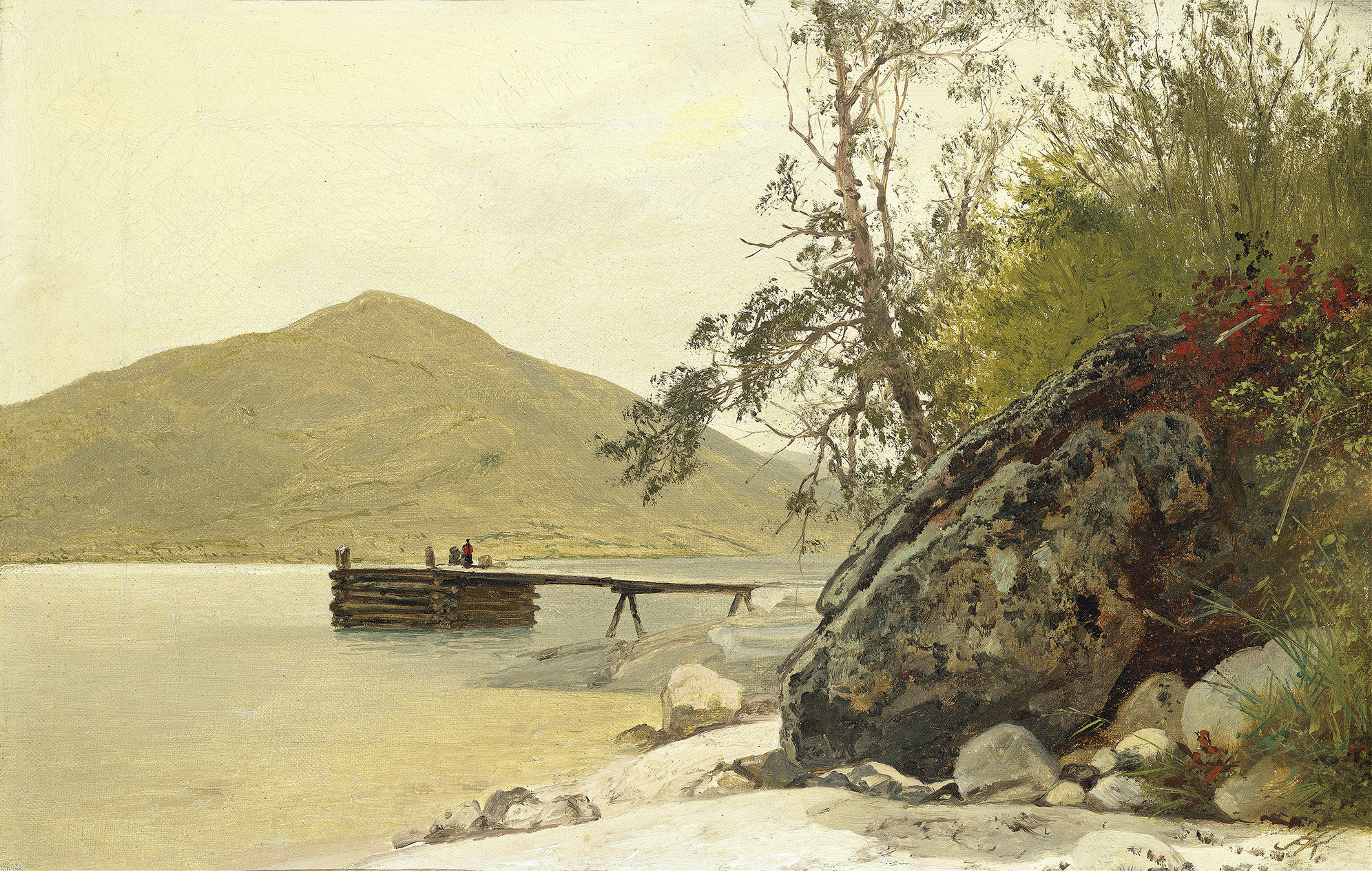
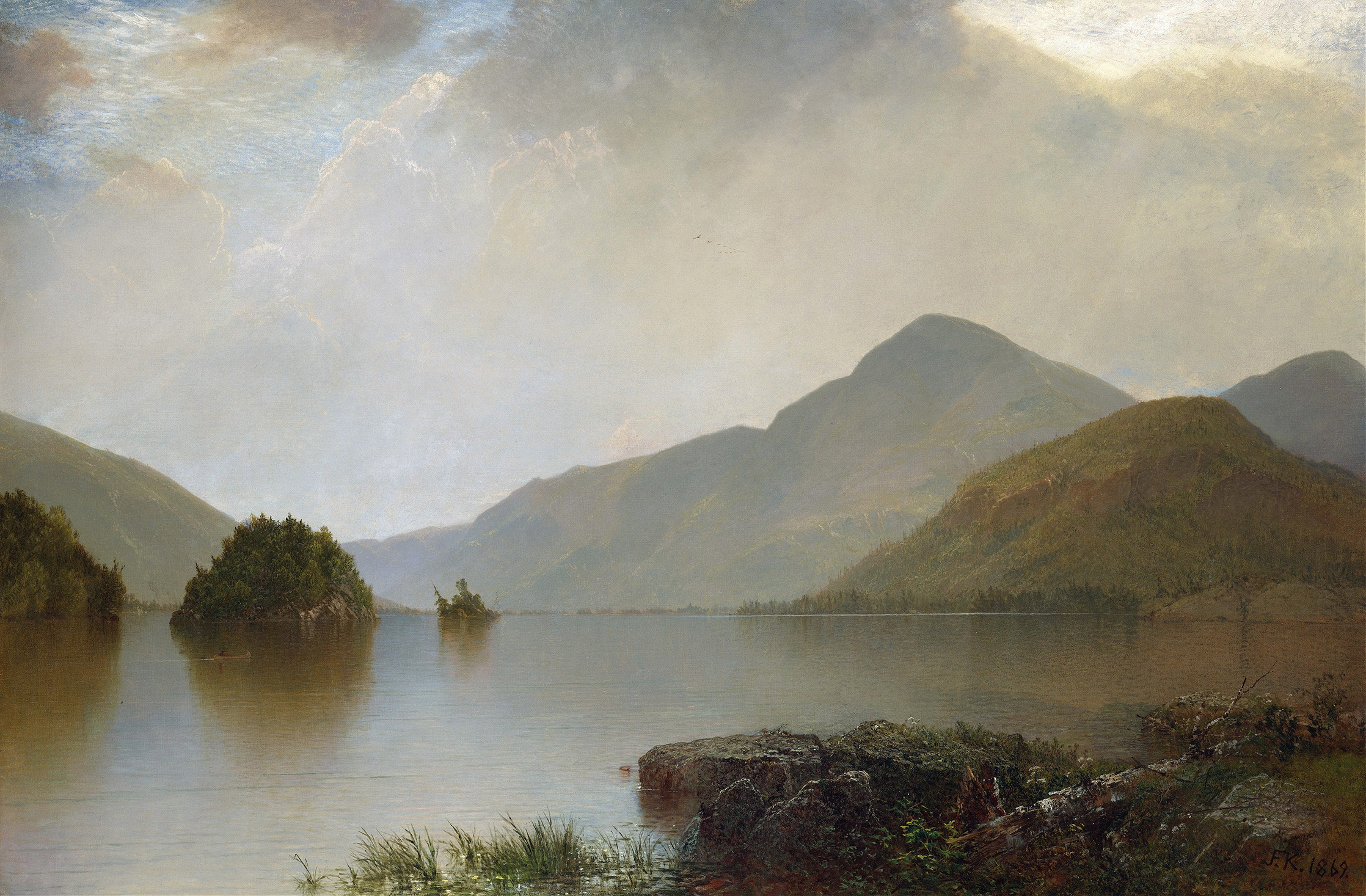
Can paint confess what words never could? In Mountain and Lake (Lake George), the brushstrokes seem to whisper the secrets of nature, merging stillness with a subtle, eternal movement. Look to the center of the canvas, where gentle waves ripple across the lake’s surface, reflecting a breathtaking palette of greens and blues. The mountains crown the horizon, their rugged peaks softened by a delicate haze that suggests both distance and tranquility.
Notice how the light dances on the water, illuminating patches of the lake while casting shadows that hint at the depth of the scene, creating a serene yet dynamic interplay of color and texture. Beyond its beauty, the painting captures a moment of harmony between the elements, evoking a sense of peace that belies the tumult of life. The juxtaposition of the solid, unyielding mountains against the fluid, ever-changing surface of the lake invites contemplation on stability and transience. This tension speaks to the viewer’s own experiences of movement and stillness, allowing for reflection on the constant evolution of nature and the self.
John Frederick Kensett created this masterpiece around 1860, during a time when American artists were increasingly drawn to the beauty of their natural landscapes. As a member of the Hudson River School, Kensett focused on capturing the sublime qualities of the American wilderness, intertwining personal expression with an evolving national identity. This period was marked by a burgeoning appreciation for nature, and the work reflects both his artistic vision and the cultural landscape of mid-19th century America.