An October Day in the White Mountains — History & Analysis
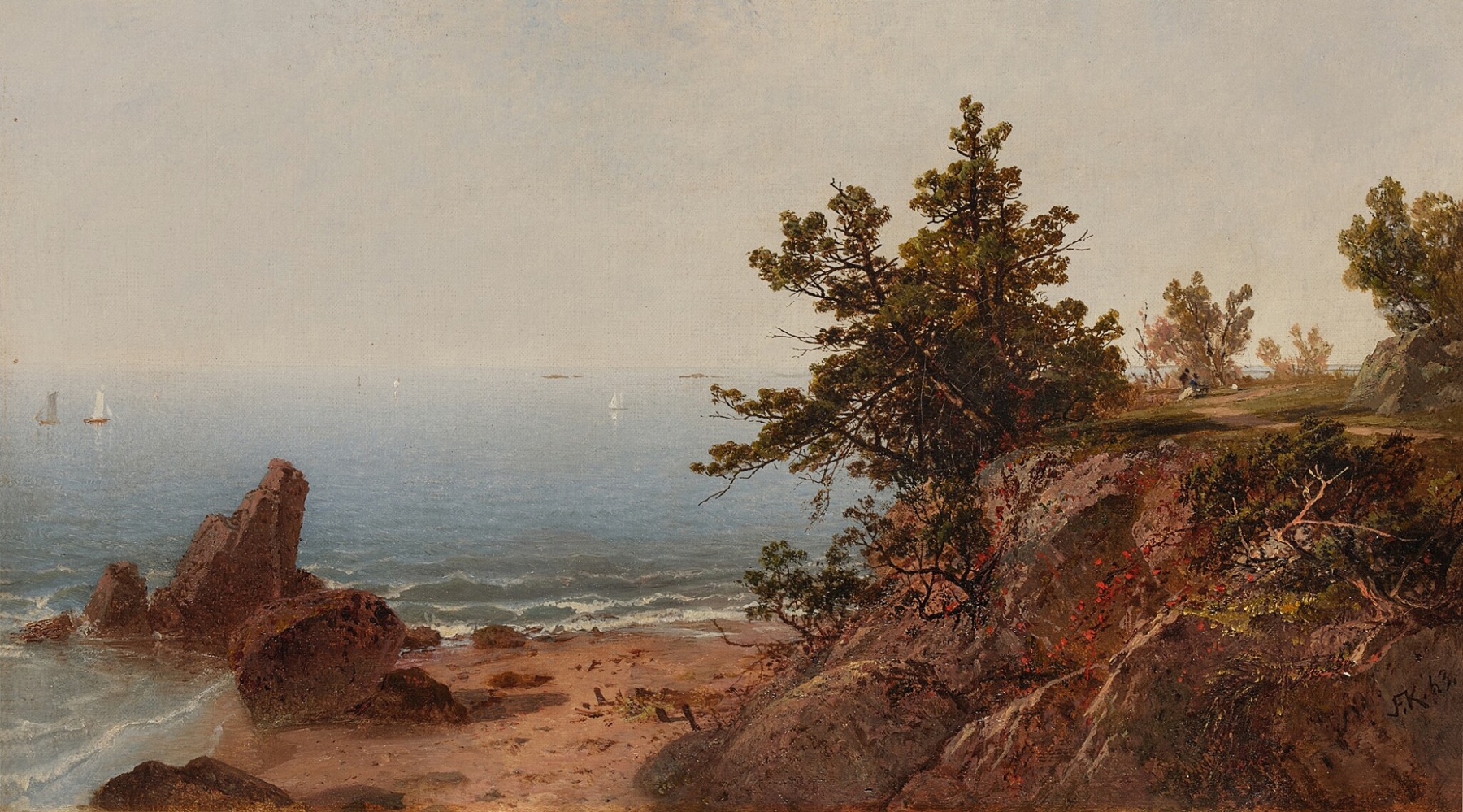
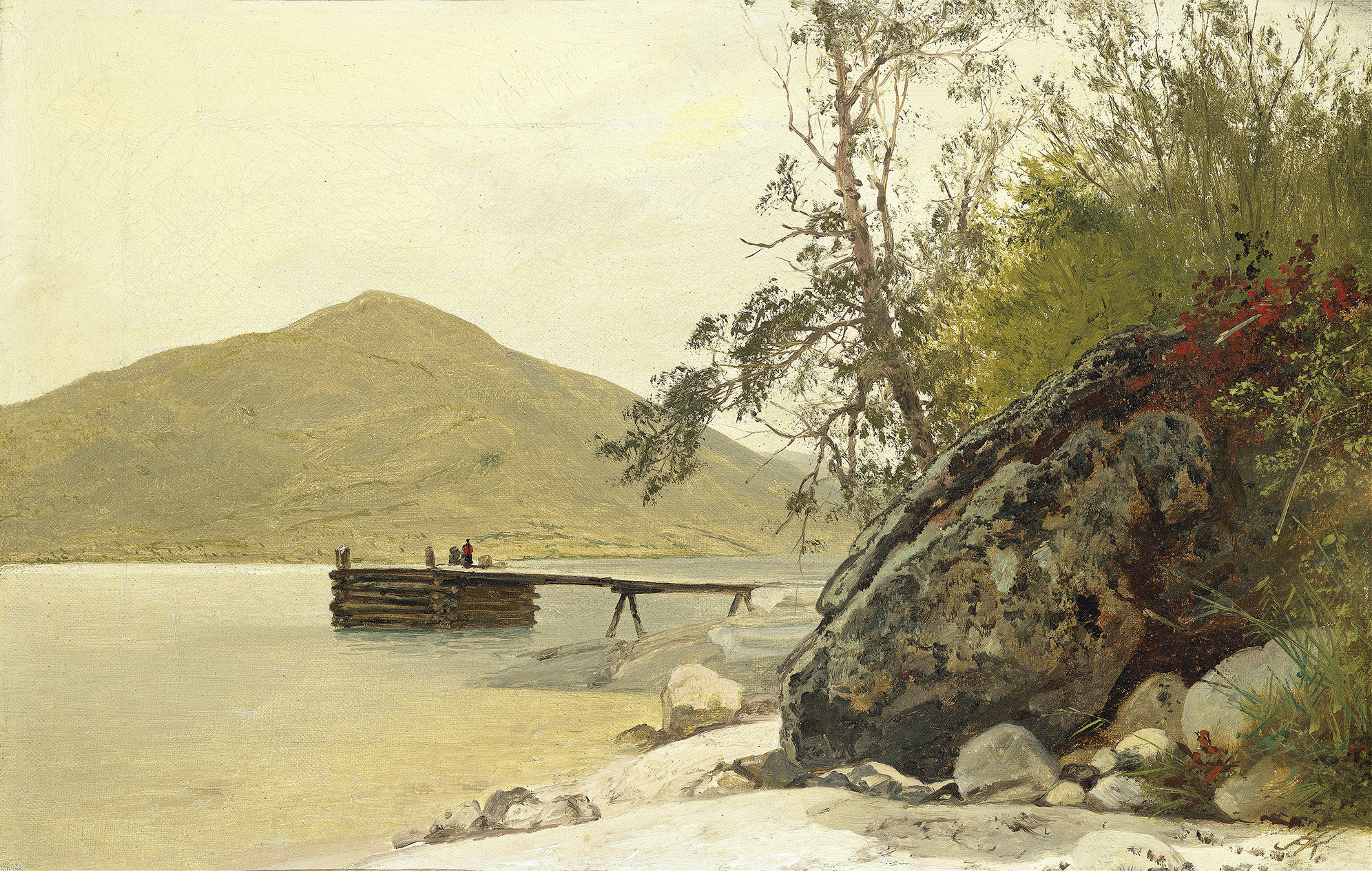
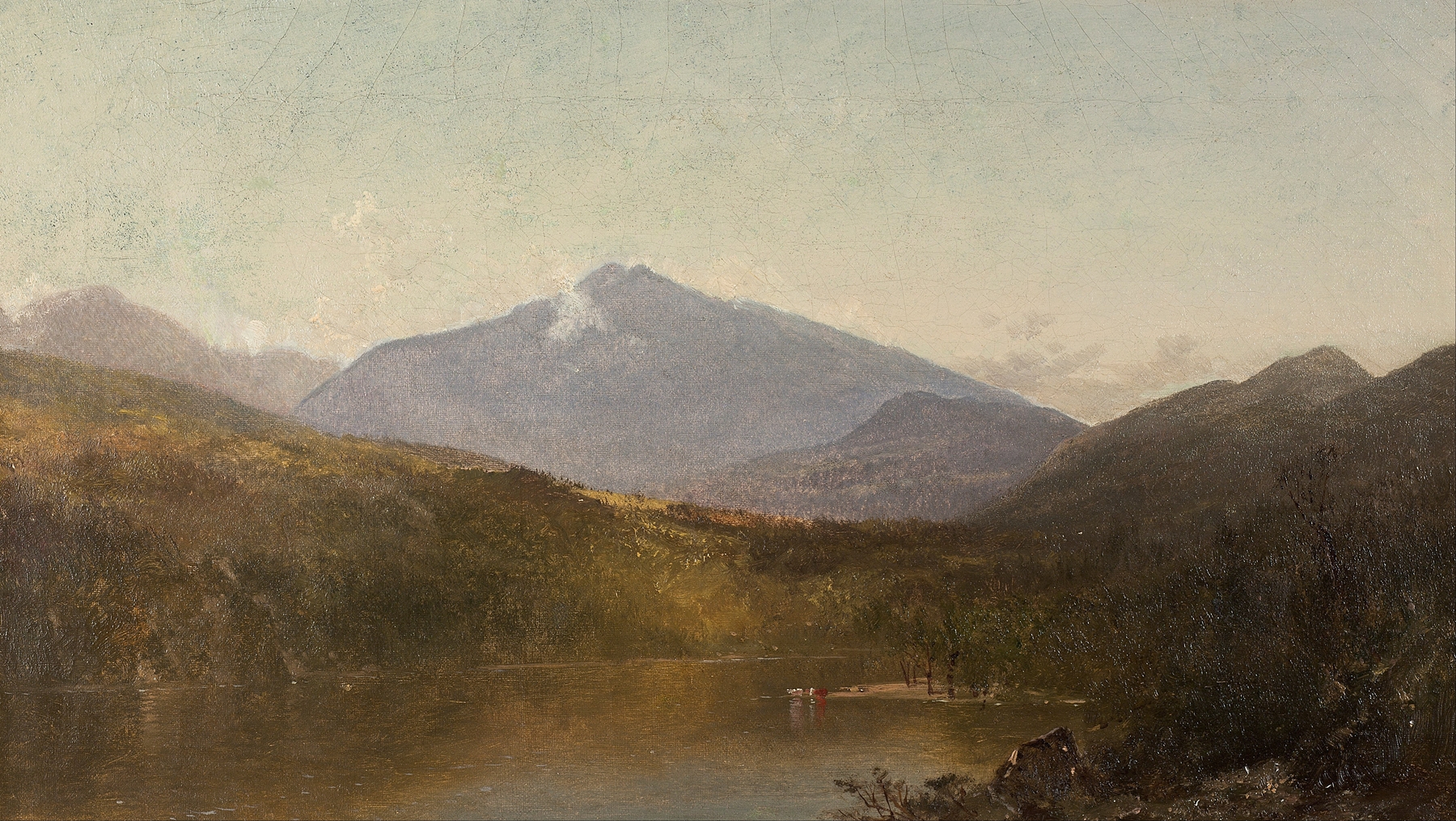
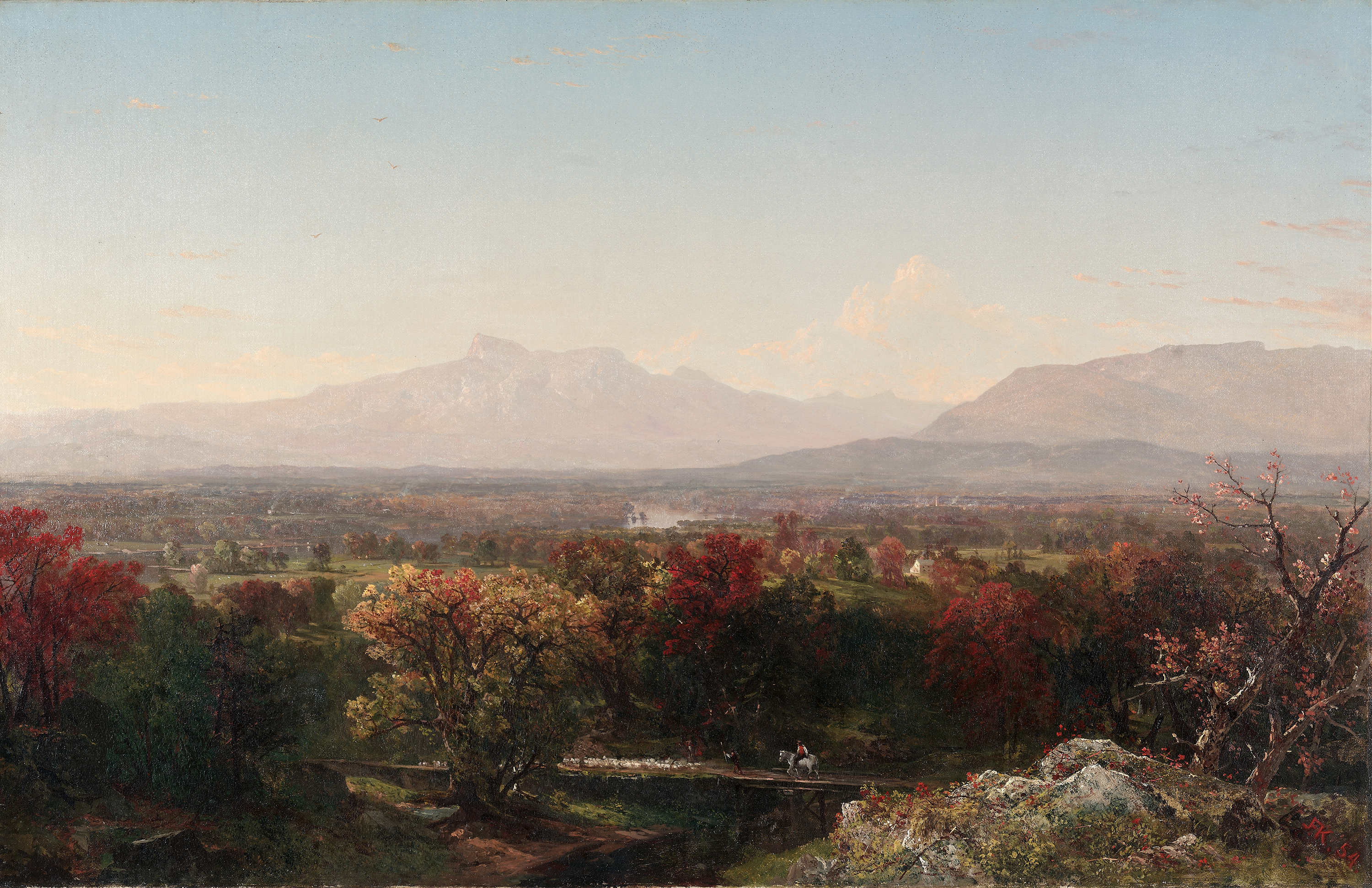
Who listens when art speaks of silence? In the stillness of An October Day in the White Mountains, the vivid autumn hues whisper secrets of decay and transience. Look to the left at the breathtaking interplay of warm oranges and deep russets, where trees shed their leaves in a quiet surrender to the season. Notice how the soft light filters through the branches, illuminating the rocky foreground with a delicate luminosity that invites contemplation.
The expansive sky, a canvas of gentle blues and whites, looms above the rugged mountain peaks, creating a palpable contrast between the vibrant life below and the distant, looming stillness of the mountains. Beneath the tranquil surface, the painting encapsulates a moment rife with tension. The lush foliage speaks of vibrant life, yet it is a fleeting spectacle, as each falling leaf signifies the inevitable march toward winter. The grandeur of nature’s beauty juxtaposes the subtle decay that underlies it, a reminder of life’s cyclical nature and the beauty found in both flourishing and decline.
Each brushstroke reveals a kind of melancholic appreciation for what is destined to fade. Created in 1854, this piece reflects Kensett’s deep engagement with the Hudson River School’s emphasis on natural beauty and the American landscape. At this time, he was exploring the serene and sublime qualities of nature, seeking to capture its essence in a moment of fleeting beauty. The United States was undergoing significant changes, and Kensett’s work stands as a testament to the romantic idealism of the era while also hinting at nature's inevitable transformations.