Muziek in de Vlaanderenstraat in Oostende — History & Analysis
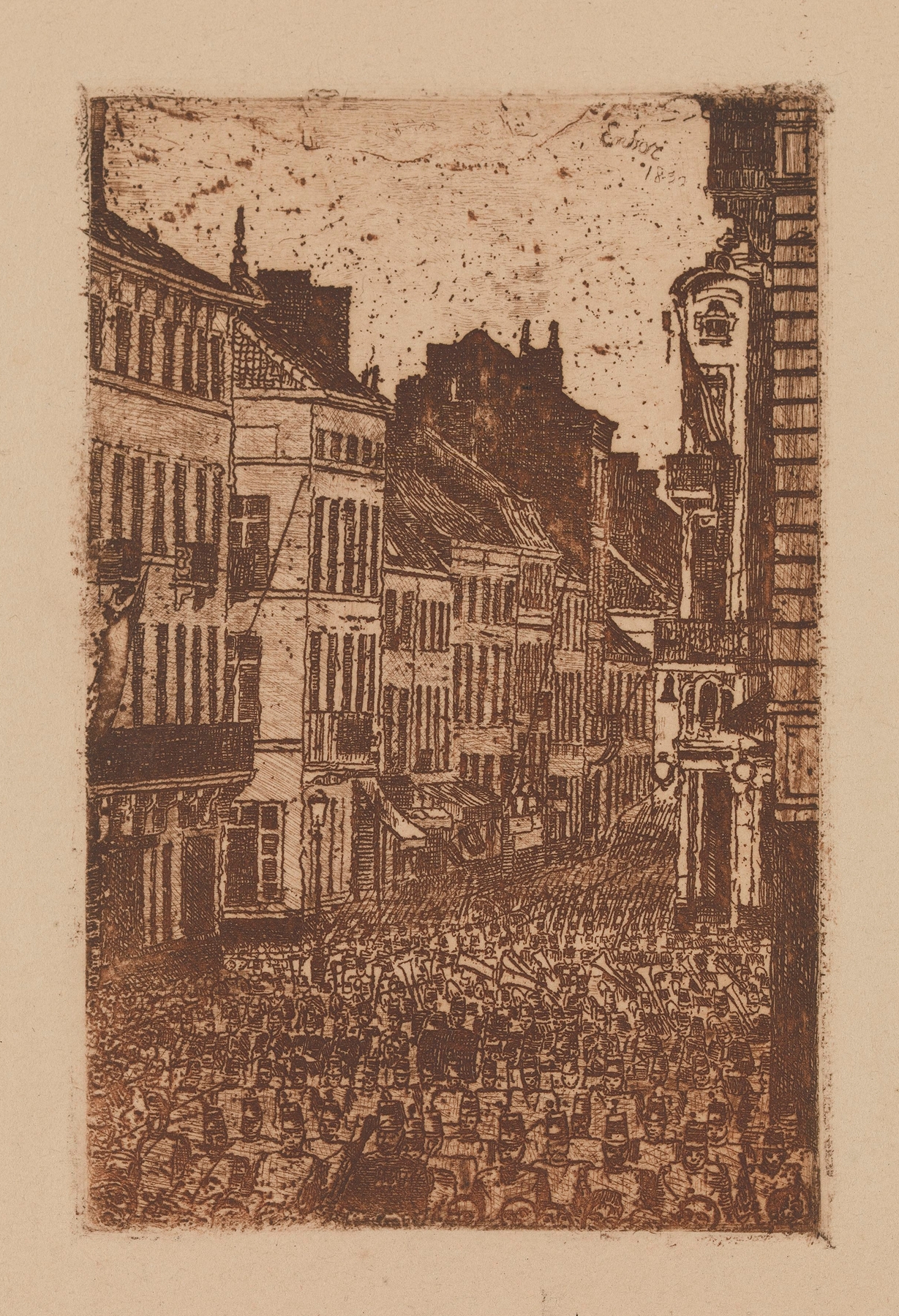
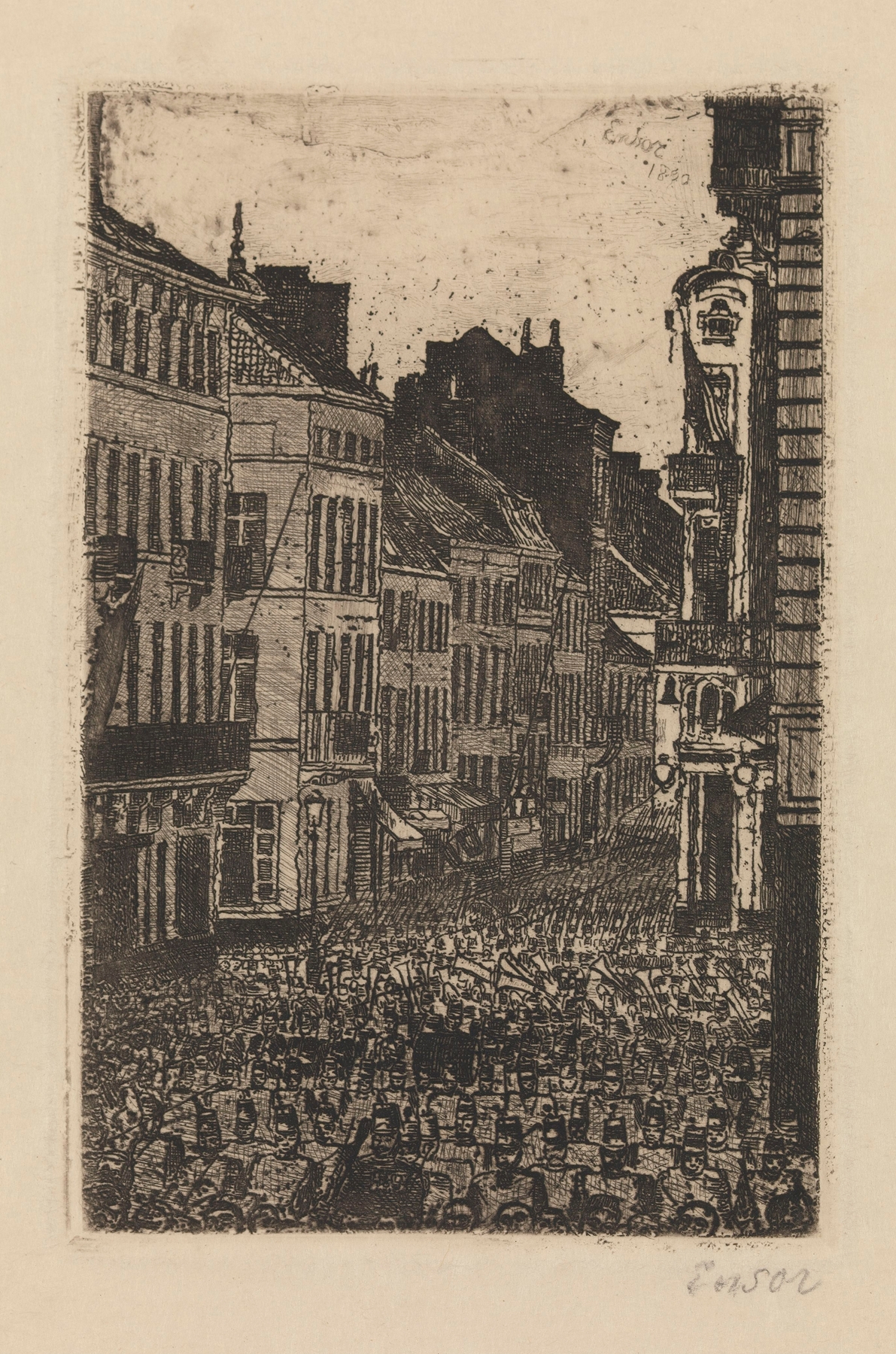
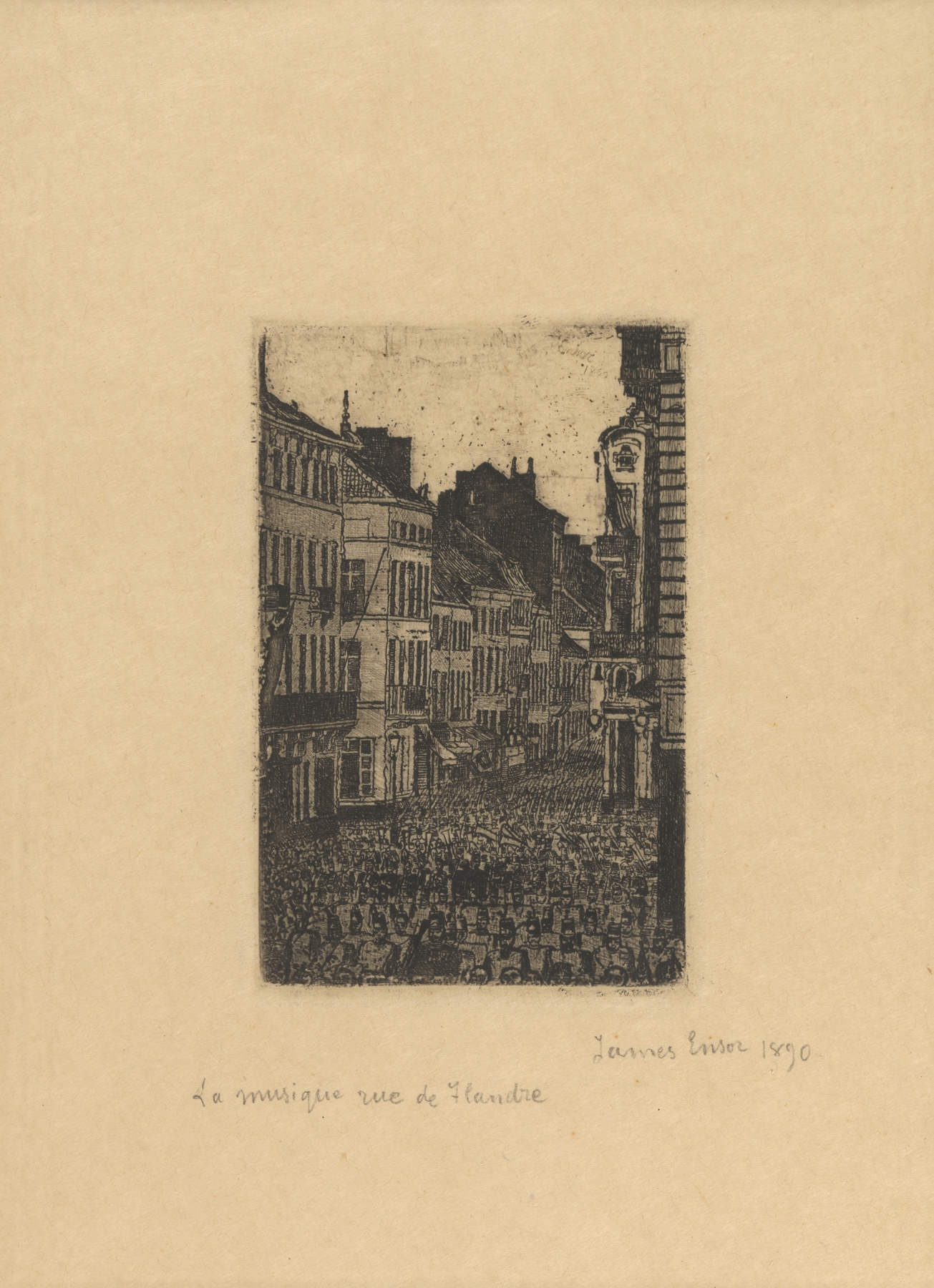
“Every brushstroke is a heartbeat remembered.” In the vibrant chaos of life, where color dances and sound pulsates, the essence of rebirth resonates through art. Look to the center of the canvas, where a joyous procession unfolds; musicians clad in lively attire draw your eye with their animated poses and vivid hues. Notice the swirling blues and greens that create a vibrant backdrop, evoking the lively energy of a Flemish street. The composition is dynamic, with figures arranged in a diagonal line that guides the viewer’s gaze from the left, where a jester plays, to the right, where a graceful woman twirls, embodying the music that fills the air.
Delve deeper into the scene, where the juxtaposition of jubilance and the shadow of anonymity speaks volumes. Each character is layered in expression—some with faces masked, reminding us of societal facades, while others bear vivid smiles, embodying the joy of life. This contrast reveals a complex emotional landscape, hinting at the coexistence of celebration and concealment, personal freedom and societal expectation, encapsulating the essence of rebirth amid the revelry.
James Ensor created this painting in 1890 while living in Ostend, Belgium, a time marked by his exploration of color and form in response to the changing art world. The late 19th century was a period of burgeoning modernism, where artists began to break free from traditional confines. His work reflected both a personal pursuit of expression and the broader cultural shifts of his time, celebrating life even amidst the masked realities of society.