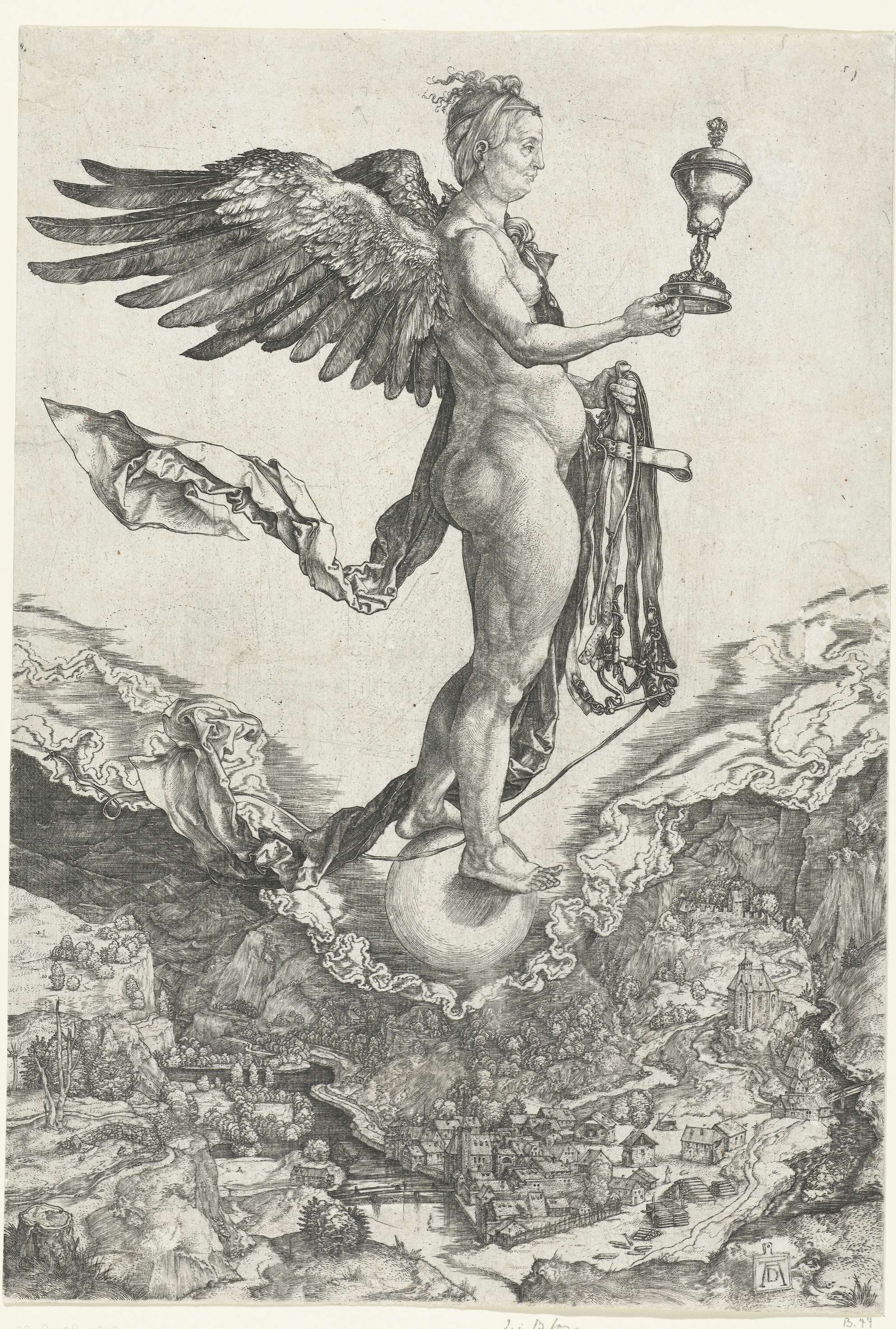
What secret hides in the quiet of the canvas? In *Nemesis*, Albrecht Dürer captures the profound weight of grief, a visceral exploration of loss and retribution that resonates through the ages. Look to the left at the figure of Nemesis, draped in a flowing robe, her gaze piercing as she stands at the center of chaos. Notice how the play of light illuminates her features, casting shadows that deepen the tension in her expression. The intricate details of her attire, adorned with symbols of fate and fortune, draw the eye, while the darker hues surrounding her evoke an atmosphere laden with foreboding. The careful balance of form and composition creates a dynamic yet unsettling harmony, prompting viewers to question the nature of justice and vengeance. As you delve deeper, consider the contrasting elements woven within the piece. The balance between the serene beauty of Nemesis and the chaotic backdrop suggests an inner struggle, a dichotomy of order and disorder. Each object in the frame, from the instruments of measurement to the fraught figures lurking in the shadows, holds significance, hinting at the moral complexities that define humanity’s relationship with fate. Grief permeates not just through the subject but reverberates within the viewer, inviting a rumination on the inevitabilities of life and the consequences of our choices. Dürer created this work between 1499 and 1503, during a time of tremendous upheaval in the art world and society. In Nuremberg, where he lived, the Renaissance was blossoming, yet tensions were brewing as the Reformation began to take root. This period marked a significant turning point for the artist, who was exploring themes of spirituality and human experience, striving to capture an essence that would resonate beyond the confines of his time.