Niagara — History & Analysis
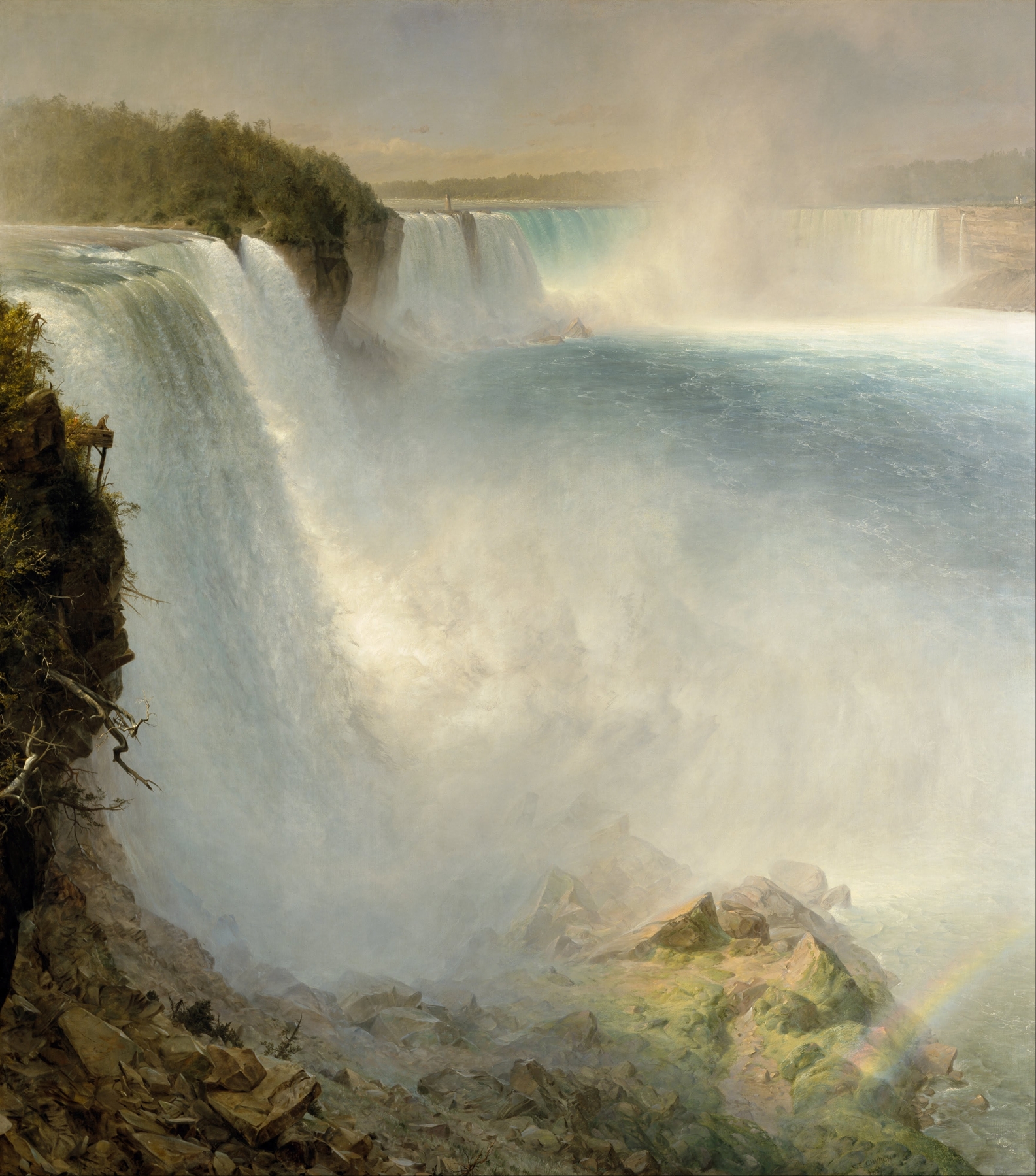
"Art reveals the soul when the world turns away." In the face of nature's grandeur, we find ourselves transformed and renewed, discovering the depth of our emotions through the strokes of a master. Look to the cascading waters as they plummet with majestic force, creating a vibrant contrast against the serene, untouched greenery surrounding them. The light dances across the surface of the falls, highlighting an array of blues and whites that evoke both power and tranquility. Notice how the subtle interplay of shadows enriches the scene, drawing your eye toward the horizon where sky and water meld into one.
Each brushstroke invites you to feel the energy of the moment, to hear the roar of the falls echoing in your chest. Within this composition lies a profound duality: the tumultuous force of nature stands in stark contrast to the stillness of the observer on the shore. The figures in the foreground, dwarfed by the landscape, represent humanity's humble presence amid the overwhelming beauty of the natural world. This interplay suggests a tension between awe and solace, urging us to confront our place in the grand tapestry of existence.
It is a reminder of the transformative power of nature, capable of evoking both fear and reverence. In 1857, Frederic Edwin Church crafted this masterpiece during a time when the Hudson River School was at its pinnacle, representing a shift towards American landscape painting. Living in Catskill, New York, Church was deeply influenced by the romantic ideals of the sublime, as well as the emerging fascination with nature as a source of inspiration and reflection. The world around him was a canvas of exploration and discovery, mirroring the transformative journey depicted in his work.