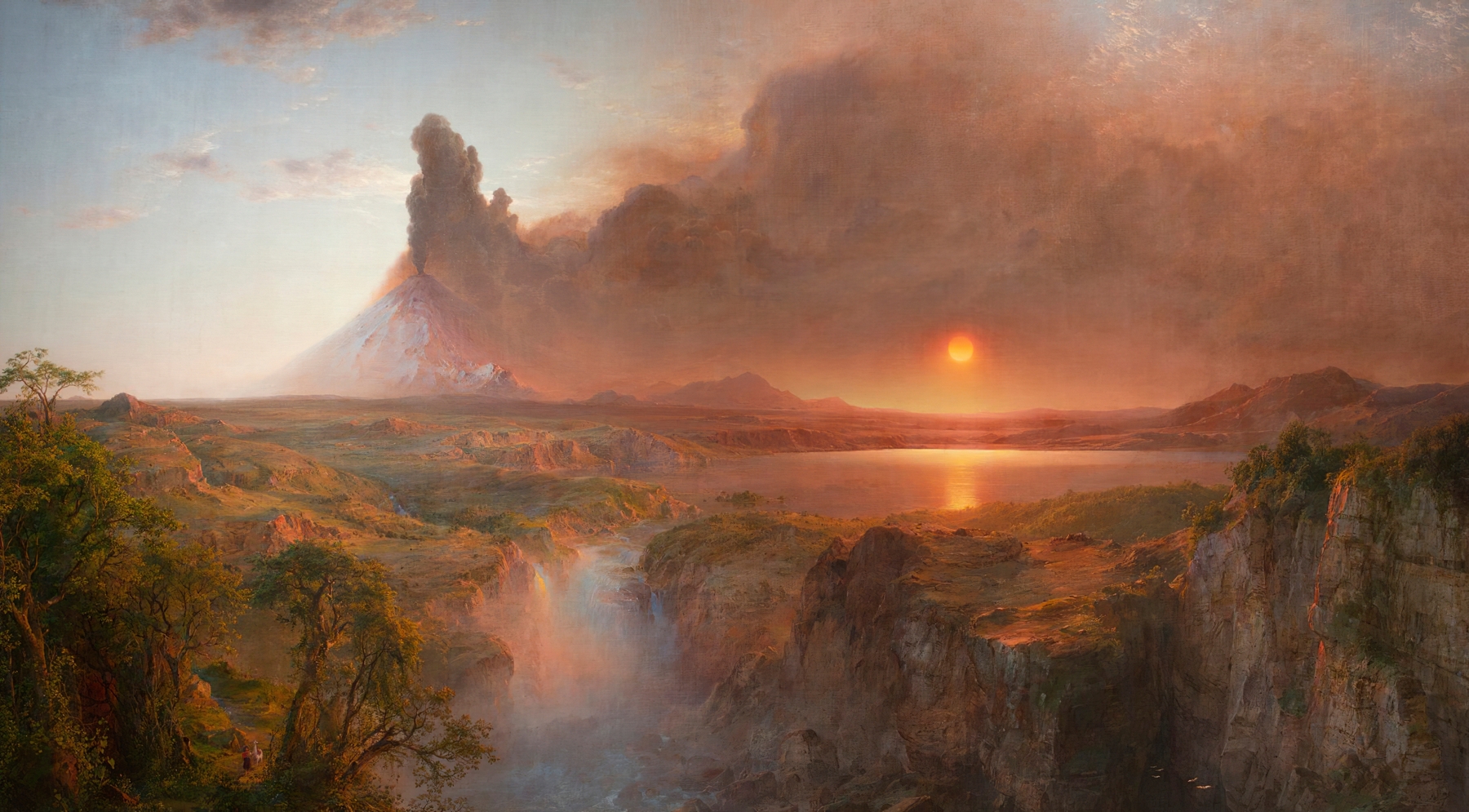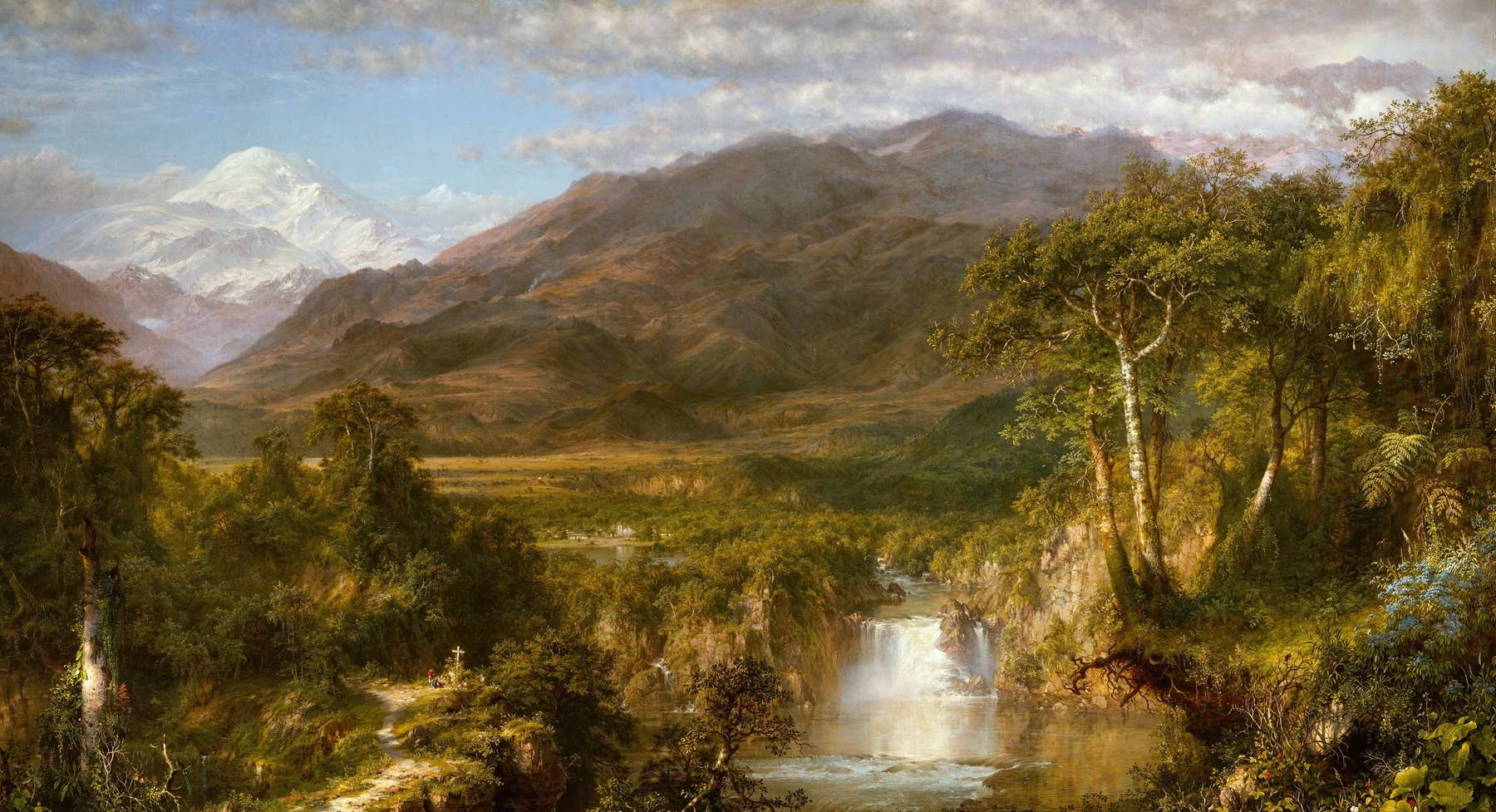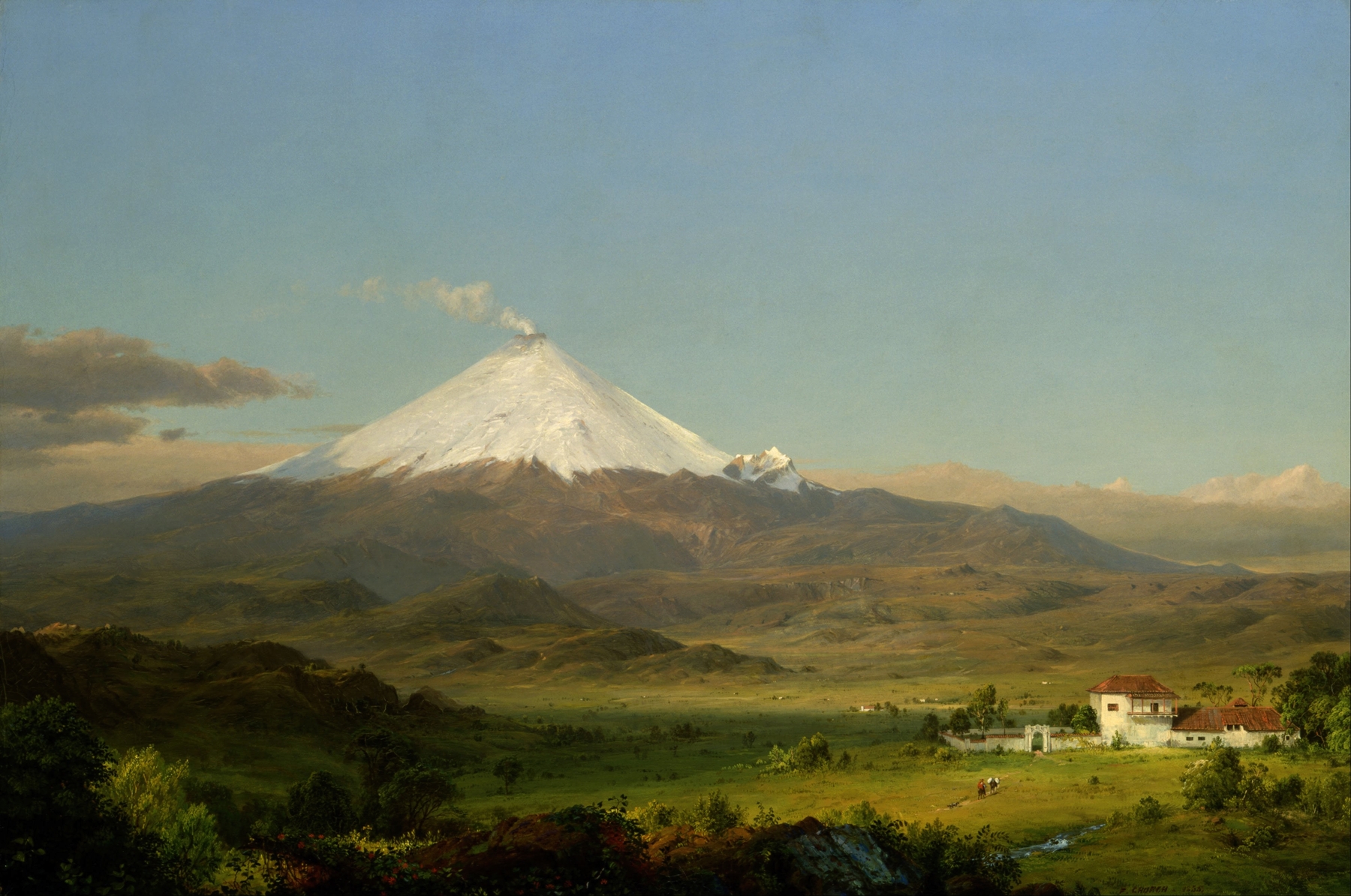
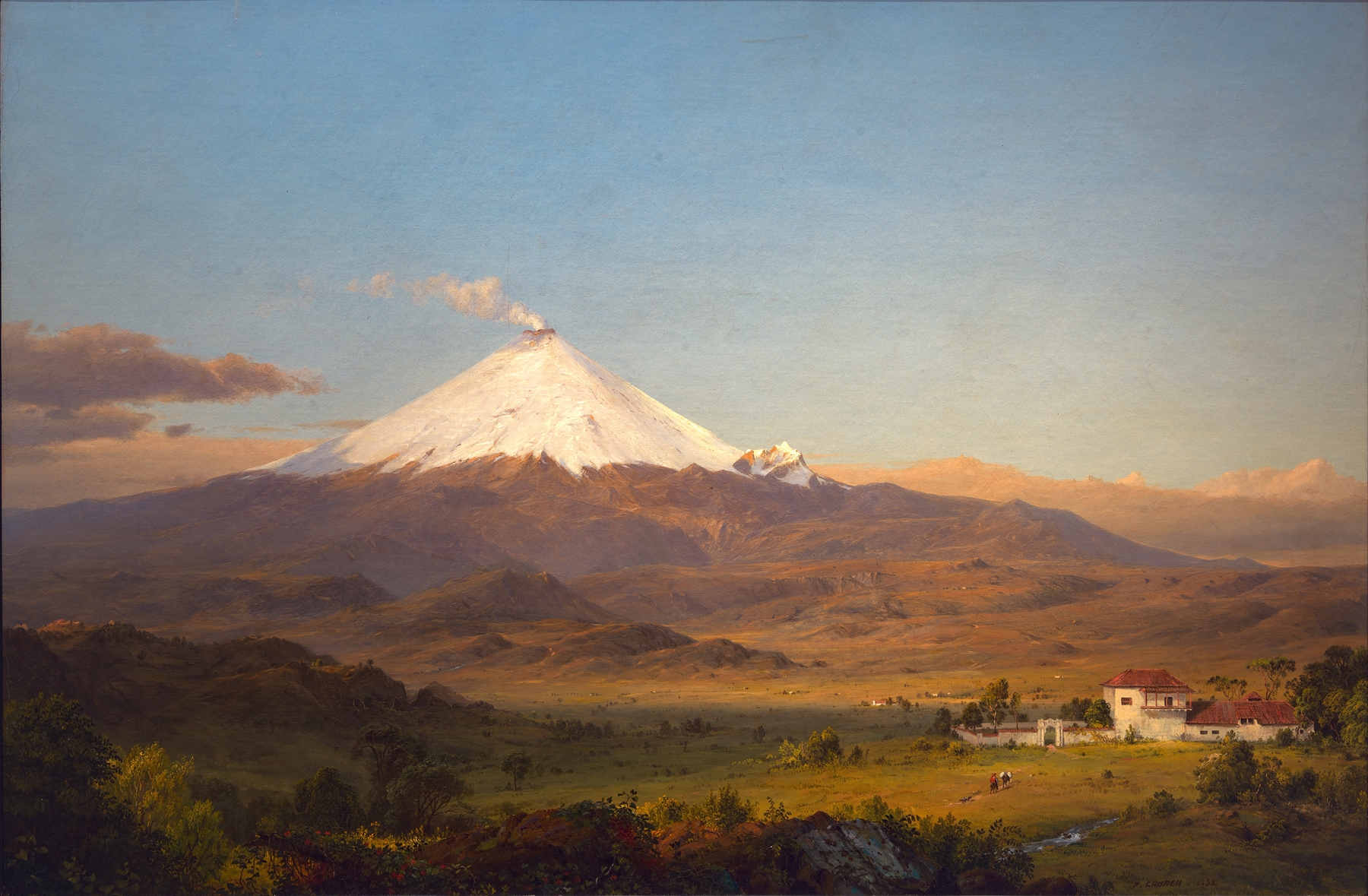
“To paint is to remember what time wants us to forget.” This idea resonates profoundly within the vast expanse of immortal landscapes, where nature reminds us of both beauty and transience. Look closely at the volcanic peak that rises majestically against a tumultuous sky in *Cotopaxi*. The vibrant hues of oranges, reds, and deep blues clash and blend, creating an atmosphere thick with emotion. The luminosity highlights the contours of the mountain while the foreground, dotted with verdant foliage and swathes of shadow, pulls your gaze towards the impending eruption, hinting at the untamed power of nature. Every brushstroke reveals the artist's mastery in depicting not only the landscape but also the tension between tranquility and upheaval. Hidden within this dramatic scene lies an exploration of mortality. The looming volcano serves as a metaphor for life’s unpredictability, where serenity can give way to chaos in an instant. The delicate balance between light and shadow echoes the fragility of existence, inviting contemplation on our place within the natural world. Additionally, the vibrant flora in the foreground symbolizes the life that thrives despite the threat, suggesting resilience amidst destruction and the cyclical nature of life and death. Frederic Edwin Church created *Cotopaxi* during the mid-19th century, a period that saw an emerging interest in the sublime. He painted it while engaging with the transcendental movements of thought that influenced his contemporaries. The exploration of nature, especially in its raw and powerful forms, mirrored the significant changes happening in society as industrialization began to alter the landscape of the world. Through this work, Church not only captured a moment but also a philosophical reflection on the interplay between humanity and nature’s overwhelming force.