Notre-Dame, Paris from the quai St Bernard — History & Analysis
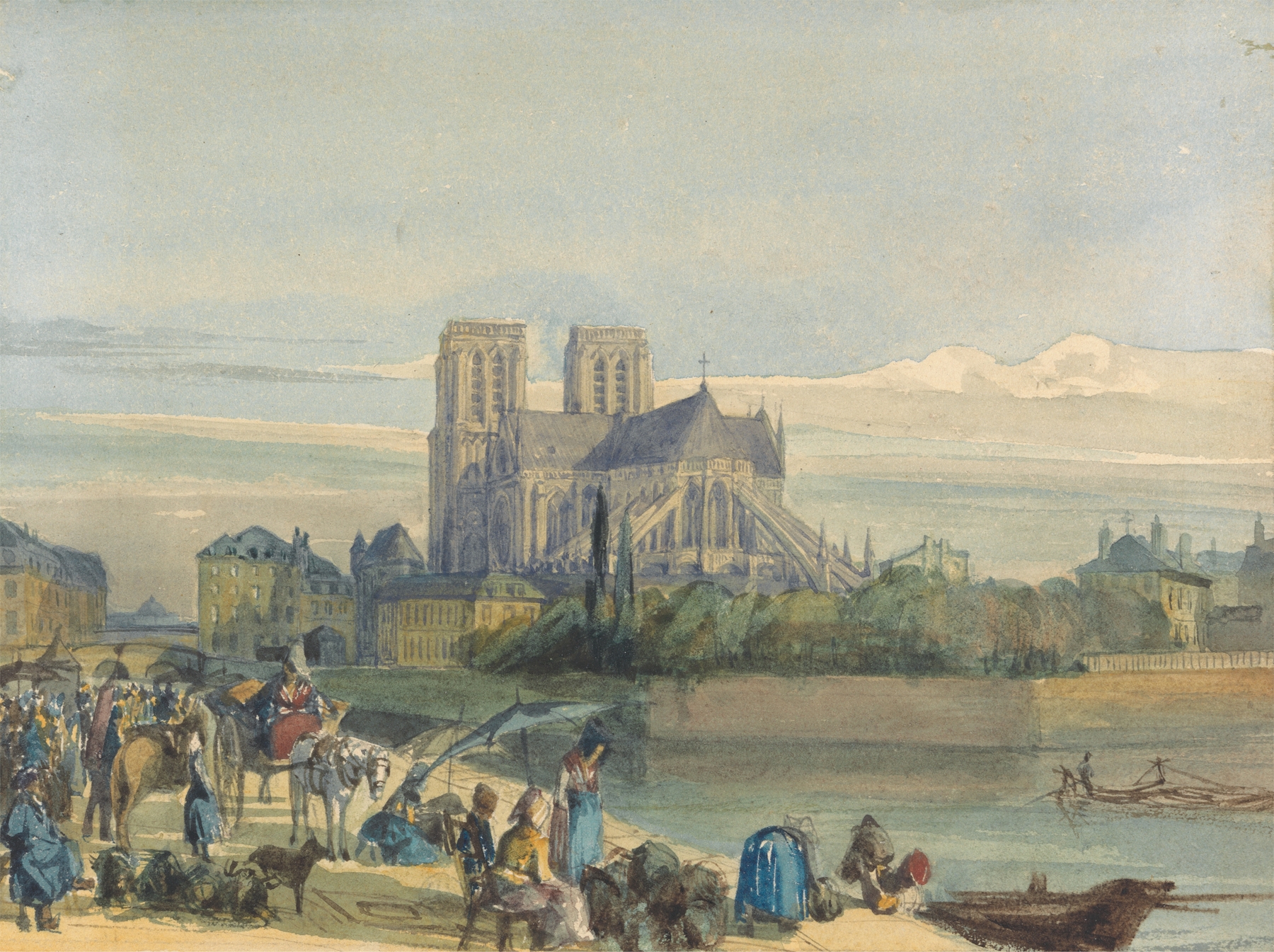
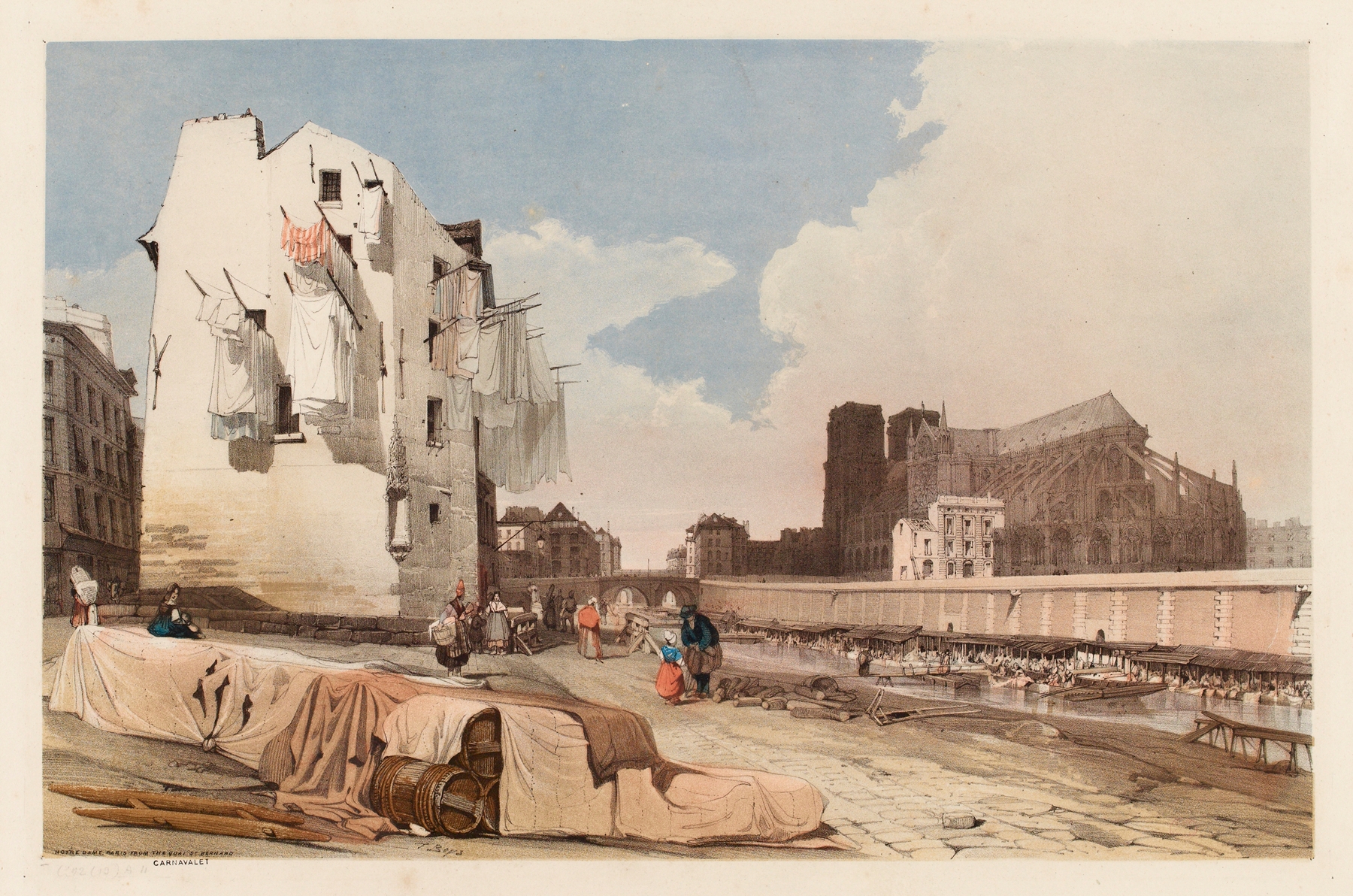
Can beauty exist without sorrow? In the delicate interplay of light and shadow, every stroke invites contemplation on the transient nature of life and art, revealing a balance of joy and melancholy. Look to the center of the canvas, where the grand silhouette of Notre-Dame rises majestically against a pastel sky. The warm hues of dawn bathe the cathedral in a gentle glow, while the tranquil waters of the Seine reflect this splendor, creating a visual harmony that is both soothing and profound. The artist's careful brushwork captures the intricate details of the architecture, with delicate lines outlining the flying buttresses and spires, all set against a soft blue backdrop that infuses the scene with a sense of calm. As you explore the edges of the painting, subtle contrasts emerge. The vibrant colors of the flowers in the foreground hint at life's exuberance, yet they are juxtaposed with the stillness of the water, evoking the passage of time. This tension between the lively blooms and the somber cathedral urges the viewer to ponder the fragility of beauty in a world marked by impermanence. Each element speaks to a deeper emotional landscape, where happiness and sorrow coexist in quiet acceptance. Created during a period of artistic exploration in the mid-19th century, the work reflects the burgeoning fascination with urban landscapes and the romantic idealization of historical architecture. Shotter Boys, influenced by the changing dynamics of France, sought to capture the essence of Paris as it stood at the crossroads of tradition and modernity. The careful depiction of Notre-Dame serves not only as a tribute to its enduring beauty but also as a reminder of the inevitable changes time brings.