Notre-Dame vue des quais, le soir — History & Analysis
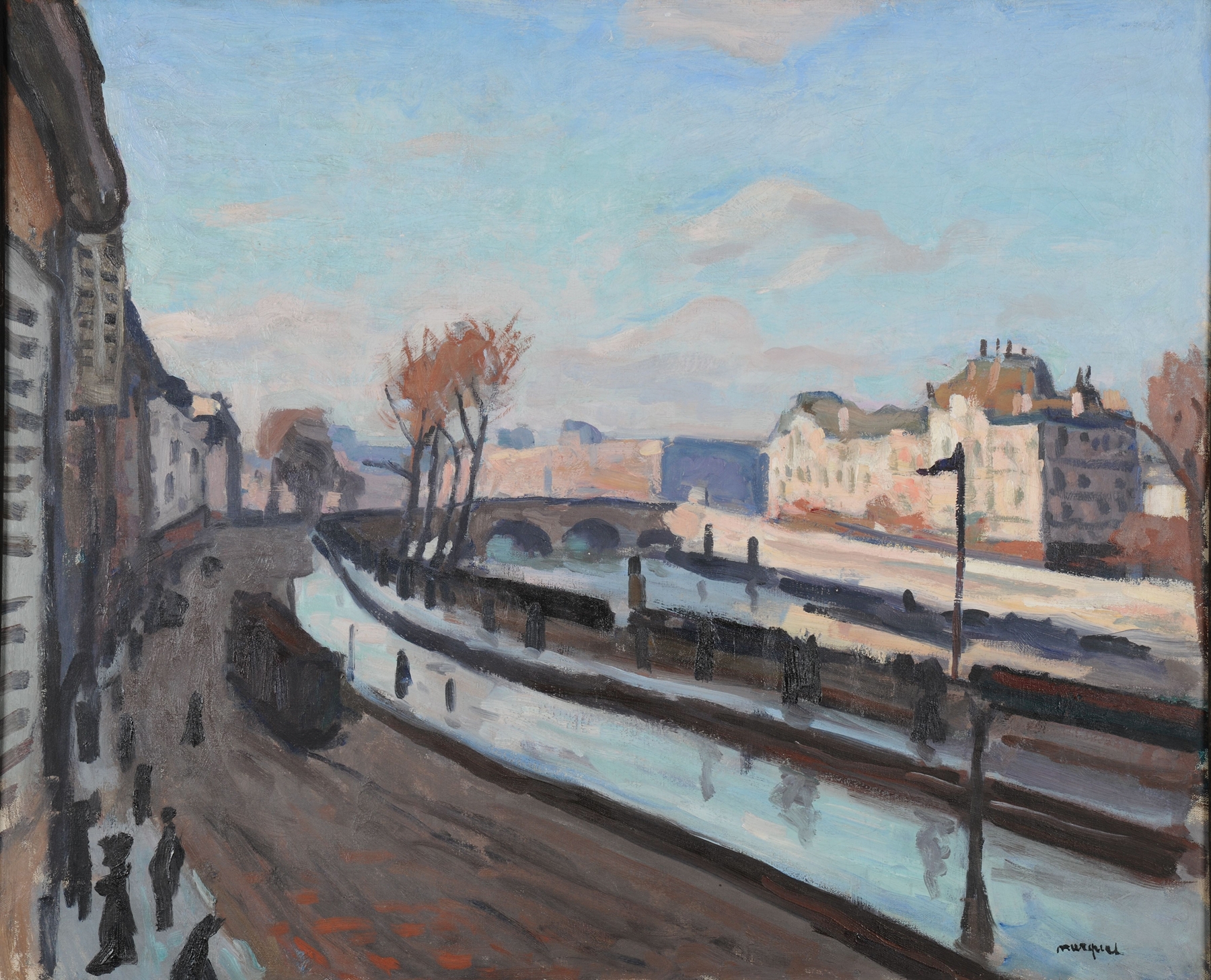
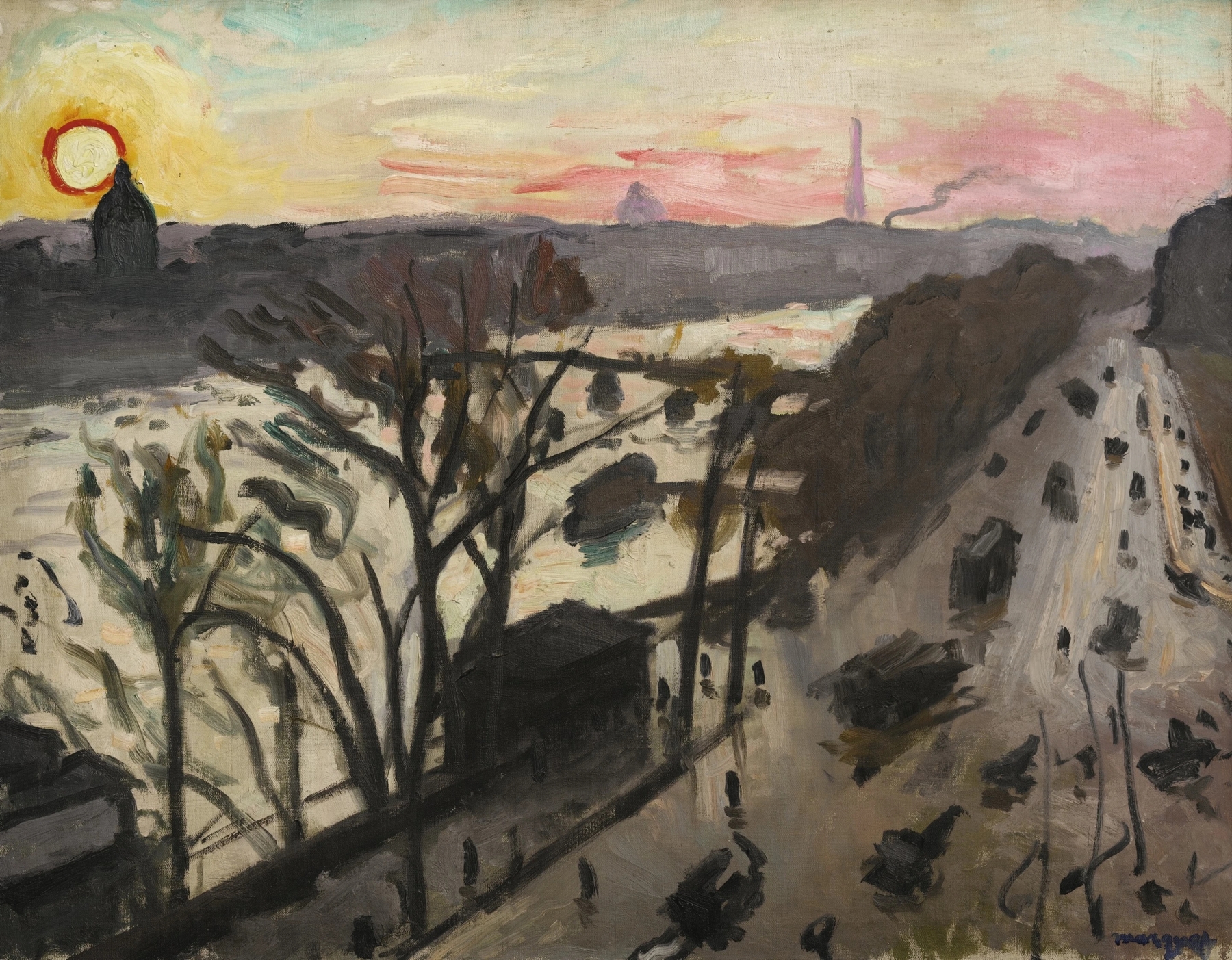
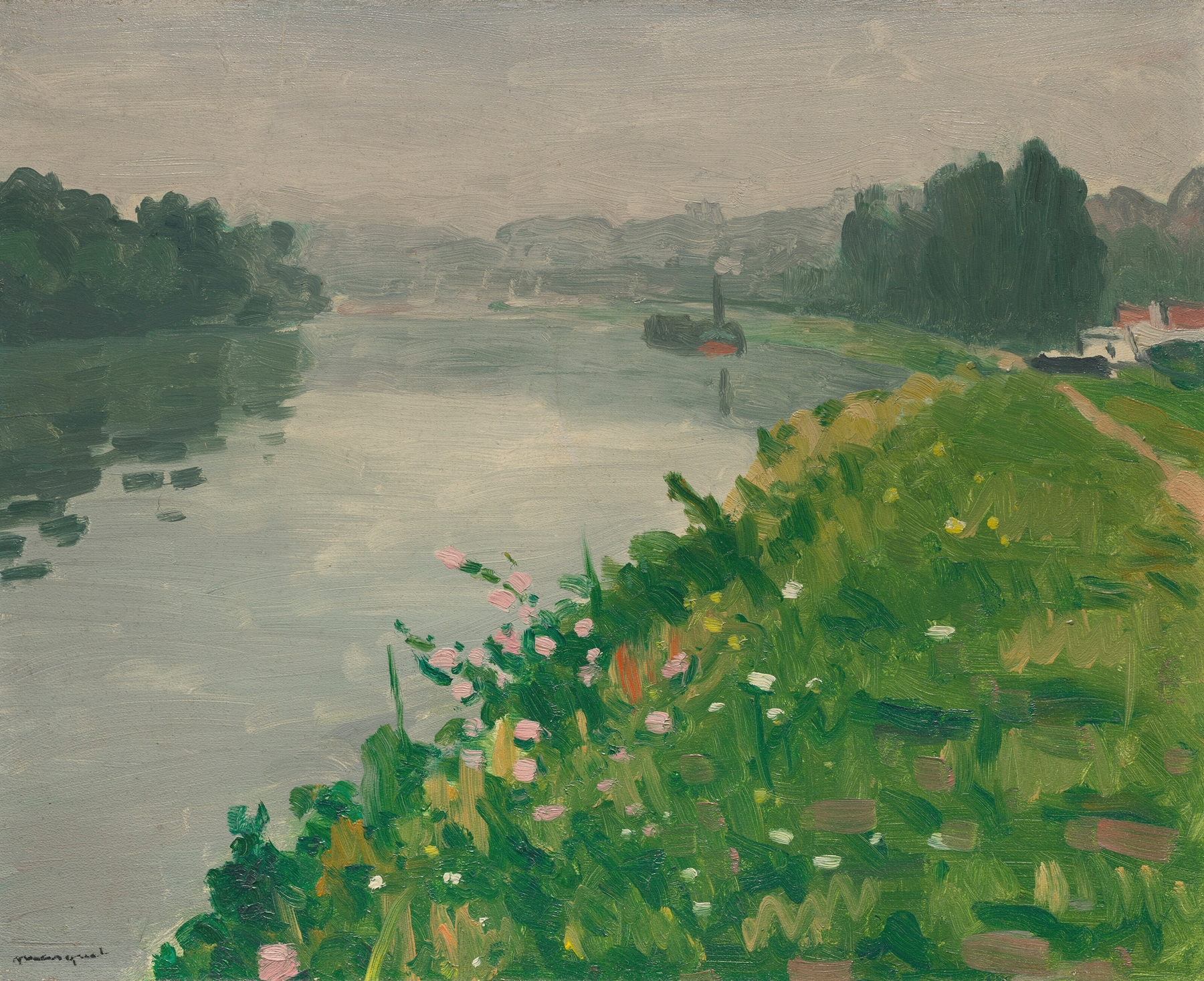
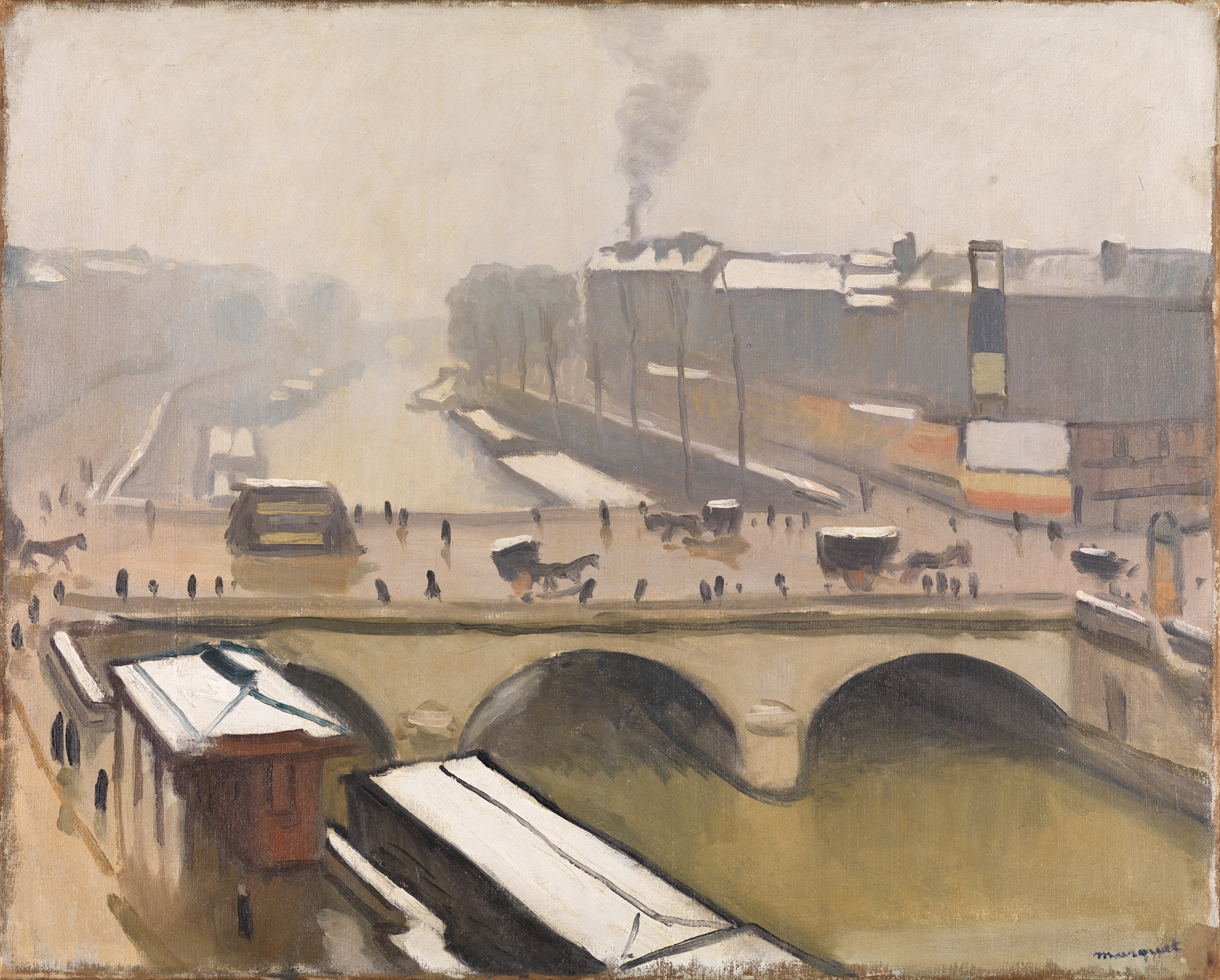
Can paint confess what words never could? In Notre-Dame vue des quais, le soir, the canvas whispers tales of nostalgia, capturing a moment where time seems to pause, allowing memory to linger. Look to the left at the soft, shimmering reflections dancing on the river's surface. The brushwork effortlessly blends hues of deep blue and warm gold, creating a spellbinding twilight atmosphere that envelops the cathedral.
The silhouette of Notre-Dame rises majestically against the evening sky, its intricate details softened by the fading light. Marquet’s bold strokes and harmonious palette draw the eye, inviting the viewer to wander along the quai, immersed in the tranquil beauty of the scene. As you delve deeper into this painting, notice the contrast between the rigidity of the cathedral's architecture and the fluidity of the water below. The vibrant colors evoke a bittersweet longing, as if the artist captured not just a view, but an emotion—a wistfulness for the fleeting moments of life.
The juxtaposition of light and shadow symbolizes the passage of time, reminding us that each sunset carries with it the weight of memories, both cherished and fleeting. In 1922, Marquet painted this work during a period of personal reflection, having found solace in the city of Paris after the upheaval of World War I. The post-war art scene was marked by a desire to reconnect with beauty and simplicity, and this piece exemplifies that yearning. As the artist stood by the banks of the Seine, he transformed his emotional landscape into a visual symphony, inviting viewers to share in his profound sense of place and memory.