Pont-Neuf sous la neige — History & Analysis
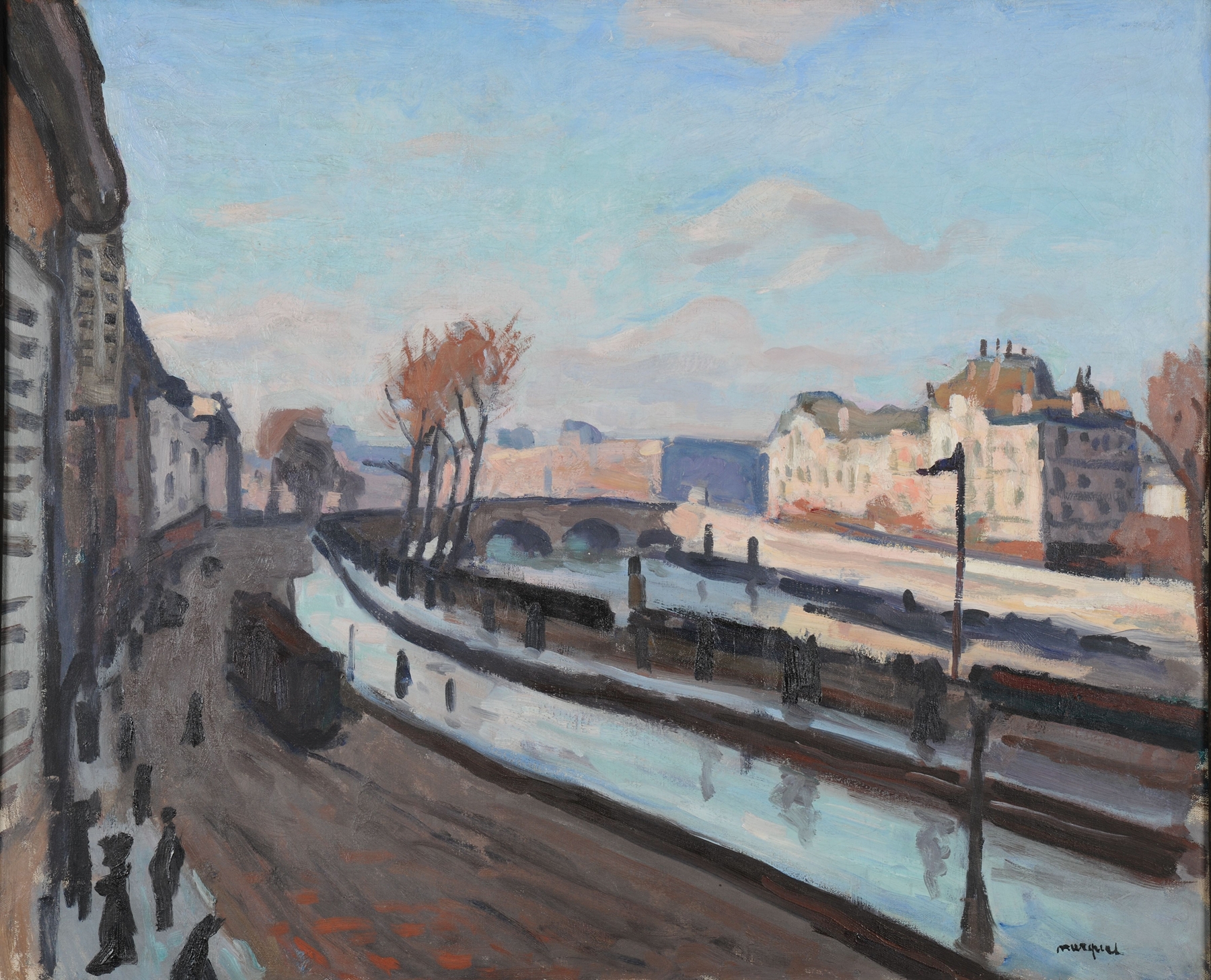
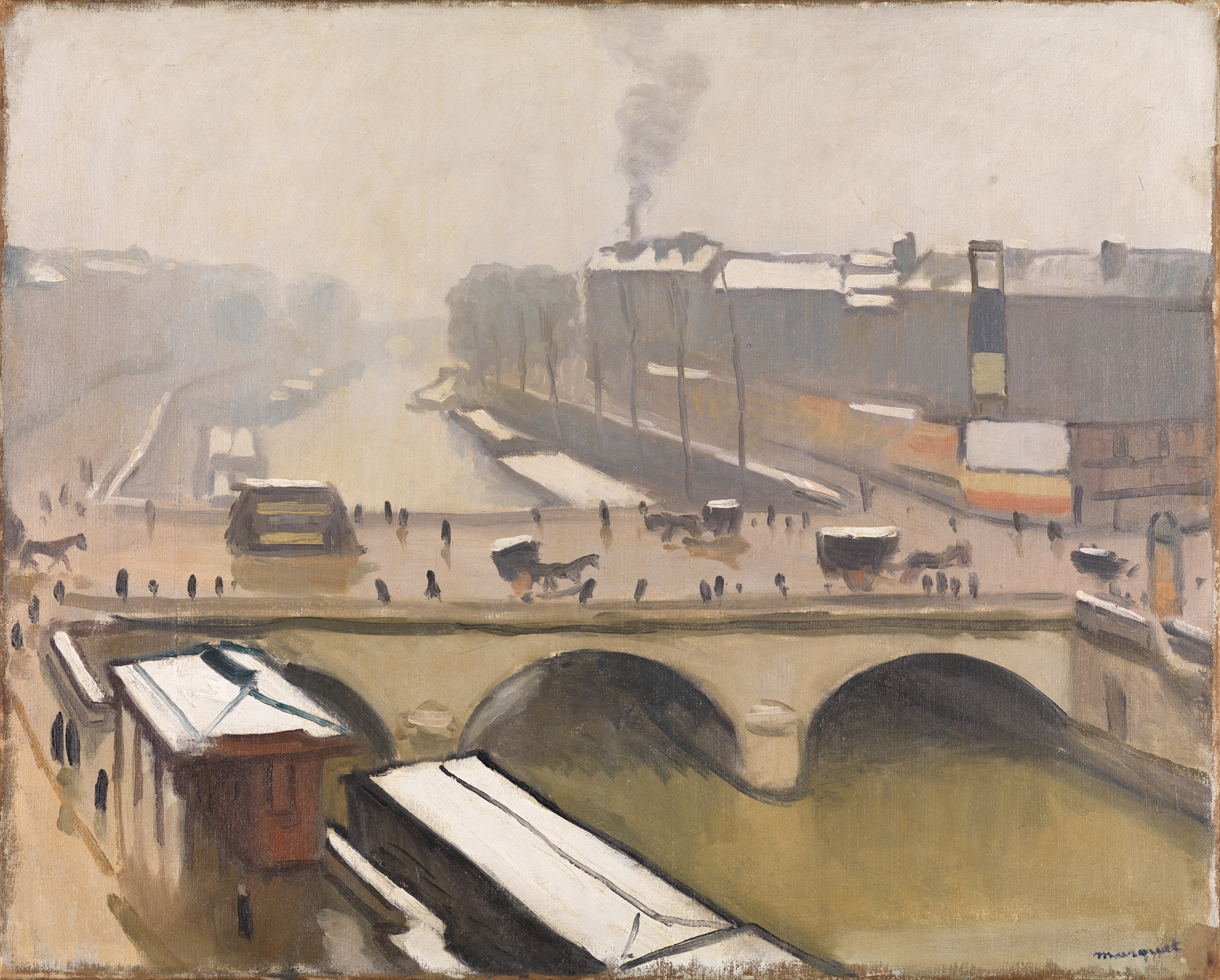
Could beauty survive in a century of chaos? In Pont-Neuf sous la neige, the stunning interplay of color and form presents a fleeting moment of serenity amidst the turmoil of early 20th-century life. Look to the center of the canvas, where the iconic arches of the Pont-Neuf rise gracefully from the snow-capped banks of the Seine. The soft, muted palette of whites and pale blues envelops the scene, contrasting with the bursts of warm ochre and deep green that suggest life beneath the winter's chill.
Notice how light dances upon the snow, its shimmering quality enhancing the structure's architectural elegance, while the flickering reflections in the water beckon the viewer to linger, to feel. Beneath this tranquil surface lies an emotional tension. The coldness of snow juxtaposes the warmth of the bridge, symbolizing resilience in the face of adversity. Each stroke speaks of the artist's brush, revealing a world that holds on to beauty even when shrouded in winter's grasp.
The distant figures, shrouded in the fog of snowfall, illustrate the solitude of the human experience, evoking a sense of nostalgia and longing for connection. Created in 1910, during a pivotal moment in Marquet's career, this piece reflects his exploration of light and color inspired by Impressionism. Living in Paris, he was surrounded by the fervor of artistic innovation while the city itself was on the cusp of modernity. In this context, the painting transcends mere representation; it captures a shared human experience, a reminder of beauty that endures in chaotic times.