Offer van Abraham — History & Analysis
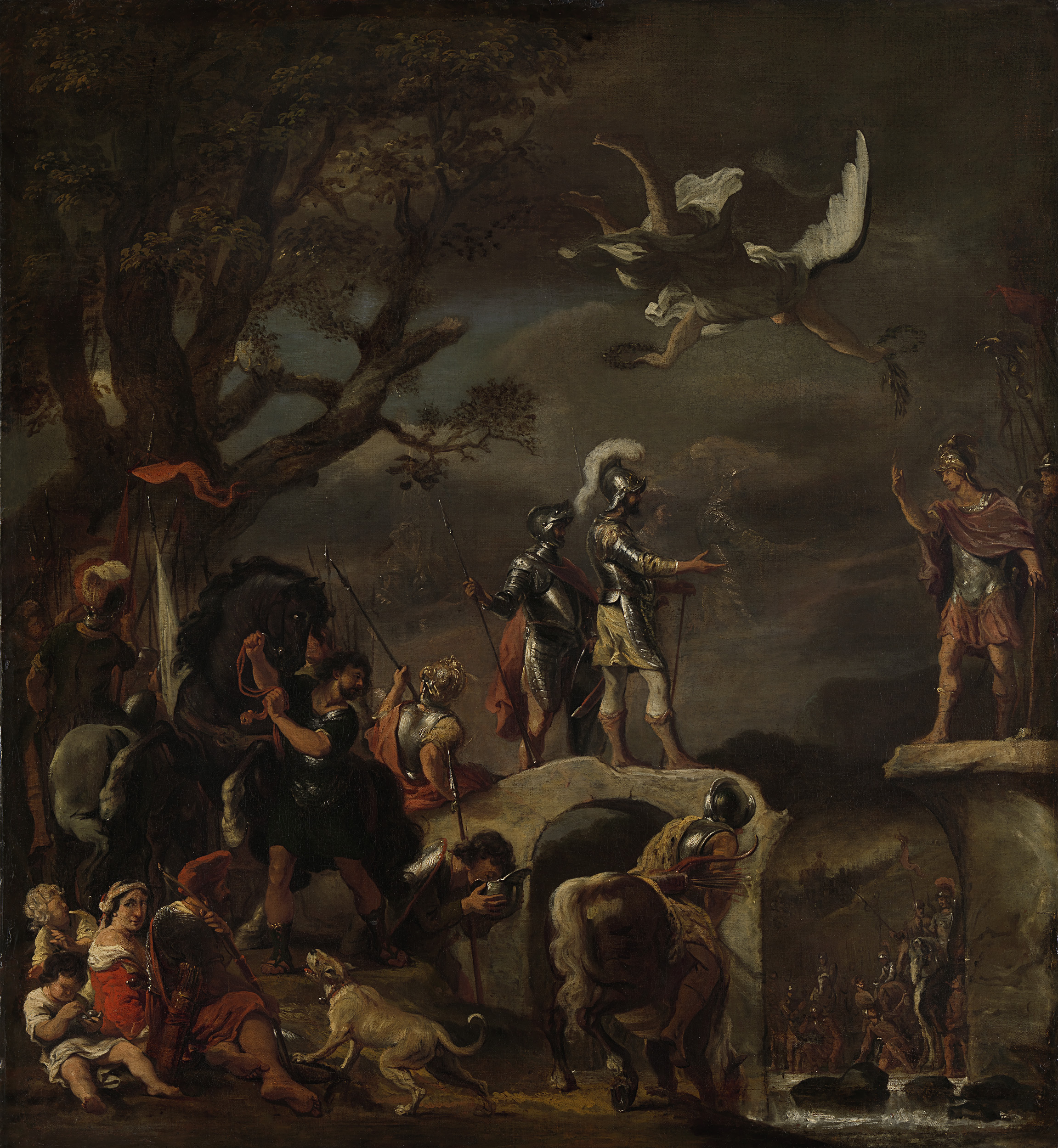
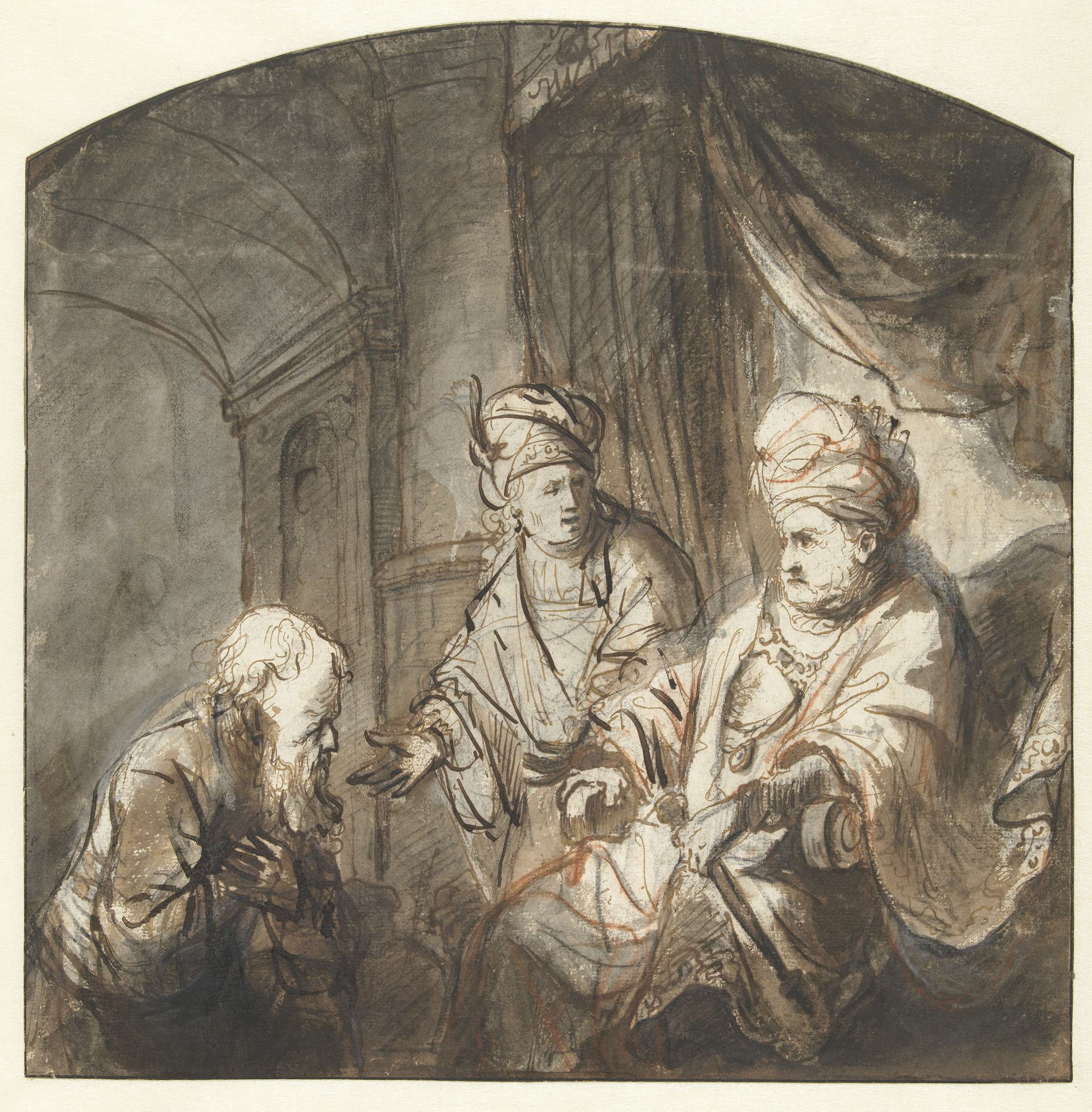
Could beauty survive in a century of chaos? In Offer van Abraham, the artist captures a moment that teeters delicately between reverence and the tempest of societal turmoil. The profound stillness inviting the viewer to ponder the essence of humanity amidst the chaos of the 17th century. Look to the left at the figure of Abraham, enveloped in rich hues of deep reds and radiant golds, exuding an air of nobility and solemnity. His outstretched hand, poised as if in a moment of divine supplication, draws the eye, while the intricate details of his garments create a striking contrast against the muted background.
Notice how the play of light gently highlights his face, illuminating his contemplative expression, while casting shadows that hint at the complexity of his thoughts. Delve deeper into the layers of symbolism within the artwork. The lamb, serene yet vulnerable at Abraham's feet, symbolizes sacrifice and the fragility of innocence in a turbulent world. The juxtaposition of Abraham's calm demeanor against the darker undertones of impending chaos serves as a poignant reminder of the resilience of faith amidst uncertainty.
This scene encapsulates the tension between divine purpose and the human experience, inviting reflection on the cost of beauty and belief. Ferdinand Bol painted this work during a time of artistic flourishing in the Dutch Golden Age, from 1632 to 1680, when he was influenced by the chiaroscuro techniques of his mentor, Rembrandt. As he navigated his own career, Bol sought to explore themes of spirituality and human emotion in a landscape marked by political upheaval and change. This painting stands as a testament to his ability to encapsulate the human spirit's search for meaning within a chaotic world.