Offer van Abraham van Isaak — History & Analysis
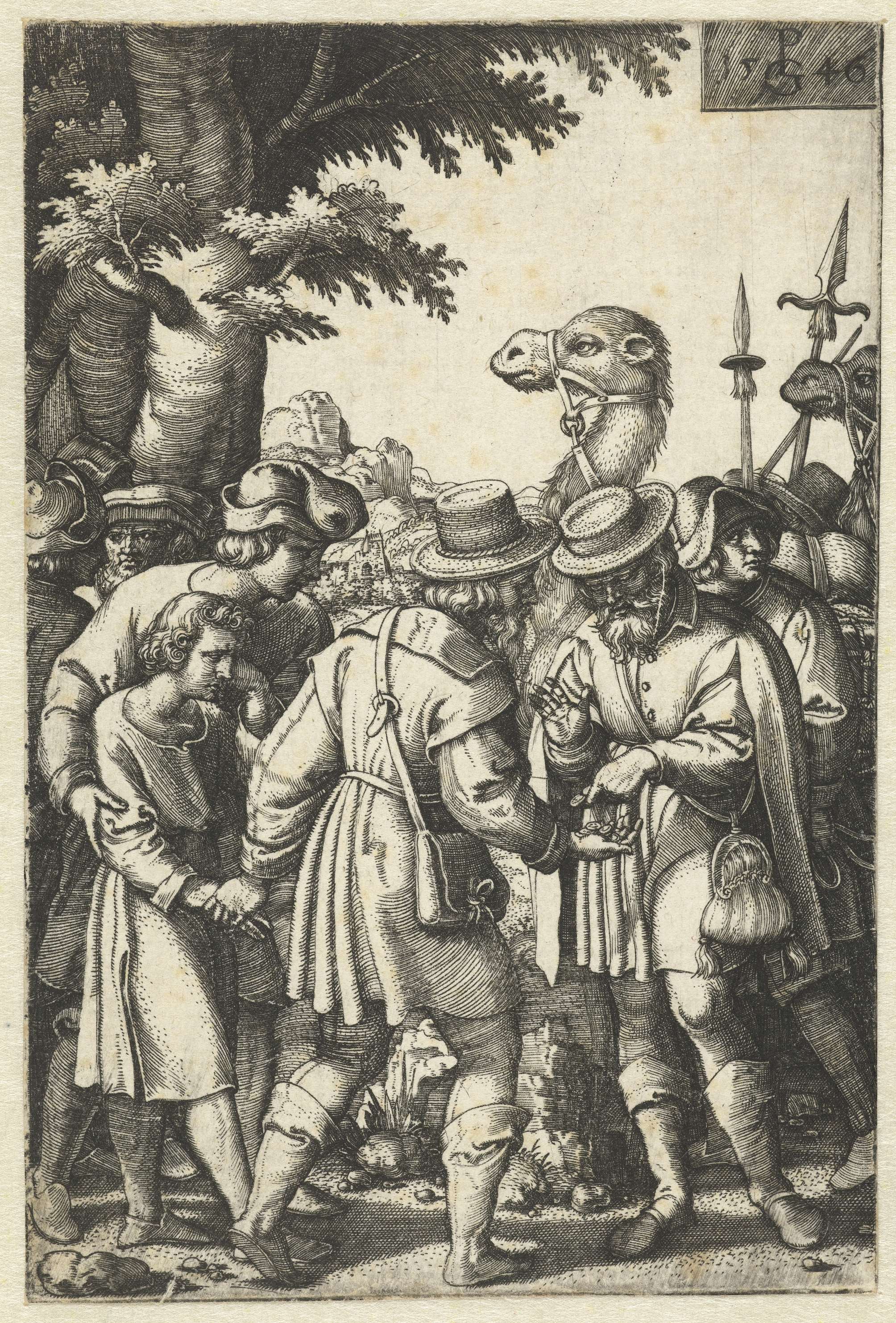
Could a single brushstroke hold eternity? In Offer van Abraham van Isaak, Georg Pencz captures not just a moment in time, but the swirling chaos of faith and sacrifice. This painting invites viewers into a realm where divine command meets human emotion, revealing the tension of a story rooted in spiritual devotion. Look to the center of the canvas where the figures of Abraham and Isaac stand, orchestrated against a backdrop that seems to pulse with energy. The deep, rich colors of the garments contrast with softer, ethereal hues in the sky, drawing the eye toward the dramatic moment of decision.
Notice how the light cascades down upon Abraham's hand, poised yet trembling, signifying both resolve and uncertainty. The meticulous detailing of their expressions speaks volumes, encapsulating the burden of impending sacrifice. Hidden within this open space of emotional turmoil are layers of meaning; the physical distance between father and son symbolizes the chasm of faith and obedience. Pencz employs chaotic brushwork to evoke the divine uncertainty that fate carries, suggesting that the divine will is fraught with human emotion.
The stark contrast between the figures' calm demeanor and the tumultuous background encapsulates the struggle of belief, making the viewer question the depths of commitment and the chaos inherent in divine commands. Pencz painted Offer van Abraham van Isaak between 1541 and 1545, during a time when the Renaissance was fostering intense theological debate and exploration. As a prominent figure in the Nuremberg school, he navigated a landscape rife with the tensions of Reformation ideologies, where biblical narratives were not only stories but reflections of contemporary moral dilemmas. This painting sits at the crossroads of artistic achievement and spiritual inquiry, embodying the complex relationship between art, faith, and the human experience.