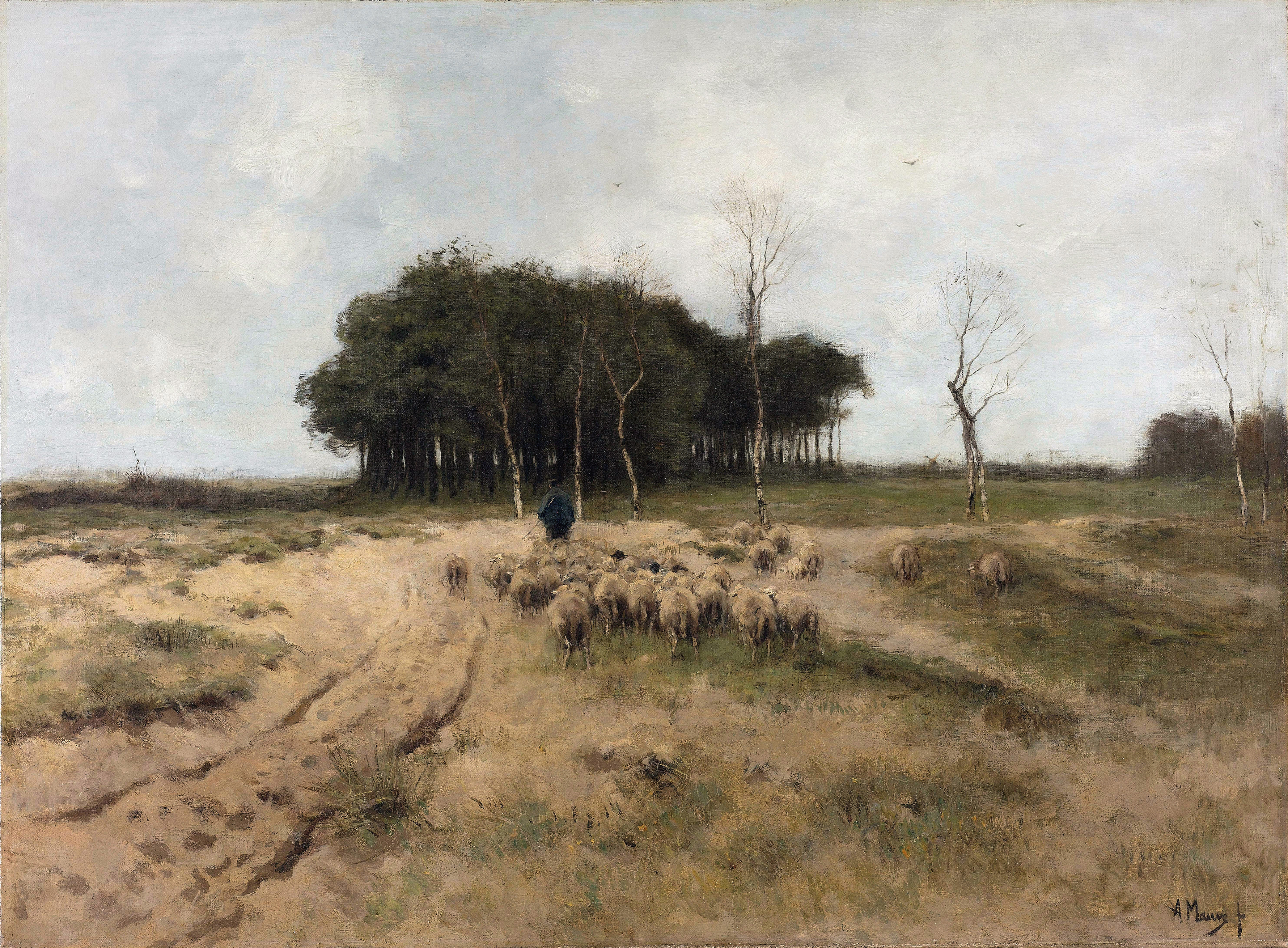
On the Heath near Laren — History & Analysis
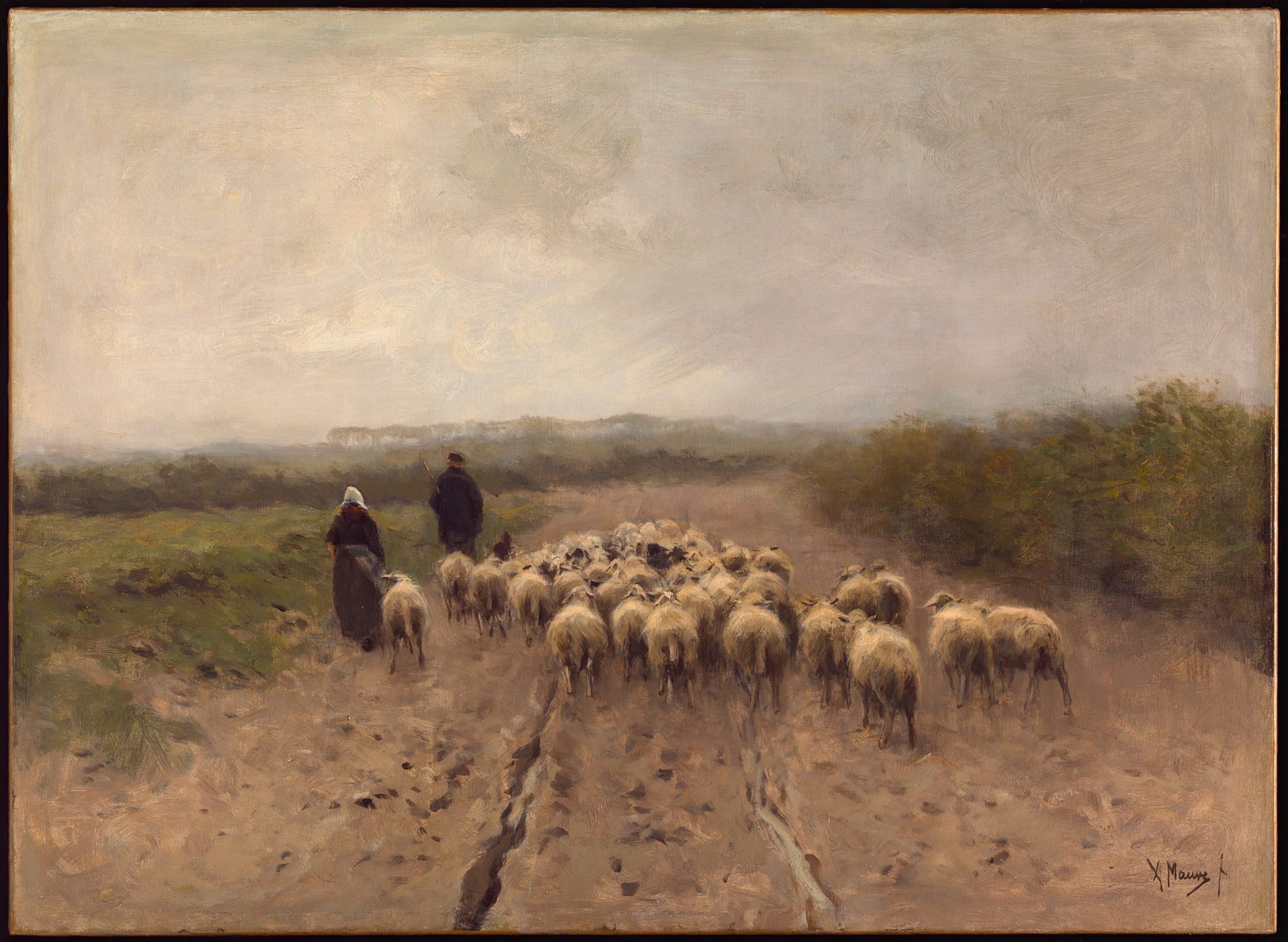
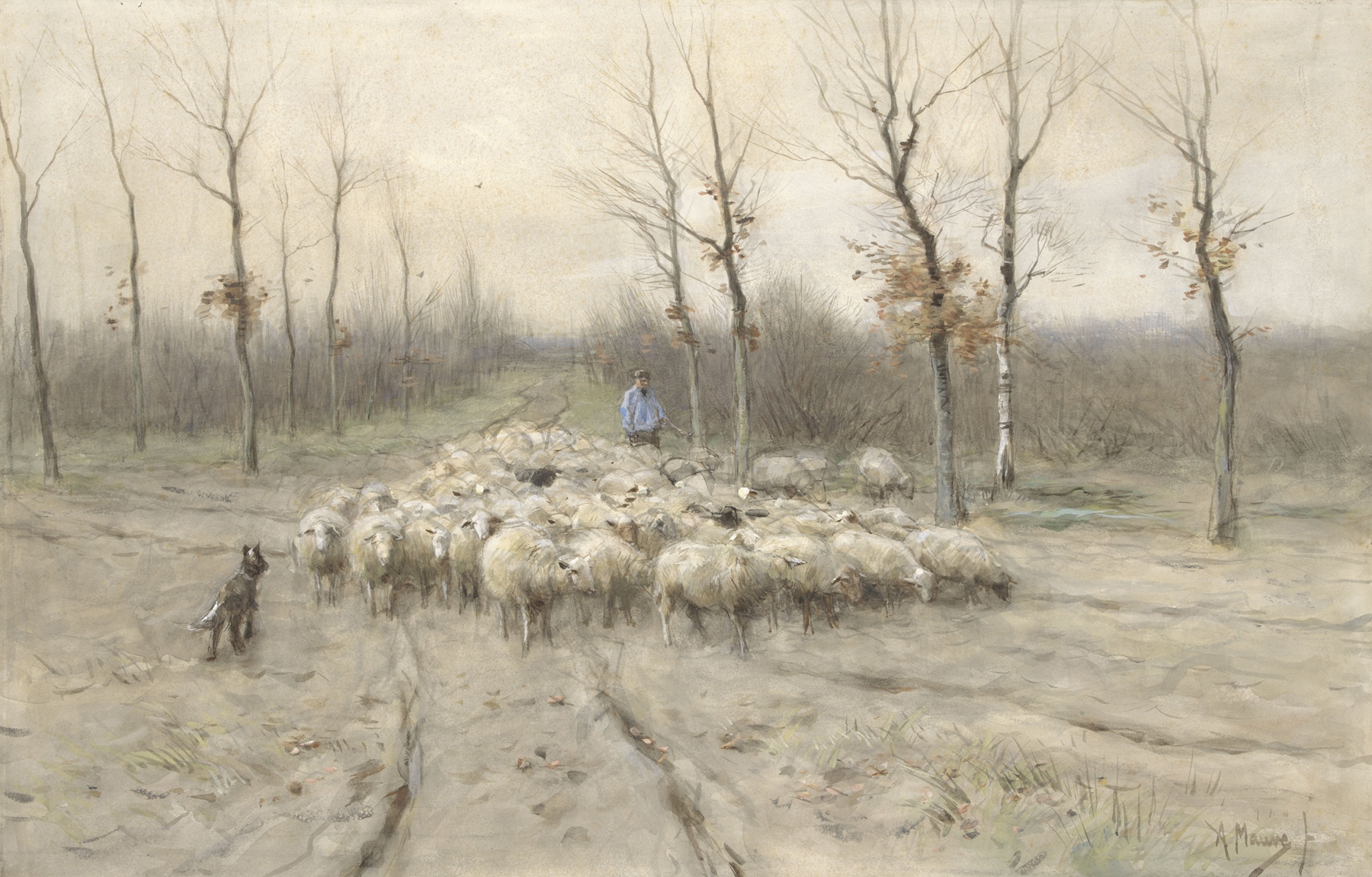
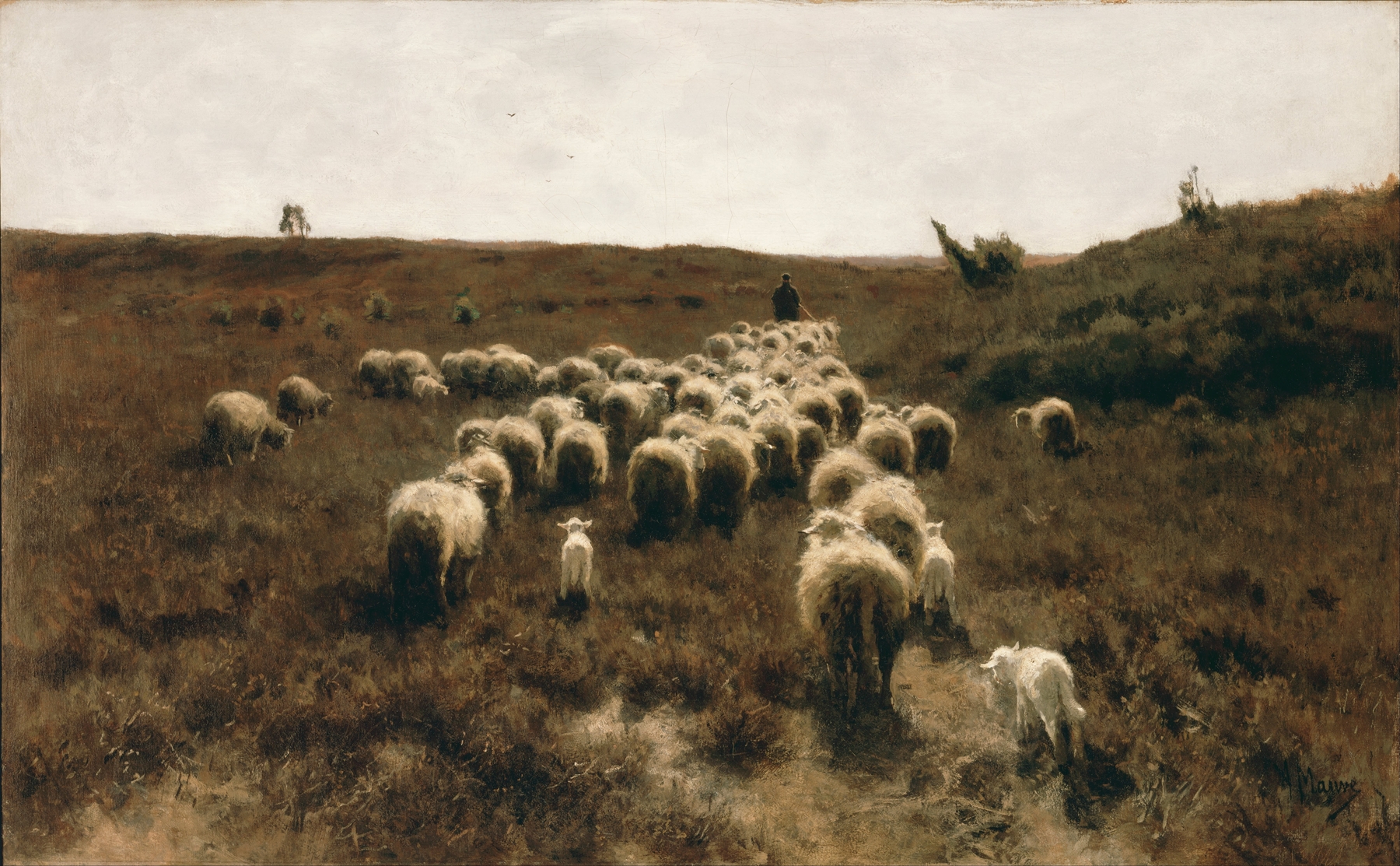
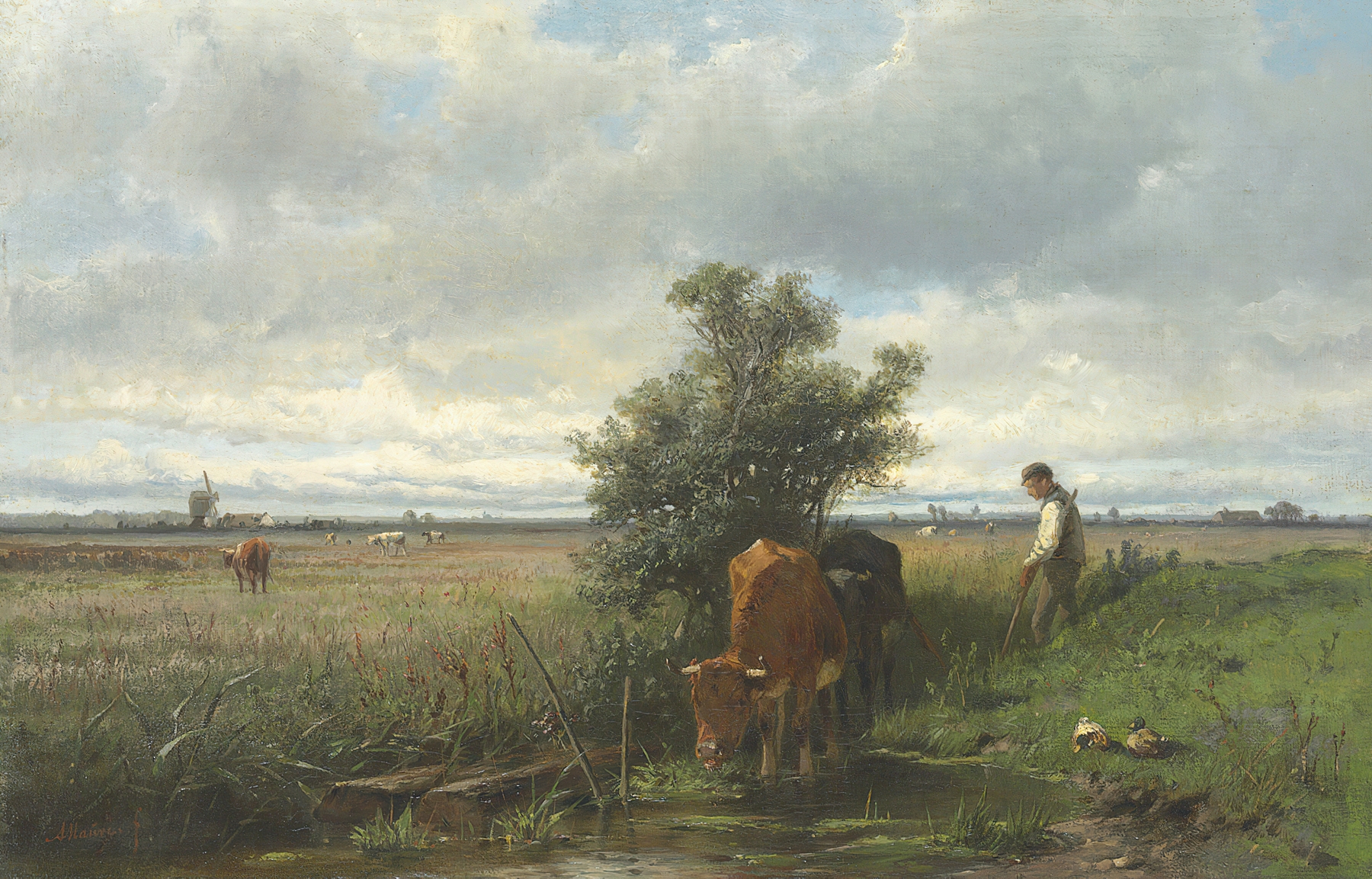
What if silence could speak through light? The tranquil essence of this artwork invites us into a world where the ordinary becomes extraordinary, and the landscape whispers secrets of transcendence. Look to the left at the gentle curve of the verdant heath, where the lush greens are punctuated by strokes of golden sunlight. Notice how the figures, gallantly positioned at the horizon, seem to blend into the landscape, becoming one with the earth.
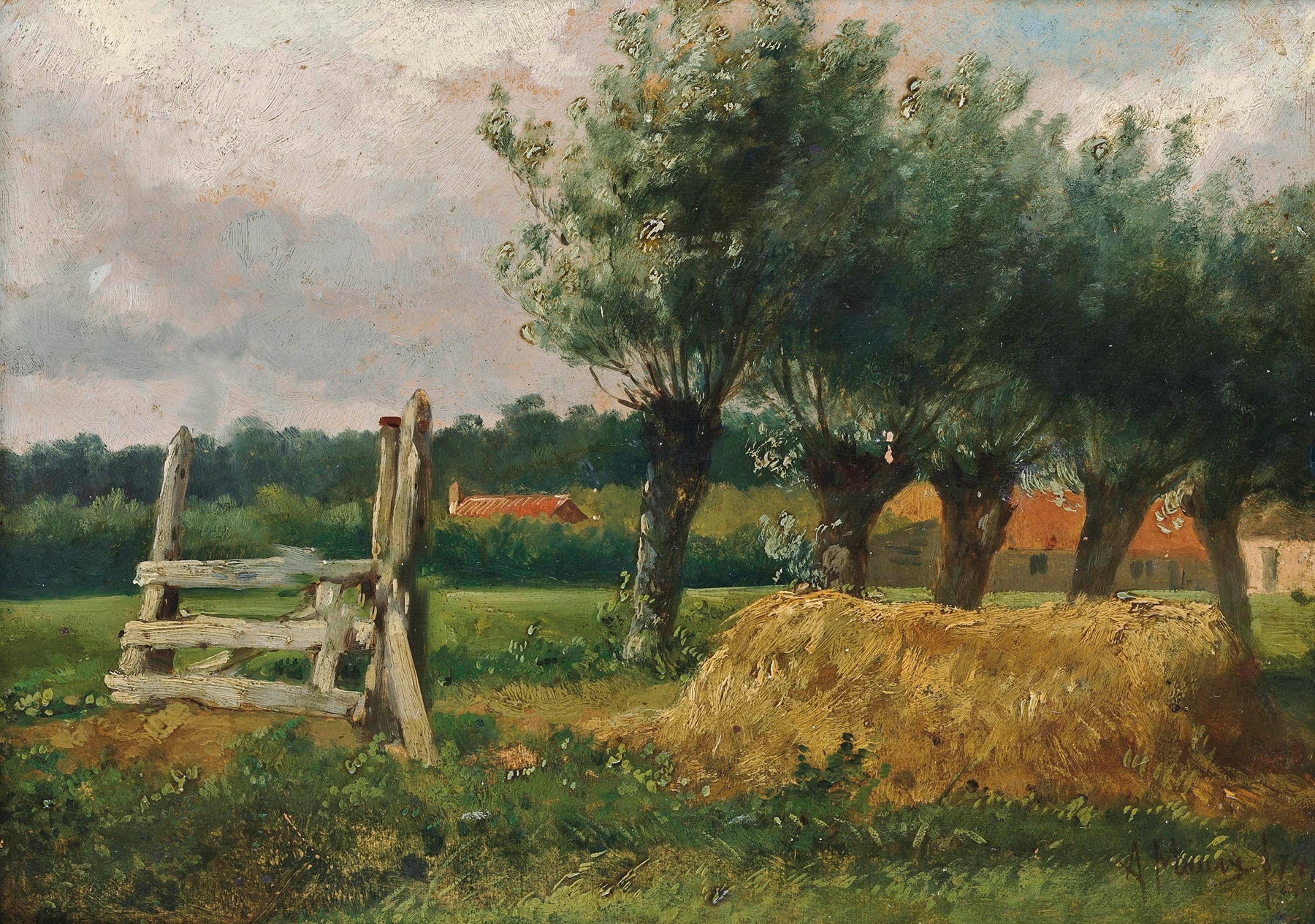
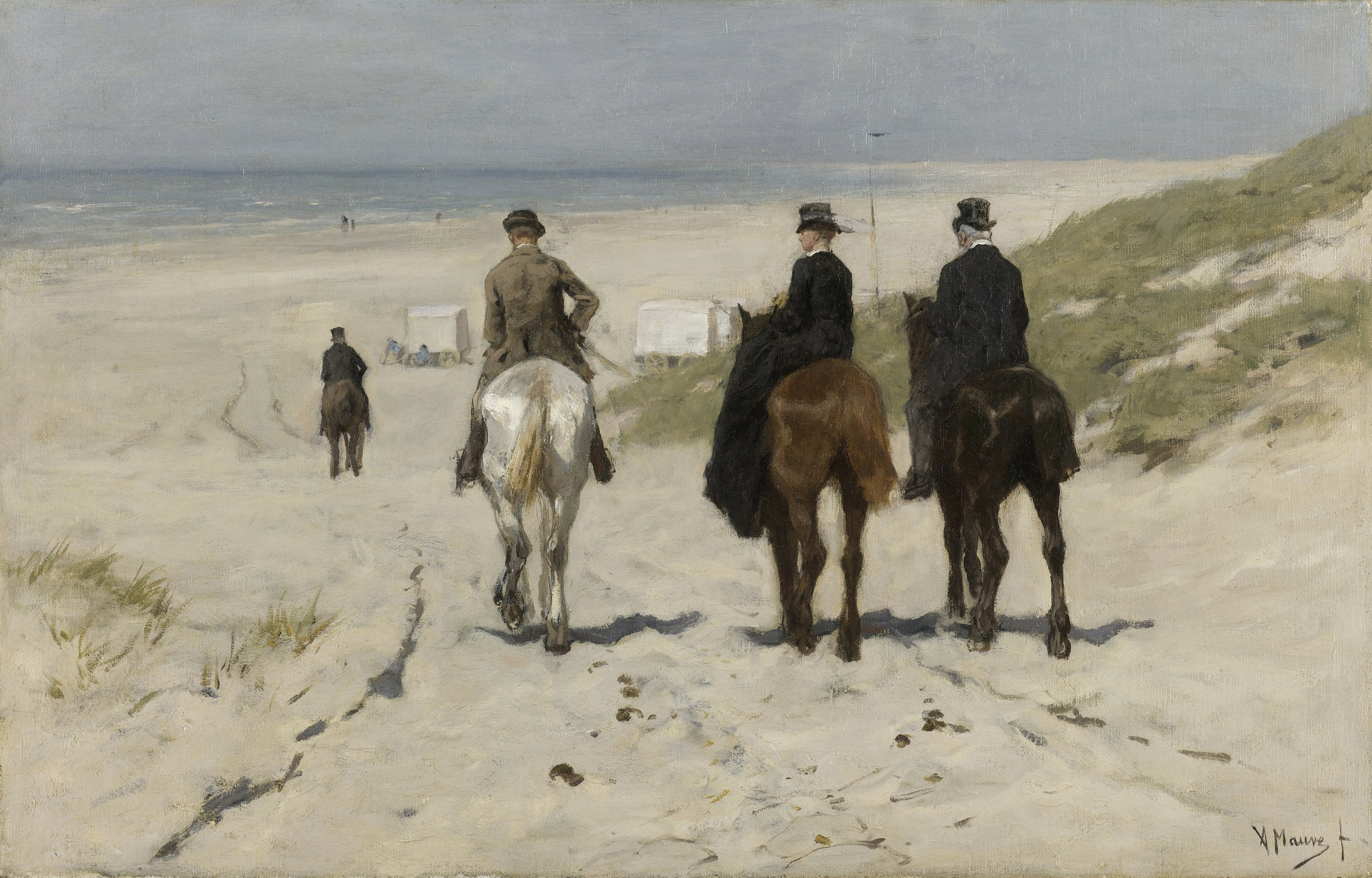
Mauve’s deft brushwork captures the dappled light filtering through the trees, creating a delicate interplay of shadow and illumination that evokes a sense of serene harmony. Within this pastoral scene, a quiet tension lingers. The convergence of human presence with the untouched beauty of nature suggests an intimate relationship that speaks to our primal connection to the land. The subtle contrast between the figures’ labor and the expansive sky above invokes questions about the balance of existence—between toil and tranquility, presence and solitude.
Each stroke carries the weight of emotion, transforming the mundane into a moment of collective reflection. In 1887, Mauve painted this work in Laren, a quaint village in the Netherlands known for its artistic community. At this time, he was deeply engaged in the exploration of rural life and the human condition, influenced by the broader trends of Impressionism. The world was shifting, and this piece captures not only the essence of a moment but also the artist's own journey amidst the evolving landscape of modern art.