Onsen no haru (Spring in a hot spring) — History & Analysis
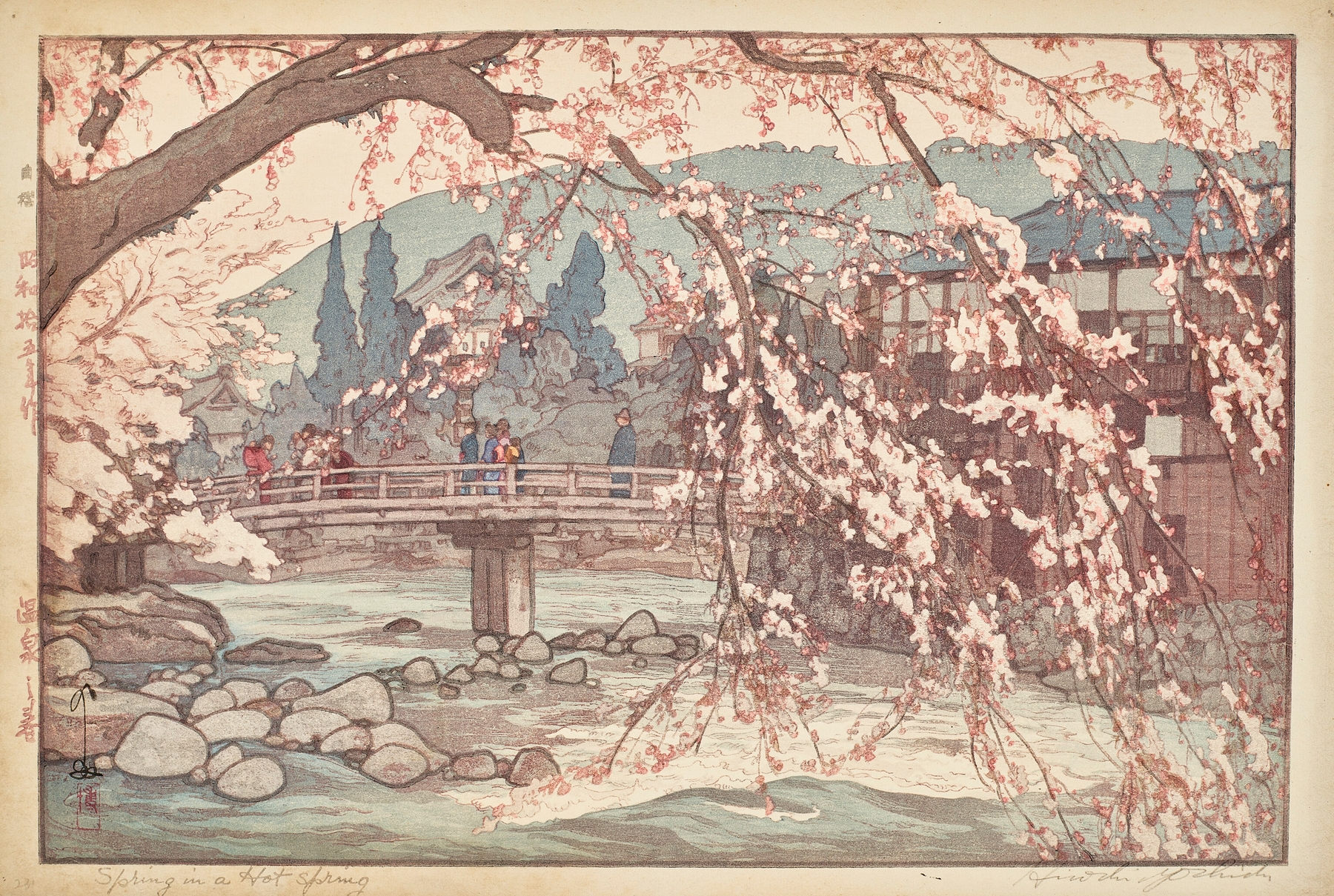
“To paint is to remember what time wants us to forget.” In the fleeting whispers of spring, balance manifests in the stillness of nature and the rhythm of human life. Here, serenity converges with transience, capturing a moment that resonates deeply within the soul. Look to the left, where the softly undulating steam rises from the onsen, blurring the edges of the warm, inviting water. The vibrant greens of budding trees frame the scene, while gentle strokes of pastel hues convey the soft light filtering through a shy morning.
The composition is masterfully balanced, drawing the viewer’s eye across the canvas from the tranquil pool to the distant hills, where soft tones mirror the brushwork, creating a sense of harmony and quietude. Within this serene portrayal lies a profound exploration of contrasts: the juxtaposition of hot and cold, nature and human presence, solitude and companionship. Notice the figures, immersed in the healing waters, their bodies relaxed yet engaged in quiet conversation. Each element, from the delicate ripples in the water to the lush foliage surrounding the onsen, evokes a sense of balance — a reminder of the interconnectedness of all things within the cycle of life.
In 1940, Yoshida Hiroshi painted this piece during a time when Japan grappled with significant social and political changes. As a leading figure in the shin hanga movement, he sought to blend traditional Japanese aesthetics with a modern sensibility, encapsulating the essence of nature and human experience. This artwork stands as a testament to his ability to capture the profound beauty of a moment, inviting us to reflect on our own balance within the world.