Paarden bij het hek — History & Analysis
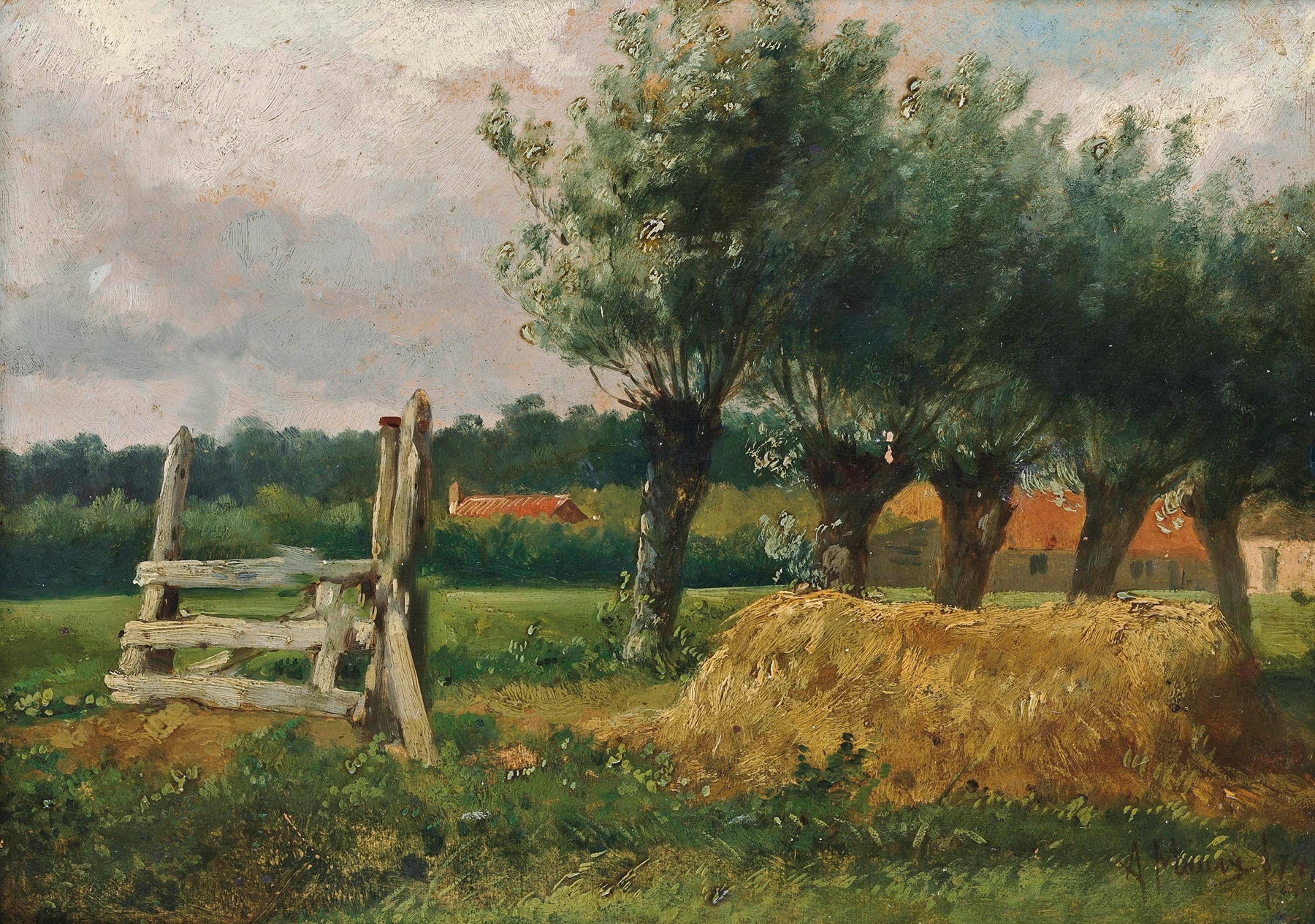
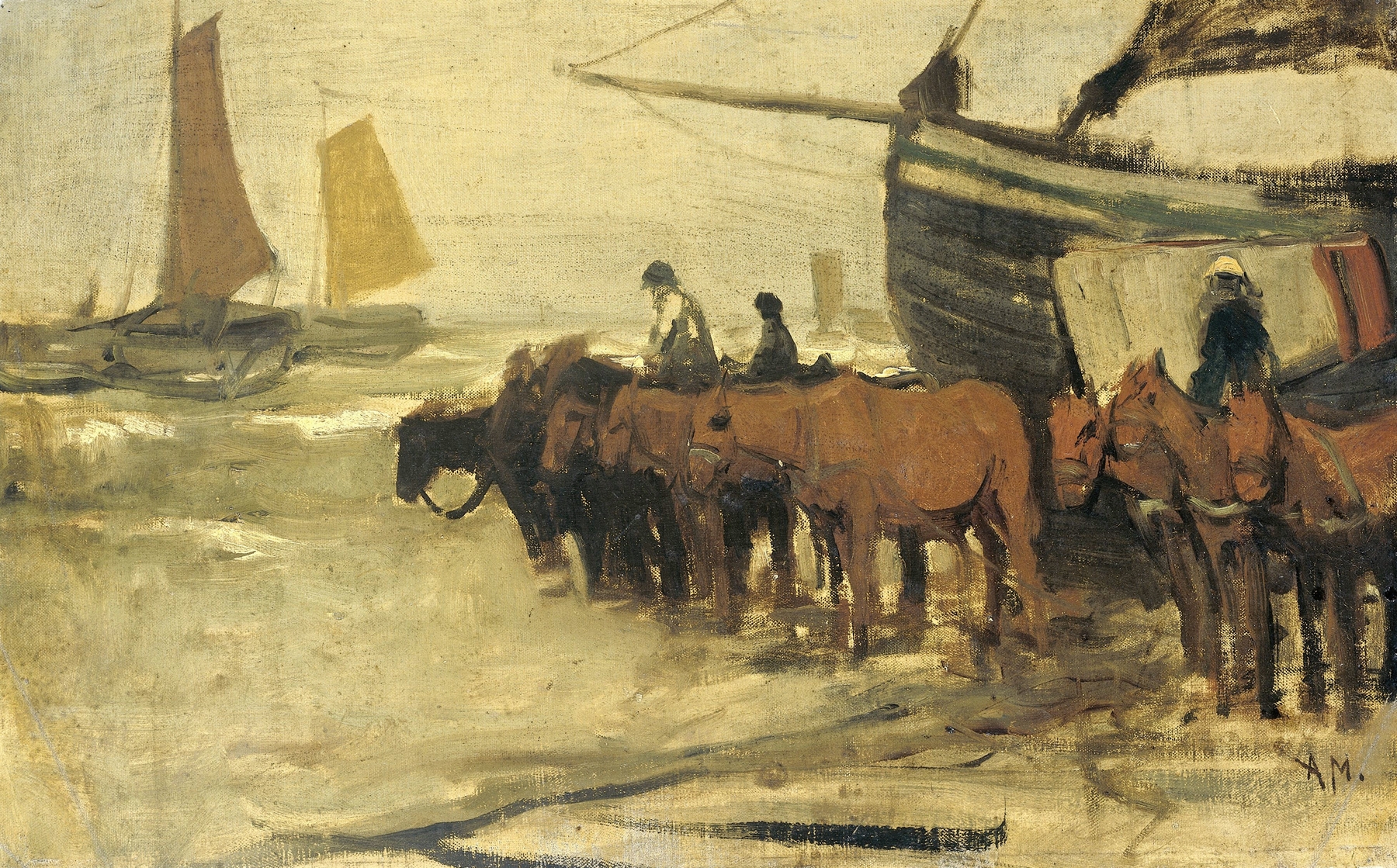
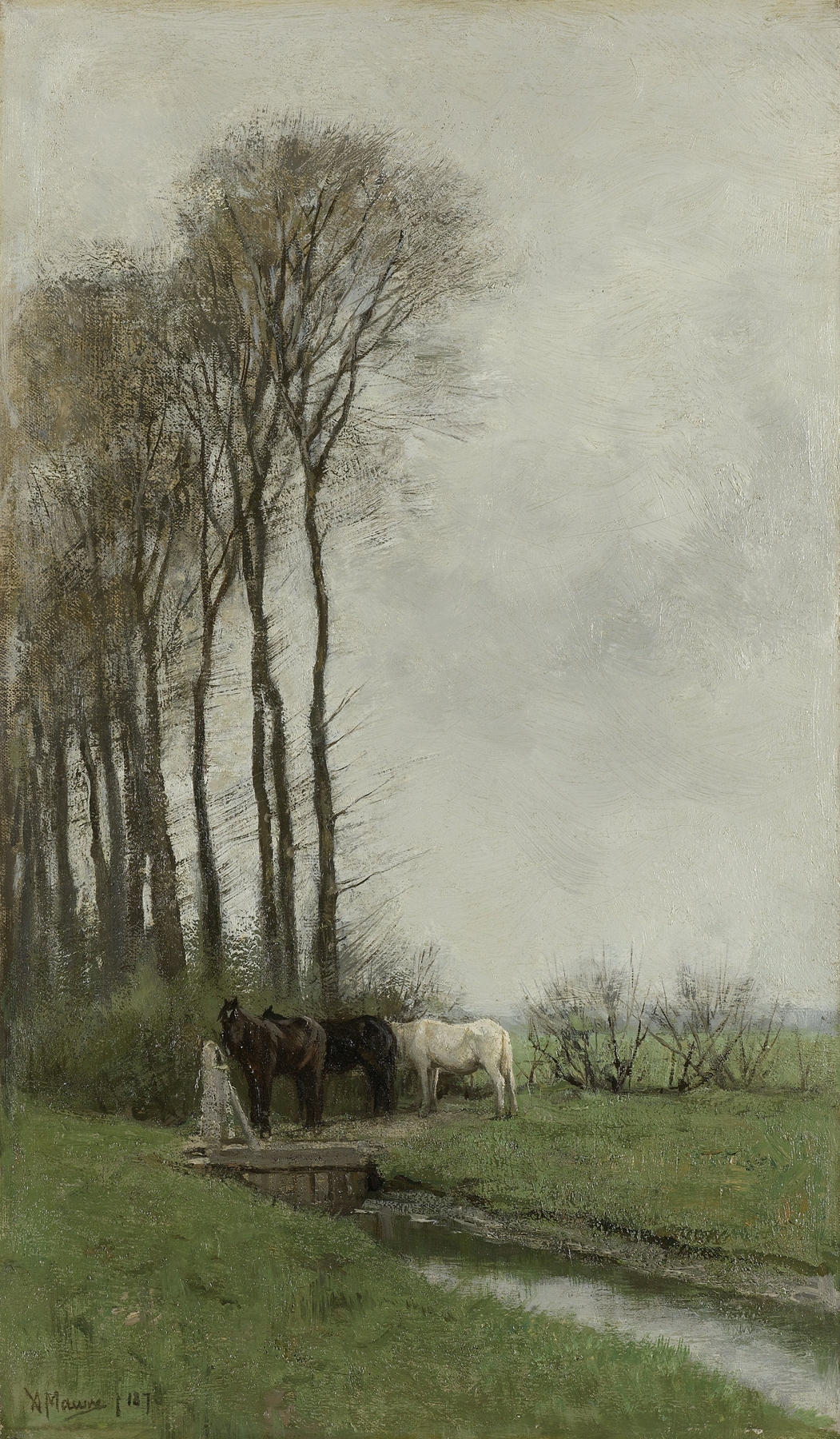
Could beauty survive in a century of chaos? In the stillness of Paarden bij het hek, a serene moment unfolds, encapsulating the quiet between worlds, where animals embody grace amid a turbulent era. Focus on the gentle curve of the fence in the foreground, drawing your gaze to the horses gathered nearby. The soft hues of browns and greens mingle seamlessly, a testament to the artist's skill in capturing natural light and texture.
Notice how Mauve's brushwork breathes life into the horses’ coats, allowing their forms to meld with the surrounding landscape, while the dappled sunlight creates a harmonious interplay of shadow and illumination. Delve deeper into the image and observe the contrasting emotions held within this tranquil scene. The horses, though serene, are tethered to the restraint of the fence, suggesting a longing for freedom. This tension between peaceful existence and unfulfilled desire echoes the anxieties of Mauve’s time, reflecting the broader societal shifts and the undercurrents of change that permeated the late 19th century.
In 1878, Mauve was immersed in the Dutch realist movement, working in the Netherlands where the industrial revolution began to alter the landscape. His focus on rural subjects served as a counterpoint to the chaos of modern life, striving to capture the essence of tranquility amid the shifting tides of his era. It was a time when art sought to preserve the beauty of the natural world before it was irrevocably altered.