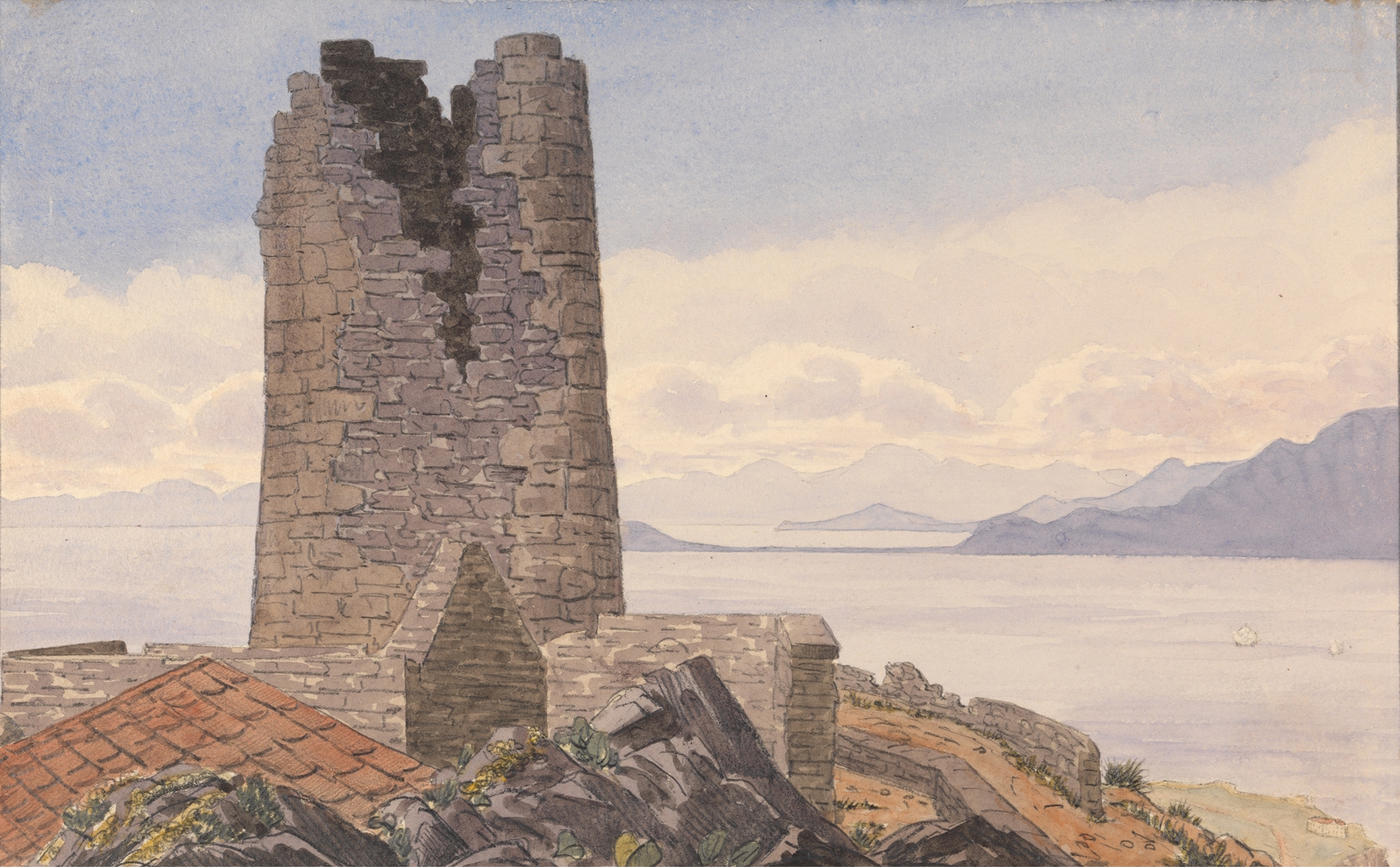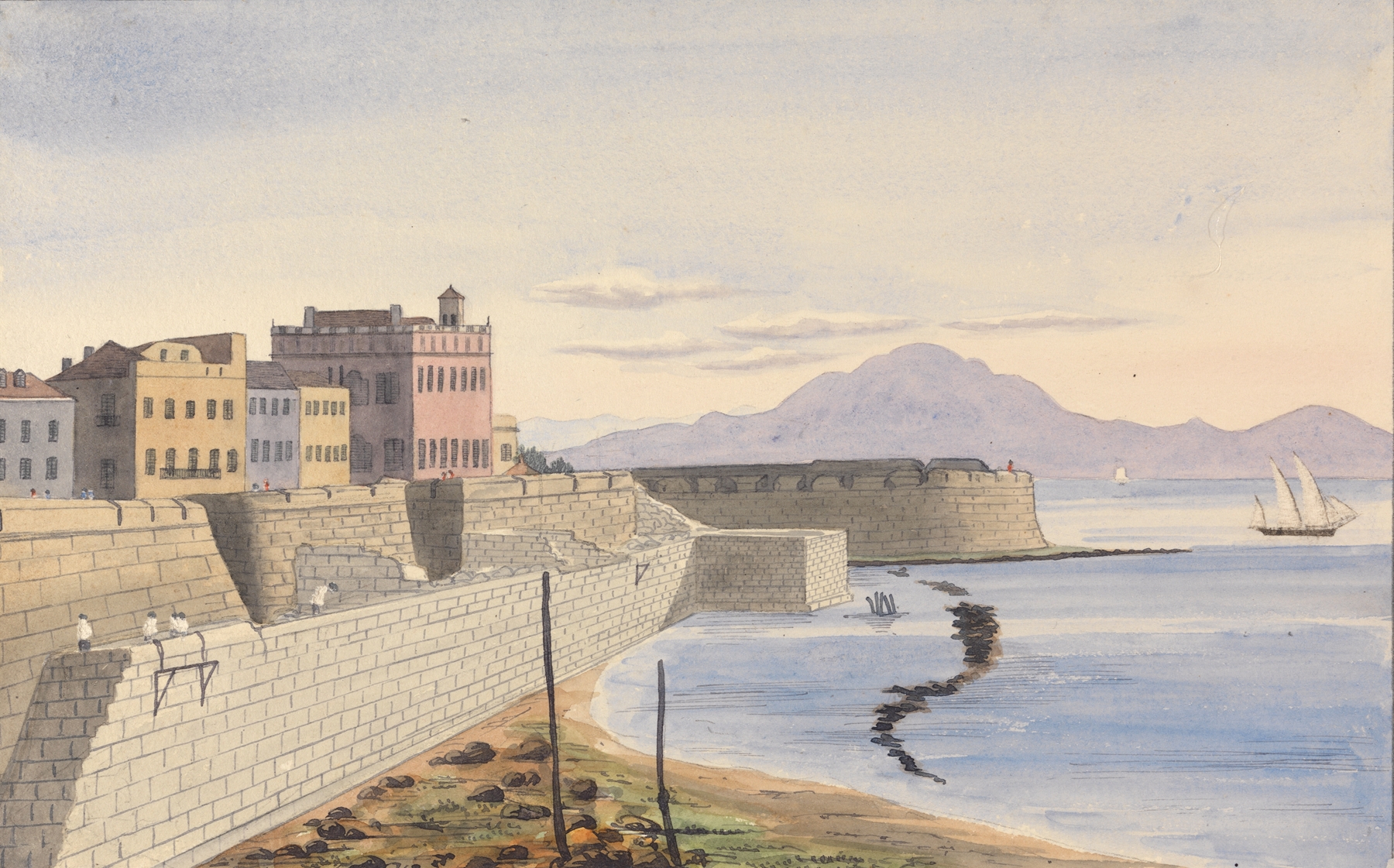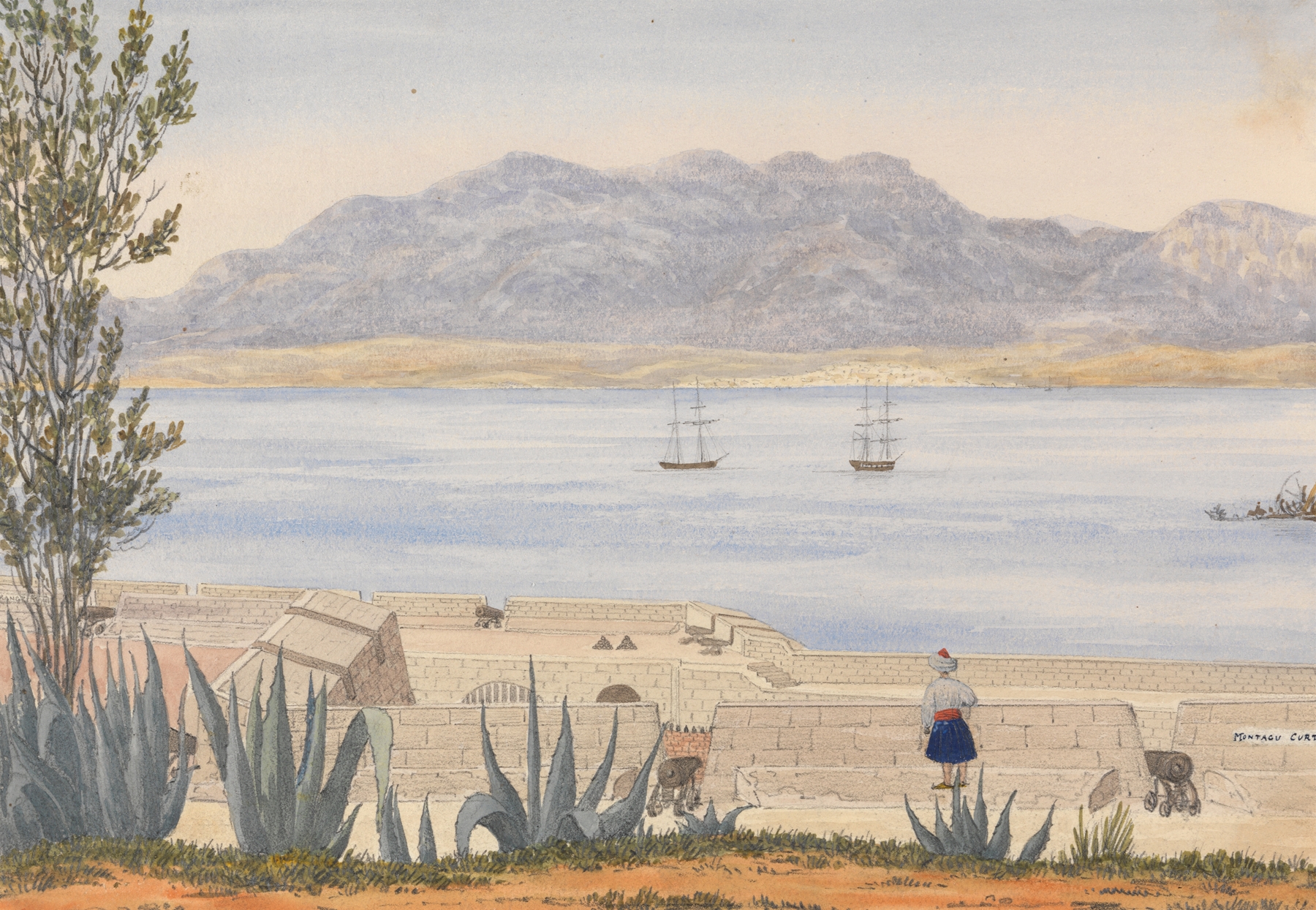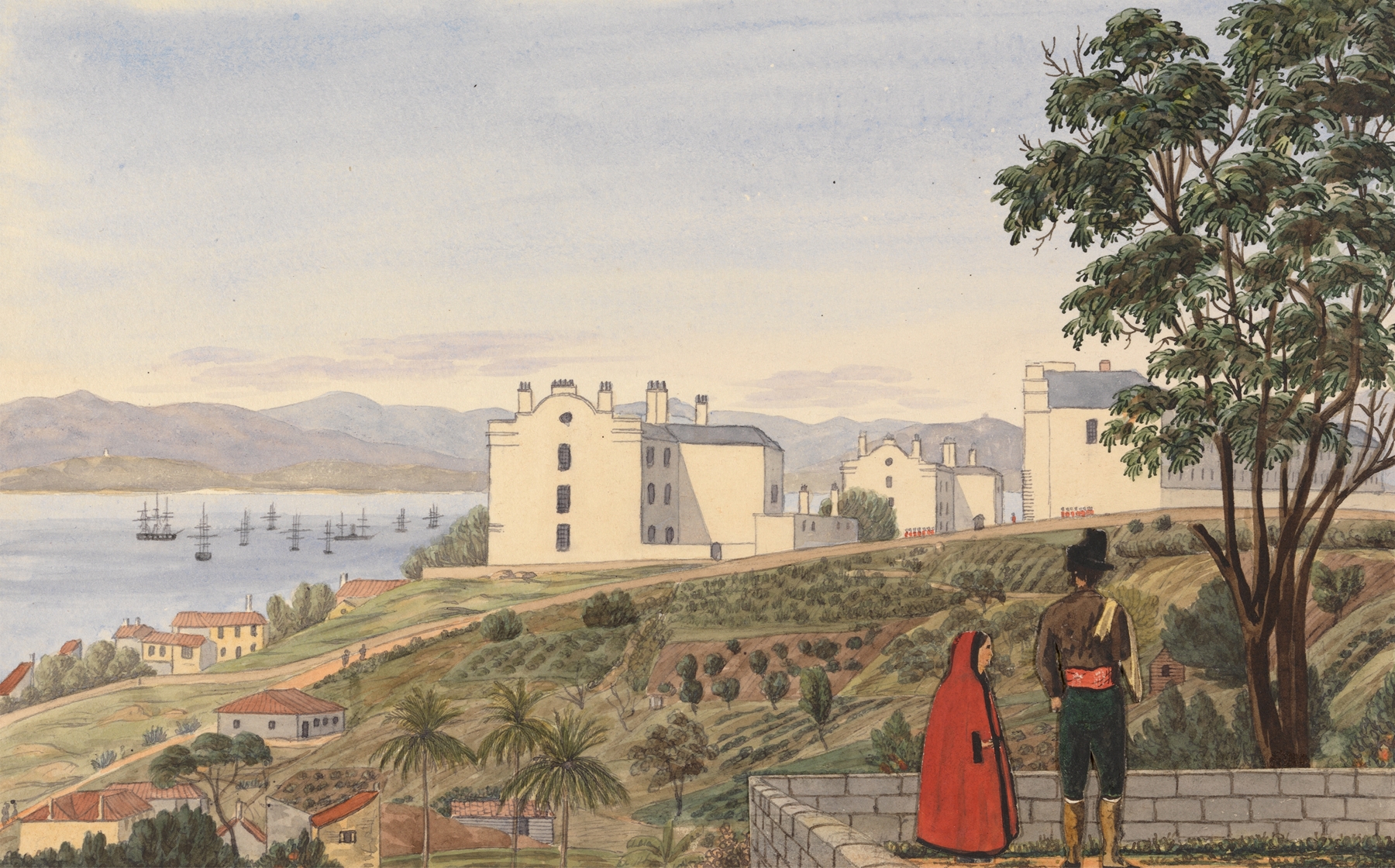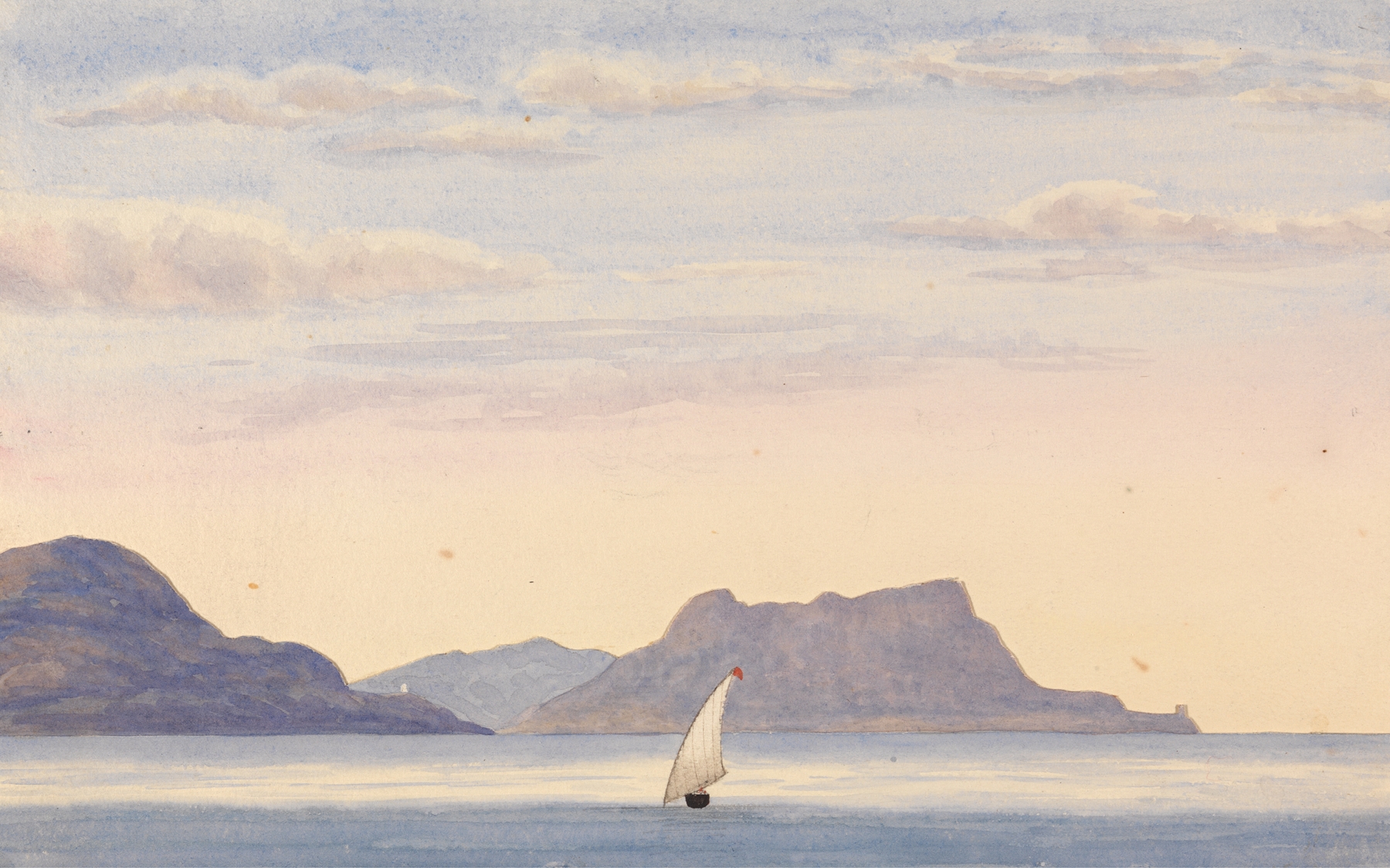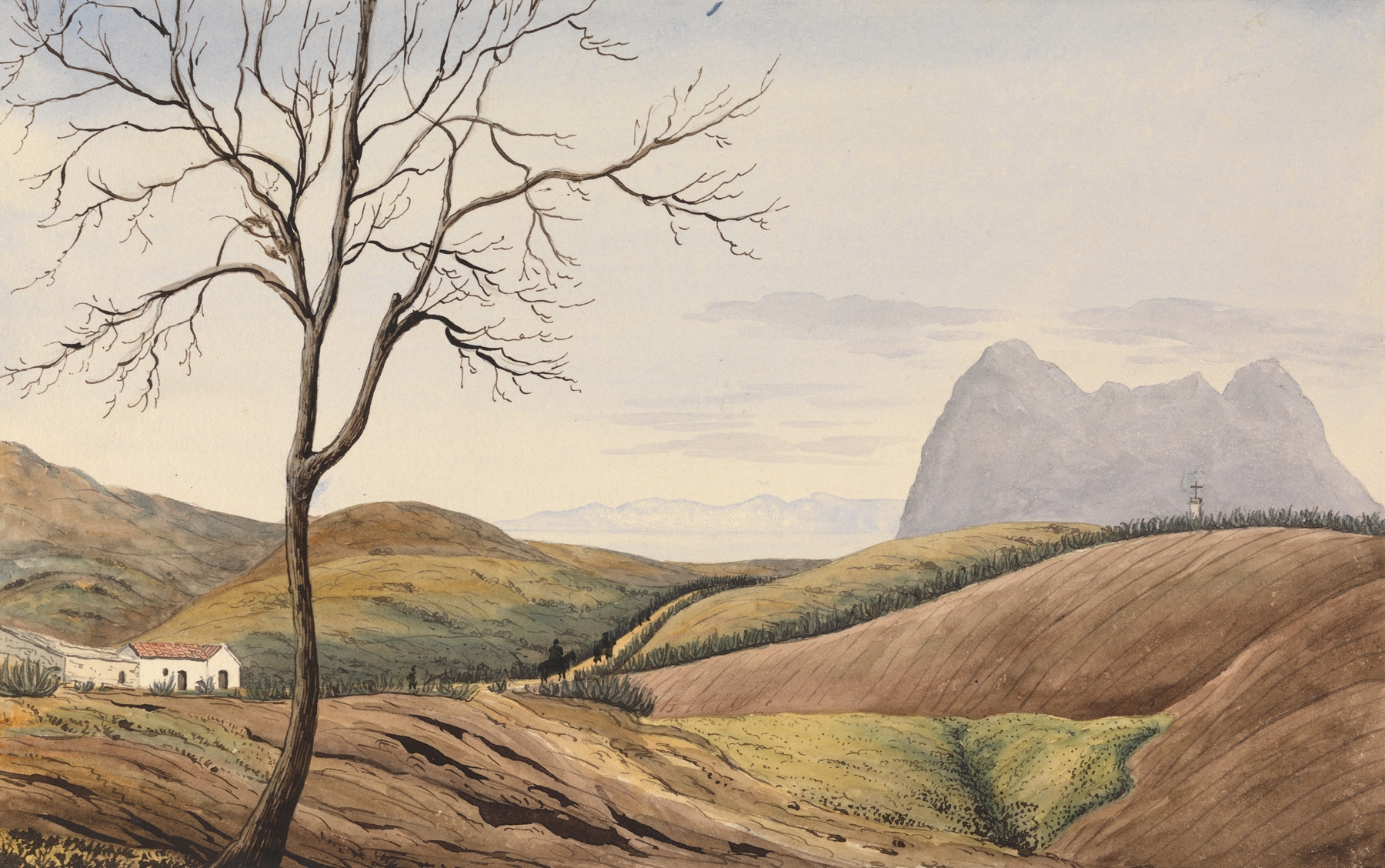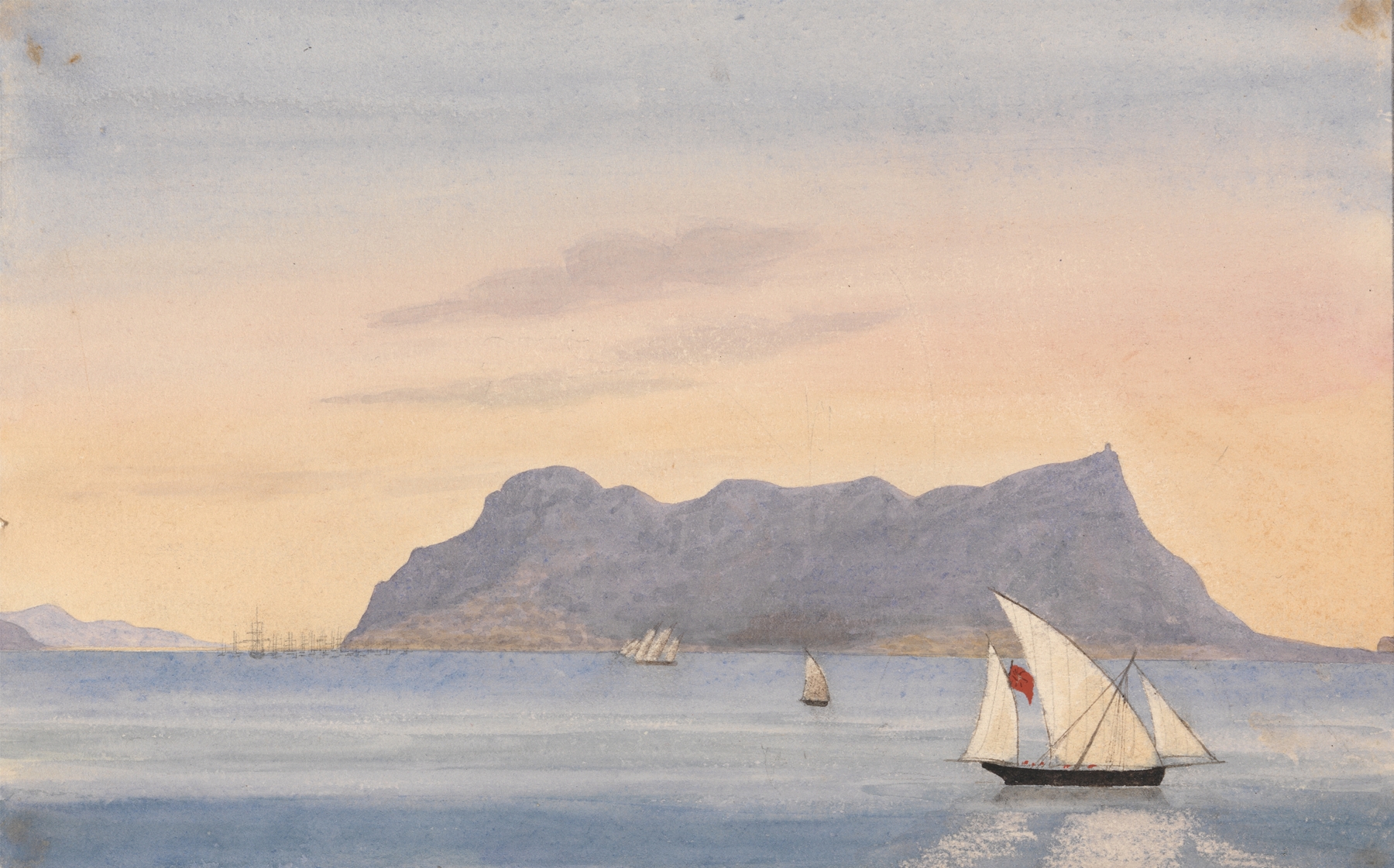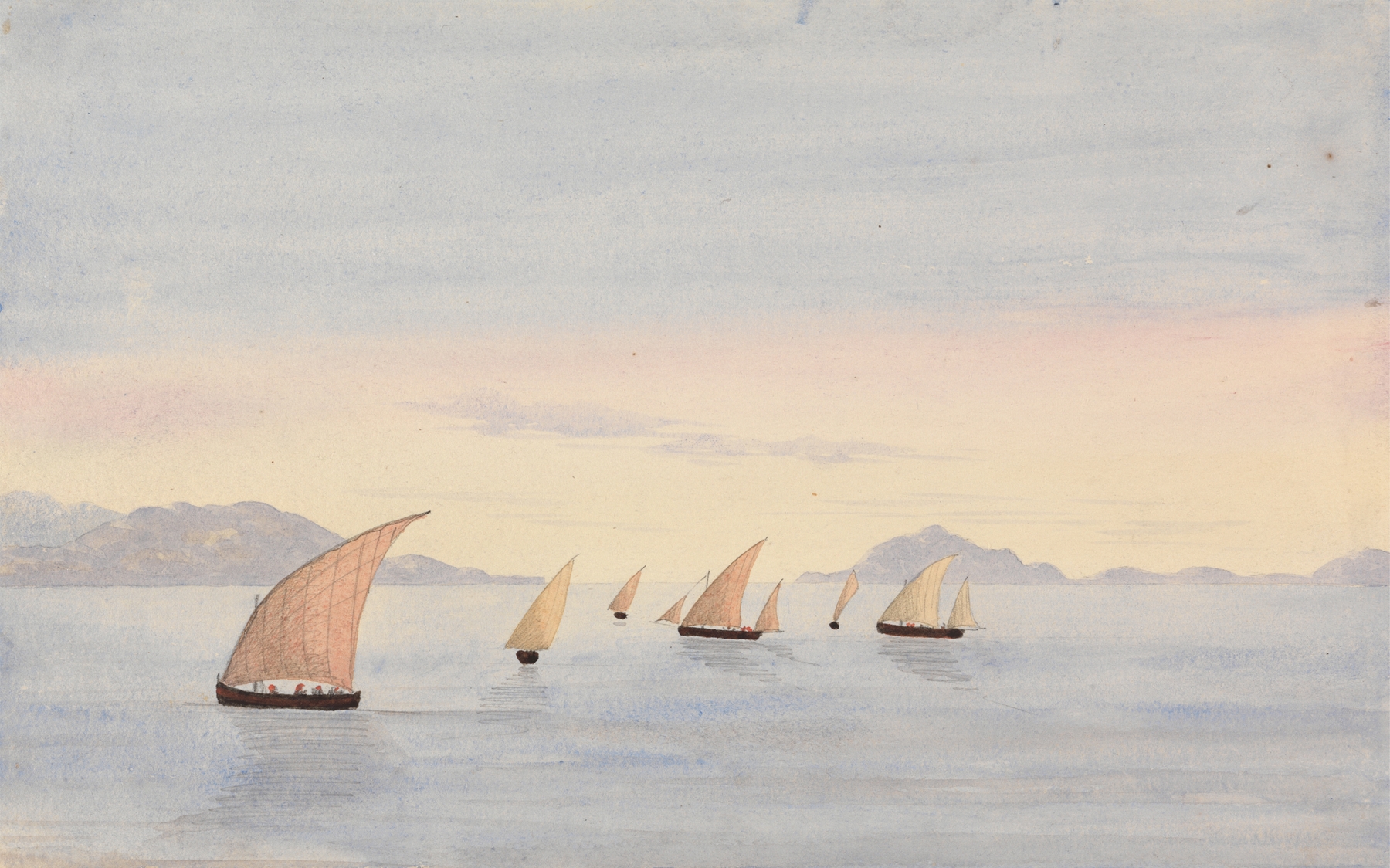
Part of the Bay of Gibraltar, the Spanish Lines — History & Analysis
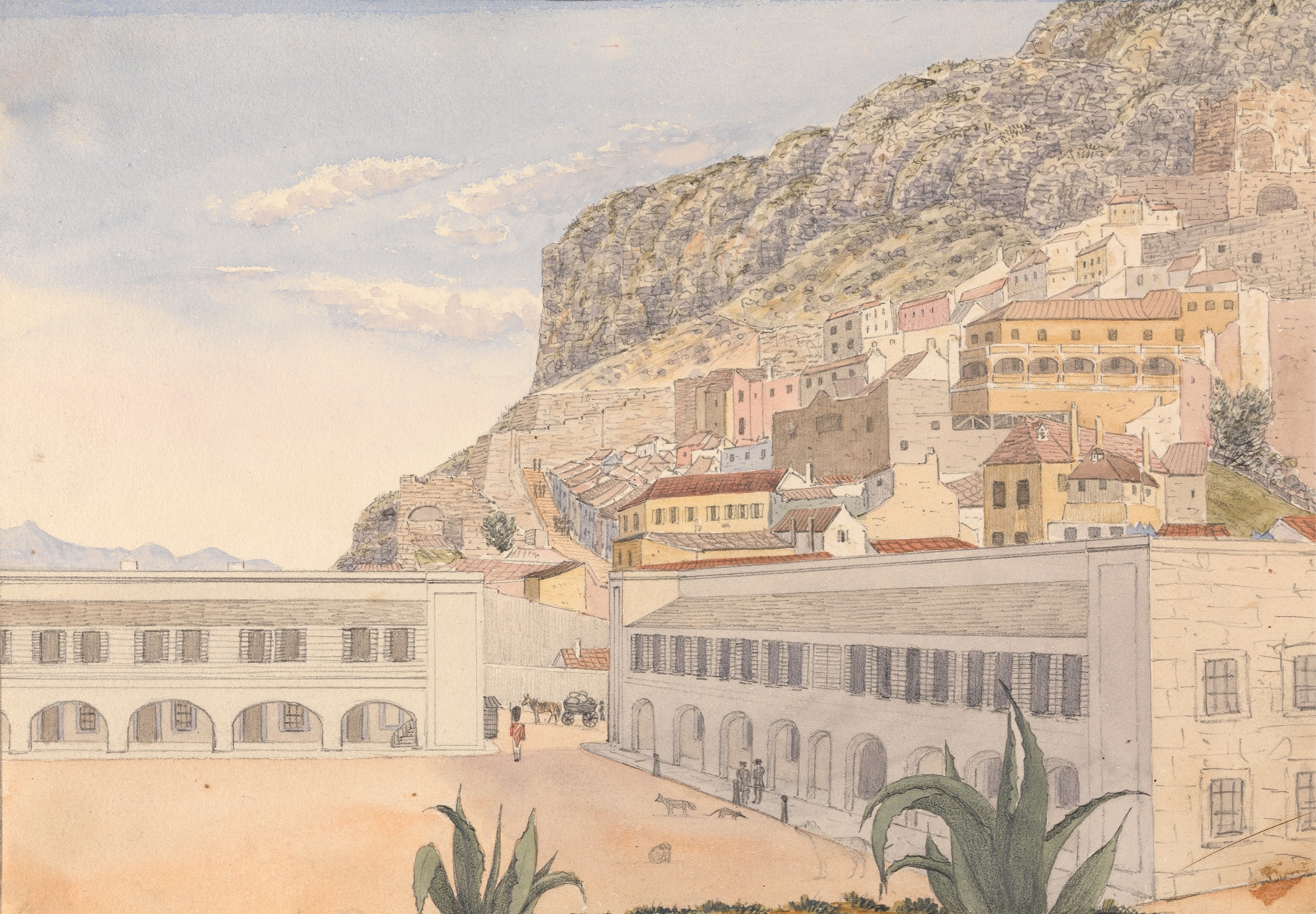
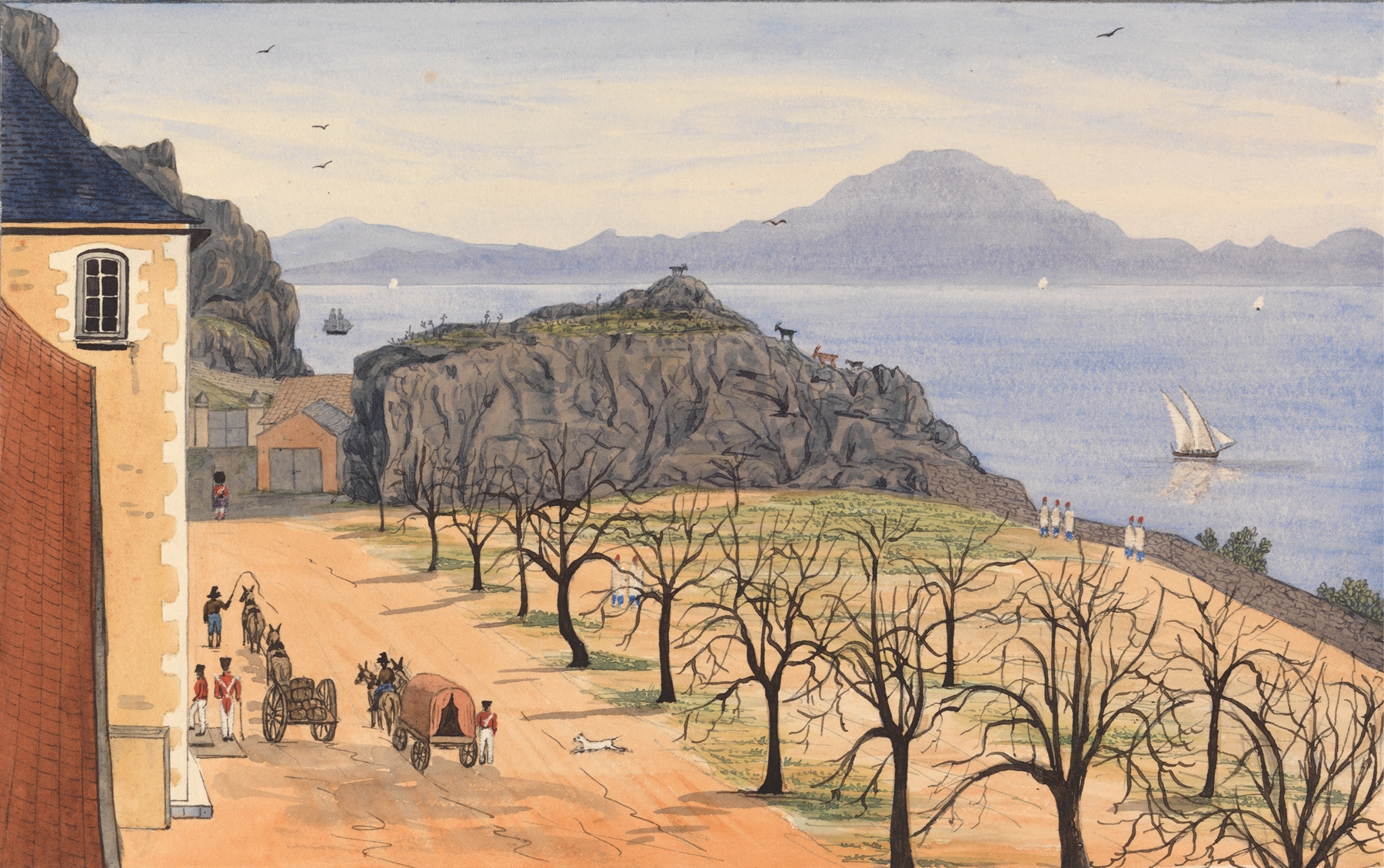
Could a single brushstroke hold eternity? In Part of the Bay of Gibraltar, the Spanish Lines, the vastness of the sea feels both alive and achingly distant, capturing the essence of loss in a moment suspended in time. Look to the horizon where the deep blues of the water meet the muted, cloud-laden sky. Notice how the silvery glints of sunlight dance across the waves, revealing a symphony of hues ranging from azure to cerulean. The meticulous brushwork captures the texture of the ocean, while the jagged outlines of the Spanish Lines punctuate the scene, grounding the viewer in this maritime expanse.
Each stroke reveals Hall's mastery, blending realism with an ethereal quality that beckons the eye to explore further. Embedded within this seascape lies a poignant tension between tranquility and the encroaching shadows of history. The Spanish Lines, remnants of conflict, serve as a reminder of the lost lives and stories that echo beneath the water's surface. The contrast between the vibrant sea and the ominous fortifications suggests the ongoing struggle between nature and man, peace and turmoil.
This duality resonates, inviting a reflection on the passage of time and what remains after the storms have settled. George Lothian Hall painted this work in 1844 during a period of artistic exploration and evolution in Britain. He was influenced by the Romantic movement, emphasizing nature's grandeur and the human experience intertwined with it. At this time, Britain was navigating significant political and societal changes, and Hall's rendering of the Bay of Gibraltar captures both the beauty and the weight of a history that continues to shape identities.