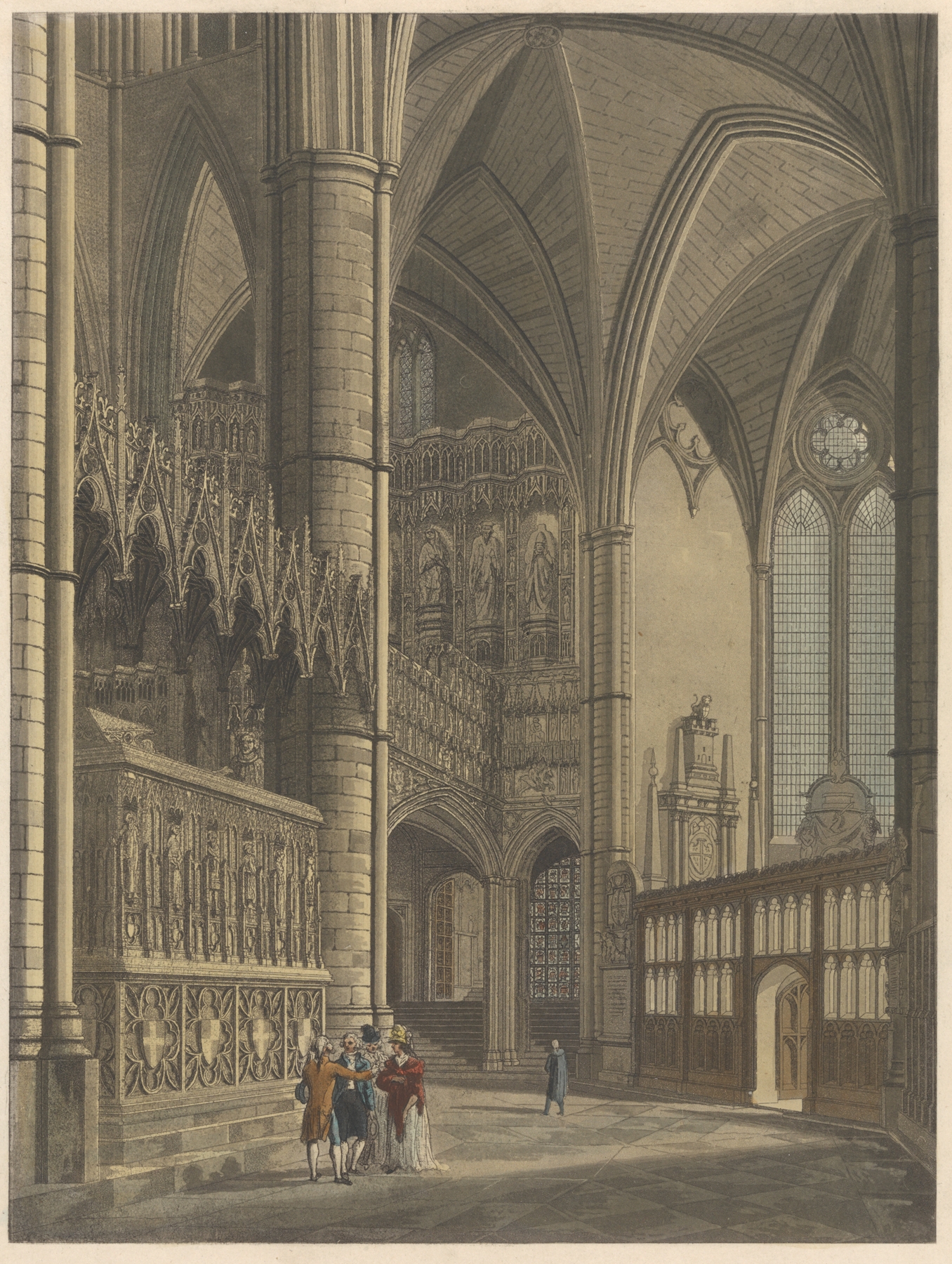
Part of the Sachristary Leading to the Chapel of Henry VII — History & Analysis
“Between color and silence, truth hides.” In the quiet recesses of architectural beauty, the yearning for connection becomes palpable, a whisper against the stone walls of solitude. Look to the right at the archway adorned with intricate carvings, beckoning the viewer into a world both sacred and somber. The muted colors of the stone, soft grays and gentle browns, create a sense of stillness that envelops the scene, while the play of light casts gentle shadows, enhancing the textural details. Notice how the light falls upon the smooth surfaces, illuminating the craftsmanship and inviting contemplation about the stories held within each stone.
But beyond the serene beauty lies a deeper narrative of isolation. The absence of figures amplifies the feeling of loneliness, as though the architecture itself longs for the presence of the faithful. Each shadowed corner hints at untold prayers, forgotten moments of reflection, and the silence that blankets the space, evoking a sense of yearning for communion. The interplay of light and shadow not only defines the physical space but also the emotional landscape, where the viewer is left to ponder their own solitude amidst the grandeur.
In 1793, Thomas Malton painted this work during a period of personal struggle and transition. Nestled in the heart of London, he was deeply immersed in the neoclassical movement, which sought to revive ancient forms while grappling with the changing tides of society. This artwork emerged from a time when architecture symbolized both refuge and isolation, reflecting Malton’s own experiences as an artist in a bustling city yearning for connection yet surrounded by the echoes of solitude.